
Priest
Ezra
Priest and Scribe of the Restoration · Persian Empire/Post-Exilic · c. 5th century BC (fl. c. 458 BC)
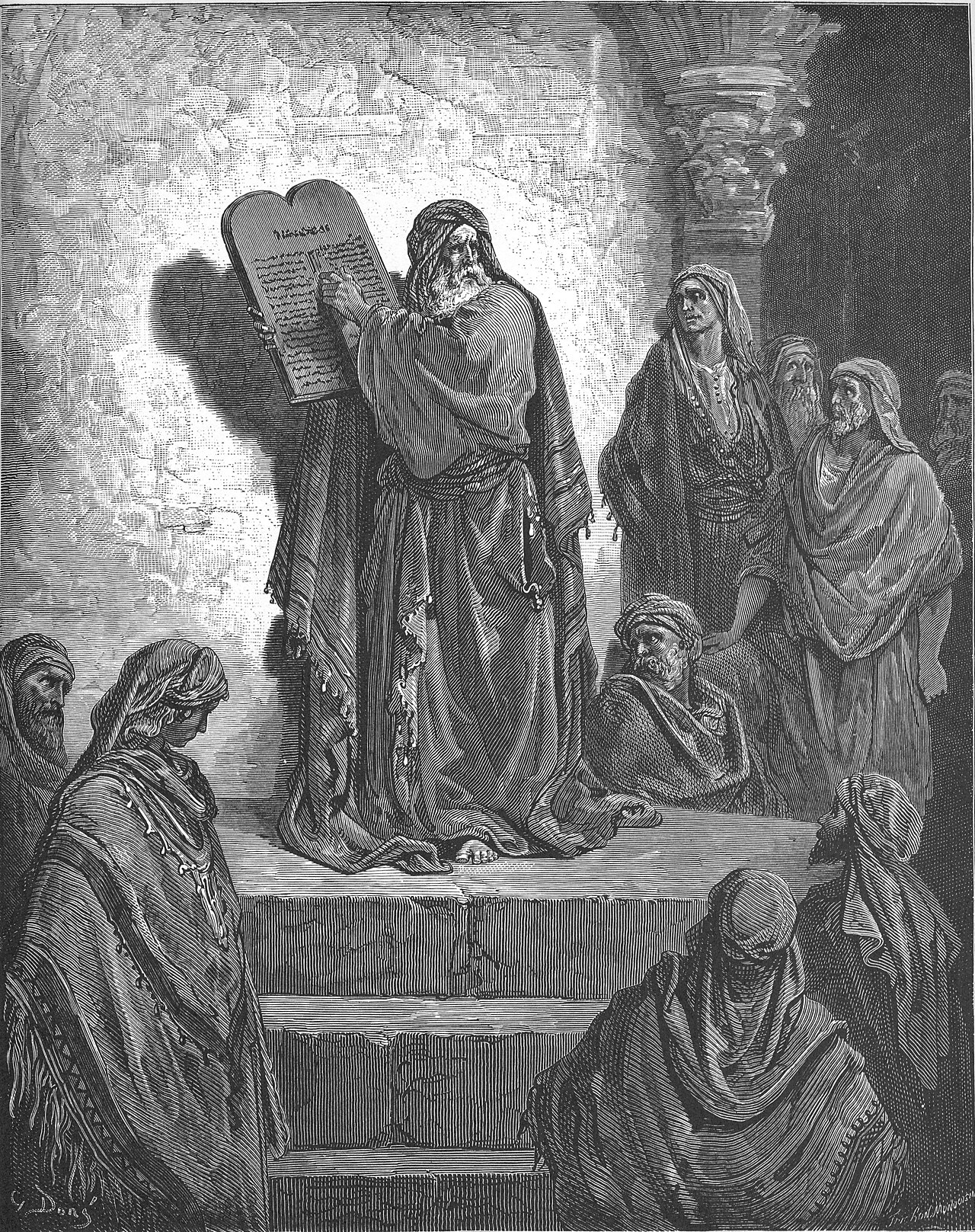
Ezra Reads the Law to the People — Gustave Doré, The Holy Bible (1866), public domain
Summary
Ezra was a priest and scribe who led a second wave of exiles back to Jerusalem, devoted to studying, obeying, and teaching God's Law. He confronted the returned community's intermarriage with pagan nations and, with Nehemiah, restored the public reading of Scripture.
- Among the passages here, Ezra is first named in Ezra 7:1: “Many years later, during the reign of Artaxerxes king of Persia, Ezra son…”
- The record places Ezra in Persian Empire/Post-Exilic.
- 28 verses name Ezra, in 2 books.
- 4 moments stand in order on this page, each with its verse.
On this page
Start here
For Ezra had set his heart to study the Law of the LORD, to practice it, and to teach its statutes and ordinances in Israel.
Ezra 7:10→- 4 key events in order
- 28 verses name Ezra, across 2 books
In Scripture
- Verses
- 28
- Books
- 2
Ezra
- Role
- Priest and Scribe of the Restoration
- Era
- Persian Empire/Post-Exilic
- Dates
- c. 5th century BC (fl. c. 458 BC)
- Tribe
- Levi (Aaronic priestly line)
- Father
- Seraiah
- Mother
- Unknown
- Spouse
- Unknown
The life in order
from the events the row records, with the first and last verse that names the person among the passages this page stands on
1Where the passages this page records open
2What the record holds, in its own order
- Led the return to JerusalemEzra 7:1-10Many years later, during the reign of Artaxerxes king of Persia, Ezra son of Seraiah, the son of Azariah, the son of Hilkiah,
- Fasted instead of requesting escortEzra 8:21-23And there by the Ahava Canal I proclaimed a fast, so that we might humble ourselves before our God and ask Him for a safe journey for us and our children, with all our possessions.
- Grieved over intermarriageEzra 9:1-15After these things had been accomplished, the leaders approached me and said, “The people of Israel, including the priests and Levites, have not kept themselves separate from the surrounding peoples whose abominations are like those of the Canaanites, Hittites, Perizzites, Jebusites, Ammonites, Moabites, Egyptians, and Amorites.
- Read the Law publiclyNehemiah 8:1-8At that time all the people gathered together in the square before the Water Gate, and they asked Ezra the scribe to bring out the Book of the Law of Moses, which the LORD had commanded for Israel.
Biography
Ezra was a priest descended from Aaron and a skilled scribe in the Law of Moses, serving in the Persian court before King Artaxerxes commissioned him to lead a company of exiles back to Jerusalem, bringing silver, gold, and vessels for the temple. Ezra refused a military escort for the dangerous journey, choosing instead to fast and pray, trusting God's protective hand openly rather than relying on human power. Arriving in Jerusalem, Ezra discovered that many, including priests and Levites, had intermarried with surrounding pagan peoples, threatening the spiritual purity of the restored community. Ezra's grief was profound and public: he tore his garments, pulled hair from his head and beard, and fell on his knees in prayer and confession before the people, leading to a covenant of repentance and separation from these marriages. Years later, Ezra joined Nehemiah in one of Scripture's most significant acts of corporate worship: standing on a wooden platform before the assembled people, Ezra read the Law aloud from morning until midday while the Levites moved through the crowd giving the sense so the people understood. The people wept in conviction, then were called to celebrate with joy, for the joy of the LORD was their strength. Ezra's defining commitment is summarized in his own testimony: he set his heart to seek the Law of the LORD, to do it, and to teach its statutes and ordinances in Israel, a pattern of study followed by obedience followed by teaching that shaped Jewish scribal tradition for centuries.
For Ezra had set his heart to study the Law of the LORD, to practice it, and to teach its statutes and ordinances in Israel.
Ezra's threefold commitment: seeking, doing, and teaching God's Law
More key verses
Text: Berean Standard Bible.
“And they sang responsively with praise and thanksgiving to the LORD: “For He is good; for His loving devotion to Israel endures forever.” Then all the people gave a great shout of praise to the LORD, because the foundation of the house of the LORD had been laid.”
“So they read from the Book of the Law of God, explaining it and giving insight, so that the people could understand what was being read.”
What they got right, and what they got wrong
Strengths
Deep devotion to studying and teaching God's Law, courageous public confession of the community's sin, trust in God over human protection, skillful scribal and priestly training
Weaknesses
His strict response to intermarriage, though addressing real covenant unfaithfulness, brought significant hardship on the families involved
Lessons
Devotion to Scripture must include study, obedience, and teaching together. Trusting God openly can be a greater testimony than relying on visible protection. Spiritual leaders must address compromise honestly, even at personal cost.
Spiritual significance
Ezra models the priestly and scribal calling to study, obey, and teach God's word faithfully, and his grief over compromise shows that spiritual leaders must confront sin even within their own community.
How Ezra points to Jesus
Ezra's public reading and teaching of the Law, ensuring the people understood it, prefigures the ministry of teaching that Christ modeled and commissioned His church to continue (Matthew 28:19-20).
Ezra in Scripture
Open a book to read its mentions here. Text: Berean Standard Bible. Names repeat in Scripture, so some of these verses may speak of another person called Ezra. The two marks are drawn from the chapters this page's own references stand in.
Old TestamentNew Testamentsegment width = share of mentions
Old Testament2 books · 28 mentions
Ezra14 mentions
- Ezra 7:1Many years later, during the reign of Artaxerxes king of Persia, Ezra son of Seraiah, the son of Azariah, the son of Hilkiah,
- Ezra 7:6this Ezra came up from Babylon. He was a scribe skilled in the Law of Moses, which the LORD, the God of Israel, had given. The king had granted Ezra all his requests, for the hand of the LORD his God was upon him.
- Ezra 7:8Ezra arrived in Jerusalem in the fifth month of the seventh year of the king.
- Ezra 7:10For Ezra had set his heart to study the Law of the LORD, to practice it, and to teach its statutes and ordinances in Israel.
- Ezra 7:11This is the text of the letter King Artaxerxes had given to Ezra the priest and scribe, an expert in the commandments and statutes of the LORD to Israel:
9 further mentions in Ezra, read them in the book.
Nehemiah14 mentions
- Nehemiah 8:1At that time all the people gathered together in the square before the Water Gate, and they asked Ezra the scribe to bring out the Book of the Law of Moses, which the LORD had commanded for Israel.
- Nehemiah 8:2On the first day of the seventh month, Ezra the priest brought the Law before the assembly of men and women and all who could listen and understand.
- Nehemiah 8:3So Ezra read it aloud from daybreak until noon as he faced the square before the Water Gate, in front of the men and women and those who could understand. And all the people listened attentively to the Book of the Law.
- Nehemiah 8:4Ezra the scribe stood on a high wooden platform built for this occasion. At his right side stood Mattithiah, Shema, Anaiah, Uriah, Hilkiah, and Maaseiah, and at his left were Pedaiah, Mishael, Malchijah, Hashum, Hash-baddanah, Zechariah, and Meshullam.
- Nehemiah 8:5Ezra opened the book in full view of all the people, since he was standing above them all, and as he opened it, all the people stood up.
9 further mentions in Nehemiah, read them in the book.
Keep studying
On this page
People1
Books1
Doorway1
Keep this page