
Nehemiah 8:2
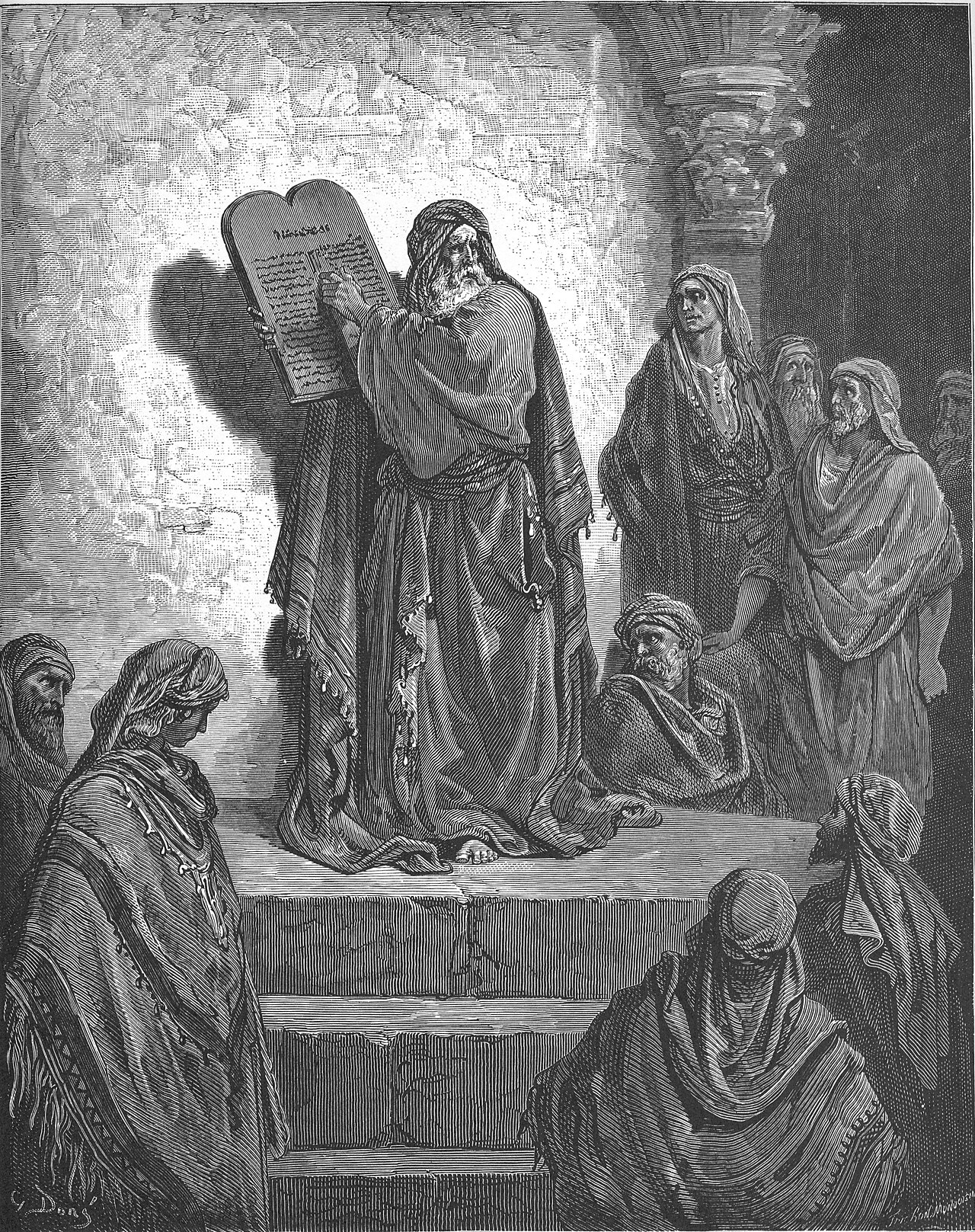
in Nehemiah 8On the first day of the seventh month, Ezra the priest brought the Law before the assembly of men and women and all who could listen and understand.
BSB
The same verse in ASV and KJV ▾
ASV
And Ezra the priest brought the law before the assembly, both men and women, and all that could hear with understanding, upon the first day of the seventh month.
KJV
And Ezra the priest brought the law before the congregation both of men and women, and all that could hear with understanding, upon the first day of the seventh month.
⋯
This verse in Nehemiah 8
Commentary
9 notes on this verseFirst day - This was the feast of trumpets, which is called a sabbath, and on which they were to have an holy convocation, Lev. xxiii, 24. And it was on this day, the altar was set up, after their return from captivity; in remembrance of which they had probably kept it ever since, with more than ordinary solemnity.
This site's exposition
to bring out the Book of the Law of Moses
on Nehemiah 8:1-3
The demand comes from below: "all the people gathered together" and asked Ezra "to bring out the Book of the Law of Moses" (8:1). The wall was finished at 6:15, and the first public act inside it is Scripture read aloud.
This site's exposition
On the first day of the seventh month
Wesley notes that the altar had been rebuilt on this date years before, and he suggests the day had been kept with special care since. The audience of men, women and all who could understand follows Deuteronomy 31:12, which gathers the whole household to hear the law.
The record, by era
The Medieval Church1 voice
And the seventh month came, etc. When Nehemiah sought to provide and arrange who should dwell in the city they had built, the seventh month arrived; for they were far away. For since the wall was finished on the twenty-fifth day of the sixth month, …
The Puritans and the Awakening3 voices
And Ezra the priest brought the law before the congregation,....
Observe, [1.] The book of the law is not to be confined to the scribes' studies, but to be brought before the congregation and read to them in their own language. [2.] Ministers, when they go to the pulpit, should take their Bibles with them;
But that was not all: it was one that day that the altar was set up, and they began to offer their burnt-offerings after their return out of captivity, a recent mercy in the memory of many then living; in a thankful remembrance of that, it is likely, they had kept this feast ever since with more than ordinary solemnity.
The Nineteenth Century1 voice
All that could hear with understanding - Infants, idiots, and children not likely to receive instruction, were not permitted to attend this meeting; nor should any such, in any place, be ever brought to the house of God, if it can be avoided: yet, rather than a poor mother should be deprived of the ordinances of God, let her come with her child in her arms; and although it be inconvenient to the congregation, and to some ministers, to hear a child cry, it is cruel to exclude the mother on this account, who, having no person to take care of her child while absent, must bring it with her, or be totally deprived of the ordinances of the Christian Church. Upon the first day of the seventh month - This was the first day of what was called the civil year; and on it was the feast of trumpets, the year being ushered in by the sound of these instruments.
1 more voice on this verse
The Nineteenth Century1 voice
A commentator
Albert Barnes1798–1870
Notes, Explanatory and Practical, on the Old and New Testaments (1832-1869)
proposed
Upon the first day of the seventh month - The day of the “Feast of Trumpets” (see the margin reference note). The gathering together of the people, spoken of in Neh 8:1, was probably to observe this feast.
How the passage was read
On Nehemiah 8:1-18On Nehemiah 8:1-18
The seventh month, rediscovered
Everything in this chapter happens on the calendar of Leviticus 23. Ezra reads the Law on “the first day of the seventh month”: that is the Day of Trumpets, kept today as Rosh Hashanah, the Jewish new year, announced by the ram's-horn trumpet (shofar). Then the people find the command about booths and keep Tabernacles (Sukkot) for the first time “since the days of Joshua”: seven days living in leafy shelters, remembering the wilderness. Jewish families still build these booths every autumn: a hut in the yard or on the balcony, roofed with branches you can see the stars through, where meals are eaten all week.
The chapter also gives the day its enduring tone: “the joy of the LORD is your strength” was said on Rosh Hashanah, to a congregation weeping under the words of the Law and told instead to feast.
This section is reception history: how the passage was read and kept in the Jewish tradition. Where a reading parts from an essential of the Christian faith, the section says so at that point.
Sources: Leviticus 23:23–43 (the seventh month's appointments) · Mishnah Sukkah 1:1 (the booth's rules)
The words behind it
17 Hebrew wordsEvery Hebrew word of this verse in the order it stands, with what it means and the door to its own study. The last column counts the times a word stands in the whole Bible: the rarer the word, the more the places it appears belong together.
| Hebrew | Sound | Meaning | Word study | In the Bible |
|---|---|---|---|---|
| וַיָּבִ֣יא | vaiyavi' | and he brought | H935 → | 2568 times |
| עֶזְרָ֣א | ʾezra' | Ezra | H5830 → | 22 times |
| הַ֠כֹּהֵן | hakohen | the priest | H3548 → | 750 times |
| אֶֽת־ | ʾet- | <obj.> | H853 → | 10935 times |
| הַתּוֹרָ֞ה | hatorah | the law | H8451 → | 219 times |
| לִפְנֵ֤י | lifnei | <to> before | H6440 → | 2123 times |
| הַקָּהָל֙ | hakahal | the assembly | H6951 → | 123 times |
| מֵאִ֣ישׁ | meish | from man | H376 → | 1663 times |
| וְעַד־ | vead- | and unto | H5704 → | 1261 times |
| אִשָּׁ֔ה | ʾishah | woman | H802 → | 781 times |
| וְכֹ֖ל | vekhol | and every | H3605 → | 5413 times |
| מֵבִ֣ין | mevin | [one who] understood | H995 → | 170 times |
| לִשְׁמֹ֑עַ | lishmoa' | to listen | H8085 → | 1159 times |
| בְּי֥וֹם | beyom | on day | H3117 → | 2304 times |
| אֶחָ֖ד | ʾechad | one | H259 → | 971 times |
| לַחֹ֥דֶשׁ | lachodesh | of the month | H2320 → | 284 times |
| הַשְּׁבִיעִֽי׃ | hashevii | <the> seventh | H7637 → | 98 times |
וַיָּבִ֣יאand he brought
vaiyavi'H935 →2568 times
עֶזְרָ֣אEzra
ʾezra'H5830 →22 times
הַ֠כֹּהֵןthe priest
hakohenH3548 →750 times
אֶֽת־<obj.>
ʾet-H853 →10935 times
הַתּוֹרָ֞הthe law
hatorahH8451 →219 times
לִפְנֵ֤י<to> before
lifneiH6440 →2123 times
הַקָּהָל֙the assembly
hakahalH6951 →123 times
מֵאִ֣ישׁfrom man
meishH376 →1663 times
וְעַד־and unto
vead-H5704 →1261 times
אִשָּׁ֔הwoman
ʾishahH802 →781 times
וְכֹ֖לand every
vekholH3605 →5413 times
מֵבִ֣ין[one who] understood
mevinH995 →170 times
לִשְׁמֹ֑עַto listen
lishmoa'H8085 →1159 times
בְּי֥וֹםon day
beyomH3117 →2304 times
אֶחָ֖דone
ʾechadH259 →971 times
לַחֹ֥דֶשׁof the month
lachodeshH2320 →284 times
הַשְּׁבִיעִֽי׃<the> seventh
hasheviiH7637 →98 times
A shaded row is a word that stands 400 times or fewer in the Bible.
The walk
8 stopsEach card is a verse this one points to, and under it the verses that one points to in turn. Where several paths arrive at the same place, that place is listed first: the text keeps returning to it.
Through
Malachi 2:7For the lips of a priest should preserve knowledge, and people should seek instruction from his mouth, because he is the messenger of the LORD of Hosts.
it leads to
- 2 Timothy 2:24–25
And a servant of the Lord must not be quarrelsome, but must be kind to everyone, able to teach, and forbearing.
- Leviticus 10:11
so that you may teach the Israelites all the statutes that the LORD has given them through Moses.”
- Deuteronomy 21:5
And the priests, the sons of Levi, shall come forward, for the LORD your God has chosen them to serve Him and pronounce blessings in His name and to give a ruling in every…
- 2 Corinthians 5:20
Therefore we are ambassadors for Christ, as though God were making His appeal through us. We implore you on behalf of Christ: Be reconciled to God.
- 2 Timothy 2:24–25
Through
Leviticus 23:24“Speak to the Israelites and say, ‘On the first day of the seventh month you are to have a day of rest, a sacred assembly announced by trumpet blasts.
it leads to
- 1 Corinthians 15:52
in an instant, in the twinkling of an eye, at the last trumpet. For the trumpet will sound, the dead will be raised imperishable, and we will be changed.
- 1 Thessalonians 4:16
For the Lord Himself will descend from heaven with a loud command, with the voice of an archangel, and with the trumpet of God, and the dead in Christ will be the first to…
- Leviticus 25:9
Then you are to sound the horn far and wide on the tenth day of the seventh month, the Day of Atonement. You shall sound it throughout your land.
- Numbers 29:1–6
“On the first day of the seventh month, you are to hold a sacred assembly, and you must not do any regular work. This will be a day for you to sound the trumpets.
- 1 Corinthians 15:52
Where this verse is studied
About Nehemiah
Who and where
1 name in this verse with a page on the site.
This page draws on Adam Clarke, Commentary on the Bible; Albert Barnes, Notes, Explanatory and Practical, on the Old and New Testaments (1832-1869); Bede, Commentary on Ezra and Nehemiah; John Gill, Exposition of the Old Testament (1748-1763); John Wesley, Explanatory Notes upon the Old Testament; Keil, The Books of Ezra, Nehemiah, and Esther; Matthew Henry, Commentary on the Whole Bible and W. F. Adeney, Ezra, Nehemiah and Esther (Expositor's Bible).