
Nehemiah 13:20
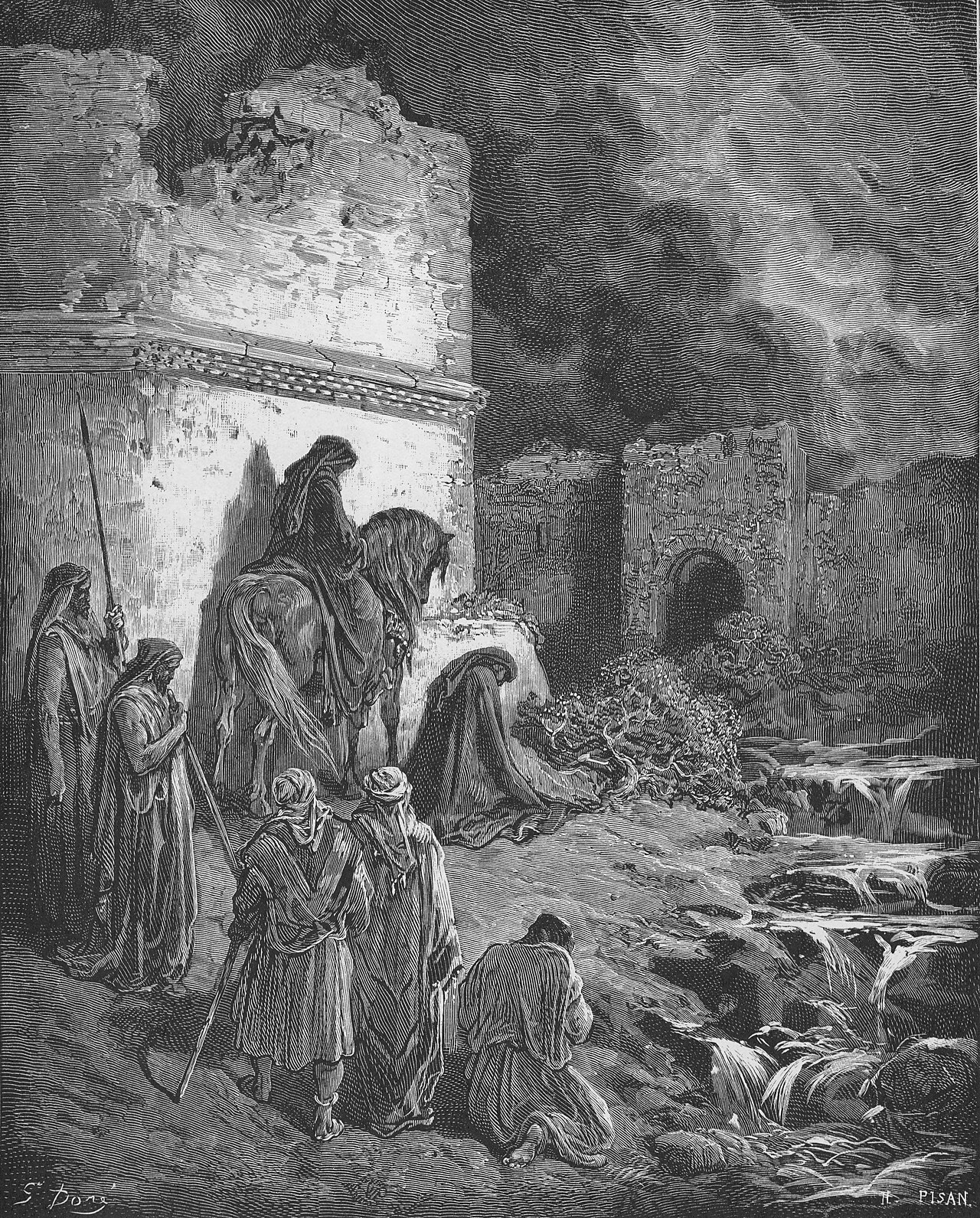
in Nehemiah 13Once or twice, the merchants and those who sell all kinds of goods camped outside Jerusalem,
BSB
The same verse in ASV and KJV ▾
ASV
So the merchants and sellers of all kind of wares lodged without Jerusalem once or twice.
KJV
So the merchants and sellers of all kind of ware lodged without Jerusalem once or twice.
⋯
This verse in Nehemiah 13
Commentary
5 notes on this verseFor the merchants and sellers of all kind of ware,.... The Tyrians particularly, Neh 13:16 lodged without Jerusalem once or twice; one sabbath day or two, not being able to get into the city, such strict watch and care being taken to keep the gates shut; this they did, hoping the Jews would come out to them and buy their goods, though they were not admitted to bring them within the city.
This site's exposition
I ordered that the gates be shut
on Nehemiah 13:19-20
Then comes enforcement: he posts his own servants "so that no load could enter on the Sabbath day" (13:19). Turned away, the merchants "camped outside Jerusalem" once or twice rather than lose the trade.
This site's exposition
camped outside Jerusalem
Gill takes these merchants as chiefly the Tyrians of verse 16, shut out and camping in hope that buyers would come out to them. Barnes sees their impatience for the gates to open. It happened once or twice before Nehemiah's warning ended it.
The record, by era
The Nineteenth Century2 voices
A commentator
Jamieson, Fausset & Brown1802–1910
Commentary Critical and Explanatory on the Whole Bible (1871)
proposed
Nehemiah took the decisive step of ordering the city gates to be shut, and not to be opened, till the Sabbath was past; and in order to ensure the faithful execution of this order, he stationed some of his own servants as guards, to prevent the introduction of any commodities on that day.
So the merchants - lodged without Jerusalem - They exposed their wares for sale on the outside of the walls.
The words behind it
9 Hebrew wordsEvery Hebrew word of this verse in the order it stands, with what it means and the door to its own study. The last column counts the times a word stands in the whole Bible: the rarer the word, the more the places it appears belong together.
| Hebrew | Sound | Meaning | Word study | In the Bible |
|---|---|---|---|---|
| וַיָּלִ֨ינוּ | vaiyalinu | and they passed [the] night | H3885 → | 84 times |
| הָרֹכְלִ֜ים | harokhelim | the traders | H7402 → | 17 times |
| וּמֹכְרֵ֧י | umokherei | and [the] sellers of | H4376 → | 80 times |
| כָל־ | khol- | every | H3605 → | 5413 times |
| מִמְכָּ֛ר | mikar | merchandise | H4465 → | |
| מִח֥וּץ | michutz | from [the] outside | H2351 → | |
| לִירוּשָׁלִָ֖ם | lirushalim | of Jerusalem | H3389 → | 643 times |
| פַּ֥עַם | paam | a time | H6471 → | 118 times |
| וּשְׁתָּֽיִם׃ | ushetayim | and two [times] | H8147 → | 768 times |
וַיָּלִ֨ינוּand they passed [the] night
vaiyalinuH3885 →84 times
הָרֹכְלִ֜יםthe traders
harokhelimH7402 →17 times
וּמֹכְרֵ֧יand [the] sellers of
umokhereiH4376 →80 times
כָל־every
khol-H3605 →5413 times
מִמְכָּ֛רmerchandise
mikarH4465 →
מִח֥וּץfrom [the] outside
michutzH2351 →
לִירוּשָׁלִָ֖םof Jerusalem
lirushalimH3389 →643 times
פַּ֥עַםa time
paamH6471 →118 times
וּשְׁתָּֽיִם׃and two [times]
ushetayimH8147 →768 times
A shaded row is a word that stands 400 times or fewer in the Bible.
Where this verse is studied
On this page
Studies3
On this verse
On this chapter
About Nehemiah
Who and where
1 name in this verse with a page on the site.
This page draws on Adam Clarke, Commentary on the Bible; Albert Barnes, Notes, Explanatory and Practical, on the Old and New Testaments (1832-1869); Jamieson Fausset and Brown, Commentary Critical and Explanatory on the Whole Bible; Jamieson, Fausset & Brown, Commentary Critical and Explanatory on the Whole Bible; John Gill, Exposition of the Old Testament (1748-1763) and W. F. Adeney, Ezra, Nehemiah and Esther (Expositor's Bible).