
Nehemiah 13:19
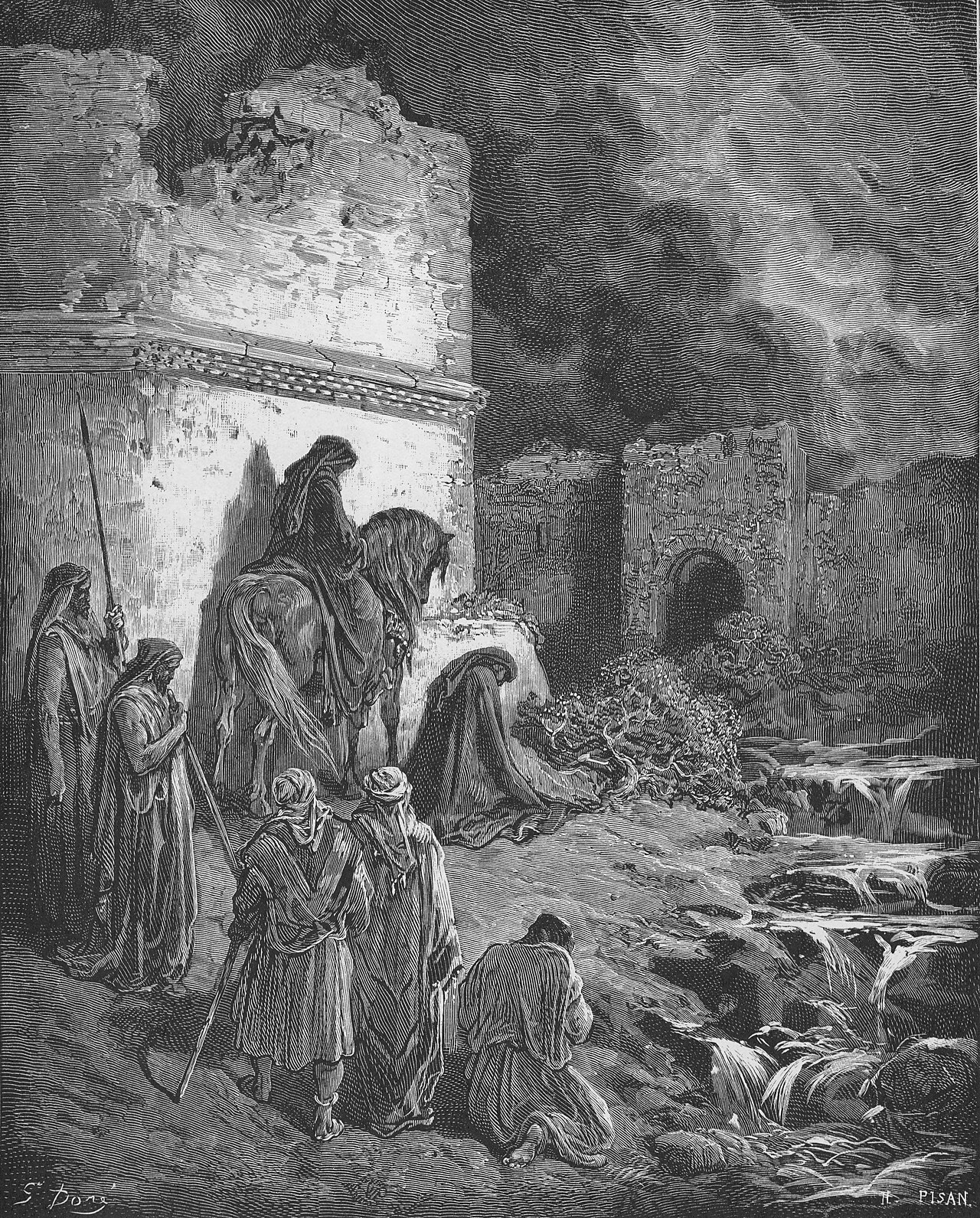
in Nehemiah 13When the evening shadows began to fall on the gates of Jerusalem, just before the Sabbath, I ordered that the gates be shut and not opened until after the Sabbath. I posted some of my servants at the gates so that no load could enter on the Sabbath day.
BSB
The same verse in ASV and KJV ▾
ASV
And it came to pass that, when the gates of Jerusalem began to be dark before the sabbath, I commanded that the doors should be shut, and commanded that they should not be opened till after the sabbath: and some of my servants set I over the gates, that there should no burden be brought in on the sabbath day.
KJV
And it came to pass, that when the gates of Jerusalem began to be dark before the sabbath, I commanded that the gates should be shut, and charged that they should not be opened till after the sabbath: and some of my servants set I at the gates, that there should no burden be brought in on the sabbath day.
⋯
This verse in Nehemiah 13
Commentary
7 notes on this verseA commentator
Albert Barnes1798–1870
Notes, Explanatory and Practical, on the Old and New Testaments (1832-1869)
The gates were closed at the sunset of the day before the Sabbath; since the Sabbath was regarded as commencing on the previous evening.
This site's exposition
I ordered that the gates be shut
on Nehemiah 13:19-20
Then comes enforcement: he posts his own servants "so that no load could enter on the Sabbath day" (13:19). Turned away, the merchants "camped outside Jerusalem" once or twice rather than lose the trade.
The record, by era
The Medieval Church1 voice
Therefore, it happened, when the gates of Jerusalem rested on the Sabbath day, etc. If our conscience, when purified from vices, rejoices in the indwelling of God, it can rightly be called Jerusalem. What are these gates of Jerusalem, but the senses of our body, …
The Puritans and the Awakening2 voices
Those that came in to worship in the courts of the temple were no doubt admitted to pass and repass, but none that came to sell goods; they were forced to lodge without the city (
quarantine:debris (2026-07-29) — unbalanced-parens
And it came to pass, that when the gates of Jerusalem began to be dark before the sabbath,....
The Nineteenth Century2 voices
A commentator
Jamieson, Fausset & Brown1802–1910
Commentary Critical and Explanatory on the Whole Bible (1871)
proposed
Nehemiah took the decisive step of ordering the city gates to be shut, and not to be opened, till the Sabbath was past; and in order to ensure the faithful execution of this order, he stationed some of his own servants as guards, to prevent the introduction of any commodities on that day.
When the gates - began to be dark - After sunset on Friday evening he caused the gates to be shut, and kept them shut all the Sabbath; and, as he could not trust the ordinary officers, he set some of his own servants to watch the gates, that no person might enter for the purpose of traffic.
The words behind it
26 Hebrew wordsEvery Hebrew word of this verse in the order it stands, with what it means and the door to its own study. The last column counts the times a word stands in the whole Bible: the rarer the word, the more the places it appears belong together.
| Hebrew | Sound | Meaning | Word study | In the Bible |
|---|---|---|---|---|
| וַיְהִ֡י | vayhi | and it was | H1961 → | 3559 times |
| כַּאֲשֶׁ֣ר | kaasher | just when | H834 → | 5497 times |
| צָֽלֲלוּ֩ | tzalalu | they became dark | H6751 → | |
| שַׁעֲרֵ֨י | shaarei | [the] gates of | H8179 → | 374 times |
| יְרוּשָׁלִַ֜ם | yerushalim | Jerusalem | H3389 → | 643 times |
| לִפְנֵ֣י | lifnei | <to> before | H6440 → | 2123 times |
| הַשַּׁבָּ֗ת | hashabat | the sabbath | H7676 → | 110 times |
| וָאֹֽמְרָה֙ | vaomerah | and I said ! | H559 → | 5305 times |
| וַיִּסָּגְר֣וּ | vaiyisageru | and they were closed | H5462 → | |
| הַדְּלָת֔וֹת | hadelatot | the doors | H1817 → | 88 times |
| וָאֹ֣מְרָ֔ה | vaomerah | and I said ! | H559 → | 5305 times |
| אֲשֶׁר֙ | ʾasher | that | H834 → | 5497 times |
| לֹ֣א | lo' | not | H3808 → | 5168 times |
| יִפְתָּח֔וּם | yiftachum | people will open them | H6605 → | 144 times |
| עַ֖ד | ʾad | until | H5704 → | 1261 times |
| אַחַ֣ר | ʾachar | after | H310 → | 715 times |
| הַשַּׁבָּ֑ת | hashabat | the sabbath | H7676 → | 110 times |
| וּמִנְּעָרַ֗י | uminearai | and some of servants my | H5288 → | 239 times |
| הֶֽעֱמַ֙דְתִּי֙ | heemadti | I stationed | H5975 → | 521 times |
| עַל־ | ʾal- | at | H5921 → | 5755 times |
| הַשְּׁעָרִ֔ים | hashearim | the gates | H8179 → | 374 times |
| לֹא־ | lo'- | not | H3808 → | 5168 times |
| יָב֥וֹא | yavo' | it will come | H935 → | 2568 times |
| מַשָּׂ֖א | masa' | a load | H4853 → | |
| בְּי֥וֹם | beyom | on [the] day of | H3117 → | 2304 times |
| הַשַּׁבָּֽת׃ | hashabat | the sabbath | H7676 → | 110 times |
וַיְהִ֡יand it was
vayhiH1961 →3559 times
כַּאֲשֶׁ֣רjust when
kaasherH834 →5497 times
צָֽלֲלוּ֩they became dark
tzalaluH6751 →
שַׁעֲרֵ֨י[the] gates of
shaareiH8179 →374 times
יְרוּשָׁלִַ֜םJerusalem
yerushalimH3389 →643 times
לִפְנֵ֣י<to> before
lifneiH6440 →2123 times
הַשַּׁבָּ֗תthe sabbath
hashabatH7676 →110 times
וָאֹֽמְרָה֙and I said !
vaomerahH559 →5305 times
וַיִּסָּגְר֣וּand they were closed
vaiyisageruH5462 →
הַדְּלָת֔וֹתthe doors
hadelatotH1817 →88 times
וָאֹ֣מְרָ֔הand I said !
vaomerahH559 →5305 times
אֲשֶׁר֙that
ʾasherH834 →5497 times
לֹ֣אnot
lo'H3808 →5168 times
יִפְתָּח֔וּםpeople will open them
yiftachumH6605 →144 times
עַ֖דuntil
ʾadH5704 →1261 times
אַחַ֣רafter
ʾacharH310 →715 times
הַשַּׁבָּ֑תthe sabbath
hashabatH7676 →110 times
וּמִנְּעָרַ֗יand some of servants my
uminearaiH5288 →239 times
הֶֽעֱמַ֙דְתִּי֙I stationed
heemadtiH5975 →521 times
עַל־at
ʾal-H5921 →5755 times
הַשְּׁעָרִ֔יםthe gates
hashearimH8179 →374 times
לֹא־not
lo'-H3808 →5168 times
יָב֥וֹאit will come
yavo'H935 →2568 times
מַשָּׂ֖אa load
masa'H4853 →
בְּי֥וֹםon [the] day of
beyomH3117 →2304 times
הַשַּׁבָּֽת׃the sabbath
hashabatH7676 →110 times
A shaded row is a word that stands 400 times or fewer in the Bible.
The walk
8 stopsEach card is a verse this one points to, and under it the verses that one points to in turn. Where several paths arrive at the same place, that place is listed first: the text keeps returning to it.
Through
Leviticus 23:22When you reap the harvest of your land, do not reap all the way to the edges of your field or gather the gleanings of your harvest. Leave them for the poor and the…
it leads to
- Leviticus 19:9–10
When you reap the harvest of your land, you are not to reap to the very edges of your field or gather the gleanings of your harvest.
- Deuteronomy 24:19–21
If you are harvesting in your field and forget a sheaf there, do not go back to get it. It is to be left for the foreigner, the fatherless, and the widow, so that…
- Isaiah 58:10
and if you give yourself to the hungry and satisfy the afflicted soul, then your light will go forth in the darkness, and your night will be like noonday.
- Proverbs 11:24–25
One gives freely, yet gains even more; another withholds what is right, only to become poor.
- 2 Corinthians 9:5–12
So I thought it necessary to urge the brothers to visit you beforehand and make arrangements for the bountiful gift you had promised. This way, your gift will be prepared generously and not begrudgingly.
- Leviticus 19:9–10
Through
Leviticus 23:32It will be a Sabbath of complete rest for you, and you shall humble yourselves. From the evening of the ninth day of the month until the following evening you are to keep your…
it leads to
- Matthew 11:28–30
Come to Me, all you who are weary and burdened, and I will give you rest.
- Psalms 35:13
Yet when they were ill, I put on sackcloth; I humbled myself with fasting, but my prayers returned unanswered.
- Psalms 69:10–11
I wept and fasted, but it brought me reproach.
- Matthew 11:28–30
Where this verse is studied
On this page
Studies3
On this verse
On this chapter
About Nehemiah
Who and where
1 name in this verse with a page on the site.
This page draws on Adam Clarke, Commentary on the Bible; Albert Barnes, Notes, Explanatory and Practical, on the Old and New Testaments (1832-1869); Bede, Commentary on Ezra and Nehemiah; Jamieson Fausset and Brown, Commentary Critical and Explanatory on the Whole Bible; Jamieson, Fausset & Brown, Commentary Critical and Explanatory on the Whole Bible; John Gill, Exposition of the Old Testament (1748-1763); Matthew Henry, Commentary on the Whole Bible and W. F. Adeney, Ezra, Nehemiah and Esther (Expositor's Bible).