
Matthew 2:14
in Matthew 2So he got up, took the Child and His mother by night, and withdrew to Egypt,
BSB
The same verse in ASV and KJV ▾
ASV
And he arose and took the young child and his mother by night, and departed into Egypt;
KJV
When he arose, he took the young child and his mother by night, and departed into Egypt:
⋯
This verse in Matthew 2
Commentary
20 notes on this verseEgypt full of idols; for after this enquiry for Him among the Jews, Christ leaving Judæa goes to be cherished among nations given to the vainest superstitions.
This site's exposition
flee to Egypt
on Matthew 2:13-15
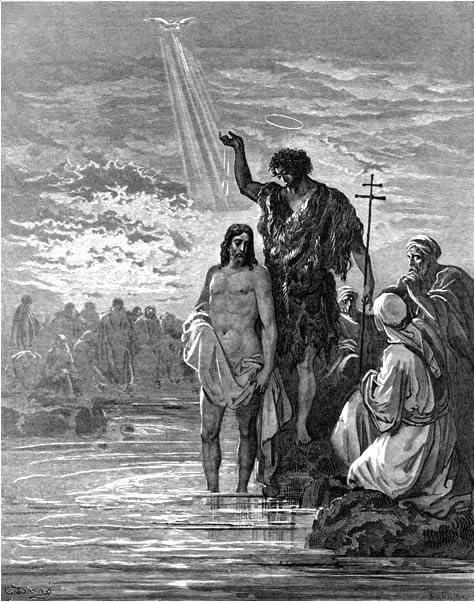
The command to "flee to Egypt" reverses the oldest road in Israel's memory, and verse 15 names the reversal: "Out of Egypt I called My Son." In Hosea 11:1 the son is Israel in the exodus, and Matthew applies it to Jesus, the true Israel, who goes into Egypt under a king who kills children and comes out at God's call. The pattern runs on through the water at 3:13-17 and the forty days at 4:1-11.
This site's exposition
by night, and withdrew to Egypt
Albert Barnes reads the night departure as prompt obedience that also hid the family from pursuit. Charles Spurgeon recalls that Egypt had often sheltered the seed of Abraham, from Abraham in the famine to Joseph and the whole family of Jacob. Hilary of Poitiers notes that the land was full of idols.
The record, by era
The Church Fathers5 voices
(Serm. 218. App.) Hear the sacrament of a great mystery. Moses before had shut up the light of day from the traitors the Egyptians; Christ by going down thither brought back light to them that sate in darkness. He fled that he might enlighten them, not that he might escape his foes. The miserable tyrant supposed that by the Saviour's coming he should be thrust from his royal throne. But it was not so; Christ came not to hurt others' dignity, but to bestow His own on others.
Christ promised that he would come incarnate, that he would go through the phases of life, that he would announce the glory of the kingdom of heaven, that he would proclaim the way of faith and that by the power of his word alone he …
In Joseph is figured the order of preachers, in Mary Holy Scripture; by the Child the knowledge of the Saviour; by the cruelty of Herod the persecution which the Church suffered in Jerusalem; by Joseph's flight into Egypt the passing of the preachers to the unbelieving Gentiles, (for Egypt signifies darkness;) by the time that he abode in Egypt the space of time between the ascension of the Lord and the coming of Anti Christ; by Herod's death the extinction of jealousy in the hearts of the Jews.
When he takes the Child and His mother to go into Egypt, it is in the night and darkness, when to return into Judæa, the Gospel speaks of no light, no darkness.
But why into Egypt? The Lord, who keepeth not His anger for ever, remembered the woes He had brought upon Egypt, and therefore sent His Son thither, and gives it this sign of great reconciliation, that with this one remedy He might heal the ten plagues of Egypt, and the nation that had been the persecutor of this first-born people, might be the guardian of His first-born Son. As formerly they had cruelly tyrannized, now they might devoutly serve; nor go to the Red Sea to be drowned, but be called to the waters of baptism to receive life. The straitness of every persecution may be called night—the relief from it in like manner, day.
12 more voices on this verse
The Church Fathers2 voices
(Vers. 13, 14.) Behold, an angel of the Lord appeared to Joseph in a dream, saying: Rise and take the child and his mother, and flee into Egypt, and stay there until I tell you. For it will come to pass that Herod will seek the child to destroy him. So Joseph rose and took the child and his mother by night, and went to Egypt; and he stayed there until the death of Herod.
Rather, however, both the people and the patriarch, going down thither, and coming up thence, were together completing the type of this His return. Thus, as they went down to avoid death by famine, so He death by conspiracy. But whereas they on their arrival were for the time delivered from the famine, this man, when He had gone down, sanctified the whole land, by setting His foot thereon. At least it is observable how, in the midst of His humiliations, the tokens of His Godhead are disclosed. Thus, first of all, the angel saying, "Flee into Egypt," did not promise to journey with them, either in their descent or return; intimating that they have a great fellow-traveller, the Child that had been born; such an one as actually changed all things immediately on His appearing, and wrought so that His enemies should minister in many ways to this Economy. Thus magi and barbarians, leaving the superstition of their fathers, are come to worship: thus Augustus ministers to the birth at Bethlehem by the decree for the taxing; Egypt receives and preserves Him, driven from His home, and plotted against, and obtains a sort of first impulse towards her union unto Him; so that when in after-time she should hear Him preached by the apostles, she might have this at least to glory of, as having received Him first. And yet this privilege did belong unto Palestine alone; but the second proved more fervent than the first.
The Medieval Church4 voices
And he arose and took the young Child and His mother by night, and departed into Egypt; and was there until the death of Herod: that it might be fulfilled which was spoken by the Lord through the prophet, saying, "Out of Egypt have I …
(Hom. in. Nat. Innocent.) The flight into Egypt signifies that the elect are often by the wickedness of the bad driven from their homes, or sentenced to banishment. Thus He, who, we shall see below, gave the command to His own, When they shall persecute you in one city, flee ye to another, first practised what He enjoined, as a man flying before the face of man on earth. He whom but a little before a star had proclaimed to the Magi to be worshipped as from heaven.
Here Matthew omits the day of purification when the first-born must be presented in the Temple with a lamb, or a pair of turtle doves, or pigeons. Their fear of Herod did not make them bold to transgress the Law, that they should not present the Child in the temple. As soon then as the rumour concerning the Child begins to be spread abroad, the Angel is sent to bid Joseph carry Him into Egypt. For when the true light withdraws, they who hate the light are in darkness, when it returns they are again enlightened.
(14) And he rose. Here is mentioned the execution of the angel's command both as to the flight and the length of the stay. He rose and took the child and his mother. The time is mentioned, when he says at night, on account of …
The Puritans and the Awakening1 voice
When he arose, he took the young child and his mother,.... That is, as soon as he awoke out of sleep, and rose from his bed, he did as he was commanded, he prepared for his journey; and very opportunely had the wise men presented their gifts; the gold they brought served to defray the expense of this journey, and which no doubt was so ordered by divine providence for this purpose.
The Nineteenth Century5 voices
EGYPT occupies a very singular position towards Israel. It was often the shelter of the seed of Abraham. Abraham, himself, went there when there was a famine in the land of his sojourn. To Egypt, Joseph was taken that he might escape from the death intended for him by his envious brothers and become the stepfather of the house of Israel. Into Egypt, as we all right well know, went the whole family of Jacob—and there they sojourned in a strange land. There Moses acquired the learning which was so useful to him.
Let us observe in this passage how true it is that the rulers of this world are seldom friendly to the cause of God . The Lord Jesus comes down from heaven to save sinners, and at once we are told that Herod the king seeks to destroy him. Greatness and riches are a perilous possession for the soul. Those who seek to have them know not what they seek. They lead men into many temptations. They are likely to fill the heart with pride, and to chain the affections down to things below.
Let us observe in this passage how true it is that the rulers of this world are seldom friendly to the cause of God . The Lord Jesus comes down from heaven to save sinners, and at once we are told that Herod the king seeks to destroy him. Greatness and riches are a perilous possession for the soul. Those who seek to have them know not what they seek. They lead men into many temptations. They are likely to fill the heart with pride, and to chain the affections down to things below. “Not many mighty; not many noble are called.”“How hardly shall they that have riches enter into the kingdom of God.” ( 1 Corinthians 1:26 ; Mark 10:23 ) Do we envy the rich and great? Does our heart sometimes say, “Oh, that I had their place, and rank, and substance?” Let us beware of giving way to such feelings. The very wealth which we admire may be gradually sinking its possessors down into hell. A little more money might be our ruin. Like Herod, we might run into every excess of wickedness and cruelty. “Take heed and beware of covetousness.” “Be content with such things as ye have.” ( Luke 12:15 ; Hebrews 13:5 ) Do we think that Christ’s cause depends on the power and patronage of princes? We are mistaken. They have seldom done much for the advancement true religion; they have far more frequently been the enemies of the truth. “Put not your trust in princes.” ( Psalm 146:3 ) They who are like Herod are many. They who are like Josiah and Edward the Sixth of England are few. Let us observe for another thing how the Lord Jesus was a “Man of Sorrows,” even from His infancy . Trouble awaits Him as soon as He enters into the world. His life is in danger from Herod’s hatred. His mother and Joseph are obliged to take him away by night, and “flee into Egypt.”It was only a type and figure of all his experience upon earth.
EGYPT occupies a very singular position towards Israel. It was often the shelter of the seed of Abraham. Abraham, himself, went there when there was a famine in the land of his sojourn. To Egypt, Joseph was taken that he might escape from the death intended for him by his envious brothers and become the stepfather of the house of Israel. Into Egypt, as we all right well know, went the whole family of Jacob—and there they sojourned in a strange land. There Moses acquired the learning which was so useful to him. It was out of the spoils of Egypt that the furniture of the Tabernacle was made—as if to show that God intended to take out of heathen hands an offering to His own Glory—just as, afterwards, the timber of the Temple was hewn by Hiram, the Phoenician, that the Gentiles might have a share in building the Temple in token that they would, one day, be made fellow heirs with Israel. But while Egypt was, for a while, the shelter of the house of Israel, it became, later, the house of bondage and a country fraught with danger to the very existence of the elect nation! There was a very useful purpose to be served by their going down into Egypt—that they might be consolidated into a nation and might acquire many useful arts which they could not have learned while they were wandering about in Palestine. The lesson was valuable, but it was learned in much misery. They had to smart beneath the lash and faint beneath their labor—the iron bondage entered into Israel's soul so that an exceedingly great and bitter cry went up to Heaven.
A commentator
Albert Barnes1798–1870
Notes, Explanatory and Practical, on the Old and New Testaments (1832-1869)
proposed
When he arose - Having arisen; that is, he arose immediately after awaking from his dream, and prepared at once to obey the command, By night - Thus he showed his prompt obedience to the command, and at the same time so concealed his departure as to render himself and Mary and the child safe from pursuit.
The words behind it
15 Greek wordsEvery Greek word of this verse in the order it stands, with what it means and the door to its own study. The last column counts the times a word stands in the whole Bible: the rarer the word, the more the places it appears belong together.
| Greek | Sound | Meaning | Word study | In the Bible |
|---|---|---|---|---|
| ὁ | ho | <the> | G3588 → | 19766 times |
| δὲ | de | And | G1161 → | 2765 times |
| ἐγερθεὶς | egertheis | having arisen | G1453 → | 142 times |
| παρέλαβεν | parelaben | he took | G3880 → | 49 times |
| τὸ | to | the | G3588 → | 19766 times |
| παιδίον | paidion | Child | G3813 → | 51 times |
| καὶ | kai | and | G2532 → | 9120 times |
| τὴν | ten | the | G3588 → | 19766 times |
| μητέρα | metera | mother | G3384 → | 83 times |
| αὐτοῦ | autou | of Him | G846 → | 5565 times |
| νυκτὸς | nuktos | by night | G3571 → | 61 times |
| καὶ | kai | and | G2532 → | 9120 times |
| ἀνεχώρησεν | anechoresen | withdrew | G402 → | 14 times |
| εἰς | eis | into | G1519 → | 1755 times |
| Αἴγυπτον, | aigupton | Egypt, | G125 → | 25 times |
ὁ<the>
hoG3588 →19766 times
δὲAnd
deG1161 →2765 times
ἐγερθεὶςhaving arisen
egertheisG1453 →142 times
παρέλαβενhe took
parelabenG3880 →49 times
τὸthe
toG3588 →19766 times
παιδίονChild
paidionG3813 →51 times
καὶand
kaiG2532 →9120 times
τὴνthe
tenG3588 →19766 times
μητέραmother
meteraG3384 →83 times
αὐτοῦof Him
autouG846 →5565 times
νυκτὸςby night
nuktosG3571 →61 times
καὶand
kaiG2532 →9120 times
ἀνεχώρησενwithdrew
anechoresenG402 →14 times
εἰςinto
eisG1519 →1755 times
Αἴγυπτον,Egypt,
aiguptonG125 →25 times
A shaded row is a word that stands 400 times or fewer in the Bible.
The walk
8 stopsEach card is a verse this one points to, and under it the verses that one points to in turn. Where several paths arrive at the same place, that place is listed first: the text keeps returning to it.
Through
Matthew 1:24When Joseph woke up, he did as the angel of the Lord had commanded him, and embraced Mary as his wife.
it leads to
- James 2:21–26
Was not our father Abraham justified by what he did when he offered his son Isaac on the altar?
- John 15:14
You are My friends if you do what I command you.
- Exodus 40:27
and he burned fragrant incense on it, just as the LORD had commanded him.
- Hebrews 11:7–8
By faith Noah, when warned about things not yet seen, in godly fear built an ark to save his family. By faith he condemned the world and became heir of the righteousness that comes…
- Exodus 40:32
They washed whenever they entered the Tent of Meeting or approached the altar, just as the LORD had commanded Moses.
- James 2:21–26
Through
Acts 26:21For this reason the Jews seized me in the temple courts and tried to kill me.
it leads to
- Acts 21:30–31
The whole city was stirred up, and the people rushed together. They seized Paul and dragged him out of the temple, and at once the gates were shut.
- Acts 21:27
When the seven days were almost over, some Jews from the province of Asia saw Paul at the temple. They stirred up the whole crowd and seized him,
- Acts 22:22
The crowd listened to Paul until he made this statement. Then they lifted up their voices and shouted, “Rid the earth of him! He is not fit to live!”
- Acts 21:30–31
Where this verse is studied
On this page
About Matthew
Who and where
1 name in this verse with a page on the site.
This page draws on 20 works. Open the list of works
This page draws on Albert Barnes, Notes on the New Testament; Albert Barnes, Notes, Explanatory and Practical, on the Old and New Testaments (1832-1869); Augustine of Hippo, Catena Aurea by Aquinas; Bede, Catena Aurea by Aquinas; Carl Friedrich Keil, Biblical Commentary on the Minor Prophets, on Hosea 11; Charles Spurgeon, The Metropolitan Tabernacle Pulpit, Sermon No. 1675; Charles Spurgeon, The Metropolitan Tabernacle Pulpit, Sermon No. 1675: “Out Of Egypt” (lightly modernized text, CCEL edition); Hilary of Poitiers, Catena Aurea by Aquinas; J.C. Ryle, Expository Thoughts on the Gospels: Matthew; Jamieson, Fausset & Brown, Commentary Critical and Explanatory on the Whole Bible; Jerome, Catena Aurea by Aquinas; Jerome, Commentary on Matthew; John Chrysostom, Homily on the Gospel of Matthew 8; John Gill, Exposition of the New Testament (1746-1748); Peter Chrysologus, SERMONS 150.10; Pseudo-Chrysostom, Catena Aurea by Aquinas; Rabanus Maurus, Catena Aurea by Aquinas; Remigius of Rheims, Catena Aurea by Aquinas; Theophylact of Ohrid, Commentary on Matthew and Thomas Aquinas, Commentary on Matthew.