
Leviticus 14:33
in Leviticus 14Then the LORD said to Moses and Aaron,
BSB
The same verse in ASV and KJV ▾
ASV
And Jehovah spake unto Moses and unto Aaron, saying,
KJV
And the Lord spake unto Moses and unto Aaron, saying,
⋯
This verse in Leviticus 14
Commentary
3 notes on this verseA commentator
Albert Barnes1798–1870
Notes, Explanatory and Practical, on the Old and New Testaments (1832-1869)
This section is separated from that on leprosy in clothing Lev 13:47-59 with which it would seem to be naturally connected, and is placed last of all the laws concerning leprosy, probably on account of its being wholly prospective. While the Israelites were in the wilderness, the materials of their dwellings were of nearly the same nature as those of their clothing, and would be liable to the same sort of decay. They were therefore included under the same law.
This site's exposition
spake unto Moses and unto Aaron
on Leviticus 14:33-36
This law is dated forward to a country Israel has not entered, since tents in the wilderness have no stone walls to hold a plague. The LORD says I put the plague of leprosy in a house of the land of your possession, and it is the one place in these two chapters where the affliction is claimed in the first person. Jamieson, Fausset and Brown record that some readers take that as a judgment sent on the owner while others read it as the ordinary way Scripture speaks of what God permits, and Adam Clarke takes the second reading. The house is emptied before the priest walks in, so its contents are spared, and nothing inside counts unclean until he has looked and spoken.
The record, by era
The Puritans and the Awakening1 voice
And the Lord spake unto Moses and unto Aaron,.... At the same time as the above laws were delivered concerning the leper, and the cleansing of him, or however immediately upon that; the affair of the leprosy of houses being what belonged to the priest to examine into and cleanse from: saying; as follows.
The words behind it
7 Hebrew wordsEvery Hebrew word of this verse in the order it stands, with what it means and the door to its own study. The last column counts the times a word stands in the whole Bible: the rarer the word, the more the places it appears belong together.
| Hebrew | Sound | Meaning | Word study | In the Bible |
|---|---|---|---|---|
| וַיְדַבֵּ֣ר | vaydaber | and he spoke | H1696 → | 1141 times |
| יְהוָ֔ה | yahweh | Yahweh | H3068 → | 6520 times |
| אֶל־ | ʾel- | to | H413 → | 5510 times |
| מֹשֶׁ֥ה | mosheh | Moses | H4872 → | 765 times |
| וְאֶֽל־ | veel- | and to | H413 → | 5510 times |
| אַהֲרֹ֖ן | ʾaharon | Aaron | H175 → | 347 times |
| לֵאמֹֽר׃ | lemor | <to> saying | H559 → | 5305 times |
וַיְדַבֵּ֣רand he spoke
vaydaberH1696 →1141 times
יְהוָ֔הYahweh
yahwehH3068 →6520 times
אֶל־to
ʾel-H413 →5510 times
מֹשֶׁ֥הMoses
moshehH4872 →765 times
וְאֶֽל־and to
veel-H413 →5510 times
אַהֲרֹ֖ןAaron
ʾaharonH175 →347 times
לֵאמֹֽר׃<to> saying
lemorH559 →5305 times
A shaded row is a word that stands 400 times or fewer in the Bible.
Where this verse is studied
On this page
Studies1
About Leviticus
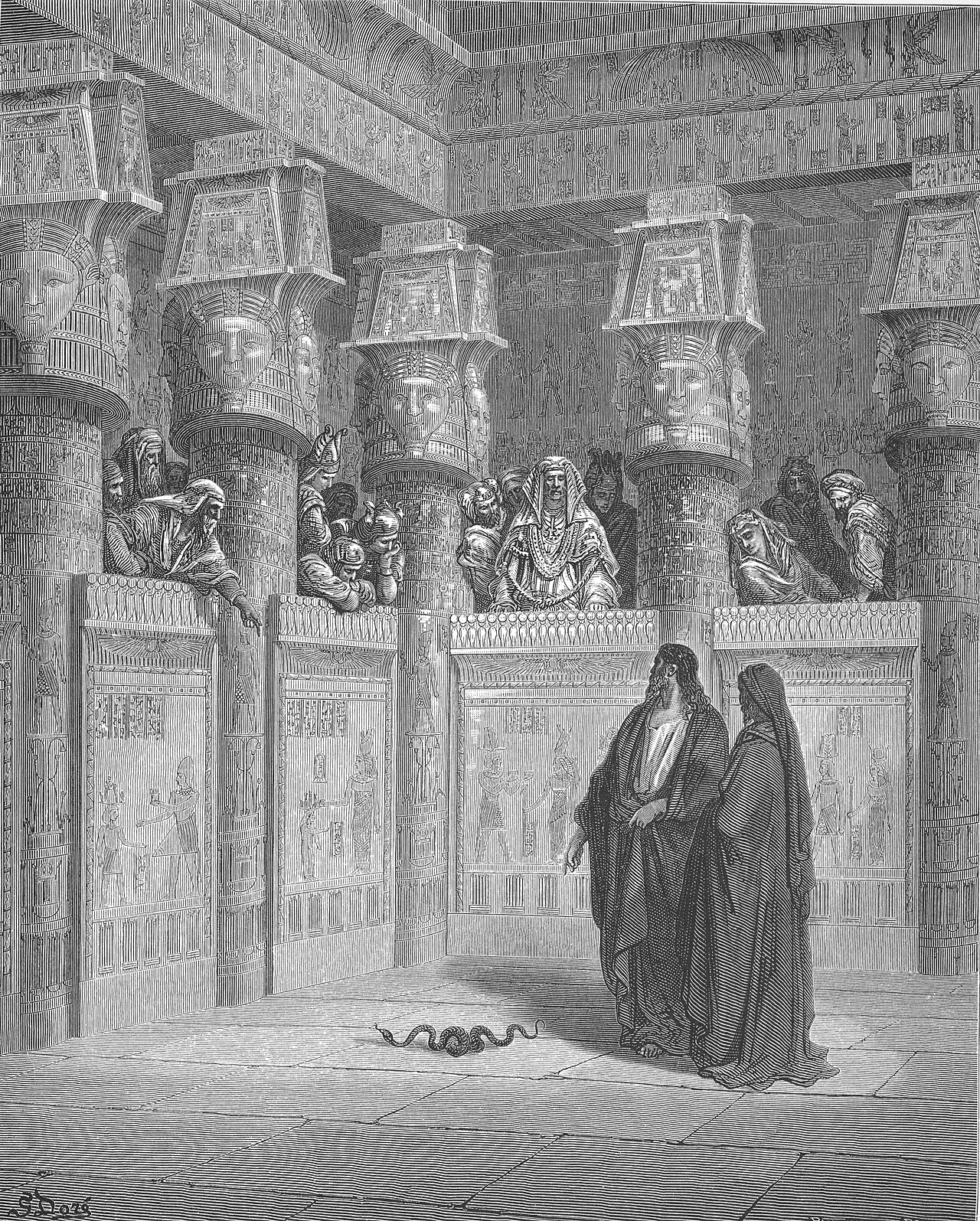
Who and where
2 names in this verse with a page on the site.
This page draws on Adam Clarke, Commentary on the Bible; Albert Barnes, Notes, Explanatory and Practical, on the Old and New Testaments (1832-1869); Jamieson, Fausset & Brown, Commentary Critical and Explanatory on the Whole Bible and John Gill, Exposition of the Old Testament (1748-1763).