
Judges 2:5
in Judges 2So they called that place Bochim and offered sacrifices there to the LORD.
BSB
The same verse in ASV and KJV ▾
ASV
And they called the name of that place Bochim: and they sacrificed there unto Jehovah.
KJV
And they called the name of that place Bochim: and they sacrificed there unto the Lord.
⋯
This verse in Judges 2
Commentary
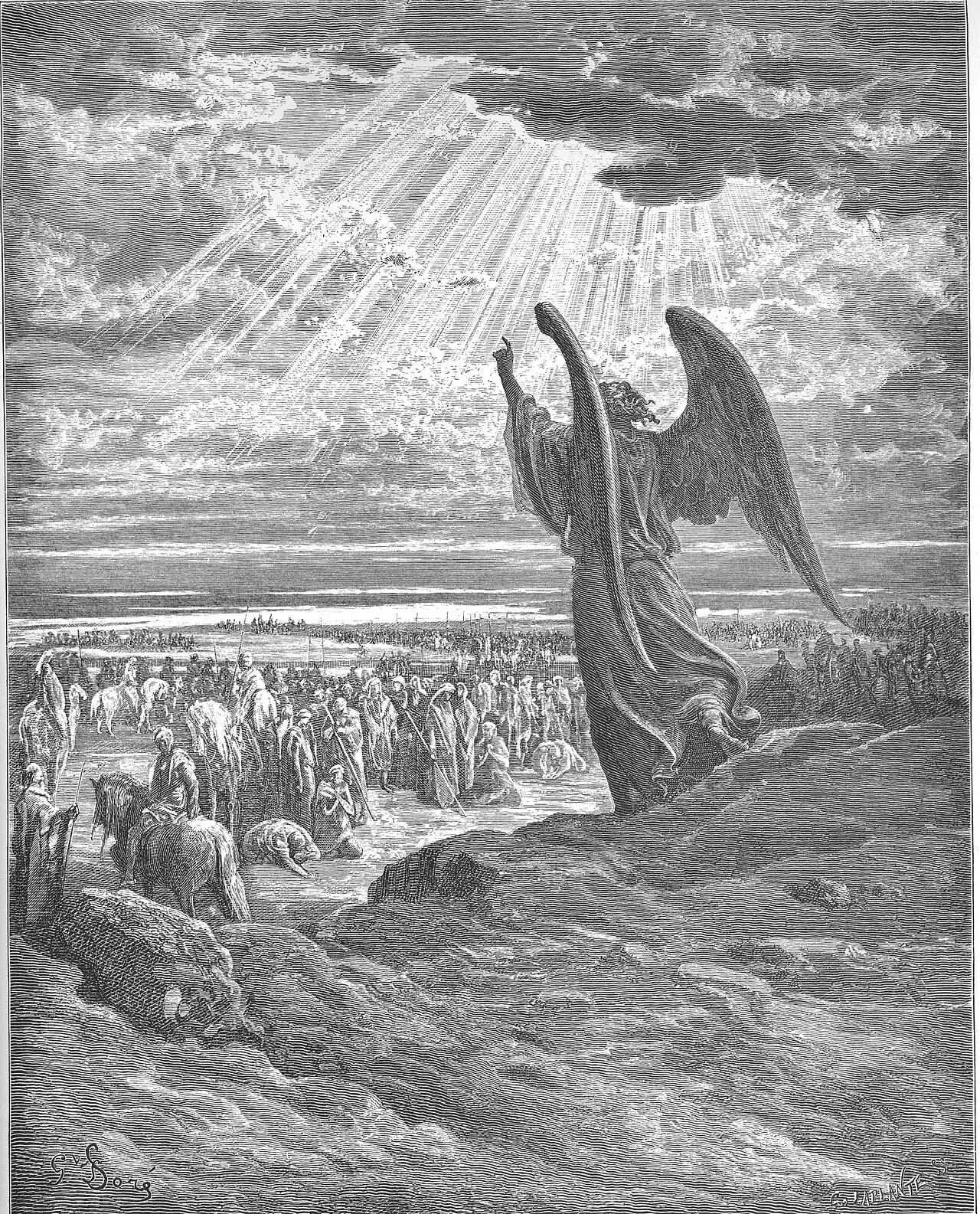
9 notes on this verseLet us consider where he has set his ascent: "In the valley of tears, in the place that he has appointed." We have read in the book of Judges that when the angel came and preached repentance to the people, saying, "You have abandoned the Lord, and the Lord shall abandon you," the Israelites wept aloud when they heard the threat; and that place was called the valley of tears. We have called attention to ancient history in order to avoid heresy.
This site's exposition
when the angel of the LORD spake these words
on Judges 2:4-5
They weep and they sacrifice, and the place is named Bochim, which means weepers. Nothing is said about throwing down an altar or breaking a league, which is what verse 2 charged them with failing to do. The book's first recorded response to God is grief without amendment, and chapter 3 begins the cycle anyway.
The record, by era
The Puritans and the Awakening3 voices
Bochim - That is, Weepers. They sacrificed - For the expiation of their sins, by which they had provoked God to this resolution.
And they called the name of that place Bochim,....
(2.) It gave occasion for a solemn sacrifice: They sacrificed there unto the Lord, having (as is supposed) met at Shiloh, where God's altar was. They offered sacrifice to turn away God's wrath, and to obtain his favour, and in token of their dedication of themselves to him, and to him only, making a covenant by this sacrifice.
The Nineteenth Century2 voices
A commentator
Albert Barnes1798–1870
Notes, Explanatory and Practical, on the Old and New Testaments (1832-1869)
Bochim - i. e. weepers. It was near Shechem, but the site is unknown. Compare the names given to places for similar reasons in Gen 35:8; Gen 50:11.
LET me give an outline of the chapter, that we may put the text into its proper setting. God had brought His people out of Egypt and divided Jordan that they might march through, dry-shod, into the land which He had promised to their fathers. He charged them to drive out the Canaanites, a race that had become so loathsome in God's sight that He decreed their destruction and appointed the tribes of Israel to be their executioners. It was for the good of the universal world that this pest-house should be broken up and that the filthy races should be destroyed—and God gave His people that charge to carry out. Those who quarrel with this arrangement should remember that this is not the only instance of aboriginal tribes being driven out by a superior race. Our Anglo-Saxon nation drove out the original inhabitants of this island, who survived only in the mountains of Wales and Cornwall and in the highlands of Scotland. It certainly will not be wise, on our part, as Anglo-Saxons, to condemn Israel for doing, under Divine command, what our forefathers did for their own aggrandizement. Alas, in more modern times, lands have been seized and nations extirpated by the white man without Divine warrant or reasonable excuse. We do not justify all this, but if any complain of Israel for obeying the sentence of God, let them first raise their voices against the driving out of ancient races by colonists of our own race! The order to slay the Canaanites had a second objective, namely, that Israel might dwell, alone, in the land and might keep themselves to themselves—the great nonconformists of the universe—separated from all the rest of mankind, both by residence and by manners, not following the customs of the nations round about them, or falling into their sins. That they might be sanctified they were to be separated.
2 more voices on this verse
The Nineteenth Century2 voices
LET me give an outline of the chapter, that we may put the text into its proper setting. God had brought His people out of Egypt and divided Jordan that they might march through, dry-shod, into the land which He had promised to their fathers. He charged them to drive out the Canaanites, a race that had become so loathsome in God's sight that He decreed their destruction and appointed the tribes of Israel to be their executioners.
They called the name of that place Bochim - The word בכים bochim signifies weepings or lamentations; and is translated by the Septuagint Κλαυθυων or Κλαυθυωνες, bewailings; and it is supposed that the place derived its name from these lamentations of the people. Some think the place itself, where the people were now assembled, was Shiloh, now named Bochim because of the above circumstance. It should be observed, that the angel speaks here in the person of God, by whom he was sent; as the prophets frequently do.
The words behind it
8 Hebrew wordsEvery Hebrew word of this verse in the order it stands, with what it means and the door to its own study. The last column counts the times a word stands in the whole Bible: the rarer the word, the more the places it appears belong together.
| Hebrew | Sound | Meaning | Word study | In the Bible |
|---|---|---|---|---|
| וַֽיִּקְרְא֛וּ | vaiyikreu | and they called | H7121 → | 733 times |
| שֵֽׁם־ | shem- | [the] name of | H8034 → | 864 times |
| הַמָּק֥וֹם | hamakom | the place | H4725 → | 401 times |
| הַה֖וּא | hahu' | <the> that | H1931 → | 1879 times |
| בֹּכִ֑ים | bokhim | Bokim | H1066 → | |
| וַיִּזְבְּחוּ־ | vaiyizbechu- | and they sacrificed | H2076 → | |
| שָׁ֖ם | sham | there | H8033 → | 834 times |
| לַֽיהוָֽה׃ פ | layahweh | to Yahweh | H3068 → | 6520 times |
וַֽיִּקְרְא֛וּand they called
vaiyikreuH7121 →733 times
שֵֽׁם־[the] name of
shem-H8034 →864 times
הַמָּק֥וֹםthe place
hamakomH4725 →401 times
הַה֖וּא<the> that
hahu'H1931 →1879 times
בֹּכִ֑יםBokim
bokhimH1066 →
וַיִּזְבְּחוּ־and they sacrificed
vaiyizbechu-H2076 →
שָׁ֖םthere
shamH8033 →834 times
לַֽיהוָֽה׃ פto Yahweh
layahwehH3068 →6520 times
A shaded row is a word that stands 400 times or fewer in the Bible.
The walk
8 stopsEach card is a verse this one points to, and under it the verses that one points to in turn. Where several paths arrive at the same place, that place is listed first: the text keeps returning to it.
Through
Judges 6:24So Gideon built an altar to the LORD there and called it The LORD Is Peace. To this day it stands in Ophrah of the Abiezrites.
it leads to
- Genesis 22:14
And Abraham called that place The LORD Will Provide. So to this day it is said, “On the mountain of the LORD it will be provided.”
- Exodus 17:15
And Moses built an altar and named it The LORD Is My Banner.
- Ezekiel 48:35
The perimeter of the city will be 18,000 cubits, and from that day on the name of the city will be: THE LORD IS THERE.”
- Judges 8:32
Later, Gideon son of Joash died at a ripe old age and was buried in the tomb of his father Joash in Ophrah of the Abiezrites.
- Genesis 22:14
Through
1 Samuel 7:9Then Samuel took a suckling lamb and offered it as a whole burnt offering to the LORD. He cried out to the LORD on behalf of Israel, and the LORD answered him.
it leads to
- Jeremiah 15:1
Then the LORD said to me: “Even if Moses and Samuel should stand before Me, My heart would not go out to this people. Send them from My presence, and let them go.
- Psalms 99:6
Moses and Aaron were among His priests; Samuel was among those who called on His name. They called to the LORD and He answered.
- Jeremiah 15:1
Through
Genesis 35:8Now Deborah, Rebekah’s nurse, died and was buried under the oak below Bethel. So Jacob named it Allon-bachuth.
it leads to
- Genesis 24:59
So they sent their sister Rebekah on her way, along with her nurse and Abraham’s servant and his men.
- Genesis 24:59
Through
Joshua 7:26And they heaped over Achan a large pile of rocks that remains to this day. So the LORD turned from His burning anger. Therefore that place is called the Valley of Achor to this…
it leads to
- Hosea 2:15
There I will give back her vineyards and make the Valley of Achor into a gateway of hope. There she will respond as she did in the days of her youth, as in the…
- Hosea 2:15
Where this verse is studied
On this page
About Judges
This page draws on Adam Clarke, Commentary on the Bible; Albert Barnes, Notes, Explanatory and Practical, on the Old and New Testaments (1832-1869); Charles Spurgeon, The Metropolitan Tabernacle Pulpit, Sermon No. 1680: “Bochim—Or, the Weepers” (lightly modernized text, CCEL edition); Jerome, HOMILIES ON THE PSALMS, ALTERNATE SERIES 63 (Ps 83); John Gill, Exposition of the Old Testament; John Gill, Exposition of the Old Testament (1748-1763); John Wesley, Explanatory Notes upon the Old Testament and Matthew Henry, Commentary on the Whole Bible.