
Judges 19:1
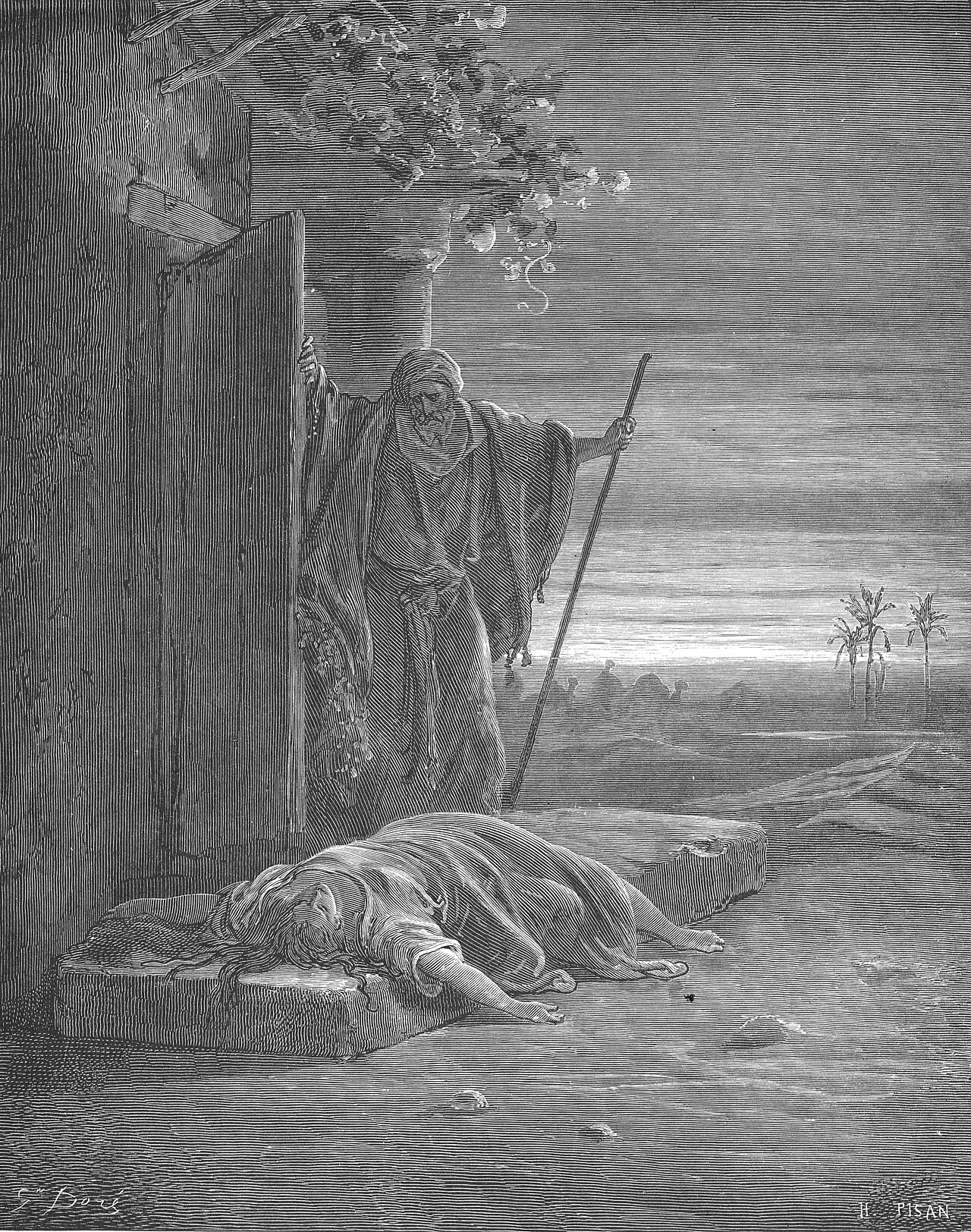
in Judges 19Now in those days, when there was no king in Israel, a Levite who lived in the remote hill country of Ephraim took for himself a concubine from Bethlehem in Judah.
BSB
The same verse in ASV and KJV ▾
ASV
And it came to pass in those days, when there was no king in Israel, that there was a certain Levite sojourning on the farther side of the hill-country of Ephraim, who took to him a concubine out of Beth-lehem-judah.
KJV
And it came to pass in those days, when there was no king in Israel, that there was a certain Levite sojourning on the side of mount Ephraim, who took to him a concubine out of Beth–lehem–judah.
⋯
This verse in Judges 19
Commentary
9 notes on this verseA commentator
Jamieson, Fausset & Brown1802–1910
Commentary Critical and Explanatory on the Whole Bible (1871)
It was no disreputable connection this Levite had formed; for a nuptial engagement with a concubine wife (though, as wanting in some outward ceremonies, it was reckoned a secondary or inferior relationship) possessed the true essence of marriage; it was not only lawful, but sanctioned by the example of many good men.
This site's exposition
when there was no king in Israel
on Judges 19:1-2
The formula “no king in Israel” falls at 17:6, 18:1, 19:1 and 21:25, bracketing the closing block at both ends. Chapter 17 sent a Levite of Bethlehem to Ephraim, and here a Levite of Ephraim takes a concubine from Bethlehem, reversing the pairing. The Hebrew says she was “unfaithful to him”, while the Septuagint says she was angry, the Vulgate that she left, and Josephus that she became estranged.
The record, by era
The Church Fathers2 voices
A Levite, more courageous than wealthy, lived in the region of Mount Ephrem, for his tribe was allotted a landed possession far removed in place of the right of inheritance. He took a wife from the tribe of Bethlehem of Judah. While they felt the first attraction of their love deeply and equally, he continued to burn with unbounded desire for his wife. Yet her ways were different. His passion for her intensified until he inwardly seethed with desire.
How full of pitiful traits is this story! A man, it says, a Levite, had taken to himself a wife, who I suppose was called a concubine from the word concubitus. She some time afterwards, as is likely to happen, offended at certain things, returned to her father and was with him four months.
The Puritans and the Awakening3 voices
25 ), and Phinehas was then high priest, ch. xx. These particular iniquities, the Danites' idolatry, and the Benjamites' immorality, let in that general apostasy, ch. iii. The abuse of the Levite's concubine is here very particularly related.
quarantine:debris (2026-07-29) — leading-citation-number+unbalanced-parens
And it came to pass in those days, when there was no king in Israel,....
He married a wife of Bethlehem-Judah. She is called his concubine, because she was not endowed, for perhaps he had nothing to endow her with, being himself a sojourner and not settled; but it does not appear that he had any other wife, and the margin calls her a wife, a concubine,
2 more voices on this verse
The Nineteenth Century2 voices
There was no king in Israel - All sorts of disorders are attributed to the want of civil government; justice, right, truth, and humanity, had fallen in the streets. Took to him a concubine - We have already seen that the concubine was a sort of secondary wife; and that such connections were not disreputable, being according to the general custom of those times. The word פילגש pilegesh, concubine, is supposed by Mr. Parkhurst to be compounded of פלג palag, “to divide, or share;” and נגש nagash, “to approach;” because the husband shared or divided his attention and affections between her and the real wife; from whom she differed in nothing material, except in her posterity not inheriting.
A commentator
Albert Barnes1798–1870
Notes, Explanatory and Practical, on the Old and New Testaments (1832-1869)
proposed
A concubine - See the margin. The name does not imply any moral reproach. A concubine was as much the man’s wife as the woman so called, though she had not the same rights. See Jdg 19:3-4.
The words behind it
20 Hebrew wordsEvery Hebrew word of this verse in the order it stands, with what it means and the door to its own study. The last column counts the times a word stands in the whole Bible: the rarer the word, the more the places it appears belong together.
| Hebrew | Sound | Meaning | Word study | In the Bible |
|---|---|---|---|---|
| וַיְהִי֙ | vayhi | and it was | H1961 → | 3559 times |
| בַּיָּמִ֣ים | baiyamim | in the days | H3117 → | 2304 times |
| הָהֵ֔ם | hahem | <the> those | H1992 → | 553 times |
| וּמֶ֖לֶךְ | umelekh | and [was] a king | H4428 → | 2525 times |
| אֵ֣ין | ʾein | there not | H369 → | 789 times |
| בְּיִשְׂרָאֵ֑ל | beyisrael | in Israel | H3478 → | 2507 times |
| וַיְהִ֣י׀ | vayhi | and he was | H1961 → | 3559 times |
| אִ֣ישׁ | ʾish | a man | H376 → | 1663 times |
| לֵוִ֗י | levi | a Levite | H3881 → | 291 times |
| גָּ֚ר | gar | sojourning | H1481 → | 97 times |
| בְּיַרְכְּתֵ֣י | beyarketei | in [the] remotest parts of | H3411 → | |
| הַר־ | har- | [the] hill country of | H2022 → | 546 times |
| אֶפְרַ֔יִם | ʾefrayim | Ephraim | H669 → | 180 times |
| וַיִּֽקַּֽח־ | vaiyikach- | and he took | H3947 → | 966 times |
| לוֹ֙ | lo | for <the> himself | ||
| אִשָּׁ֣ה | ʾishah | a woman | H802 → | 781 times |
| פִילֶ֔גֶשׁ | filegesh | a concubine | H6370 → | 37 times |
| מִבֵּ֥ית | mibeit | from Beth- | H1035 → | 82 times |
| לֶ֖חֶם | lechem | -lehem | H1035 → | 82 times |
| יְהוּדָֽה׃ | yehudah | Judah | H3063 → | 819 times |
וַיְהִי֙and it was
vayhiH1961 →3559 times
בַּיָּמִ֣יםin the days
baiyamimH3117 →2304 times
הָהֵ֔ם<the> those
hahemH1992 →553 times
וּמֶ֖לֶךְand [was] a king
umelekhH4428 →2525 times
אֵ֣יןthere not
ʾeinH369 →789 times
בְּיִשְׂרָאֵ֑לin Israel
beyisraelH3478 →2507 times
וַיְהִ֣י׀and he was
vayhiH1961 →3559 times
אִ֣ישׁa man
ʾishH376 →1663 times
לֵוִ֗יa Levite
leviH3881 →291 times
גָּ֚רsojourning
garH1481 →97 times
בְּיַרְכְּתֵ֣יin [the] remotest parts of
beyarketeiH3411 →
הַר־[the] hill country of
har-H2022 →546 times
אֶפְרַ֔יִםEphraim
ʾefrayimH669 →180 times
וַיִּֽקַּֽח־and he took
vaiyikach-H3947 →966 times
לוֹ֙for <the> himself
lo
אִשָּׁ֣הa woman
ʾishahH802 →781 times
פִילֶ֔גֶשׁa concubine
filegeshH6370 →37 times
מִבֵּ֥יתfrom Beth-
mibeitH1035 →82 times
לֶ֖חֶם-lehem
lechemH1035 →82 times
יְהוּדָֽה׃Judah
yehudahH3063 →819 times
A shaded row is a word that stands 400 times or fewer in the Bible.
The walk
8 stopsEach card is a verse this one points to, and under it the verses that one points to in turn. Where several paths arrive at the same place, that place is listed first: the text keeps returning to it.
Through
Matthew 2:6‘But you, Bethlehem, in the land of Judah, are by no means least among the rulers of Judah, for out of you will come a ruler who will be the shepherd of My people…
it leads to
- Ezekiel 34:23–25
I will appoint over them one shepherd, My servant David, and he will feed them. He will feed them and be their shepherd.
- Micah 5:2
But you, Bethlehem Ephrathah, who are small among the clans of Judah, out of you will come forth for Me One to be ruler over Israel—One whose origins are of old, from the days…
- John 7:42
Doesn’t the Scripture say that the Christ will come from the line of David and from Bethlehem, the village where David lived?”
- Isaiah 9:6–7
For unto us a child is born, unto us a son is given, and the government will be upon His shoulders. And He will be called Wonderful Counselor, Mighty God, Everlasting Father, Prince of…
- Genesis 49:10
The scepter will not depart from Judah, nor the staff from between his feet, until Shiloh comes and the allegiance of the nations is his.
- Ezekiel 34:23–25
Through
Judges 21:25In those days there was no king in Israel; everyone did what was right in his own eyes.
it leads to
- Judges 17:6
In those days there was no king in Israel; everyone did what was right in his own eyes.
Reached by 2 separate paths from here.
- Deuteronomy 12:8
You are not to do as we are doing here today, where everyone does what seems right in his own eyes.
- Proverbs 3:5
Trust in the LORD with all your heart, and lean not on your own understanding;
- Judges 17:6
About Judges
Who and where
3 names in this verse with a page on the site.
- PersonPatriarchsJudahJacob's fourth son who pledges himself for Benjamin; the tribe that carries the scepter to Shiloh (49:10) and the line to Christ (…
- PlaceJudeaEphraimThe town near the wilderness where Jesus withdrew with His disciples before the last Passover (John 11:54).
- PlaceBethlehemBethlehemDavid’s town, six miles south of Jerusalem, where Ruth gleaned, where Samuel anointed a shepherd boy, and where Jesus was born as…
This page draws on 9 works. Open the list of works
This page draws on Adam Clarke, Commentary on the Bible; Albert Barnes, Notes, Explanatory and Practical, on the Old and New Testaments (1832-1869); Ambrose of Milan, LETTER 33; Ambrose of Milan, On the Duties of the Clergy 3.19.111-12; Jamieson, Fausset & Brown, Commentary Critical and Explanatory on the Whole Bible; John Gill, Exposition of the Old Testament; John Gill, Exposition of the Old Testament (1748-1763); Keil and Delitzsch, Biblical Commentary on the Old Testament: Joshua, Judges, Ruth and Matthew Henry, Commentary on the Whole Bible.