
Isaiah 30:20
in Isaiah 30The Lord will give you the bread of adversity and the water of affliction, but your Teacher will no longer hide Himself—with your own eyes you will see Him.
BSB
The same verse in ASV and KJV ▾
ASV
And though the Lord give you the bread of adversity and the water of affliction, yet shall not thy teachers be hidden anymore, but thine eyes shall see thy teachers;
KJV
And though the Lord give you the bread of adversity, and the water of affliction, yet shall not thy teachers be removed into a corner any more, but thine eyes shall see thy teachers:
⋯
This verse in Isaiah 30
Commentary
10 notes on this verse(Verse 20.) Crying, you will not weep in vain, showing compassion, he will have compassion on you: at the sound of your cry, as soon as he hears, he will answer you. When you return to Zion and dwell in Jerusalem, you will not weep as you wept before, but your mourning will turn into joy: For blessed are those who weep, for they themselves will laugh (Luke VI, 21). And after you have called out and said to the Lord. I cried out with all my heart, hear me, O Lord (Psalm CXVIII, 145).
This site's exposition
thy teachers be removed into a corner
on Isaiah 30:20-21
The bread of adversity and water of affliction are named honestly as real hardship, and against that hardship the promise is not comfort but instruction, thy teachers shall not be removed into a corner any more, but thine eyes shall see thy teachers. A voice behind the traveller then speaks the single clearest guidance in the chapter, this is the way, walk ye in it, given at the exact moment of turning right or left. Wesley reads the teachers restored and the voice given together, correction no longer withheld once the people are willing to hear it.
The record, by era
The Church Fathers1 voice
"Let waters from your own fountain flow in abundance for you, but let your waters pass through into your streets." And according to the prophet Isaiah, "You shall be like a watered garden and like a fountain of water whose waters shall not fail. And the places that have been desolate for ages shall be built in you; you shall raise up the foundations of generation and generation; and you shall be called the repairer of the fences, turning the paths into rest." And that blessedness shall come upon you which the same prophet promises: "And the Lord will not cause your teacher to flee away from you any more, and your eyes shall see your teacher. And your ears shall hear the word of one admonishing you behind your back. This is the way, walk in it, and go not aside either to the right hand or to the left." And so it will come to pass that not only every purpose and thought of our heart but also all the wanderings and rovings of your imagination will become to you a holy and unceasing pondering of the divine law.
The Medieval Church2 voices
He has seen us sinning and has borne with it. He who forbade us to sin before we did it does not stop waiting to pardon us even after we have sinned. The one we have rejected is calling us. We have turned away from him, but he has not turned away. Hence Isaiah said, "Your eyes shall see your teacher, and your ears shall hear the voice of a counselor behind you." A person is counseled to his face, so to speak, when he is created for righteousness and receives the precepts of rectitude. When he despises these precepts, it is as if he is turning his back to his Creator's face. But he still follows behind us and counsels us that we have despised him, but he still does not cease to call us. We turn our backs on his face, so to speak, when we reject his words, when we trample his commandments under foot; but he who sees that we reject him still calls out to us by his commandments and waits for us by his patience, stands behind us, and calls us back when we have turned away.
Against poverty: and the Lord will give you spare bread, and this is the sense: they will be content with little food: the chief thing for man's life is water and bread (Sir 29:28[21]); or because in the return from Babylon they suffered scarcity. This …
The Puritans and the Awakening2 voices
And though the Lord give you the bread of adversity, and the water of affliction,.... Either at this present time, when the city was besieged by Sennacherib; or when it should be besieged by the Chaldeans, when adversity was their bread, and affliction their water; or when they had only bread and water in their adversity and affliction; or a famine of bread and water, as is common in times of a siege.
), and many of these promises are very applicable to gospel grace. A prophecy of the total rout and ruin of the Assyrian army, which should be an occasion of great joy and an introduction to those happy times,
quarantine:debris (2026-07-29) — leading-punctuation+unbalanced-parens
3 more voices on this verse
The Nineteenth Century3 voices
Though the Lord “Though Jehovah” - For אדני Adonai, sixteen MSS. and three editions have יהוה Yehovah, many of De Rossi’s have the same reading; all my own have יהוה Yehovah.
A commentator
Jamieson, Fausset & Brown1802–1910
Commentary Critical and Explanatory on the Whole Bible (1871)
proposed
Rather, "The Lord will give"; the "though" is not in the original. bread of adversity--He will not deny you food enough to save you in your adversity (1Ki 22:27;
quarantine:debris (2026-07-29) — unbalanced-parens
A commentator
Albert Barnes1798–1870
Notes, Explanatory and Practical, on the Old and New Testaments (1832-1869)
proposed
And though the Lord give you the bread of adversity - The bread that is eaten in a time of calamity; that is, he would bring upon them sore distress and want. The water of affliction - Margin, ‘Oppression.’ That is, water drank in times of affliction and oppression, or in the long and weary days of captivity. Yet shall not thy teachers - Your public instructors and guides Psa 74:9; Isa 43:27; Dan 12:3; Amo 8:11-12. This refers to “all” those who would be the true guides and teachers of the people of God in subsequent times; and relates, therefore, not only to prophets and pious men whom God would raise up under their own dispensation, but also to all whom he would appoint to communicate his will. It is a promise that the church of God should never want a pious and devoted ministry qualified to make known his will and defend his truth. Be removed into a corner - The word used here (יכנף yikânēp from כנף kânap) occurs nowhere else in the Scriptures. It is probably derived from כנף kânâp, “a wing;” and in the Syriac and Chaldee, it means to collect together. The Septuagint renders this, ‘And they who deceived thee shall no more come near unto thee.’ The Syriac, ‘And he (that is, the Lord) shall no more collect thy seducers.’ The Chaldee, ‘And he shall no more take away his own glory from the house of his sanctuary.’ Rosenmuller, in accordance with Schultens, renders it, ‘And thy teachers shall no more hide themselves,’ referring to the fact that the wing of a fowl furnishes a hiding-place or shelter. This would accord with the general idea that they should not be removed from public view. Lowth, singularly, and without authority from versions or manuscripts, renders it, ‘Yet the timely rain shall no more be restrained.’ The general idea is, evidently, that they should be no more taken away; and probably the specific idea is that proposed by Taylor (“Heb. […]
The words behind it
16 Hebrew wordsEvery Hebrew word of this verse in the order it stands, with what it means and the door to its own study. The last column counts the times a word stands in the whole Bible: the rarer the word, the more the places it appears belong together.
| Hebrew | Sound | Meaning | Word study | In the Bible |
|---|---|---|---|---|
| וְנָתַ֨ן | venatan | and he will give | H5414 → | 2011 times |
| לָכֶ֧ם | lakhem | to you | ||
| אֲדֹנָ֛י | ʾadonai | [the] Lord | H136 → | 440 times |
| לֶ֥חֶם | lechem | bread | H3899 → | 298 times |
| צָ֖ר | tzar | distress | H6862 → | 109 times |
| וּמַ֣יִם | umayim | and water | H4325 → | 581 times |
| לָ֑חַץ | lachatz | oppression | H3906 → | |
| וְלֹֽא־ | velo'- | and not | H3808 → | 5168 times |
| יִכָּנֵ֥ף | yikanef | he will hide himself | H3670 → | |
| עוֹד֙ | ʾod | again | H5750 → | 490 times |
| מוֹרֶ֔יךָ | moreikha | teachers your | H4175 → | |
| וְהָי֥וּ | vehayu | and they will be | H1961 → | 3559 times |
| עֵינֶ֖יךָ | ʾeineikha | eyes your | H5869 → | 887 times |
| רֹא֥וֹת | root | seeing | H7200 → | 1300 times |
| אֶת־ | ʾet- | <obj.> | H853 → | 10935 times |
| מוֹרֶֽיךָ׃ | moreikha | teachers your | H4175 → |
וְנָתַ֨ןand he will give
venatanH5414 →2011 times
לָכֶ֧םto you
lakhem
אֲדֹנָ֛י[the] Lord
ʾadonaiH136 →440 times
לֶ֥חֶםbread
lechemH3899 →298 times
צָ֖רdistress
tzarH6862 →109 times
וּמַ֣יִםand water
umayimH4325 →581 times
לָ֑חַץoppression
lachatzH3906 →
וְלֹֽא־and not
velo'-H3808 →5168 times
יִכָּנֵ֥ףhe will hide himself
yikanefH3670 →
עוֹד֙again
ʾodH5750 →490 times
מוֹרֶ֔יךָteachers your
moreikhaH4175 →
וְהָי֥וּand they will be
vehayuH1961 →3559 times
עֵינֶ֖יךָeyes your
ʾeineikhaH5869 →887 times
רֹא֥וֹתseeing
rootH7200 →1300 times
אֶת־<obj.>
ʾet-H853 →10935 times
מוֹרֶֽיךָ׃teachers your
moreikhaH4175 →
A shaded row is a word that stands 400 times or fewer in the Bible.
The walk
8 stopsEach card is a verse this one points to, and under it the verses that one points to in turn. Where several paths arrive at the same place, that place is listed first: the text keeps returning to it.
Through
Acts 14:22strengthening the souls of the disciples and encouraging them to continue in the faith. “We must endure many hardships to enter the kingdom of God,” they said.
it leads to
- 1 Peter 5:10
And after you have suffered for a little while, the God of all grace, who has called you to His eternal glory in Christ, will Himself restore you, secure you, strengthen you, and establish…
- 2 Timothy 3:12
Indeed, all who desire to live godly lives in Christ Jesus will be persecuted,
- John 16:33
I have told you these things so that in Me you may have peace. In the world you will have tribulation. But take courage; I have overcome the world!”
- 1 Thessalonians 3:2–4
We sent Timothy, our brother and fellow worker for God in the gospel of Christ, to strengthen and encourage you in your faith,
- Romans 8:17
And if we are children, then we are heirs: heirs of God and co-heirs with Christ—if indeed we suffer with Him, so that we may also be glorified with Him.
- 1 Peter 5:10
Through
Psalms 127:2In vain you rise early and stay up late, toiling for bread to eat— for He gives sleep to His beloved.
it leads to
- Ecclesiastes 5:12
The sleep of the worker is sweet, whether he eats little or much, but the abundance of the rich man permits him no sleep.
- Psalms 4:8
I will lie down and sleep in peace, for You alone, O LORD, make me dwell in safety.
- Job 11:18
You will be secure, because there is hope, and you will look around and lie down in safety.
- Ecclesiastes 5:12
About Isaiah
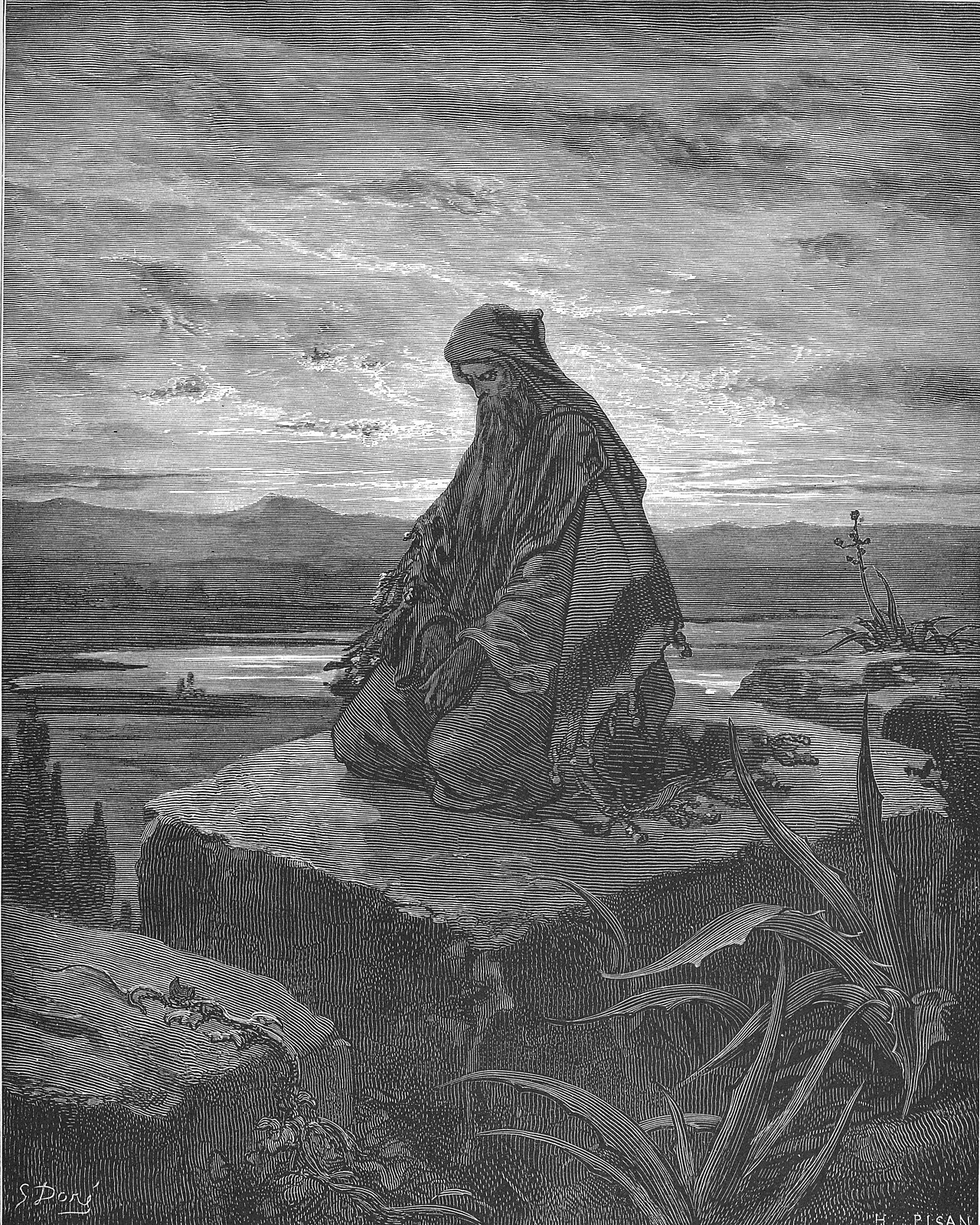
This page draws on 10 works. Open the list of works
This page draws on Adam Clarke, Commentary on the Bible; Albert Barnes, Notes, Explanatory and Practical, on the Old and New Testaments (1832-1869); Gregory the Dialogist, Forty Gospel Homilies 34; Jamieson, Fausset & Brown, Commentary Critical and Explanatory on the Whole Bible; Jerome, Commentary on Isaiah; John Cassian, CONFERENCE 14:13; John Gill, Exposition of the Old Testament (1748-1763); John Wesley, Explanatory Notes upon the Old Testament; Matthew Henry, Commentary on the Whole Bible and Thomas Aquinas, Commentary on Isaiah.