
Genesis 9:21
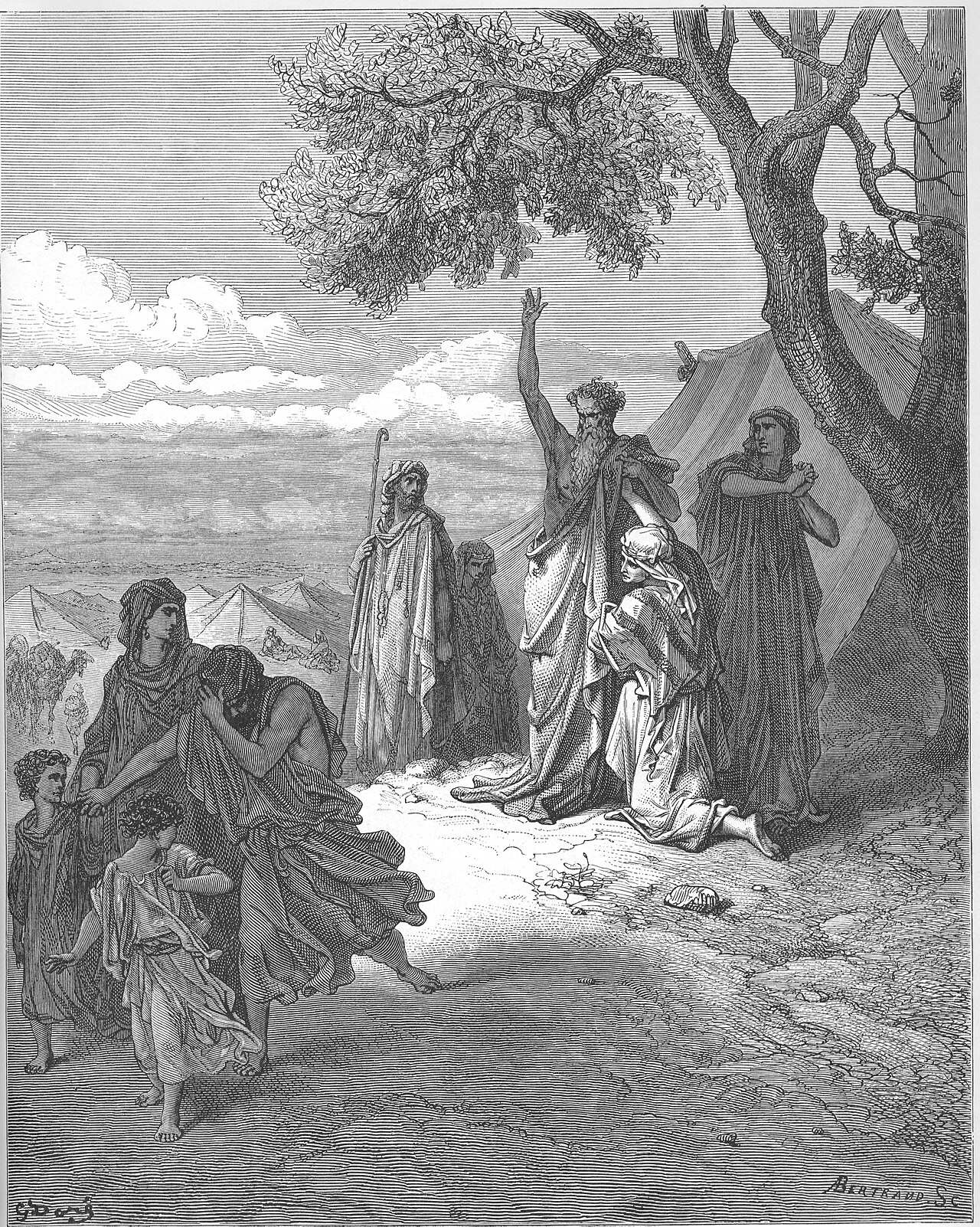
in Genesis 9But when he drank some of its wine, he became drunk and uncovered himself inside his tent.
BSB
The same verse in ASV and KJV ▾
ASV
and he drank of the wine, and was drunken; and he was uncovered within his tent.
KJV
And he drank of the wine, and was drunken; and he was uncovered within his tent.
⋯
This verse in Genesis 9
Commentary
17 notes on this verseWhen Christ says, "I am the true vine," the blood of Christ is assuredly not water but wine. We are redeemed and made alive by his blood. But in the cup it is not wine as such that redeems but his blood. This is declared by the sacrament and testimony of all the Scriptures. For we find this even in Genesis also, in respect of the sacrament prefigured in Noah. That he drank wine was to them a precursor and figure of the Lord's passion.
This site's exposition
a man of the soil
on Genesis 9:20-23
Noah plants a vineyard, drinks its wine and lies uncovered inside his tent. Ham sees his father's nakedness and goes out to tell it, while Shem and Japheth walk in backward and cover him without looking. The garment they carry on their shoulders answers the garments of skin God made at 3:21, and the beats of Eden run again here, a planting, a fruit, a nakedness and a covering. Canaan was already born, so this falls years after the ark.
This site's exposition
he became drunk and uncovered himself
Adam Clarke held that Noah, a man of the soil planting the first vineyard, drank the wine without knowing its strength. Matthew Henry called the drunkenness a blot on a righteous man. He read blameless at 6:9 as sincerity.
The record, by era
The Church Fathers5 voices
Why was Noah not blamed for falling into drunkenness? His falling was not due to intemperance but inexperience. For he was the first man to press the fruit of the vine and was ignorant not only of the power of the drink but also of …
Perhaps, on the other hand, someone might say, "Why was vine dressing, source of such terrible wickedness, introduced into life?" Do not idly blurt out what comes into your head, O man: vine dressing is not wicked nor is wine evil—rather, it is use of them in excess. You see, dreadful sins arise not from wine as such but from intemperate attitudes of human depravity that undermine the benefit that should naturally come from it. The reason that now after the deluge he shows you the use of wine is that you may learn that before using wine the human race had to come to grief from it. Before wine had even appeared, human history gave evidence of the extremity of sinfulness and unbridled licentiousness. This was intended to teach you that when you see the way wine is used, you will not attribute it all to wine as such but to depraved human intention bent on evil. Consider especially where wine has proved useful, and tremble, O man. For wine is used in good things by which our salvation is made real. Those who have an insight into spiritual realities understand this saying.
That is why the drunkenness of Noah also has been described, so that we may guard against drunkenness as much as possible, with the picture of such a fall clearly described before our eyes in Scripture. That is why, too, the Lord blessed those who covered the shame of his drunkenness. Scripture, summing everything up in one succinct verse, has said, "Wine is sufficient for a man well taught, and upon his bed, he shall rest."
Noah's drunkenness was not from an excess of wine but because it had been a long time since he had drunk any wine. In the ark he had drunk no wine.
A commentator
Philoxenus of Mabbug13 Ascetic Discourses, Discourse 11 -- On Abstinence · Written before 523.
proposed
Now this is the first lust which conquered the world, and because of it the first transgression of the law took place; and next Cain also, in turning unto this, meditated the killing of his brother that he might inherit the earth by himself.
9 more voices on this verse
The Church Fathers1 voice
A commentator
IrenaeusThe Demonstration of the Apostolic Preaching, Sections 19-21 · Written before 202.
proposed
Now the three sons of Noah were Shem, Ham and Japheth, from whom again the race was multiplied: for these were the beginning of mankind after the flood. Now of these one fell under a curse, and the two (others) inherited a blessing by reason of their works.
The Medieval Church3 voices
A commentator
BonaventureCollations on the Hexaemeron, Collation 14 · Written in the 13th century.
proposed
In the mystery of the cleansing of crimes, Christ is symbolized by Noah who lay naked in his tent in a state of drunkenness: for Christ was drunk with love for His spouse and was naked on the cross — where the very wicked Cham …
And drinking the wine, he became drunk, and he was naked in his tent. The Lord drank wine when he received the cup of his passion. He was made drunk by drinking when by suffering for us he reached the utmost extremity of death.
"Woe to you that demand strong drink as soon as they rise in the morning, and linger into the night while wine inflames them!"
The Puritans and the Awakening3 voices
That the fairest copy that ever mere man wrote since the fall had its blots and false strokes. It was said of Noah that he was perfect in his generations ( ch. vi. 9 ), but this shows that it is meant of sincerity, not a sinless perfection.
And he drank of the wine, and was drunken,....
That the fairest copy that ever mere man wrote since the fall had its blots and false strokes. It was said of Noah that he was perfect in his generations ( ch. vi. 9 ), but this shows that it is meant of sincerity, not a sinless perfection.
The Nineteenth Century2 voices
He drank of the wine, etc. - It is very probable that this was the first time the wine was cultivated; and it is as probable that the strength or intoxicating power of the expressed juice was never before known. Noah, therefore, might have drunk it at this time without the least blame, as he knew not till this trial the effects it would produce. I once knew a case which I believe to be perfectly parallel.
A commentator
Jamieson, Fausset & Brown1802–1910
Commentary Critical and Explanatory on the Whole Bible (1871)
proposed
And he drank of the wine, and was drunken--perhaps at the festivities of the vintage season. This solitary stain on the character of so eminently pious a man must, it is believed, have been the result of age or inadvertency.
The words behind it
7 Hebrew wordsEvery Hebrew word of this verse in the order it stands, with what it means and the door to its own study. The last column counts the times a word stands in the whole Bible: the rarer the word, the more the places it appears belong together.
| Hebrew | Sound | Meaning | Word study | In the Bible |
|---|---|---|---|---|
| וַיֵּ֥שְׁתְּ | vaiyeshet | and he drank | H8354 → | 217 times |
| מִן־ | min- | some of | H4480 → | 1188 times |
| הַיַּ֖יִן | haiyayin | the wine | H3196 → | 141 times |
| וַיִּשְׁכָּ֑ר | vaiyishkar | and he became drunk | H7937 → | |
| וַיִּתְגַּ֖ל | vaiyitgal | and he uncovered himself | H1540 → | |
| בְּת֥וֹךְ | betokh | in [the] middle of | H8432 → | 418 times |
| אָהֳלֽוֹ׃ | ʾoholo | tent his | H168 → | 345 times |
וַיֵּ֥שְׁתְּand he drank
vaiyeshetH8354 →217 times
מִן־some of
min-H4480 →1188 times
הַיַּ֖יִןthe wine
haiyayinH3196 →141 times
וַיִּשְׁכָּ֑רand he became drunk
vaiyishkarH7937 →
וַיִּתְגַּ֖לand he uncovered himself
vaiyitgalH1540 →
בְּת֥וֹךְin [the] middle of
betokhH8432 →418 times
אָהֳלֽוֹ׃tent his
ʾoholoH168 →345 times
A shaded row is a word that stands 400 times or fewer in the Bible.
The walk
8 stopsEach card is a verse this one points to, and under it the verses that one points to in turn. Where several paths arrive at the same place, that place is listed first: the text keeps returning to it.
Through
Galatians 5:21and envy; drunkenness, orgies, and the like. I warn you, as I did before, that those who practice such things will not inherit the kingdom of God.
it leads to
- 1 Corinthians 6:9–10
Do you not know that the wicked will not inherit the kingdom of God? Do not be deceived: Neither the sexually immoral, nor idolaters, nor adulterers, nor men who submit to or perform homosexual…
- Romans 13:13
Let us behave decently, as in the daytime, not in carousing and drunkenness, not in sexual immorality and debauchery, not in dissension and jealousy.
- Romans 8:13
For if you live according to the flesh, you will die; but if by the Spirit you put to death the deeds of the body, you will live.
- Ephesians 5:5–6
For of this you can be sure: No immoral, impure, or greedy person (that is, an idolater), has any inheritance in the kingdom of Christ and of God.
- 1 Corinthians 6:9–10
Through
Titus 2:2Older men are to be temperate, dignified, self-controlled, and sound in faith, love, and perseverance.
it leads to
- Galatians 5:23
gentleness, and self-control. Against such things there is no law.
- Galatians 5:23
Through
Proverbs 20:1Wine is a mocker, strong drink is a brawler, and whoever is led astray by them is not wise.
it leads to
- Ephesians 5:18
Do not get drunk on wine, which leads to reckless indiscretion. Instead, be filled with the Spirit.
- Hosea 4:11
Promiscuity, wine, and new wine take away understanding.
- Isaiah 28:7
These also stagger from wine and stumble from strong drink: Priests and prophets reel from strong drink and are befuddled by wine. They stumble because of strong drink, muddled in their visions and stumbling…
- Ephesians 5:18
Where this verse is studied
About Genesis
This page draws on 14 works. Open the list of works
This page draws on Adam Clarke, Commentary on the Bible; Bede, Commentary on Genesis (Hexaemeron); Bonaventure, Collations on the Hexaemeron, Collation 14; Clement of Alexandria, The Instructor Book 2; Cyprian, Epistle LXII.2-3; Ephrem the Syrian, COMMENTARY ON GENESIS 7.1.1; Irenaeus, The Demonstration of the Apostolic Preaching, Sections 19-21; Jamieson, Fausset & Brown, Commentary Critical and Explanatory on the Whole Bible; John Chrysostom, HOMILIES ON GENESIS 29.10; John Gill, Exposition of the Old Testament (1748-1763); Leander of Seville, THE TRAINING OF NUNS 19.9; Matthew Henry, Commentary on the Whole Bible; Philoxenus of Mabbug, 13 Ascetic Discourses, Discourse 11 -- On Abstinence and Theodoret of Cyrus, QUESTIONS ON GENESIS 56.