
Genesis 11:5
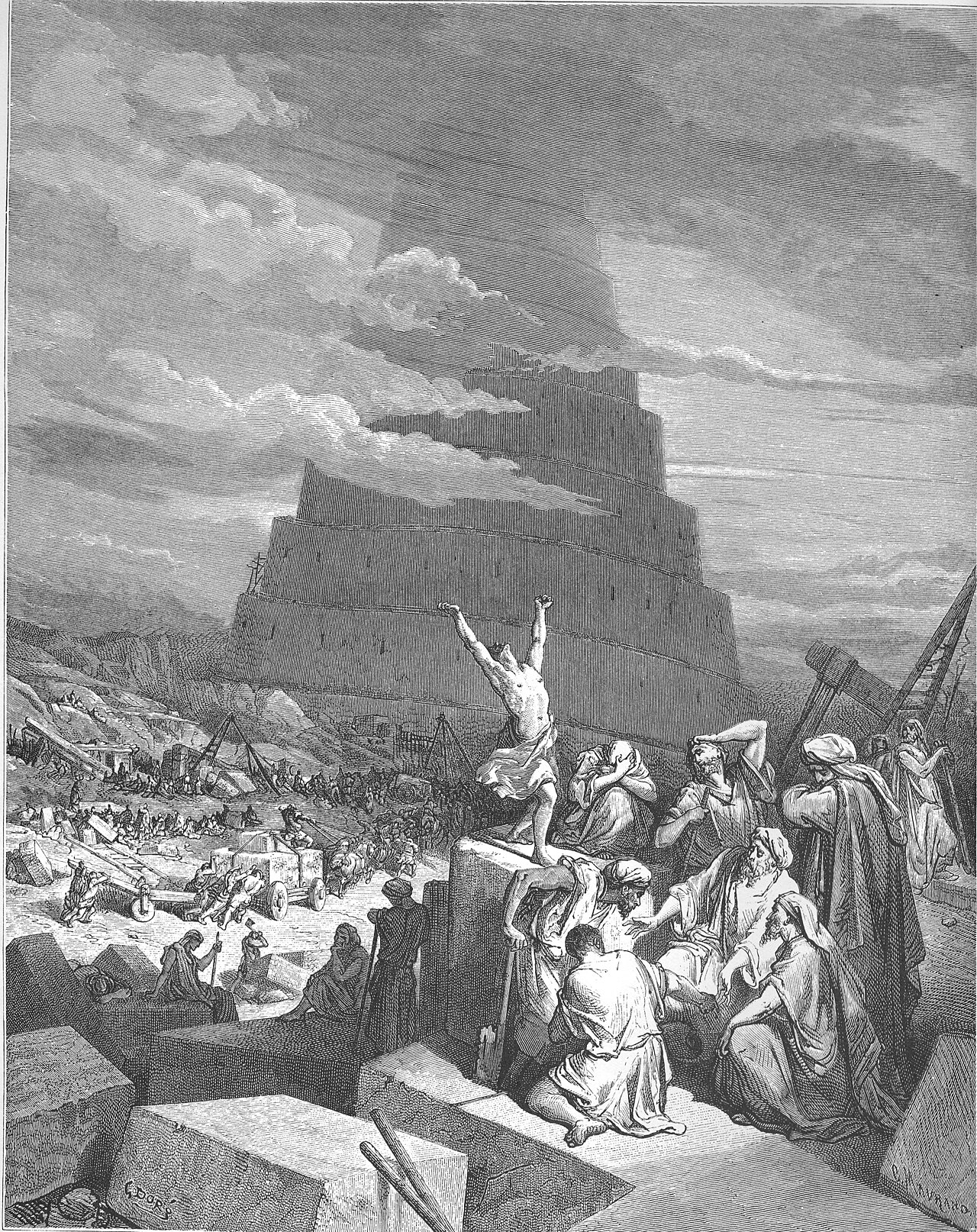
in Genesis 11Then the LORD came down to see the city and the tower that the sons of men were building.
BSB
The same verse in ASV and KJV ▾
ASV
And Jehovah came down to see the city and the tower, which the children of men builded.
KJV
And the Lord came down to see the city and the tower, which the children of men builded.
⋯
This verse in Genesis 11
Commentary
13 notes on this verseAre they stronger than he? (2.) Their sinfulness and obnoxiousness. They were the sons of Adam, so it is in the Hebrew; nay, of that Adam, that sinful disobedient Adam, whose children are by nature children of disobedience, children that are corrupters.
This site's exposition
the LORD came down to see the city
on Genesis 11:5-6
The tower reaches to the heavens, and the LORD comes down to see it. That is the passage's own measure of its height. Jacob is shown a stairway at 28:12 with its top reaching to heaven and the LORD standing above it, and that one God set up. Verse 6 grants that the plan would have held: nothing they devise will be beyond them.
The record, by era
The Church Fathers5 voices
A commentator
Book of JubileesBook of Jubilees Chapter 10, sections 18-27, Charles' 1913 translation · Written before -100.
proposed
And in the three and thirtieth jubilee, in the first year in the second week, Peleg took to himself a wife, whose name was Lomna the daughter of Sina'ar, and she bare him a son in the fourth year of this week, and he called …
A commentator
JosephusAntiquities of the Jews - Book I, Chapter 4, Sections 1-3 · Written before 100.
proposed
1. Now the sons of Noah were three, - Shem, Japhet, and Ham, born one hundred years before the Deluge. These first of all descended from the mountains into the plains, and fixed their habitation there; and persuaded others who were greatly afraid of the …
A commentator
Eusebius of CaesareaPreparation for the Gospel, BOOK IX, CHAPTER XIV · Written before 339.
proposed
AGAIN, whereas Moses wrote an account of the building of the tower, and how from one language men passed into the confusion of many dialects, the author just before mentioned, in his work entitled Of Assyrian History, bears the like testimony, speaking as follows: [ABYDENUS] 'But there are some who say that the men who first arose out of the earth, being puffed up by their strength and great stature, and proudly thinking that they were better than the gods, raised a huge tower, where Babylon now stands: and when they were already nearer to heaven, the winds came to the help of the gods, and overthrew their structure upon them, the ruins of which were called Babylon. And being up to that time of one tongue, they received from the gods a confused language; and afterwards war arose between Cronos and Titan. [JOSEPHUS] 'And the place in which they built the tower is now called Babylon, because of the confusion of what at first was clear in their language. For the Hebrews call confusion "Babel."
They foolishly began to build a tower that touched the stars and thought they might be able to climb the skies with it. But God, seeing that their work proceeded because they spoke the same language, intervened and caused them to speak different languages.
A commentator
Gregory of NyssaAnswer to Eunomius' Second Book, Section 276 · Written before 395.
proposed
And if any one cites the confusion of tongues that took place at the building of the tower, as contradicting what I have said, not even there is God spoken of as creating men's languages, but as confounding the existing one, that all might not hear all. For when all lived together and were not as yet divided by various differences of race, the aggregate of men dwelt together with one language among them; but when by the Divine will it was decreed that all the earth should be replenished by mankind, then, their community of tongue being broken up, men were dispersed in various directions and adopted this and that form of speech and language, possessing a certain bond of union in similarity of tongue, not indeed disagreeing from others in their knowledge of things, but differing in the character of their names. For a stone or a stick does not seem one thing to one man and another to another, but the different peoples call them by different names. So that our position remains unshaken, that human language is the invention of the human mind or understanding. For from the beginning, as long as all men had the same language, we see from Holy Scripture that men received no teaching of God's words, nor, when men were separated into various differences of language, did a Divine enactment prescribe how each man should talk. But God, willing that men should speak different languages, gave human nature full liberty to formulate arbitrary sounds, so as to render their meaning more intelligible.
6 more voices on this verse
The Church Fathers1 voice
But I do not understand how he can imagine the overturning of the tower (of Babel) to have happened with a similar object to that of the deluge, which effected a purification of the earth, according to the accounts both of Jews and Christians. For, in order that the narrative contained in Genesis respecting the tower may be held to convey no secret meaning, but, as Celsus supposes, may be taken as true to the letter, the event does not on such a view appear to have taken place for the purpose of purifying the earth; unless, indeed, he imagines that the so-called confusion of tongues is such a purificatory process. But on this point, he who has the opportunity will treat more seasonably when his object is to show not only what is the meaning of the narrative in its historical connection, but what metaphorical meaning may be deduced from it. Seeing that he imagines, however, that Moses, who wrote the account of the tower, and the confusion of tongues, has perverted the story of the sons of Aloeus, and referred it to the tower, we must remark that I do not think any one prior to the time of Homer has mentioned the sons of Aloeus, while I am persuaded that what is related about the tower has been recorded by Moses as being much older not only than Homer, but even than the invention of letters among the Greeks. Who, then, are the perverters of each other's narratives? Whether do they who relate the story of the Aloadæ pervert the history of the time, or he who wrote the account of the tower and the confusion of tongues the story of the Aloadæ? Now to impartial hearers Moses appears to be more ancient than Homer.
The Medieval Church2 voices
But when the threatenings of the mighty God Are fulfilled, which he threatened mortals once, When in Assyrian land they built a tower;-- 120 (And they all spoke one language, and resolved To mount aloft into the starry heaven; But on the air the Immortal …
The Lord came down to see the city and the tower which the sons of Adam were building. The old translation has for the sons of Adam the sons of men, that is, not the sons of God, but those who, living according to man, …
The Puritans and the Awakening2 voices
And the Lord came down to see the city and the tower,....
Are they stronger than he? (2.) Their sinfulness and obnoxiousness. They were the sons of Adam, so it is in the Hebrew; nay, of that Adam, that sinful disobedient Adam, whose children are by nature children of disobedience, children that are corrupters.
The Nineteenth Century1 voice
And the Lord came down - A lesson, says an ancient Jewish commentator, to magistrates to examine every evidence before they decree judgment and execute justice.
The words behind it
11 Hebrew wordsEvery Hebrew word of this verse in the order it stands, with what it means and the door to its own study. The last column counts the times a word stands in the whole Bible: the rarer the word, the more the places it appears belong together.
| Hebrew | Sound | Meaning | Word study | In the Bible |
|---|---|---|---|---|
| וַיֵּ֣רֶד | vaiyered | and he came down | H3381 → | 381 times |
| יְהוָ֔ה | yahweh | Yahweh | H3068 → | 6520 times |
| לִרְאֹ֥ת | lirot | to see | H7200 → | 1300 times |
| אֶת־ | ʾet- | <obj.> | H853 → | 10935 times |
| הָעִ֖יר | hair | the city | H5892 → | 1090 times |
| וְאֶת־ | veet | and <obj.> | H853 → | 10935 times |
| הַמִּגְדָּ֑ל | hamigdal | the tower | H4026 → | |
| אֲשֶׁ֥ר | ʾasher | which | H834 → | 5497 times |
| בָּנ֖וּ | banu | they had built | H1129 → | 376 times |
| בְּנֵ֥י | benei | [the] children of | H1121 → | 4930 times |
| הָאָדָֽם׃ | haadam | <the> humankind | H120 → | 551 times |
וַיֵּ֣רֶדand he came down
vaiyeredH3381 →381 times
יְהוָ֔הYahweh
yahwehH3068 →6520 times
לִרְאֹ֥תto see
lirotH7200 →1300 times
אֶת־<obj.>
ʾet-H853 →10935 times
הָעִ֖ירthe city
hairH5892 →1090 times
וְאֶת־and <obj.>
veetH853 →10935 times
הַמִּגְדָּ֑לthe tower
hamigdalH4026 →
אֲשֶׁ֥רwhich
ʾasherH834 →5497 times
בָּנ֖וּthey had built
banuH1129 →376 times
בְּנֵ֥י[the] children of
beneiH1121 →4930 times
הָאָדָֽם׃<the> humankind
haadamH120 →551 times
A shaded row is a word that stands 400 times or fewer in the Bible.
The walk
8 stopsEach card is a verse this one points to, and under it the verses that one points to in turn. Where several paths arrive at the same place, that place is listed first: the text keeps returning to it.
Through
Hebrews 4:13Nothing in all creation is hidden from God’s sight; everything is uncovered and exposed before the eyes of Him to whom we must give account.
it leads to
- 1 Corinthians 4:5
Therefore judge nothing before the appointed time; wait until the Lord comes. He will bring to light what is hidden in darkness and will expose the motives of men’s hearts. At that time each…
- Psalms 33:13–15
The LORD looks down from heaven; He sees all the sons of men.
- Proverbs 15:3
The eyes of the LORD are in every place, observing the evil and the good.
- Ecclesiastes 12:14
For God will bring every deed into judgment, along with every hidden thing, whether good or evil.
- 2 Corinthians 5:10
For we must all appear before the judgment seat of Christ, that each one may receive his due for the things done in the body, whether good or bad.
- 1 Corinthians 4:5
Through
John 3:13No one has ascended into heaven except the One who descended from heaven—the Son of Man.
it leads to
- Proverbs 30:4
Who has ascended to heaven and come down? Who has gathered the wind in His hands? Who has bound up the waters in His cloak? Who has established all the ends of the earth?…
- John 6:38
For I have come down from heaven, not to do My own will, but to do the will of Him who sent Me.
- Acts 2:34
For David did not ascend into heaven, but he himself says: ‘The Lord said to my Lord, “Sit at My right hand
- Proverbs 30:4
Where this verse is studied
On this page
Studies7
About Genesis
This page draws on 12 works. Open the list of works
This page draws on Adam Clarke, Commentary on the Bible; Bede, Commentary on Genesis (Hexaemeron); Book of Jubilees, Book of Jubilees Chapter 10, sections 18-27, Charles' 1913 translation; Commodian, SONG OF TWO PEOPLES 165-69; Eusebius of Caesarea, Preparation for the Gospel, BOOK IX, CHAPTER XIV; Gregory of Nyssa, Answer to Eunomius' Second Book, Section 276; John Gill, Exposition of the Old Testament; John Gill, Exposition of the Old Testament (1748-1763); Josephus, Antiquities of the Jews - Book I, Chapter 4, Sections 1-3; Matthew Henry, Commentary on the Whole Bible; Origen of Alexandria, Contra Celsum, Book IV, Chapter 21 and Sibylline Oracles, Sibylline Oracles Book III: 117-129.