
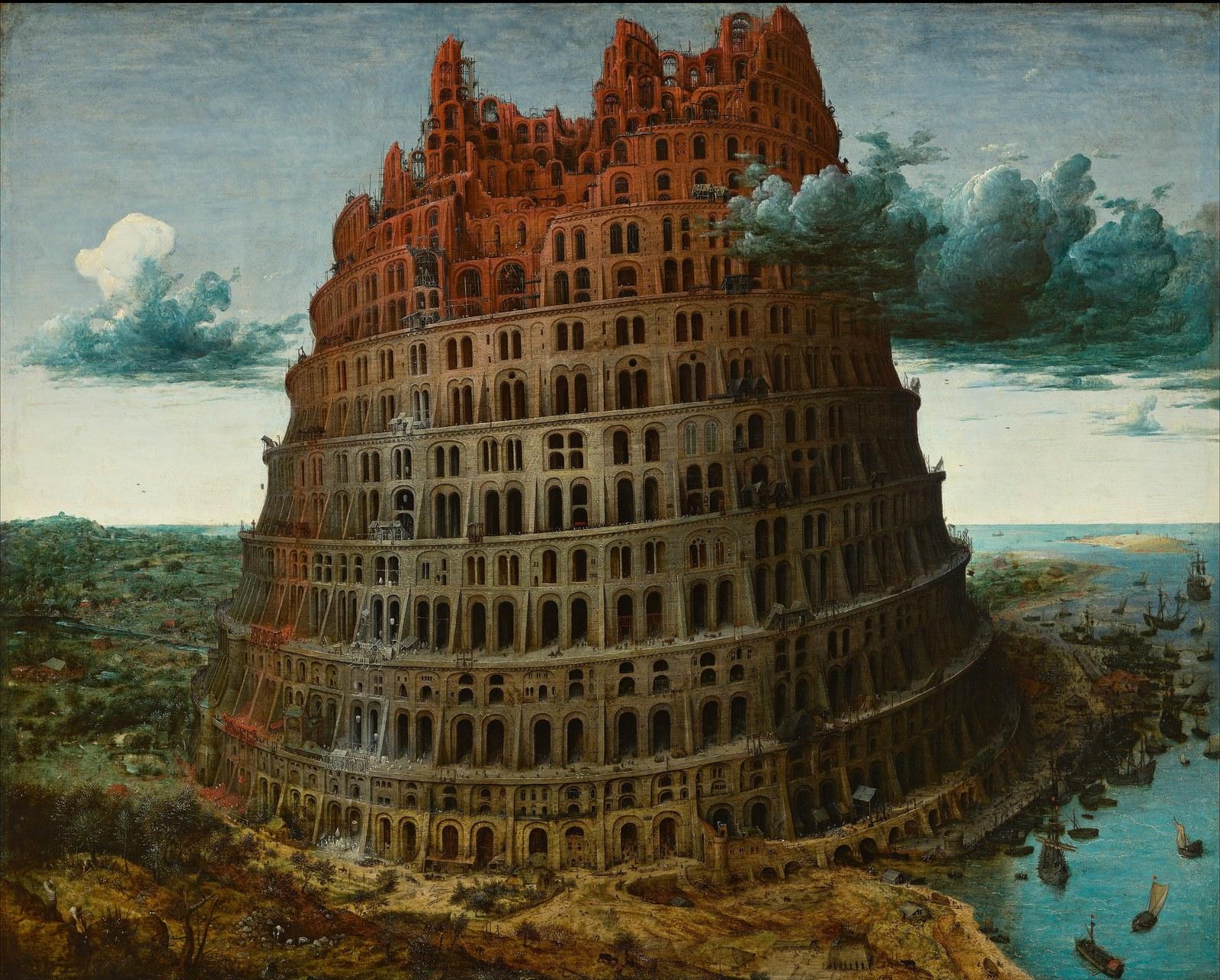
Pieter Bruegel the Elder, The Tower of Babel, 1568. Public domain.
Zephaniah 3:9 · Passage · Featured Study
The Pure Lips of Zephaniah 3:9
The prophet promises that the nations will call on the LORD together.
For then I will restore pure lips to the peoples, that all may call upon the name of the LORD and serve Him shoulder to shoulder.
- The passage
- Zephaniah 3:9, Zephaniah 3:8 to 13
- Book
- Zephaniah
- Hold in memory
- Zephaniah 3:9
Babel ended in scattering, and this verse ends in worship.
Summary
The promise of a pure lip is made to all the peoples. This study asks what the pure lip is and how readers have heard it.
- Keil and Delitzsch read the lip as cleansed from the names of idols.
- Readers have also heard the promise as pure worship and as the gospel.
- Two old notes call Pentecost the counterpart of Babel.
The Promise in Zephaniah 3
The verses around the promise move from a fire to an offering.
Therefore wait for Me,” declares the LORD, “until the day I rise to testify. For My decision is to gather nations, to assemble kingdoms, to pour out upon them My indignation—all My burning anger. For all the earth will be consumed by the fire of My jealousy.The fire comes before the gift.
The Hebrew of the promise reads saphah berurah, a lip made pure. Its last words are shekem echad, one shoulder, which the Berean renders shoulder to shoulder.
From beyond the rivers of Cush My worshipers, My scattered people, will bring Me an offering.Worship from the far south follows the promise of pure lips.
The Speech of the Peoples
Scripture follows human speech from one confused language to every tongue before the throne.
Each step tells what happens to the speech of the peoples.
- Genesis 11:1The whole world has one language.Genesis 11:1
- Genesis 11:7The LORD confuses their language at Babel.Genesis 11:7
- Isaiah 6:5Isaiah confesses unclean lips among a people of unclean lips.Isaiah 6:5
- Isaiah 19:18Five cities of Egypt speak the language of Canaan.Isaiah 19:18
- Zephaniah 3:9The peoples receive pure lips to call on the LORD.Zephaniah 3:9
- Acts 2:6Each hearer hears the apostles in his own language.Acts 2:6
- Romans 15:6Believers glorify God with one mind and one voice.Romans 15:6
- Revelation 7:9A multitude from every tongue stands before the throne.Revelation 7:9
Eight steps, in the order of the books.
Romans 15:6, Revelation 7:9
From the Fire to a Humble People
Zephaniah 3:8 to 13 moves from the judgment of the nations to a remnant that speaks no lies.
Zephaniah 3:11 says the LORD will remove the proud from Jerusalem, so that no one will be haughty on His holy mountain.
But I will leave within you a meek and humble people, and they will trust in the name of the LORD.The remnant answers the proud whom Zephaniah 3:11 removes.
The remnant of Israel will no longer do wrong or speak lies, nor will a deceitful tongue be found in their mouths. But they will feed and lie down, with no one to make them tremble.”The remnant's mouths are clean as the peoples' lips are made pure.
Albert Barnes read the remnant as the poor people the LORD leaves over, the true Israel.
Babel and Its Scattering
Genesis 11 tells how one language became many.
That is why it is called Babel, for there the LORD confused the language of the whole world, and from that place the LORD scattered them over the face of all the earth.The story of Babel ends with this verse.
John Wesley rejected the claim of a writer of his day that God confused the builders' worship rather than their tongues. He called the claim's reading of the Hebrew word false.
One Word for Lip and Language
Three Hebrew words carry the promise.
saphah
176 uses in the canon
Saphah is the lip, and Genesis 11 uses it for the one language of the earth.
barar
18 uses in the canon
Barar means to purify or to select, the verb behind the pure lips.
shekem
21 uses in the canon
Shekem is the shoulder, the place where a burden is carried.
Isaiah 6:5 uses saphah twice, and in Isaiah 6:7 a coal from the altar touches the prophet's mouth.
Voices on the Pure Lips
Two teachers, of the third century and the eighteenth, read the promise as worship among the nations.
Origen of Alexandria (died 253)
Origen joined the one yoke of the nations to the offering from Ethiopia in the next verse.
“If anyone is able, insofar as he found that Israel is saved ‘after the full number of pagan nations,’ let him consider having passed over by reason the remaining period, when it is that ‘all serve God under a single yoke,’ according to what is said in Zephaniah, ‘And from the ends of Ethiopia they offer sacrifices to him,’ when, as it is said in the sixty-seventh psalm, ‘Ethiopia stretches forth its hand to God,’ and ‘to the kings of the earth’ the word commands, saying, ‘Sing to the Lord, raise a psalm to the God of Jacob.’”
Origen of Alexandria · Homilies on Jeremiah 5:4.3 · on Zephaniah 3:10Patristic
Matthew Henry (1662 to 1714)
Matthew Henry read the verse as a promise about the church's worship.
“That the worship of God, according to his will, shall be more closely applied to, and more unanimously concurred in. Instead of sacrifice and incense, they shall call upon the name of the Lord. Prayer is the spiritual offering with which God must be honoured; and, to prepare and fit us for that duty, it is necessary that we have a pure language.”
Matthew Henry · Commentary on the Whole Bible · on Zephaniah 3:9Puritan
How the Promise Has Been Read
Readers have heard the pure lip in three ways, and two notes set Pentecost beside Babel.
Lips cleansed from the names of idolsKeil and Delitzsch
Keil and Delitzsch wrote that God purifies the sinful lips of the nations so that they can call on Him. In their reading the lip is the organ of speech, and the names of idols had defiled it.
For I will remove from her lips the names of the Baals; no longer will their names be invoked.Keil and Delitzsch cite this verse for lips defiled by the names of idols.
A pure form of worshipAdam Clarke
Adam Clarke took the pure language as the form of religious worship, restored to a people who had been idolaters, and he applied the promise to the conversion of the Jews under the gospel. He cited Isaiah 19:18 for the same use of the word.
Fulfilled in the gospelAlbert Barnes
Albert Barnes read the then of the verse as the time of the gospel, with the return from Babylon as its forerunner.
Pentecost beside Babel, in notes on kin textsJamieson, Fausset and Brown; Albert Barnes; Gregory of Nazianzus
Jamieson, Fausset and Brown called Pentecost the counterpart of Babel in their note on Isaiah 19:18. Barnes called Pentecost the reversal of Babel's confusion in his note on Zechariah 8:23. Neither note names Zephaniah 3:9.
Gregory of Nazianzus set the two events side by side in a sermon on Pentecost.
“The old confusion of tongues was beneficial when people, who were of one language in wickedness and impiety, just as some still are, were building the tower. But by the confusion of their language, the unity of their intention was broken up and their undertaking destroyed. Much more worthy of praise is the present miraculous unity of language [at Pentecost]. Being poured from one Spirit on many people, it brings them again into harmony. And there is a diversity of gifts, which stands in need of yet another gift to discern which is the best, where all are praiseworthy.”
Gregory of Nazianzus · On Pentecost, Oration 41:16 · on Psalm 52:4Patristic
Every Tongue Before the Throne
Revelation shows the peoples of every tongue joined in one cry.
And they cried out in a loud voice: “Salvation to our God, who sits on the throne, and to the Lamb!”The cry names God and the Lamb as the source of salvation.
Zephaniah's promise asks the reader to call on the name of the LORD with lips He has made clean.
Sources
Scripture is the Berean Standard Bible.
- The Hebrew Bible with Strong's numbers, at Zephaniah 3:9, Genesis 11:1, 7 and 9 and Isaiah 6:5.
- Strong's Hebrew lexicon, the counts of uses.
- Henry, Commentary on the Whole Bible; Clarke, Commentary on the Bible; Barnes, Notes; Gill, Exposition; Jamieson, Fausset and Brown, Commentary Critical and Explanatory; Jerome, Commentary on Zephaniah; Chrysostom, Demonstration against the Pagans; on Zephaniah 3:8 to 13, Genesis 11, Acts 2:6 and Romans 15:6.
- Matthew Henry, Commentary on the Whole Bible (1710), on Zephaniah 3:9.
- Origen of Alexandria, Homilies on Jeremiah, on Zephaniah 3:10.
- Adam Clarke, Commentary on the Bible (1832), on Zephaniah 3:9.
- Albert Barnes, Notes, Explanatory and Practical, on Zephaniah 3:9, Zephaniah 3:13 and Zechariah 8:23.
- Jamieson, Fausset and Brown, Commentary Critical and Explanatory on the Whole Bible (1871), on Isaiah 19:18.
- Gregory of Nazianzus, Oration 41, On Pentecost.
- John Wesley, Explanatory Notes upon the Old Testament (1765), on Genesis 11:7.
- Carl Friedrich Keil and Franz Delitzsch, Biblical Commentary on the Old Testament: The Minor Prophets, on Zephaniah 3:9.
Keep Studying
Read it3
Church history1
People and groups2
Doctrines2