
Genesis 11:27
in Genesis 11This is the account of Terah. Terah became the father of Abram, Nahor, and Haran. And Haran became the father of Lot.
BSB
The same verse in ASV and KJV ▾
ASV
Now these are the generations of Terah. Terah begat Abram, Nahor, and Haran; and Haran begat Lot.
KJV
Now these are the generations of Terah: Terah begat Abram, Nahor, and Haran; and Haran begat Lot.
⋯
This verse in Genesis 11
Commentary
8 notes on this verseHis country: Ur of the Chaldee's - An idolatrous country, where even the children of Eber themselves degenerated. His relations, mentioned for his sake, and because of their interest in he following story. His father was Terah, of whom it is said, Josh. xxiv, 2, that he served other gods on the other side the flood; so early did idolatry gain footing in the world.
This site's exposition
This is the account of Terah
on Genesis 11:27-28
The sixth account is the narrowest so far, down from the nations of chapter 10 to Terah's household in one town. Lot arrives as an orphan and stays with Abram. Haran is the first man in this list said to die, and he died in his father's lifetime, in Ur of the Chaldeans. Jerome passes on a Hebrew tradition that read Ur as fire and told of Abraham delivered out of it, and he reports it as their story.
The record, by era
The Medieval Church1 voice
These are the generations of Terah. Terah became the father of Abram, Nahor, and Haran. The house of Terah was one, from which Abraham was born, in which the worship of the one true God was kept; and, as is credible, in which the Hebrew …
The Puritans and the Awakening4 voices
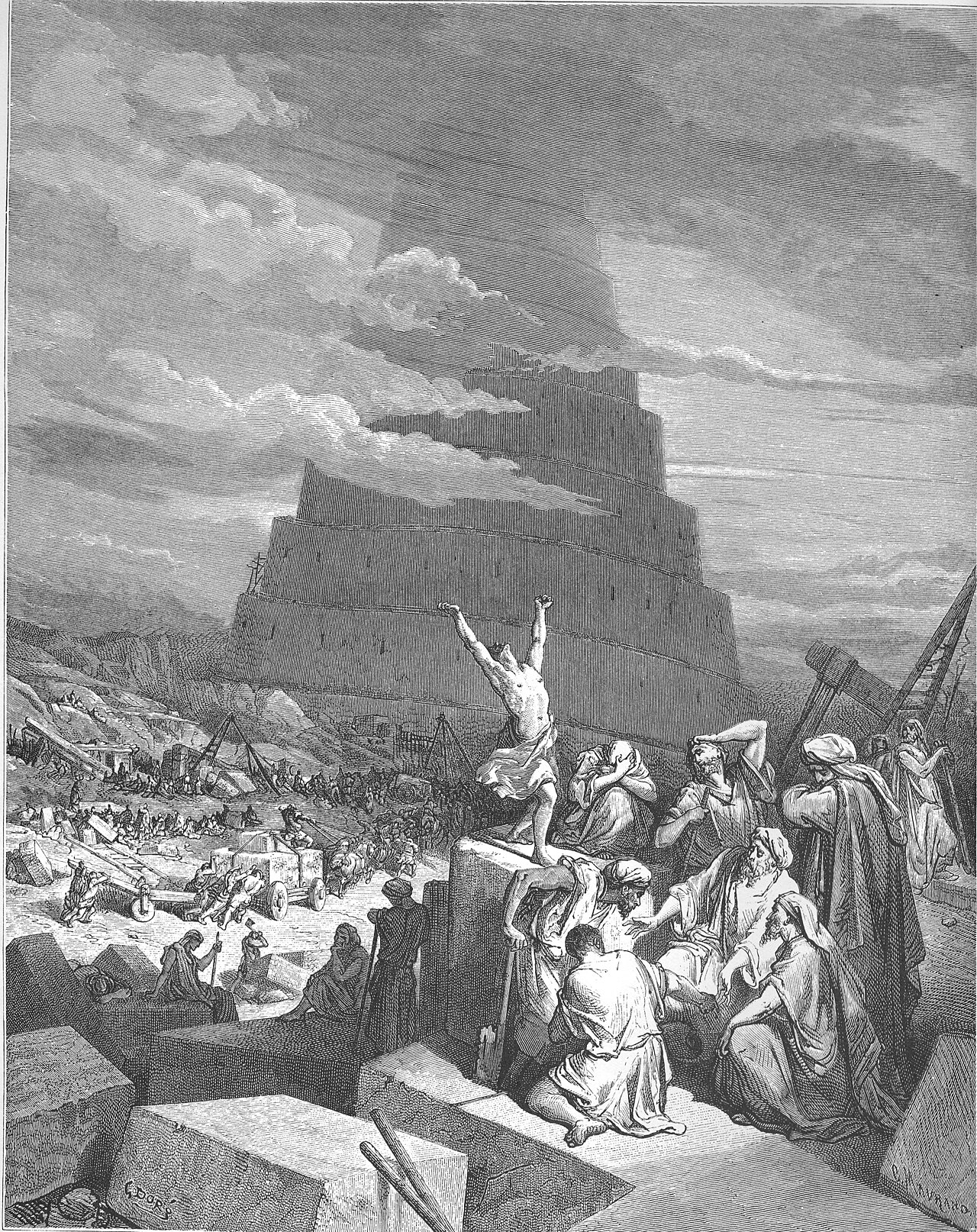
The Confusion of Tongues. 1 And the whole earth was of one language, and of one speech. 2 And it came to pass, as they journeyed from the east, that they found a plain in the land of Shinar; and they dwelt there.
quarantine:scripture (2026-07-29) — scripture-overlap:90%@v1-2
His country: Ur of the Chaldee's - An idolatrous country, where even the children of Eber themselves degenerated. His relations, mentioned for his sake, and because of their interest in he following story. His father was Terah, of whom it is said, Josh. xxiv, 2, that he served other gods on the other side the flood; so early did idolatry gain footing in the world.
Now these are the generations of Terah,.... Or the genealogy of his posterity, which is a very short one; for it only gives an account of his three sons as before: Terah begat Abram, Nahor, and Haran: and of three grand children, Lot, Milcah, and Iscah, the children of Haran; and chiefly for the sake of Abram it is given, and indeed the above genealogy of Shem, which ends with him; and of whom and whose posterity the remaining part of this book of Genesis treats: and Haran begat Lot: of whom we have some further account in Gen 13:1.
The Confusion of Tongues. 1 And the whole earth was of one language, and of one speech. 2 And it came to pass, as they journeyed from the east, that they found a plain in the land of Shinar; and they dwelt there.
1 more voice on this verse
The Nineteenth Century1 voice
A commentator
Albert Barnes1798–1870
Notes, Explanatory and Practical, on the Old and New Testaments (1832-1869)
proposed
- Section X - Abraham - XXXVI. The Father of Abram 27. לוט lôṭ, Lot, “veil;” verb: “cover.” 28. אוּר 'ûr, Ur, “light, flame.” כשׂדים kaśdı̂ym, Kasdim, Cardi, Kurds, Χαλδαῖοι Kaldaioi. כסד kesed, “gain?” Arabic. Ur Kasdim has been identified with Hur, now called Mugheir (the bitumened), a heap of ruins lying south of the Euphrates, nearly opposite its jucnction with the Shat el-Hie. Others place it at Edessa, now Orfa, a short way north of Carrhae.
How the passage was read
What the Jewish commentators add
On the verses either side of this one
[AND BEGOT ABRAM.] Abraham was born in a place called Ur of the Chaldees.
This section is reception history: how the passage was read and kept in the Jewish tradition. Where a reading parts from an essential of the Christian faith, the section says so at that point.
Texts and citation data: Sefaria; each excerpt follows its version’s licence. 5 further sources are cited on this chapter that carry no English text this site may quote or only restate the verse.
The words behind it
15 Hebrew wordsEvery Hebrew word of this verse in the order it stands, with what it means and the door to its own study. The last column counts the times a word stands in the whole Bible: the rarer the word, the more the places it appears belong together.
| Hebrew | Sound | Meaning | Word study | In the Bible |
|---|---|---|---|---|
| וְאֵ֙לֶּה֙ | veeleh | and these | H428 → | 746 times |
| תּוֹלְדֹ֣ת | toldot | [are] [the] accounts of | H8435 → | 39 times |
| תֶּ֔רַח | terach | Terah | H8646 → | 13 times |
| תֶּ֚רַח | terach | Terah | H8646 → | 13 times |
| הוֹלִ֣יד | holid | he fathered | H3205 → | 496 times |
| אֶת־ | ʾet- | <obj.> | H853 → | 10935 times |
| אַבְרָ֔ם | ʾavram | Abram | H87 → | 61 times |
| אֶת־ | ʾet- | <obj.> | H853 → | 10935 times |
| נָח֖וֹר | nachor | Nahor | H5152 → | 18 times |
| וְאֶת־ | veet | and <obj.> | H853 → | 10935 times |
| הָרָ֑ן | haran | Haran | H2039 → | 7 times |
| וְהָרָ֖ן | veharan | and Haran | H2039 → | 7 times |
| הוֹלִ֥יד | holid | he fathered | H3205 → | 496 times |
| אֶת־ | ʾet- | <obj.> | H853 → | 10935 times |
| לֽוֹט׃ | lot | Lot | H3876 → | 33 times |
וְאֵ֙לֶּה֙and these
veelehH428 →746 times
תּוֹלְדֹ֣ת[are] [the] accounts of
toldotH8435 →39 times
תֶּ֔רַחTerah
terachH8646 →13 times
תֶּ֚רַחTerah
terachH8646 →13 times
הוֹלִ֣ידhe fathered
holidH3205 →496 times
אֶת־<obj.>
ʾet-H853 →10935 times
אַבְרָ֔םAbram
ʾavramH87 →61 times
אֶת־<obj.>
ʾet-H853 →10935 times
נָח֖וֹרNahor
nachorH5152 →18 times
וְאֶת־and <obj.>
veetH853 →10935 times
הָרָ֑ןHaran
haranH2039 →7 times
וְהָרָ֖ןand Haran
veharanH2039 →7 times
הוֹלִ֥ידhe fathered
holidH3205 →496 times
אֶת־<obj.>
ʾet-H853 →10935 times
לֽוֹט׃Lot
lotH3876 →33 times
A shaded row is a word that stands 400 times or fewer in the Bible.
The walk
8 stopsEach card is a verse this one points to, and under it the verses that one points to in turn. Where several paths arrive at the same place, that place is listed first: the text keeps returning to it.
Through
Genesis 12:4So Abram departed, as the LORD had directed him, and Lot went with him. Abram was seventy-five years old when he left Haran.
it leads to
- Hebrews 11:8
By faith Abraham, when called to go to a place he would later receive as his inheritance, obeyed and went, without knowing where he was going.
- Hebrews 11:8
Through
Genesis 11:31And Terah took his son Abram, his grandson Lot son of Haran, and his daughter-in-law Sarai the wife of Abram, and they set out from Ur of the Chaldeans for the land of Canaan.…
it leads to
- Nehemiah 9:7
You are the LORD, the God who chose Abram, who brought him out of Ur of the Chaldeans and gave him the name Abraham.
- Acts 7:2–4
And Stephen declared: “Brothers and fathers, listen to me! The God of glory appeared to our father Abraham while he was still in Mesopotamia, before he lived in Haran,
- Genesis 12:4
So Abram departed, as the LORD had directed him, and Lot went with him. Abram was seventy-five years old when he left Haran.
- Genesis 24:10
Then the servant took ten of his master’s camels and departed with all manner of good things from his master in hand. And he set out for Nahor’s hometown in Aram-naharaim.
- Genesis 15:7
The LORD also told him, “I am the LORD, who brought you out of Ur of the Chaldeans to give you this land to possess.”
- Nehemiah 9:7
Through
2 Peter 2:7and if He rescued Lot, a righteous man distressed by the depraved conduct of the lawless
it leads to
- Genesis 19:16
But when Lot hesitated, the men grabbed his hand and the hands of his wife and his two daughters. And they led them safely out of the city, because of the LORD’s compassion for…
- Genesis 19:29
So when God destroyed the cities of the plain, He remembered Abraham, and He brought Lot out of the catastrophe that destroyed the cities where he had lived.
- Genesis 19:16
Where this verse is studied
On this page
Studies7
About Genesis
Who and where
2 names in this verse with a page on the site.
This page draws on Albert Barnes, Notes, Explanatory and Practical, on the Old and New Testaments (1832-1869); Bede, Commentary on Genesis (Hexaemeron); Jerome, Hebrew Questions on Genesis; John Gill, Exposition of the Old Testament (1748-1763); John Wesley, Explanatory Notes upon the Old Testament and Matthew Henry, Commentary on the Whole Bible.