
Genesis 11:2
in Genesis 11And as people journeyed eastward, they found a plain in the land of Shinar and settled there.
BSB
The same verse in ASV and KJV ▾
ASV
And it came to pass, as they journeyed east, that they found a plain in the land of Shinar; and they dwelt there.
KJV
And it came to pass, as they journeyed from the east, that they found a plain in the land of Shinar; and they dwelt there.
⋯
This verse in Genesis 11
Commentary
18 notes on this verseAs they journeyed from the east - Assyria, Mesopotamia, and the country on the borders and beyond the Euphrates, are called the east in the sacred writings. Balaam said that the king of Moab had brought him from the mountains of the east, Num 23:7. Now it appears, from Num 22:5, that Balaam dwelt at Pethor, on the river Euphrates.
This site's exposition
the whole world had one language
on Genesis 11:1-2
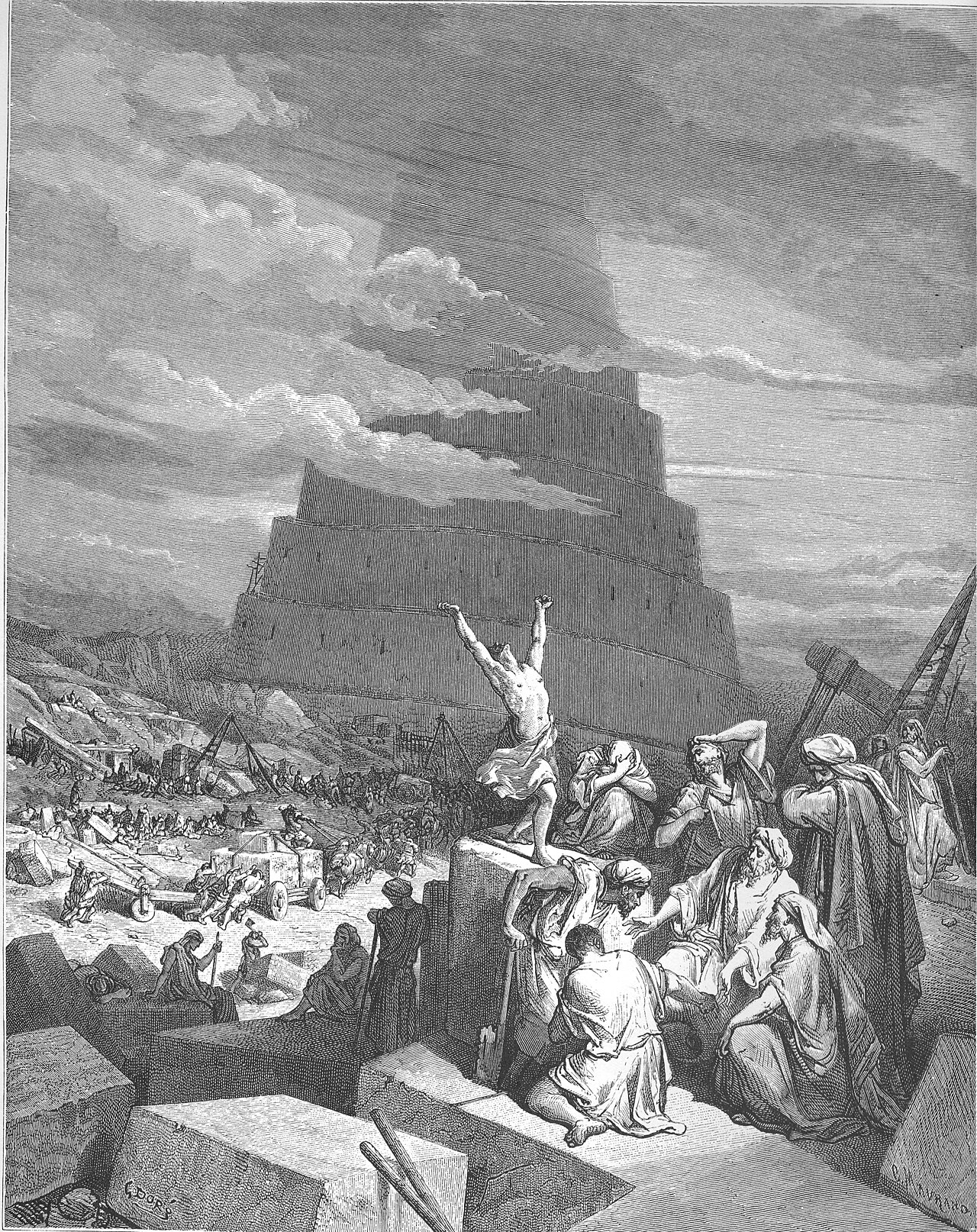
Chapter 10 has already divided the nations by language three times over. This chapter goes back and tells how it happened. The plain of Shinar is the ground where Nimrod's kingdom began at 10:10. The people moved eastward and settled there, and the word to Noah's sons at 9:1 was to fill the earth.
This site's exposition
they found a plain in the land of Shinar
Clarke reads the verse as the people moving from the east, out of the land beyond the Euphrates, which Scripture calls the east. Balaam came from Pethor on the Euphrates. The plain they found in the land of Shinar is where Babel and its tower would stand.
The record, by era
The Church Fathers5 voices
A commentator
Book of JubileesBook of Jubilees Chapter 10, sections 18-27, Charles' 1913 translation · Written before -100.
proposed
And in the three and thirtieth jubilee, in the first year in the second week, Peleg took to himself a wife, whose name was Lomna the daughter of Sina'ar, and she bare him a son in the fourth year of this week, and he called …
A commentator
JosephusAntiquities of the Jews - Book I, Chapter 4, Sections 1-3 · Written before 100.
proposed
1. Now the sons of Noah were three, - Shem, Japhet, and Ham, born one hundred years before the Deluge. These first of all descended from the mountains into the plains, and fixed their habitation there; and persuaded others who were greatly afraid of the …
A commentator
Eusebius of CaesareaPreparation for the Gospel, BOOK IX, CHAPTER XIV · Written before 339.
proposed
AGAIN, whereas Moses wrote an account of the building of the tower, and how from one language men passed into the confusion of many dialects, the author just before mentioned, in his work entitled Of Assyrian History, bears the like testimony, speaking as follows: [ABYDENUS] 'But there are some who say that the men who first arose out of the earth, being puffed up by their strength and great stature, and proudly thinking that they were better than the gods, raised a huge tower, where Babylon now stands: and when they were already nearer to heaven, the winds came to the help of the gods, and overthrew their structure upon them, the ruins of which were called Babylon. And being up to that time of one tongue, they received from the gods a confused language; and afterwards war arose between Cronos and Titan. [JOSEPHUS] 'And the place in which they built the tower is now called Babylon, because of the confusion of what at first was clear in their language. For the Hebrews call confusion "Babel."
A commentator
Gregory of NyssaAnswer to Eunomius' Second Book, Section 276 · Written before 395.
proposed
And if any one cites the confusion of tongues that took place at the building of the tower, as contradicting what I have said, not even there is God spoken of as creating men's languages, but as confounding the existing one, that all might not hear all. For when all lived together and were not as yet divided by various differences of race, the aggregate of men dwelt together with one language among them; but when by the Divine will it was decreed that all the earth should be replenished by mankind, then, their community of tongue being broken up, men were dispersed in various directions and adopted this and that form of speech and language, possessing a certain bond of union in similarity of tongue, not indeed disagreeing from others in their knowledge of things, but differing in the character of their names. For a stone or a stick does not seem one thing to one man and another to another, but the different peoples call them by different names. So that our position remains unshaken, that human language is the invention of the human mind or understanding. For from the beginning, as long as all men had the same language, we see from Holy Scripture that men received no teaching of God's words, nor, when men were separated into various differences of language, did a Divine enactment prescribe how each man should talk. But God, willing that men should speak different languages, gave human nature full liberty to formulate arbitrary sounds, so as to render their meaning more intelligible.
But I do not understand how he can imagine the overturning of the tower (of Babel) to have happened with a similar object to that of the deluge, which effected a purification of the earth, according to the accounts both of Jews and Christians. For, in order that the narrative contained in Genesis respecting the tower may be held to convey no secret meaning, but, as Celsus supposes, may be taken as true to the letter, the event does not on such a view appear to have taken place for the purpose of purifying the earth; unless, indeed, he imagines that the so-called confusion of tongues is such a purificatory process. But on this point, he who has the opportunity will treat more seasonably when his object is to show not only what is the meaning of the narrative in its historical connection, but what metaphorical meaning may be deduced from it. Seeing that he imagines, however, that Moses, who wrote the account of the tower, and the confusion of tongues, has perverted the story of the sons of Aloeus, and referred it to the tower, we must remark that I do not think any one prior to the time of Homer has mentioned the sons of Aloeus, while I am persuaded that what is related about the tower has been recorded by Moses as being much older not only than Homer, but even than the invention of letters among the Greeks. Who, then, are the perverters of each other's narratives? Whether do they who relate the story of the Aloadæ pervert the history of the time, or he who wrote the account of the tower and the confusion of tongues the story of the Aloadæ? Now to impartial hearers Moses appears to be more ancient than Homer.
10 more voices on this verse
The Church Fathers2 voices
"When they traveled from the east, they found open country in the land of Sennar [Shinar] and settled there." Notice how the human race, instead of managing to keep to its own boundaries, always longs for more and reaches out for greater things. This is what the human race has lost in particular, not being prepared to recognize the limitations of its own condition but always lusting after more, entertaining ambitions beyond its capacity. In this regard, too, when people who chase after the things of the world acquire for themselves much wealth and status, they lose sight of their own nature, as it were, and aspire to such heights that they topple into the very depths. You could see this happening every day without others being any the wiser from the sight of it. Instead, they pause for a while but immediately lose all recollection of it and take the same road as the others and fall over the same precipice. This is exactly what you can see happening to these people in the present instance: "When they traveled from the east, they found open country in the land of Sennar [Shinar] and settled there." See how in gradual stages it teaches us the instability of their attitude. When they saw the open country (the text says), they packed up and left their previous dwelling and settled down there.
A commentator
Book of Biblical AntiquitiesBook of Biblical Antiquities by Pseudo-Philo, Sections 1-18 · Written before 100.
proposed
VI. Then all they that had been divided and dwelt upon the earth gathered together there after, and dwelt together; and they set forth from the East and found a plain in the land of Babylon: and there they dwelt, and they said every man …
The Medieval Church3 voices
But when the threatenings of the mighty God Are fulfilled, which he threatened mortals once, When in Assyrian land they built a tower;-- 120 (And they all spoke one language, and resolved To mount aloft into the starry heaven; But on the air the Immortal …
And as they journeyed from the east, they found a plain in the land of Shinar and settled there. It appears from these words that even the first humans held the region of the East; thus it should be considered the head of the world, …
Departing from the East, they found a plain in which to dwell, because withdrawing from the light of righteousness, the reprobate found for themselves the broad ways of the world in which they might remain with a fickle mind; and this in the stench of …
The Puritans and the Awakening5 voices
Their unanimous resolution is, Let us build ourselves a city and a tower. It is observable that the first builders of cities, both in the old world ( ch. iv.
quarantine:debris (2026-07-29) — unbalanced-parens
And it came to pass, as they journeyed from the east,....
And it came to pass, as they journeyed from the east,....
The righteous judgment of God upon them in disappointing their design, by confounding their language, and so scattering them,
Their unanimous resolution is, Let us build ourselves a city and a tower. It is observable that the first builders of cities, both in the old world ( ch. iv.
How the passage was read
What the Jewish commentators add
Rashi comments: “They journeyed from where they were then dwelling, as it is written above, And their dwelling was from Mesha, as thou goest toward Sephar, unto the mountain of the east. 333 Above,:30.
1 more on this passage, in their own words ▾
When the word one in the feminine is in the absolute it is vocalized with a segol beneath the alef ( echat ).
This section is reception history: how the passage was read and kept in the Jewish tradition. Where a reading parts from an essential of the Christian faith, the section says so at that point.
Texts and citation data: Sefaria; each excerpt follows its version’s licence. 5 further sources are cited on this chapter that carry no English text this site may quote or only restate the verse.
The words behind it
9 Hebrew wordsEvery Hebrew word of this verse in the order it stands, with what it means and the door to its own study. The last column counts the times a word stands in the whole Bible: the rarer the word, the more the places it appears belong together.
| Hebrew | Sound | Meaning | Word study | In the Bible |
|---|---|---|---|---|
| וַֽיְהִ֖י | vayhi | and it was | H1961 → | 3559 times |
| בְּנָסְעָ֣ם | benaseam | when set out they | H5265 → | 146 times |
| מִקֶּ֑דֶם | mikedem | from [the] east | H6924 → | 87 times |
| וַֽיִּמְצְא֥וּ | vaiyimtzeu | and they found | H4672 → | 455 times |
| בִקְעָ֛ה | vikah | a plain | H1237 → | |
| בְּאֶ֥רֶץ | beeretz | in [the] land of | H776 → | 2504 times |
| שִׁנְעָ֖ר | shinar | Shinar | H8152 → | 8 times |
| וַיֵּ֥שְׁבוּ | vaiyeshevu | and they dwelt | H3427 → | 1079 times |
| שָֽׁם׃ | sham | there | H8033 → | 834 times |
וַֽיְהִ֖יand it was
vayhiH1961 →3559 times
בְּנָסְעָ֣םwhen set out they
benaseamH5265 →146 times
מִקֶּ֑דֶםfrom [the] east
mikedemH6924 →87 times
וַֽיִּמְצְא֥וּand they found
vaiyimtzeuH4672 →455 times
בִקְעָ֛הa plain
vikahH1237 →
בְּאֶ֥רֶץin [the] land of
beeretzH776 →2504 times
שִׁנְעָ֖רShinar
shinarH8152 →8 times
וַיֵּ֥שְׁבוּand they dwelt
vaiyeshevuH3427 →1079 times
שָֽׁם׃there
shamH8033 →834 times
A shaded row is a word that stands 400 times or fewer in the Bible.
The walk
8 stopsEach card is a verse this one points to, and under it the verses that one points to in turn. Where several paths arrive at the same place, that place is listed first: the text keeps returning to it.
Through
Genesis 14:1In those days Amraphel king of Shinar, Arioch king of Ellasar, Chedorlaomer king of Elam, and Tidal king of Goiim
it leads to
- Genesis 10:10
His kingdom began in Babylon, Erech, Accad, and Calneh, in the land of Shinar.
Reached by 2 separate paths from here.
- Genesis 10:10
Through
Zechariah 5:11“To build a house for it in the land of Shinar,” he told me. “And when it is ready, the basket will be set there on its pedestal.”
it leads to
- Genesis 14:1
In those days Amraphel king of Shinar, Arioch king of Ellasar, Chedorlaomer king of Elam, and Tidal king of Goiim
Reached by 2 separate paths from here.
- Isaiah 11:11
On that day the Lord will extend His hand a second time to recover the remnant of His people from Assyria, from Egypt, from Pathros, from Cush, from Elam, from Shinar, from Hamath, and…
Reached by 2 separate paths from here.
- Genesis 14:1
Through
Daniel 1:2And the Lord delivered into his hand Jehoiakim king of Judah, along with some of the articles from the house of God. He carried these off to the land of Shinar, to the house…
it leads to
- 2 Chronicles 36:7
Nebuchadnezzar also took to Babylon some of the articles from the house of the LORD, and he put them in his temple in Babylon.
- Jeremiah 27:19–20
For this is what the LORD of Hosts says about the pillars, the sea, the bases, and the rest of the articles that remain in this city,
- 2 Chronicles 36:7
Through
Genesis 10:10His kingdom began in Babylon, Erech, Accad, and Calneh, in the land of Shinar.
it leads to
- Genesis 11:9
That is why it is called Babel, for there the LORD confused the language of the whole world, and from that place the LORD scattered them over the face of all the earth.
- Genesis 11:9
Through
Isaiah 11:11On that day the Lord will extend His hand a second time to recover the remnant of His people from Assyria, from Egypt, from Pathros, from Cush, from Elam, from Shinar, from Hamath, and…
it leads to
- Micah 7:12
On that day they will come to you from Assyria and the cities of Egypt, even from Egypt to the Euphrates, from sea to sea and mountain to mountain.
- Zechariah 10:8–12
I will whistle for them to gather, for I have redeemed them; and they will be as numerous as they once were.
- Micah 7:12
Where this verse is studied
On this page
Studies7
About Genesis
Who and where
1 name in this verse with a page on the site.
This page draws on 12 works. Open the list of works
This page draws on Adam Clarke, Commentary on the Bible; Bede, Commentary on Genesis (Hexaemeron); Book of Biblical Antiquities, Book of Biblical Antiquities by Pseudo-Philo, Sections 1-18; Book of Jubilees, Book of Jubilees Chapter 10, sections 18-27, Charles' 1913 translation; Eusebius of Caesarea, Preparation for the Gospel, BOOK IX, CHAPTER XIV; Gregory of Nyssa, Answer to Eunomius' Second Book, Section 276; John Chrysostom, HOMILIES ON GENESIS 30.5; John Gill, Exposition of the Old Testament (1748-1763); Josephus, Antiquities of the Jews - Book I, Chapter 4, Sections 1-3; Matthew Henry, Commentary on the Whole Bible; Origen of Alexandria, Contra Celsum, Book IV, Chapter 21 and Sibylline Oracles, Sibylline Oracles Book III: 117-129.