
Ezra 6:3
in Ezra 6In the first year of King Cyrus, he issued a decree concerning the house of God in Jerusalem: Let the house be rebuilt as a place for offering sacrifices, and let its foundations be firmly laid. It is to be sixty cubits high and sixty cubits wide,
BSB
The same verse in ASV and KJV ▾
ASV
In the first year of Cyrus the king, Cyrus the king made a decree: Concerning the house of God at Jerusalem, let the house be builded, the place where they offer sacrifices, and let the foundations thereof be strongly laid; the height thereof threescore cubits, and the breadth thereof threescore cubits;
KJV
In the first year of Cyrus the king the same Cyrus the king made a decree concerning the house of God at Jerusalem, Let the house be builded, the place where they offered sacrifices, and let the foundations thereof be strongly laid; the height thereof threescore cubits, and the breadth thereof threescore cubits;
⋯
This verse in Ezra 6
Commentary
7 notes on this verseA commentator
Albert Barnes1798–1870
Notes, Explanatory and Practical, on the Old and New Testaments (1832-1869)
It is difficult to reconcile the dimentions here with expressions in Zechariah Zec 4:10, Haggai Hag 2:3, and even Ezra Ezr 3:12, which imply that the second temple was smaller than the first (compare 1Ki 6:2). Perhaps the dimensions here are those which Cyrus required the Jews not to exceed.
This site's exposition
Let the house be rebuilt
on Ezra 6:3-5
The house is to be rebuilt, and the costs paid from the royal treasury. The gold and silver articles Nebuchadnezzar carried to Babylon must be returned and deposited in the house of God. The temple's furnishings and its funding both trace to one decree of a pagan king.
The record, by era
The Medieval Church1 voice
And as for laying the supporting foundations, etc., it is not for us to explain; because neither in the earlier building of the temple nor in the later one is any of these measurements or such work found. Hence it is inferred that Cyrus uttered …
The Puritans and the Awakening3 voices
Cubits - Those proportions differ from those of Solomon's temple, which was but thirty cubits high, only the porch was a hundred and twenty cubits high, and but twenty cubits in breadth. Either therefore Solomon's cubits were sacred cubits, which were larger than the other, and these but common cubits. Or, the sixty cubits of height are meant only for the porch.
In the first year of Cyrus the king; the same Cyrus the king made a decree concerning the house of God at Jerusalem, let the house be builded,....
Here is a warrant for the building of the temple: Let the house of God at Jerusalem, yea, let that house be built (so it may be read), within such and such dimensions, and with such and such materials.
The Nineteenth Century1 voice
The height thereof threescore cubits - This was much larger than the temple of Solomon. This was sixty cubits high, and sixty cubits broad; whereas Solomon’s was only twenty cubits broad, and thirty cubits high.
The words behind it
25 Hebrew wordsEvery Hebrew word of this verse in the order it stands, with what it means and the door to its own study. The last column counts the times a word stands in the whole Bible: the rarer the word, the more the places it appears belong together.
| Hebrew | Sound | Meaning | Word study | In the Bible |
|---|---|---|---|---|
| בִּשְׁנַ֨ת | bishnat | in year | H8140 → | 7 times |
| חֲדָ֜ה | chadah | one | H2298 → | 14 times |
| לְכ֣וֹרֶשׁ | lekhoresh | of Cyrus | H3567 → | 8 times |
| מַלְכָּ֗א | malka' | king the | H4430 → | 180 times |
| כּ֣וֹרֶשׁ | koresh | Cyrus | H3567 → | 8 times |
| מַלְכָּא֮ | malka' | king the | H4430 → | 180 times |
| שָׂ֣ם | sam | he made | H7761 → | 26 times |
| טְעֵם֒ | teem | a decree | H2942 → | 28 times |
| בֵּית־ | beit- | [the] house of | H1005 → | 44 times |
| אֱלָהָ֤א | ʾelaha' | <the> God | H426 → | 95 times |
| בִֽירוּשְׁלֶם֙ | virushelem | in Jerusalem | H3390 → | 26 times |
| בַּיְתָ֣א | bayta' | house the | H1005 → | 44 times |
| יִתְבְּנֵ֔א | yitbene' | let it be built | H1124 → | 22 times |
| אֲתַר֙ | ʾatar | a place | H870 → | 8 times |
| דִּֽי־ | di- | which | H1768 → | 345 times |
| דָבְחִ֣ין | davechin | [they were] sacrificing | H1684 → | |
| דִּבְחִ֔ין | divchin | sacrifices | H1685 → | |
| וְאֻשּׁ֖וֹהִי | veushohi | and foundations its | H787 → | 3 times |
| מְסֽוֹבְלִ֑ין | mesovlin | [be] retained | H5446 → | |
| רוּמֵהּ֙ | rumeh | height its | H7314 → | |
| אַמִּ֣ין | ʾamin | cubits | H521 → | |
| שִׁתִּ֔ין | shitin | sixty | H8361 → | |
| פְּתָיֵ֖הּ | petayeh | width its | H6613 → | |
| אַמִּ֥ין | ʾamin | cubits | H521 → | |
| שִׁתִּֽין׃ | shitin | sixty | H8361 → |
בִּשְׁנַ֨תin year
bishnatH8140 →7 times
חֲדָ֜הone
chadahH2298 →14 times
לְכ֣וֹרֶשׁof Cyrus
lekhoreshH3567 →8 times
מַלְכָּ֗אking the
malka'H4430 →180 times
כּ֣וֹרֶשׁCyrus
koreshH3567 →8 times
מַלְכָּא֮king the
malka'H4430 →180 times
שָׂ֣םhe made
samH7761 →26 times
טְעֵם֒a decree
teemH2942 →28 times
בֵּית־[the] house of
beit-H1005 →44 times
אֱלָהָ֤א<the> God
ʾelaha'H426 →95 times
בִֽירוּשְׁלֶם֙in Jerusalem
virushelemH3390 →26 times
בַּיְתָ֣אhouse the
bayta'H1005 →44 times
יִתְבְּנֵ֔אlet it be built
yitbene'H1124 →22 times
אֲתַר֙a place
ʾatarH870 →8 times
דִּֽי־which
di-H1768 →345 times
דָבְחִ֣ין[they were] sacrificing
davechinH1684 →
דִּבְחִ֔יןsacrifices
divchinH1685 →
וְאֻשּׁ֖וֹהִיand foundations its
veushohiH787 →3 times
מְסֽוֹבְלִ֑ין[be] retained
mesovlinH5446 →
רוּמֵהּ֙height its
rumehH7314 →
אַמִּ֣יןcubits
ʾaminH521 →
שִׁתִּ֔יןsixty
shitinH8361 →
פְּתָיֵ֖הּwidth its
petayehH6613 →
אַמִּ֥יןcubits
ʾaminH521 →
שִׁתִּֽין׃sixty
shitinH8361 →
A shaded row is a word that stands 400 times or fewer in the Bible.
The walk
8 stopsEach card is a verse this one points to, and under it the verses that one points to in turn. Where several paths arrive at the same place, that place is listed first: the text keeps returning to it.
Through
2 Chronicles 36:22In the first year of Cyrus king of Persia, to fulfill the word of the LORD spoken through Jeremiah, the LORD stirred the spirit of Cyrus king of Persia to send a proclamation throughout…
it leads to
- Jeremiah 25:12
But when seventy years are complete, I will punish the king of Babylon and that nation, the land of the Chaldeans, for their guilt, declares the LORD, and I will make it an everlasting…
- Ezra 1:1–3
In the first year of Cyrus king of Persia, to fulfill the word of the LORD spoken through Jeremiah, the LORD stirred the spirit of Cyrus king of Persia to send a proclamation throughout…
- Jeremiah 29:10
For this is what the LORD says: “When Babylon’s seventy years are complete, I will attend to you and confirm My promise to restore you to this place.
- Jeremiah 25:12
Through
2 Chronicles 2:6But who is able to build a house for Him, since the heavens, even the highest heavens, cannot contain Him? Who then am I, that I should build a house for Him, except as…
it leads to
- Isaiah 66:1
This is what the LORD says: “Heaven is My throne, and earth is My footstool. What kind of house will you build for Me? Or where will My place of repose be?
- 2 Chronicles 6:18
But will God indeed dwell with man upon the earth? Even heaven, the highest heaven, cannot contain You, much less this temple I have built.
- 1 Kings 8:27
But will God indeed dwell upon the earth? Even heaven, the highest heaven, cannot contain You, much less this temple I have built.
- Acts 7:48–49
However, the Most High does not dwell in houses made by human hands. As the prophet says:
- Isaiah 66:1
Through
Psalms 122:4where the tribes go up, the tribes of the LORD, as a testimony for Israel, to give thanks to the name of the LORD.
it leads to
- Deuteronomy 16:16
Three times a year all your men are to appear before the LORD your God in the place He will choose: at the Feast of Unleavened Bread, the Feast of Weeks, and the Feast…
- Deuteronomy 16:16
Where this verse is studied
On this page
About Ezra
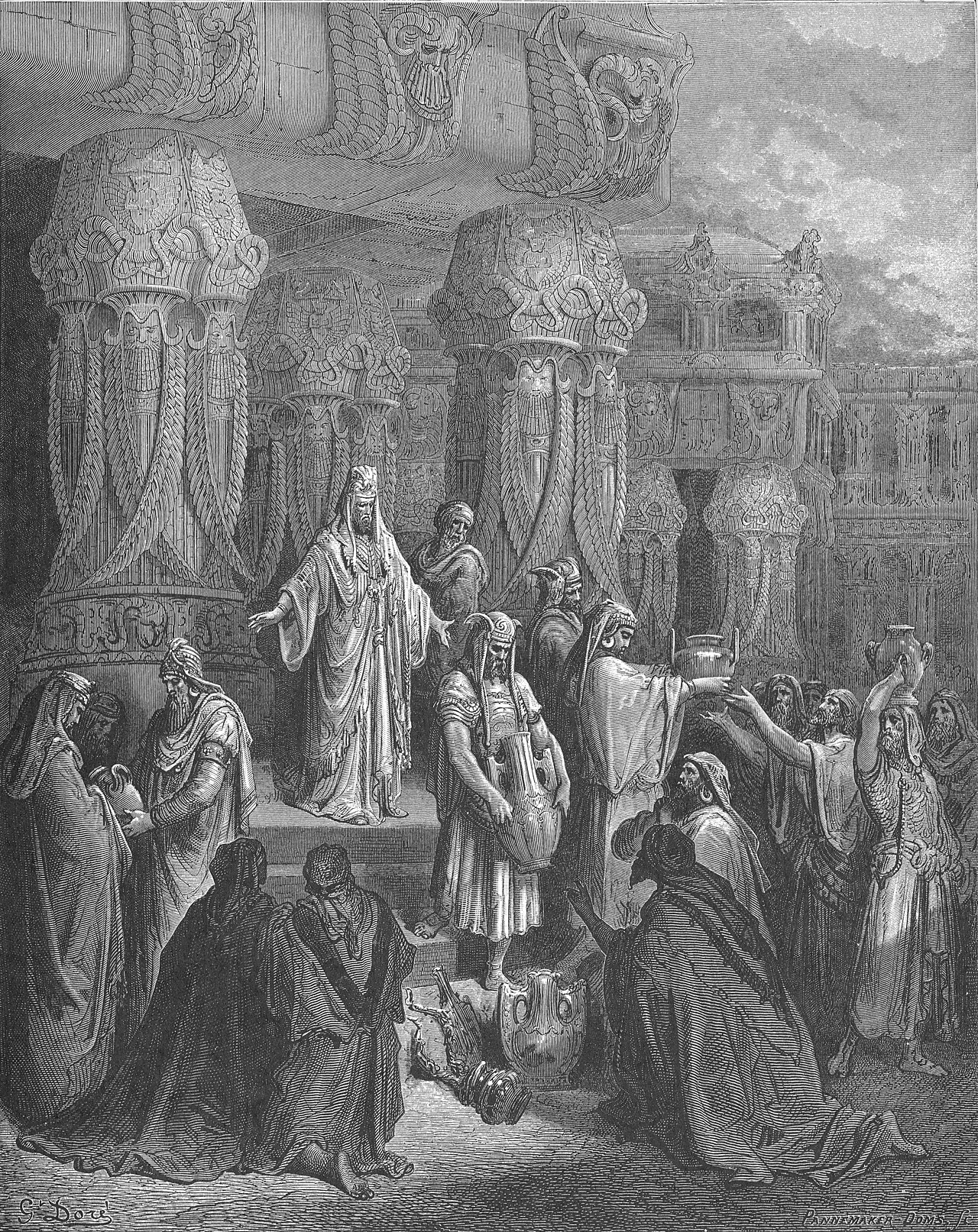
Who and where
1 name in this verse with a page on the site.
This page draws on Adam Clarke, Commentary on the Bible; Albert Barnes, Notes, Explanatory and Practical, on the Old and New Testaments (1832-1869); Bede, Commentary on Ezra and Nehemiah; John Gill, Exposition of the Old Testament (1748-1763); John Wesley, Explanatory Notes upon the Old Testament and Matthew Henry, Commentary on the Whole Bible.