
Ezra 6:11
in Ezra 6I also decree that if any man interferes with this directive, a beam is to be torn from his house and raised up, and he is to be impaled on it. And his own house shall be made a pile of rubble for this offense.
BSB
The same verse in ASV and KJV ▾
ASV
Also I have made a decree, that whosoever shall alter this word, let a beam be pulled out from his house, and let him be lifted up and fastened thereon; and let his house be made a dunghill for this:
KJV
Also I have made a decree, that whosoever shall alter this word, let timber be pulled down from his house, and being set up, let him be hanged thereon; and let his house be made a dunghill for this.
⋯
This verse in Ezra 6
Commentary
6 notes on this verseAlso I have made a decree, that whosoever shall alter this word,.... Act contrary to this command, will not obey it, but as much as in him lies changes and revokes it: let timber be pulled down from his house, and being set up, let him, be hanged thereon; that is, let a beam be taken from it, and a gallows or gibbet made of it, and hang him on it: and let his house be made a dunghill for this; be pulled down, and never rebuilt more; see Gill on Dan 2:2; see Gill on Dan 2:9.
This site's exposition
a pile of rubble for this offense
on Ezra 6:11-12
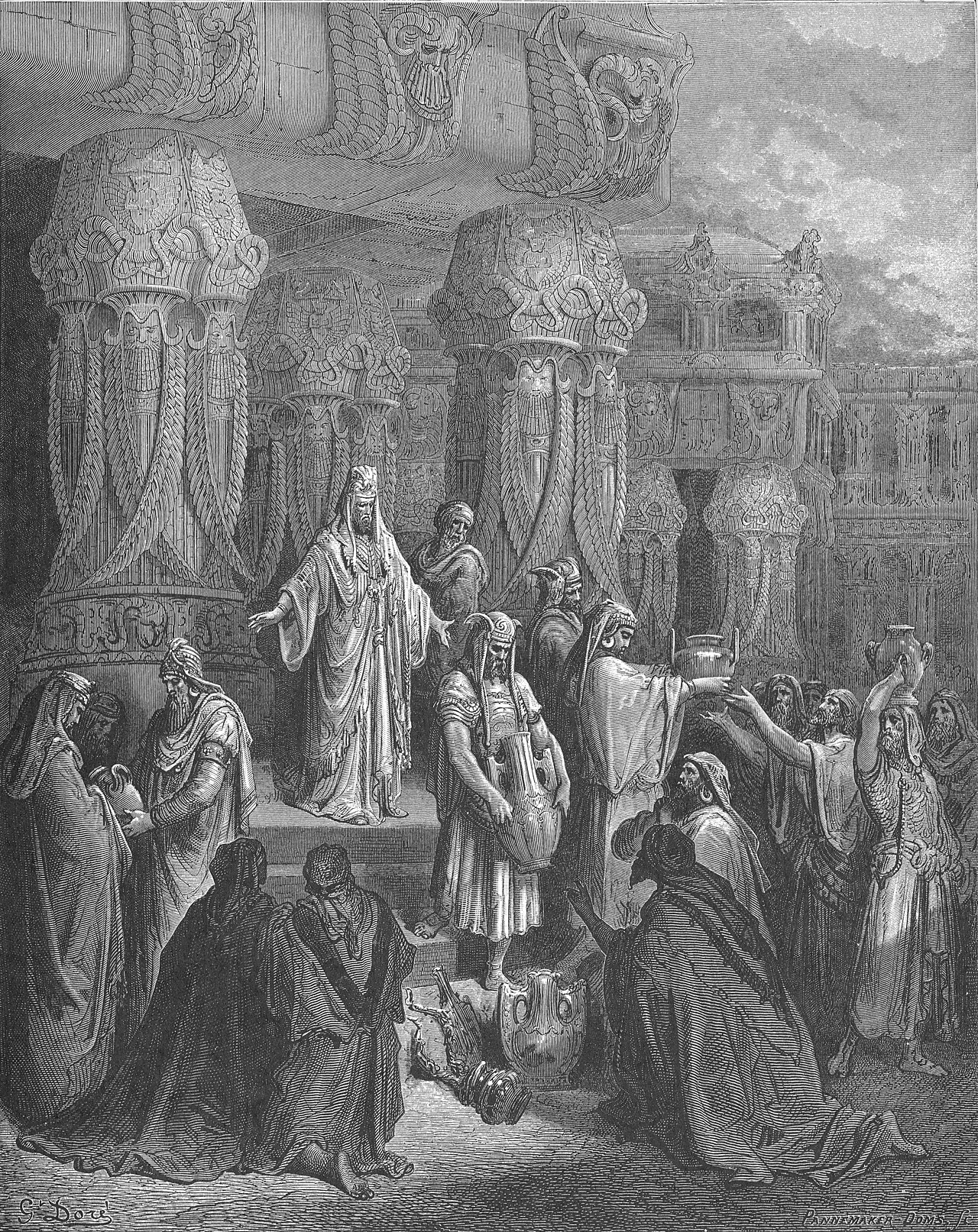
Darius backs the decree with a threat as severe as the grant is generous. Anyone who interferes will have a beam torn from his house and be impaled on it. He closes by asking God to overthrow any king or people who lifts a hand to alter the decree.
The record, by era
The Medieval Church1 voice
Therefore, a decree was established by me, etc. The sense of the letter is clear: because he wished to impose the most severe punishment, if anyone attempted to change the decree of his religion; that is, the loss of everything he could possess and his …
The Nineteenth Century3 voices
A commentator
Albert Barnes1798–1870
Notes, Explanatory and Practical, on the Old and New Testaments (1832-1869)
Being set up, let him be hanged thereon - Rather, “let him be lifted up and crucified upon it.” Crucifixion was the most common form of capital punishment among the Persians.
A commentator
Jamieson, Fausset & Brown1802–1910
Commentary Critical and Explanatory on the Whole Bible (1871)
11, 12. whosoever shall alter this word--The warning was specially directed against the turbulent and fanatical Samaritans. The extremely favorable purport of this edict was no doubt owing in some measure to the influence of Cyrus, of whom Darius entertained a high admiration, and whose two daughters he had married.
Let timber be pulled down - Whether this refers to the punishment of hanging and gibbeting of whipping at a post, or of empaling, is not quite clear. In China they tie culprits to posts; and the executioner cuts them open while alive, takes out their bowels, etc. Empaling, thrusting a sharp stake through the body till it comes out at the side of the neck, or hanging, seems to be intended here. Let his house be made a dunghill - Let it be reduced to ruins, and never more used, except for the most sordid and unclean purposes.
How the passage was read
What the Jewish commentators add
And an order is issued by me And a command is issued by me, along with the issue of a word regarding any person who disobeys this word.
2 more on this passage, in their own words ▾
That they should in order that they should offer up pleasing sacrificing to the God of the heavens, and that they should pray for the life of the king and his children.
And God, Who caused His name to rest there [as translated,] and God, Who caused His name to rest there.
This section is reception history: how the passage was read and kept in the Jewish tradition. Where a reading parts from an essential of the Christian faith, the section says so at that point.
Texts and citation data: Sefaria; each excerpt follows its version’s licence. 3 further sources are cited on this chapter that carry no English text this site may quote or only restate the verse.
The words behind it
22 Hebrew wordsEvery Hebrew word of this verse in the order it stands, with what it means and the door to its own study. The last column counts the times a word stands in the whole Bible: the rarer the word, the more the places it appears belong together.
| Hebrew | Sound | Meaning | Word study | In the Bible |
|---|---|---|---|---|
| וּמִנִּי֮ | umini | and from me | H4481 → | 109 times |
| שִׂ֣ים | sim | it is made | H7761 → | 26 times |
| טְעֵם֒ | teem | a decree | H2942 → | 28 times |
| דִּ֣י | di | that | H1768 → | 345 times |
| כָל־ | khol- | every | H3606 → | 82 times |
| אֱנָ֗שׁ | ʾenash | person | H606 → | |
| דִּ֤י | di | who | H1768 → | 345 times |
| יְהַשְׁנֵא֙ | yehashne' | he will violate | H8133 → | |
| פִּתְגָמָ֣א | pitgama' | command the | H6600 → | 6 times |
| דְנָ֔ה | denah | this | H1836 → | 58 times |
| יִתְנְסַ֥ח | yitnesach | let it be pulled away | H5256 → | |
| אָע֙ | ʾa' | a beam | H636 → | 5 times |
| מִן־ | min- | from | H4481 → | 109 times |
| בַּיְתֵ֔הּ | bayteh | house his | H1005 → | 44 times |
| וּזְקִ֖יף | uzekif | and [he will] be lifted up | H2211 → | |
| יִתְמְחֵ֣א | yitmeche' | let him be impaled | H4223 → | |
| עֲלֹ֑הִי | ʾalohi | on it | H5922 → | 104 times |
| וּבַיְתֵ֛הּ | uvayteh | and house his | H1005 → | 44 times |
| נְוָל֥וּ | nevalu | a refuse-heap | H5122 → | |
| יִתְעֲבֵ֖ד | yitaved | let it be made | H5648 → | 28 times |
| עַל־ | ʾal- | on | H5922 → | 104 times |
| דְּנָֽה׃ | denah | this | H1836 → | 58 times |
וּמִנִּי֮and from me
uminiH4481 →109 times
שִׂ֣יםit is made
simH7761 →26 times
טְעֵם֒a decree
teemH2942 →28 times
דִּ֣יthat
diH1768 →345 times
כָל־every
khol-H3606 →82 times
אֱנָ֗שׁperson
ʾenashH606 →
דִּ֤יwho
diH1768 →345 times
יְהַשְׁנֵא֙he will violate
yehashne'H8133 →
פִּתְגָמָ֣אcommand the
pitgama'H6600 →6 times
דְנָ֔הthis
denahH1836 →58 times
יִתְנְסַ֥חlet it be pulled away
yitnesachH5256 →
אָע֙a beam
ʾa'H636 →5 times
מִן־from
min-H4481 →109 times
בַּיְתֵ֔הּhouse his
baytehH1005 →44 times
וּזְקִ֖יףand [he will] be lifted up
uzekifH2211 →
יִתְמְחֵ֣אlet him be impaled
yitmeche'H4223 →
עֲלֹ֑הִיon it
ʾalohiH5922 →104 times
וּבַיְתֵ֛הּand house his
uvaytehH1005 →44 times
נְוָל֥וּa refuse-heap
nevaluH5122 →
יִתְעֲבֵ֖דlet it be made
yitavedH5648 →28 times
עַל־on
ʾal-H5922 →104 times
דְּנָֽה׃this
denahH1836 →58 times
A shaded row is a word that stands 400 times or fewer in the Bible.
The walk
8 stopsEach card is a verse this one points to, and under it the verses that one points to in turn. Where several paths arrive at the same place, that place is listed first: the text keeps returning to it.
Through
Daniel 2:5The king replied to the astrologers, “My word is final: If you do not tell me the dream and its interpretation, you will be cut into pieces and your houses will be reduced to…
it leads to
- Daniel 3:29
Therefore I decree that the people of any nation or language who say anything offensive against the God of Shadrach, Meshach, and Abednego will be cut into pieces and their houses reduced to rubble.…
Reached by 2 separate paths from here.
- 2 Kings 10:27
They also demolished the sacred pillar of Baal. Then they tore down the temple of Baal and made it into a latrine, which it is to this day.
- Daniel 3:29
Through
2 Kings 10:27They also demolished the sacred pillar of Baal. Then they tore down the temple of Baal and made it into a latrine, which it is to this day.
it leads to
- Daniel 2:5
The king replied to the astrologers, “My word is final: If you do not tell me the dream and its interpretation, you will be cut into pieces and your houses will be reduced to…
Reached by 2 separate paths from here.
- Daniel 2:5
Through
Ezra 7:26If anyone does not keep the law of your God and the law of the king, let a strict judgment be executed against him, whether death, banishment, confiscation of property, or imprisonment.
it leads to
- Deuteronomy 13:1–18
If a prophet or dreamer of dreams arises among you and proclaims a sign or wonder to you,
- Leviticus 20:1–27
Then the LORD said to Moses,
- Deuteronomy 13:1–18
Through
2 Kings 9:37And Jezebel’s body will lie like dung in the field on the plot of ground at Jezreel, so that no one can say: This is Jezebel.’”
it leads to
- Jeremiah 8:2
They will be exposed to the sun and moon, and to all the host of heaven which they have loved, served, followed, consulted, and worshiped. Their bones will not be gathered up or buried,…
- Jeremiah 16:4
“They will die from deadly diseases. They will not be mourned or buried, but will lie like dung on the ground. They will be finished off by sword and famine, and their corpses will…
- Psalms 83:10
who perished at Endor and became like dung on the ground.
- Jeremiah 8:2
Where this verse is studied
On this page
Studies9
On this verse
About Ezra
This page draws on Adam Clarke, Commentary on the Bible; Albert Barnes, Notes, Explanatory and Practical, on the Old and New Testaments (1832-1869); Bede, Commentary on Ezra and Nehemiah; Jamieson, Fausset & Brown, Commentary Critical and Explanatory on the Whole Bible; John Gill, Exposition of the Old Testament (1748-1763); John Gill, Exposition of the Old Testament and Matthew Henry, Commentary on the Whole Bible.