
Ezra 6:7
in Ezra 6Leave this work on the house of God alone. Let the governor and elders of the Jews rebuild this house of God on its original site.
BSB
The same verse in ASV and KJV ▾
ASV
let the work of this house of God alone; let the governor of the Jews and the elders of the Jews build this house of God in its place.
KJV
Let the work of this house of God alone; let the governor of the Jews and the elders of the Jews build this house of God in his place.
⋯
This verse in Ezra 6
Commentary
9 notes on this verseThis site's exposition
You must stay away from that place
on Ezra 6:6-8
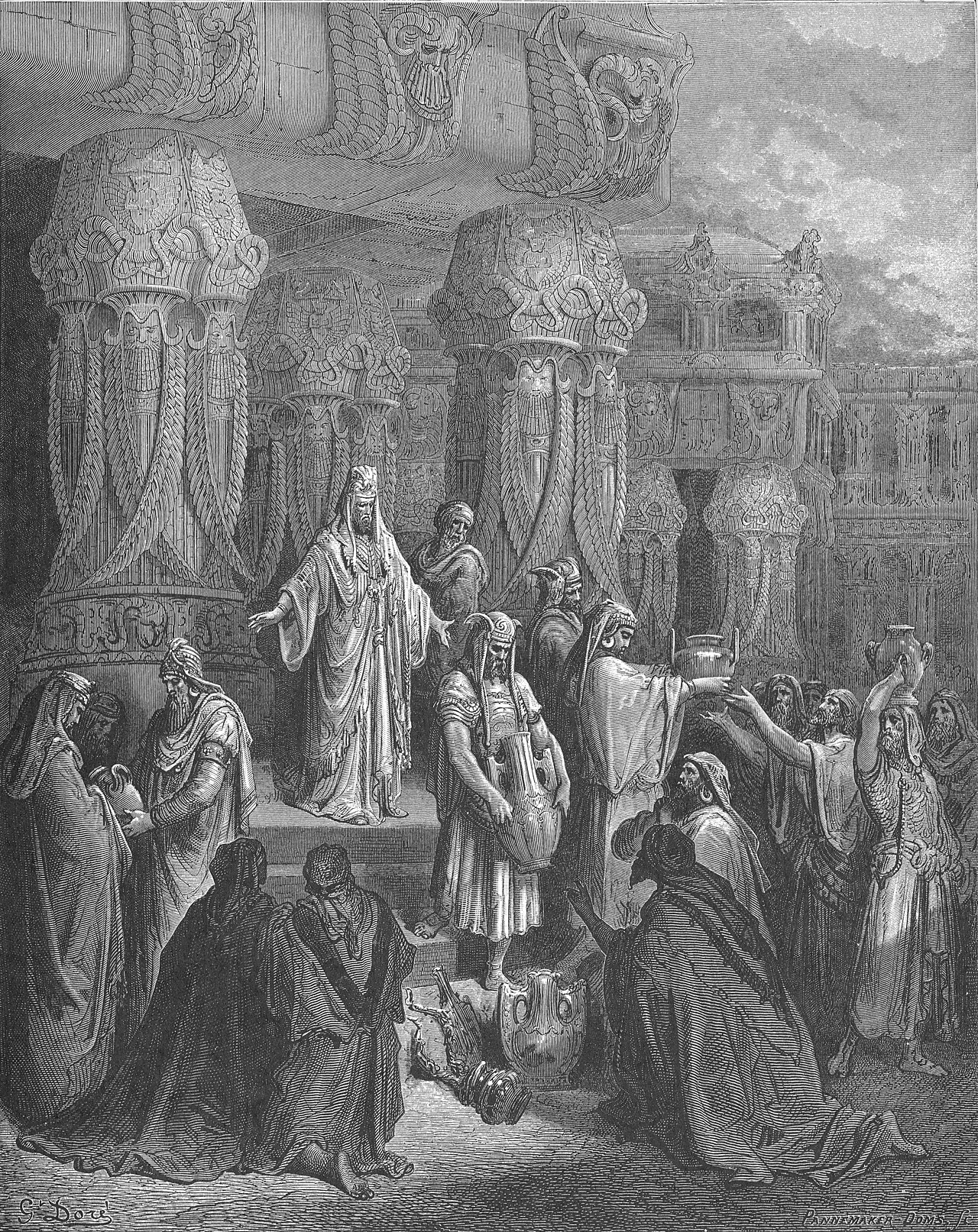
Darius orders the governor and his associates to stay away and let the governor and elders of the Jews rebuild the house of God. He funds the work, paying the cost in full from the royal treasury. A king who could have shut the project down becomes its paymaster.
This site's exposition
on its original site
The words on its original site echo Cyrus's instruction as the elders quoted it at 5:15, and Darius now confirms it. Their governor stands beside the elders. Adam Clarke names Zerubbabel as the civil governor who led the rebuilding with Jeshua the high priest.
The record, by era
The Church Fathers5 voices
Ezra, the priest of God, restored the law, which had been burned by the Chaldeans in the archives of the temple. For indeed he was full of the same spirit with which the Scriptures had previously been filled. [De Mirabilibus Sacrae Scripturae, 2.33]
A commentator
Eusebius of CaesareaThe Church History of Eusebius, Book 5 · Written before 339.
proposed
And this was nothing wonderful for God to do, who, in the captivity of the people under Nebuchadnezzar, when the Scriptures had been destroyed, and the Jews had returned to their own country after seventy years, afterwards, in the time of Artaxerxes, king of the Persians, inspired Ezra the priest, of the tribe of Levi, to relate all the words of the former prophets, and to restore to the people the legislation of Moses. [quoting Irenaeus] Such are the words of Irenaeus.
If (Noah) had not had this (conservative power) by so short a route, there would (still) be this (consideration) to warrant our assertion of (the genuineness of) this Scripture: he could equally have renewed it, under the Spirit's inspiration, after it had been destroyed by the violence of the deluge, as, after the destruction of Jerusalem by the Babylonian storming of it, every document of the Jewish literature is generally agreed to have been restored through Ezra.
We must certainly understand by this day the time of the composition of the history, whether you prefer the view that Moses was the author of the Pentateuch or that Ezra re-edited it. In either case I make no objection. The question now is whether the words unto this day are to be referred to the time of publishing or writing the books, and if so it is for him to show, now that so many years have rolled away since that day, that either the idols hidden beneath the oak have been found, or the grave of Moses discovered; for he obstinately maintains that what does not happen so long as the point of time indicated by until and unto has not been attained, begins to be when that point has been reached.
And there was nothing astonishing in God having done this,-He who, when, during the captivity of the people under Nebuchadnezzar, the Scriptures had been corrupted, and when, after seventy years, the Jews had returned to their own land, then, in the times of Artaxerxes king of the Persians, inspired Esdras the priest, of the tribe of Levi, to recast all the words of the former prophets, and to re-establish with the people the Mosaic legislation.
2 more voices on this verse
The Puritans and the Awakening2 voices
Let the work of this house of God alone,.... Suffer them to go on with it, and do not hinder them; it looks, by these expressions, as if he had some suspicion or hint given him that they were inclined to molest them, or that there were some that stirred them up to it, and were desirous of it: let the governor of the Jews, and the elders of the Jews, build this house of God in his place; where it formerly stood; that is, go on with the building of it.
Thus was the wrath of the enemy made to praise God and the remainder thereof did he restrain. (2.) He orders them out of his own revenue to assist the builders with money, [1.] For carrying on the building,
The words behind it
15 Hebrew wordsEvery Hebrew word of this verse in the order it stands, with what it means and the door to its own study. The last column counts the times a word stands in the whole Bible: the rarer the word, the more the places it appears belong together.
| Hebrew | Sound | Meaning | Word study | In the Bible |
|---|---|---|---|---|
| שְׁבֻ֕קוּ | shevuku | leave! | H7662 → | |
| לַעֲבִידַ֖ת | laavidat | <obj.> [the] work of | H5673 → | 6 times |
| בֵּית־ | beit- | [the] house of | H1005 → | 44 times |
| אֱלָהָ֣א | ʾelaha' | <the> God | H426 → | 95 times |
| דֵ֑ךְ | dekh | this | H1791 → | 13 times |
| פַּחַ֤ת | pachat | [the] governor of | H6347 → | 10 times |
| יְהוּדָיֵא֙ | yehudaye' | Jews the | H3062 → | 10 times |
| וּלְשָׂבֵ֣י | ulesavei | and <to> [the] elders of | H7868 → | 5 times |
| יְהוּדָיֵ֔א | yehudaye' | Jews the | H3062 → | 10 times |
| בֵּית־ | beit- | [the] house of | H1005 → | 44 times |
| אֱלָהָ֥א | ʾelaha' | <the> God | H426 → | 95 times |
| דֵ֖ךְ | dekh | this | H1791 → | 13 times |
| יִבְנ֥וֹן | yivnon | let them build | H1124 → | 22 times |
| עַל־ | ʾal- | on | H5922 → | 104 times |
| אַתְרֵֽהּ׃ | ʾatreh | place its | H870 → | 8 times |
שְׁבֻ֕קוּleave!
shevukuH7662 →
לַעֲבִידַ֖ת<obj.> [the] work of
laavidatH5673 →6 times
בֵּית־[the] house of
beit-H1005 →44 times
אֱלָהָ֣א<the> God
ʾelaha'H426 →95 times
דֵ֑ךְthis
dekhH1791 →13 times
פַּחַ֤ת[the] governor of
pachatH6347 →10 times
יְהוּדָיֵא֙Jews the
yehudaye'H3062 →10 times
וּלְשָׂבֵ֣יand <to> [the] elders of
ulesaveiH7868 →5 times
יְהוּדָיֵ֔אJews the
yehudaye'H3062 →10 times
בֵּית־[the] house of
beit-H1005 →44 times
אֱלָהָ֥א<the> God
ʾelaha'H426 →95 times
דֵ֖ךְthis
dekhH1791 →13 times
יִבְנ֥וֹןlet them build
yivnonH1124 →22 times
עַל־on
ʾal-H5922 →104 times
אַתְרֵֽהּ׃place its
ʾatrehH870 →8 times
A shaded row is a word that stands 400 times or fewer in the Bible.
Where this verse is studied
On this page
Studies9
On this verse
About Ezra
This page draws on 10 works. Open the list of works
This page draws on Adam Clarke, Commentary on the Bible; Augustine of Hippo, Commentary (church-history corpus); Berean Standard Bible, Ezra 5; Eusebius of Caesarea, The Church History of Eusebius, Book 5; Irenaeus, Irenaeus Against Heresies Book 3; Jerome, The Perpetual Virginity of Blessed Mary; John Gill, Exposition of the Old Testament; John Gill, Exposition of the Old Testament (1748-1763); Matthew Henry, Commentary on the Whole Bible and Tertullian, On the Apparel of Women Book I.