
Exodus 4:15
in Exodus 4You are to speak to him and put the words in his mouth. I will help both of you to speak, and I will teach you what to do.
BSB
The same verse in ASV and KJV ▾
ASV
And thou shalt speak unto him, and put the words in his mouth: and I will be with thy mouth, and with his mouth, and will teach you what ye shall do.
KJV
And thou shalt speak unto him, and put words in his mouth: and I will be with thy mouth, and with his mouth, and will teach you what ye shall do.
⋯
This verse in Exodus 4
Commentary
4 notes on this verseThis site's exposition
put the words in his mouth
on Exodus 4:15-16
The arrangement is the shape of prophecy in miniature, one man receiving the word and another carrying it. Exodus 7:1 states it outright: "I have made you like God to Pharaoh, and your brother Aaron will be your prophet".
The record, by era
The Puritans and the Awakening1 voice
And thou shalt speak unto him, and put words in his mouth,....
The Nineteenth Century2 voices
I will be with thy mouth, and with his mouth - Ye shall be both, in all things which I appoint you to do in this business, under the continual inspiration of the Most High.
A commentator
Albert Barnes1798–1870
Notes, Explanatory and Practical, on the Old and New Testaments (1832-1869)
proposed
Thou shalt speak - Moses thus retains his position as “mediator;” the word comes to him first, he transmits it to his brother.
How the passage was read
What the Jewish commentators add
On the verses either side of this one
I KNOW THAT HE [Aaron] CAN SPEAK WELL. That is to say, “It is revealed before Me that, out of his love for you, Aaron will willingly speak on your behalf even if I were not to command him.
This section is reception history: how the passage was read and kept in the Jewish tradition. Where a reading parts from an essential of the Christian faith, the section says so at that point.
Texts and citation data: Sefaria; each excerpt follows its version’s licence. 4 further sources are cited on this chapter that carry no English text this site may quote or only restate the verse.
The words behind it
17 Hebrew wordsEvery Hebrew word of this verse in the order it stands, with what it means and the door to its own study. The last column counts the times a word stands in the whole Bible: the rarer the word, the more the places it appears belong together.
| Hebrew | Sound | Meaning | Word study | In the Bible |
|---|---|---|---|---|
| וְדִבַּרְתָּ֣ | vedibarta | and you will speak | H1696 → | 1141 times |
| אֵלָ֔יו | ʾelav | to him | H413 → | 5510 times |
| וְשַׂמְתָּ֥ | vesamta | and you will put | H7760 → | 584 times |
| אֶת־ | ʾet- | <obj.> | H853 → | 10935 times |
| הַדְּבָרִ֖ים | hadevarim | the words | H1697 → | 1440 times |
| בְּפִ֑יו | befiv | in mouth his | H6310 → | 498 times |
| וְאָנֹכִ֗י | veanokhi | and I | H595 → | 359 times |
| אֶֽהְיֶ֤ה | ʾehyeh | I will be | H1961 → | 3559 times |
| עִם־ | ʾim- | with | H5973 → | 1050 times |
| פִּ֙יךָ֙ | pikha | mouth your | H6310 → | 498 times |
| וְעִם־ | veim- | and with | H5973 → | 1050 times |
| פִּ֔יהוּ | pihu | mouth his | H6310 → | 498 times |
| וְהוֹרֵיתִ֣י | vehoreiti | and I will teach | H3384 → | 80 times |
| אֶתְכֶ֔ם | ʾetkhem | <obj.> you | H853 → | 10935 times |
| אֵ֖ת | ʾet | <obj.> | H853 → | 10935 times |
| אֲשֶׁ֥ר | ʾasher | [that] which | H834 → | 5497 times |
| תַּעֲשֽׂוּן׃ | taasun | you will do ! | H6213 → | 2628 times |
וְדִבַּרְתָּ֣and you will speak
vedibartaH1696 →1141 times
אֵלָ֔יוto him
ʾelavH413 →5510 times
וְשַׂמְתָּ֥and you will put
vesamtaH7760 →584 times
אֶת־<obj.>
ʾet-H853 →10935 times
הַדְּבָרִ֖יםthe words
hadevarimH1697 →1440 times
בְּפִ֑יוin mouth his
befivH6310 →498 times
וְאָנֹכִ֗יand I
veanokhiH595 →359 times
אֶֽהְיֶ֤הI will be
ʾehyehH1961 →3559 times
עִם־with
ʾim-H5973 →1050 times
פִּ֙יךָ֙mouth your
pikhaH6310 →498 times
וְעִם־and with
veim-H5973 →1050 times
פִּ֔יהוּmouth his
pihuH6310 →498 times
וְהוֹרֵיתִ֣יand I will teach
vehoreitiH3384 →80 times
אֶתְכֶ֔ם<obj.> you
ʾetkhemH853 →10935 times
אֵ֖ת<obj.>
ʾetH853 →10935 times
אֲשֶׁ֥ר[that] which
ʾasherH834 →5497 times
תַּעֲשֽׂוּן׃you will do !
taasunH6213 →2628 times
A shaded row is a word that stands 400 times or fewer in the Bible.
The walk
8 stopsEach card is a verse this one points to, and under it the verses that one points to in turn. Where several paths arrive at the same place, that place is listed first: the text keeps returning to it.
Through
Luke 21:15For I will give you speech and wisdom that none of your adversaries will be able to resist or contradict.
it leads to
- Jeremiah 1:9
Then the LORD reached out His hand, touched my mouth, and said to me: “Behold, I have put My words in your mouth.
- Ephesians 6:19
Pray also for me, that whenever I open my mouth, words may be given me so that I will boldly make known the mystery of the gospel,
- Luke 12:12
For at that time the Holy Spirit will teach you what you should say.”
- Acts 6:10
but they could not stand up to his wisdom or the Spirit by whom he spoke.
- Exodus 4:11–12
And the LORD said to him, “Who gave man his mouth? Or who makes the mute or the deaf, the sighted or the blind? Is it not I, the LORD?
- Jeremiah 1:9
Through
Deuteronomy 18:18I will raise up for them a prophet like you from among their brothers. I will put My words in his mouth, and he will tell them everything I command him.
it leads to
- John 12:49–50
I have not spoken on My own, but the Father who sent Me has commanded Me what to say and how to say it.
- John 8:28
So Jesus said, “When you have lifted up the Son of Man, then you will know that I am He, and that I do nothing on My own, but speak exactly what the Father…
- Deuteronomy 18:15
The LORD your God will raise up for you a prophet like me from among your brothers. You must listen to him.
- John 12:49–50
Where this verse is studied
On this page
Studies9
On this verse
On this chapter
About Exodus
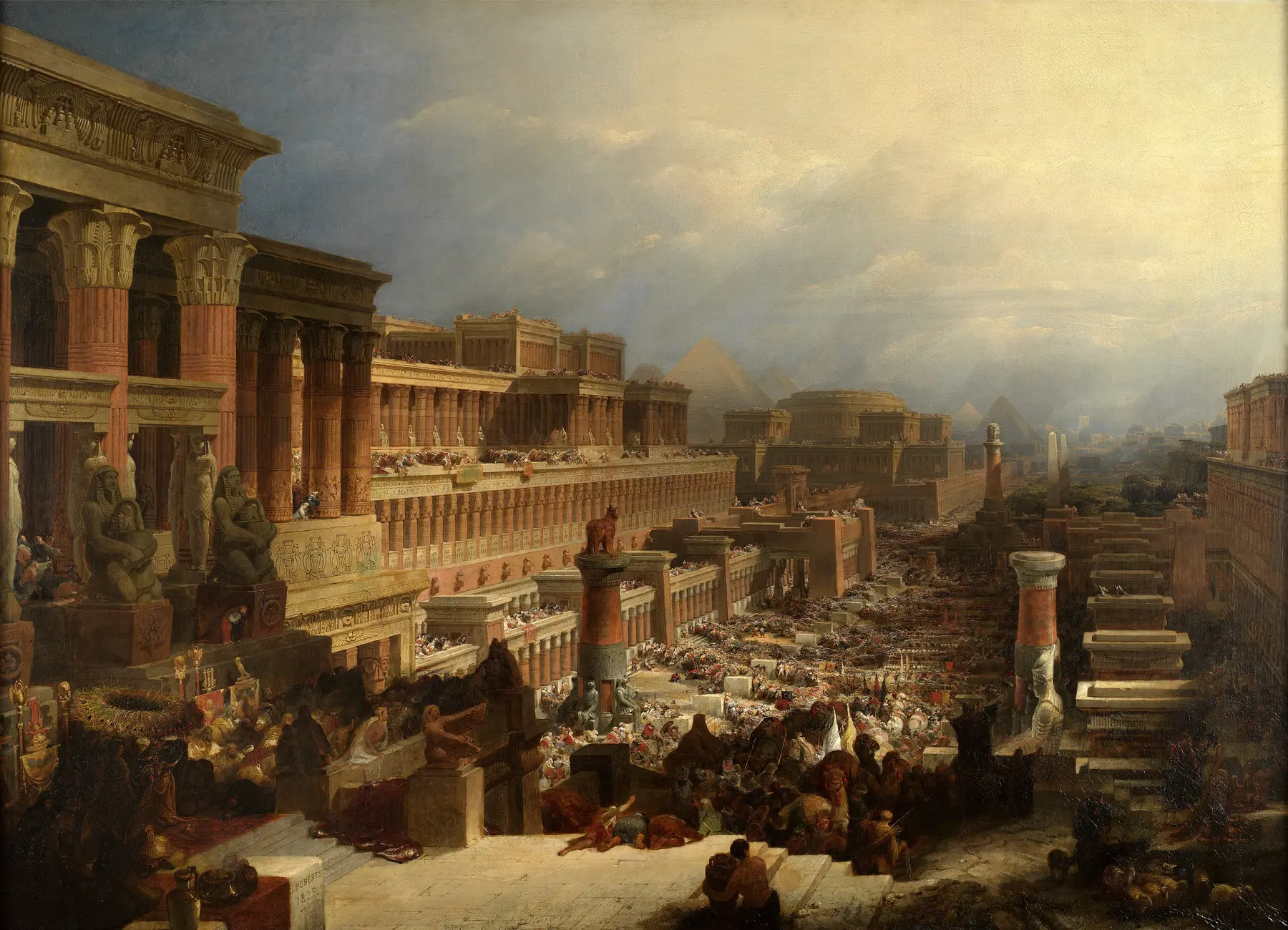
This page draws on Adam Clarke, Commentary on the Bible; Albert Barnes, Notes, Explanatory and Practical, on the Old and New Testaments (1832-1869); John Gill, Exposition of the Old Testament (1748-1763); Keil and Delitzsch, Biblical Commentary on the Old Testament: The Pentateuch and Matthew Henry, Commentary on the Whole Bible.