
Exodus 7:8
in Exodus 7The LORD said to Moses and Aaron,
BSB
The same verse in ASV and KJV ▾
ASV
And Jehovah spake unto Moses and unto Aaron, saying,
KJV
And the Lord spake unto Moses and unto Aaron, saying,
⋯
This verse in Exodus 7
Commentary
4 notes on this verseThis site's exposition
spake unto Moses and unto Aaron
on Exodus 7:8-10
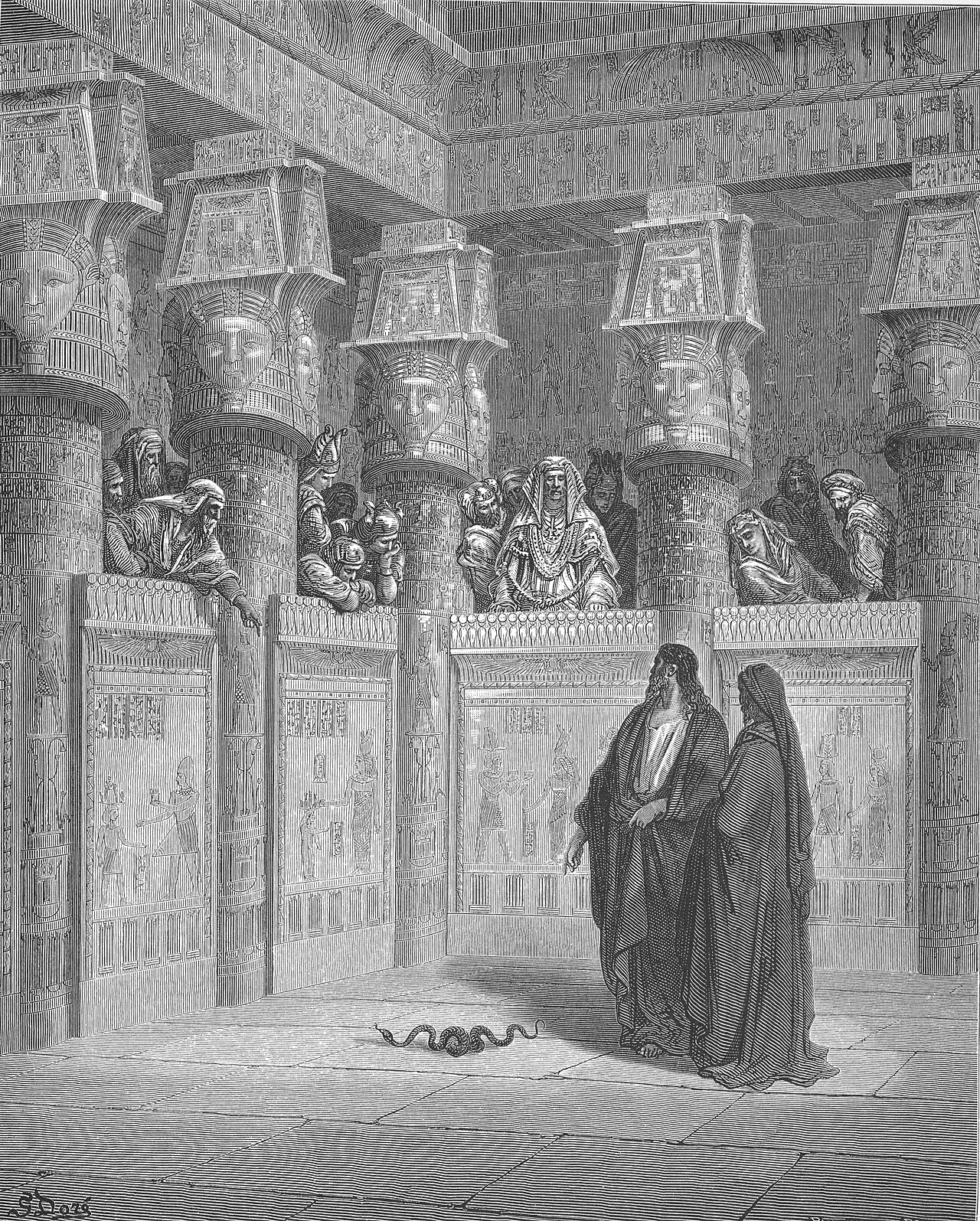
The first sign given at the bush comes back. At 4:2-4 the rod became a serpent and Moses fled from it, and here Aaron casts it down before Pharaoh on command, though the Hebrew noun is not the one used at the bush. Exodus 4:3 has nachash, the ordinary word for a snake, while 7:9, 7:10 and 7:12 have tannin, a word used elsewhere of a great creature of the water. The same rod turns the river at verse 20, divides the sea at 14:16 and strikes the rock at 17:6.
The record, by era
The Church Fathers1 voice
Great indeed was Moses, who afflicted Egypt grievously and saved his people by many signs and prodigies, who went within the cloud and instituted the twofold law: the law of the letter without and the law of the spirit within. Aaron also, the brother of Moses according to the flesh and the spirit, sacrificed and prayed on behalf of the people, as consecrated minister of the great and holy tabernacle, "which the Lord has erected and not man."
The Puritans and the Awakening2 voices
And the Lord spake unto Moses and unto Aaron,.... After he had given them their commission, and instructions to go to Pharaoh, and a little before they went in to him: saying, as follows.
He chastises his disobedience by a plague, the first of the ten, turning the waters into blood; but Pharaoh hardens his heart against this correction,
The words behind it
7 Hebrew wordsEvery Hebrew word of this verse in the order it stands, with what it means and the door to its own study. The last column counts the times a word stands in the whole Bible: the rarer the word, the more the places it appears belong together.
| Hebrew | Sound | Meaning | Word study | In the Bible |
|---|---|---|---|---|
| וַיֹּ֣אמֶר | vaiyomer | and he said | H559 → | 5305 times |
| יְהוָ֔ה | yahweh | Yahweh | H3068 → | 6520 times |
| אֶל־ | ʾel- | to | H413 → | 5510 times |
| מֹשֶׁ֥ה | mosheh | Moses | H4872 → | 765 times |
| וְאֶֽל־ | veel- | and to | H413 → | 5510 times |
| אַהֲרֹ֖ן | ʾaharon | Aaron | H175 → | 347 times |
| לֵאמֹֽר׃ | lemor | <to> saying | H559 → | 5305 times |
וַיֹּ֣אמֶרand he said
vaiyomerH559 →5305 times
יְהוָ֔הYahweh
yahwehH3068 →6520 times
אֶל־to
ʾel-H413 →5510 times
מֹשֶׁ֥הMoses
moshehH4872 →765 times
וְאֶֽל־and to
veel-H413 →5510 times
אַהֲרֹ֖ןAaron
ʾaharonH175 →347 times
לֵאמֹֽר׃<to> saying
lemorH559 →5305 times
A shaded row is a word that stands 400 times or fewer in the Bible.
Where this verse is studied
On this page
Studies1
About Exodus
Who and where
2 names in this verse with a page on the site.
This page draws on Adam Clarke, Commentary on the Bible; Gregory of Nazianzus, ORATION 43, On St. Basil 72; John Gill, Exposition of the Old Testament (1748-1763); Keil and Delitzsch, Biblical Commentary on the Old Testament: The Pentateuch and Matthew Henry, Commentary on the Whole Bible.