
Exodus 4:29
in Exodus 4Then Moses and Aaron went and assembled all the elders of the Israelites,
BSB
The same verse in ASV and KJV ▾
ASV
And Moses and Aaron went and gathered together all the elders of the children of Israel:
KJV
And Moses and Aaron went and gathered together all the elders of the children of Israel:
⋯
This verse in Exodus 4
Commentary
6 notes on this verseA commentator
Albert Barnes1798–1870
Notes, Explanatory and Practical, on the Old and New Testaments (1832-1869)
All the elders - The Israelites retained their own national organization; their affairs were administered by their own elders, who called a public assembly Exo 4:31 to hear the message brought by Moses and Aaron.
This site's exposition
gathered together all the elders
on Exodus 4:29-31
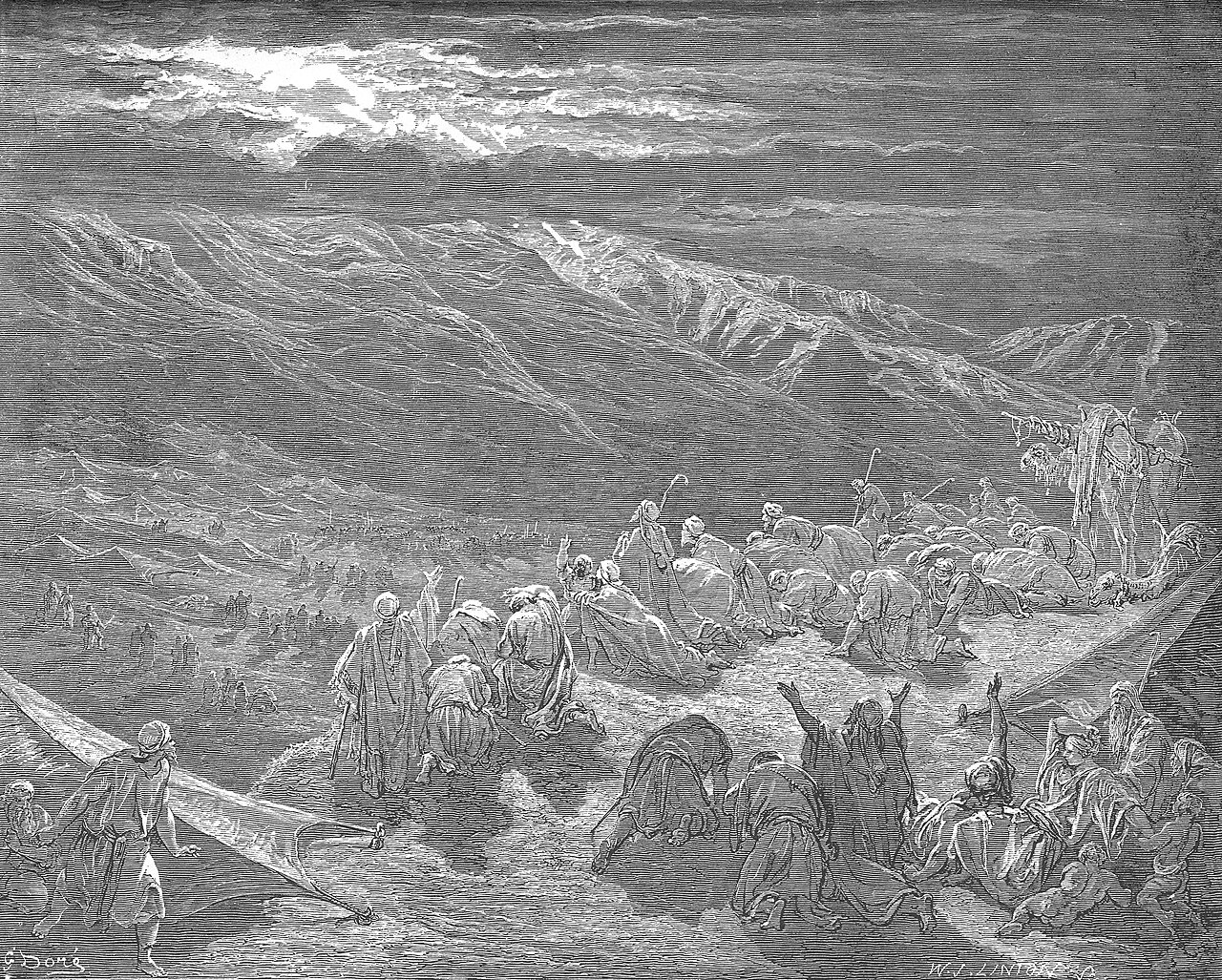
The chapter closes on the answer to the objection it opened with, since Moses had said they will not believe me and the people believed. What moves them is the report that the LORD had visited the children of Israel and looked upon their affliction, which is the language of Genesis 50:24 where Joseph promised that God will surely visit you. They bow their heads and worship, the same act the people perform at Exodus 12:27 on the night the passover is commanded. The belief recorded here does not hold past chapter five, where these same people turn on Moses once Pharaoh doubles the work.
The record, by era
The Puritans and the Awakening3 voices
18 ), knowing that no man could do those works that they did, unless God were with him. They gave glory to God: They bowed their heads and worshipped, therein expressing not only their humble thankfulness to God, who had raised them up and sent them a deliverer, but also their cheerful readiness to observe orders, and pursue the methods of their deliverance.
quarantine:debris (2026-07-29) — leading-citation-number+unbalanced-parens
And Moses and Aaron went,.... Set forward for Egypt: and being come thither: gathered together all the elders of the children of Israel; the heads of tribes and families, as many as they could conveniently get together in one place; probably in the metropolis of the kingdom, where Pharaoh's palace was, since we quickly hear of their going in to him.
It was a very great honour that Moses was called to when God commissioned him to bring Israel out of Egypt; yet he is with difficulty persuaded to accept the commission, and does it at last with great reluctance, which we should rather impute to a humble diffidence of himself and his own sufficiency than to any unbelieving distrust of God and his word and power.
The Nineteenth Century1 voice
A commentator
Jamieson, Fausset & Brown1802–1910
Commentary Critical and Explanatory on the Whole Bible (1871)
proposed
Moses and Aaron went--towards Egypt, Zipporah and her sons having been sent back. (Compare Ex 18:2). gathered . . . all the elders--Aaron was spokesman, and Moses performed the appointed miracles--through which "the people" (that is, the elders) believed (1Ki 17:24;
quarantine:debris (2026-07-29) — unbalanced-parens
The words behind it
9 Hebrew wordsEvery Hebrew word of this verse in the order it stands, with what it means and the door to its own study. The last column counts the times a word stands in the whole Bible: the rarer the word, the more the places it appears belong together.
| Hebrew | Sound | Meaning | Word study | In the Bible |
|---|---|---|---|---|
| וַיֵּ֥לֶךְ | vaiyelekh | and he went | H1980 → | 1546 times |
| מֹשֶׁ֖ה | mosheh | Moses | H4872 → | 765 times |
| וְאַהֲרֹ֑ן | veaharon | and Aaron | H175 → | 347 times |
| וַיַּ֣אַסְפ֔וּ | vaiyaasfu | and they gathered | H622 → | 200 times |
| אֶת־ | ʾet- | <obj.> | H853 → | 10935 times |
| כָּל־ | kol- | all | H3605 → | 5413 times |
| זִקְנֵ֖י | ziknei | [the] elders of | H2205 → | 178 times |
| בְּנֵ֥י | benei | [the] people of | H1121 → | 4930 times |
| יִשְׂרָאֵֽל׃ | yisrael | Israel | H3478 → | 2507 times |
וַיֵּ֥לֶךְand he went
vaiyelekhH1980 →1546 times
מֹשֶׁ֖הMoses
moshehH4872 →765 times
וְאַהֲרֹ֑ןand Aaron
veaharonH175 →347 times
וַיַּ֣אַסְפ֔וּand they gathered
vaiyaasfuH622 →200 times
אֶת־<obj.>
ʾet-H853 →10935 times
כָּל־all
kol-H3605 →5413 times
זִקְנֵ֖י[the] elders of
zikneiH2205 →178 times
בְּנֵ֥י[the] people of
beneiH1121 →4930 times
יִשְׂרָאֵֽל׃Israel
yisraelH3478 →2507 times
A shaded row is a word that stands 400 times or fewer in the Bible.
The walk
8 stopsEach card is a verse this one points to, and under it the verses that one points to in turn. Where several paths arrive at the same place, that place is listed first: the text keeps returning to it.
Through
Exodus 3:16Go, assemble the elders of Israel and say to them, ‘The LORD, the God of your fathers—the God of Abraham, Isaac, and Jacob—has appeared to me and said: I have surely attended to you…
it leads to
- Psalms 8:4
what is man that You are mindful of him, or the son of man that You care for him?
- Exodus 4:31
and they believed. And when they heard that the LORD had attended to the Israelites and had seen their affliction, they bowed down and worshiped.
- Genesis 50:24
Then Joseph said to his brothers, “I am about to die, but God will surely visit you and bring you up from this land to the land He promised on oath to Abraham, Isaac,…
- Acts 15:14
Simon has told us how God first visited the Gentiles to take from them a people to be His own.
- Psalms 8:4
Through
Exodus 24:1Then the LORD said to Moses, “Come up to the LORD—you and Aaron, Nadab and Abihu, and seventy of Israel’s elders—and you are to worship at a distance.
it leads to
- Numbers 11:16
Then the LORD said to Moses, “Bring Me seventy of the elders of Israel known to you as leaders and officers of the people. Bring them to the Tent of Meeting and have them…
- Exodus 6:23
And Aaron married Elisheba, the daughter of Amminadab and sister of Nahshon, and she bore him Nadab and Abihu, Eleazar and Ithamar.
- Numbers 11:16
Through
Exodus 24:11But God did not lay His hand on the nobles of Israel; they saw Him, and they ate and drank.
it leads to
- Luke 15:23–24
Bring the fattened calf and kill it. Let us feast and celebrate.
- Exodus 18:12
Then Moses’ father-in-law Jethro brought a burnt offering and sacrifices to God, and Aaron came with all the elders of Israel to eat bread with Moses’ father-in-law in the presence of God.
- Luke 15:23–24
Where this verse is studied
On this page
Studies2
On this verse
On this chapter
About Exodus
Who and where
2 names in this verse with a page on the site.
This page draws on Albert Barnes, Notes, Explanatory and Practical, on the Old and New Testaments (1832-1869); Jamieson, Fausset & Brown, Commentary Critical and Explanatory on the Whole Bible; John Gill, Exposition of the Old Testament (1748-1763); Keil and Delitzsch, Biblical Commentary on the Old Testament: The Pentateuch and Matthew Henry, Commentary on the Whole Bible.