
Exodus 21:15
in Exodus 21Whoever strikes his father or mother must surely be put to death.
BSB
The same verse in ASV and KJV ▾
ASV
And he that smiteth his father, or his mother, shall be surely put to death.
KJV
And he that smiteth his father, or his mother, shall be surely put to death.
⋯
This verse in Exodus 21
Commentary
4 notes on this verseThis site's exposition
Whoever strikes his father or mother
on Exodus 21:15-16
Striking a father or a mother carries the sentence murder carries, which puts a sanction under the fifth commandment of Exodus 20:12. Verse 16 makes stealing a man a capital crime, whether he has been sold on or is still in the thief's hand.
The record, by era
The Puritans and the Awakening1 voice
And he that smiteth his father or his mother,....
The Nineteenth Century2 voices
That smiteth his father, or his mother - As such a case argued peculiar depravity, therefore no mercy was to be shown to the culprit.
A commentator
Albert Barnes1798–1870
Notes, Explanatory and Practical, on the Old and New Testaments (1832-1869)
proposed
The following offences were to be punished with death: Striking a parent, compare Deu 27:16. Cursing a parent, compare the marginal references. Kidnapping, whether with a view to retain the person stolen, or to sell him, compare the marginal references.
How the passage was read
What the Jewish commentators add
On the verses either side of this one
To slay him. With guile. is to be understood as if written, and slew him with guile.
This section is reception history: how the passage was read and kept in the Jewish tradition. Where a reading parts from an essential of the Christian faith, the section says so at that point.
Texts and citation data: Sefaria; each excerpt follows its version’s licence. 4 further sources are cited on this chapter that carry no English text this site may quote or only restate the verse.
The words behind it
5 Hebrew wordsEvery Hebrew word of this verse in the order it stands, with what it means and the door to its own study. The last column counts the times a word stands in the whole Bible: the rarer the word, the more the places it appears belong together.
| Hebrew | Sound | Meaning | Word study | In the Bible |
|---|---|---|---|---|
| וּמַכֵּ֥ה | umakeh | and [one who] will strike | H5221 → | 499 times |
| אָבִ֛יו | ʾaviv | <of> father his | H1 → | 1212 times |
| וְאִמּ֖וֹ | veimo | and mother his | H517 → | 220 times |
| מ֥וֹת | mot | certainly <to die> | H4191 → | 839 times |
| יוּמָֽת׃ | yumat | he will be put to death | H4191 → | 839 times |
וּמַכֵּ֥הand [one who] will strike
umakehH5221 →499 times
אָבִ֛יו<of> father his
ʾavivH1 →1212 times
וְאִמּ֖וֹand mother his
veimoH517 →220 times
מ֥וֹתcertainly <to die>
motH4191 →839 times
יוּמָֽת׃he will be put to death
yumatH4191 →839 times
A shaded row is a word that stands 400 times or fewer in the Bible.
The walk
8 stopsEach card is a verse this one points to, and under it the verses that one points to in turn. Where several paths arrive at the same place, that place is listed first: the text keeps returning to it.
Through
1 Timothy 1:9We realize that law is not enacted for the righteous, but for the lawless and rebellious, for the ungodly and sinful, for the unholy and profane, for killers of father or mother, for murderers,
it leads to
- Galatians 3:19
Why then was the law given? It was added because of transgressions, until the arrival of the seed to whom the promise referred. It was administered through angels by a mediator.
- 1 Peter 4:18
And, “If it is hard for the righteous to be saved, what will become of the ungodly and the sinner?”
- Romans 5:20
The law came in so that the trespass would increase; but where sin increased, grace increased all the more,
- Galatians 5:23
gentleness, and self-control. Against such things there is no law.
- Galatians 3:10–14
All who rely on works of the law are under a curse. For it is written: “Cursed is everyone who does not continue to do everything written in the Book of the Law.”
- Galatians 3:19
Through
Proverbs 30:11There is a generation of those who curse their fathers and do not bless their mothers.
it leads to
- Proverbs 20:20
Whoever curses his father or mother, his lamp will be extinguished in deepest darkness.
- Proverbs 20:20
Through
Proverbs 30:17As for the eye that mocks a father and scorns obedience to a mother, may the ravens of the valley pluck it out and young vultures devour it.
it leads to
- Deuteronomy 21:18–21
If a man has a stubborn and rebellious son who does not obey his father and mother and does not listen to them when disciplined,
- Proverbs 30:11
There is a generation of those who curse their fathers and do not bless their mothers.
- Deuteronomy 21:18–21
Where this verse is studied
About Exodus
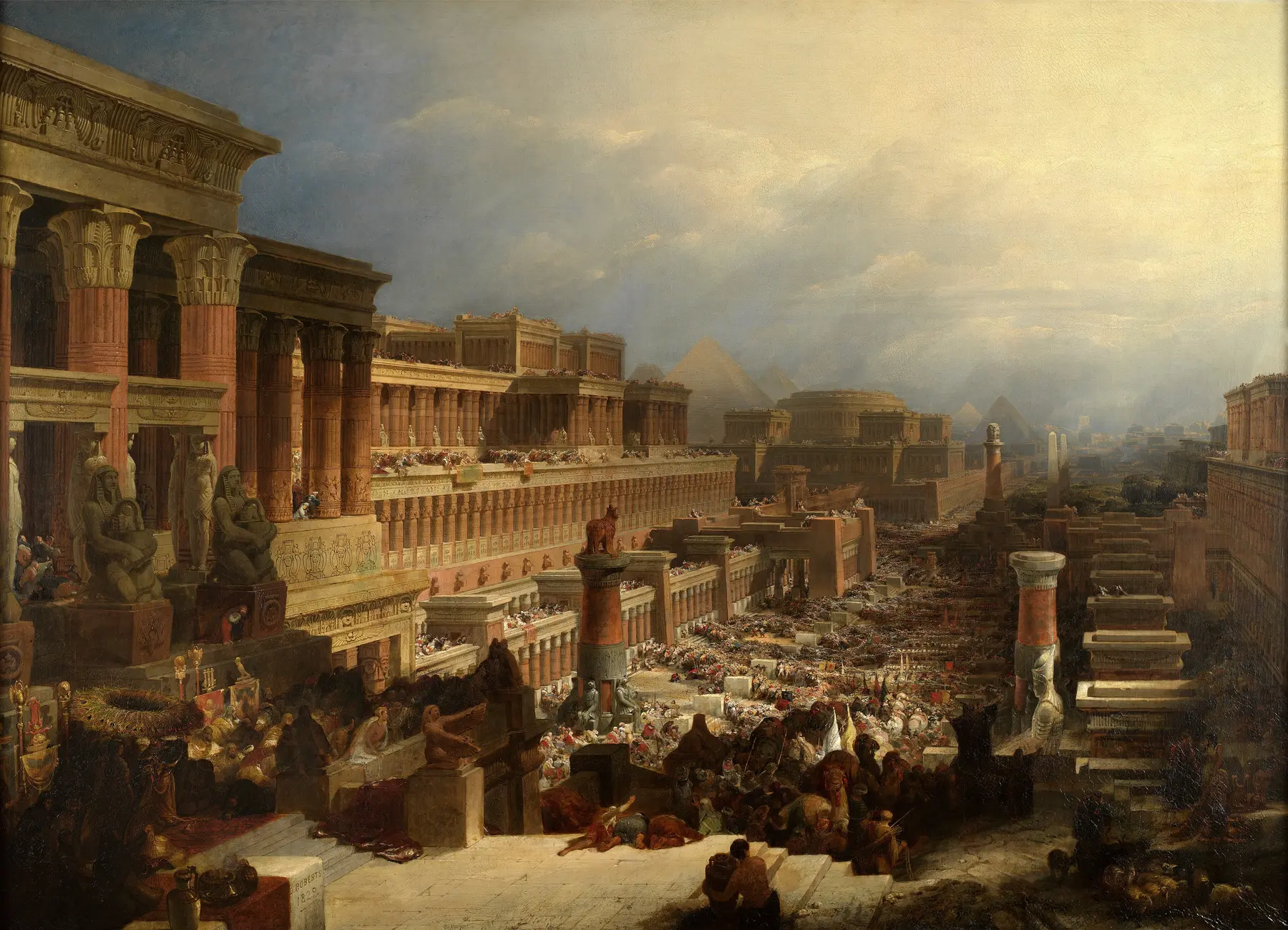
This page draws on Adam Clarke, Commentary on the Bible; Albert Barnes, Notes, Explanatory and Practical, on the Old and New Testaments; Albert Barnes, Notes, Explanatory and Practical, on the Old and New Testaments (1832-1869) and John Gill, Exposition of the Old Testament (1748-1763).