
Exodus 17:7
in Exodus 17He named the place Massah and Meribah because the Israelites quarreled, and because they tested the LORD, saying, “Is the LORD among us or not?”
BSB
The same verse in ASV and KJV ▾
ASV
And he called the name of the place Massah, and Meribah, because of the striving of the children of Israel, and because they tempted Jehovah, saying, Is Jehovah among us, or not?
KJV
And he called the name of the place Massah, and Meribah, because of the chiding of the children of Israel, and because they tempted the Lord, saying, Is the Lord among us, or not?
⋯
This verse in Exodus 17
Commentary
6 notes on this verseHe called the name of the place Massah, and Meribah - מסה Massah signifies temptation or trial; and מריבה Meribah, contention or litigation. From 1Co 10:4, we learn that this rock was a type of Christ, and their drinking of it is represented as their being made partakers of the grace and mercy of God through Christ Jesus; and yet many who drank fell and perished in the wilderness in the very act of disobedience! Reader, be not high minded, but fear!
This site's exposition
He named the place Massah
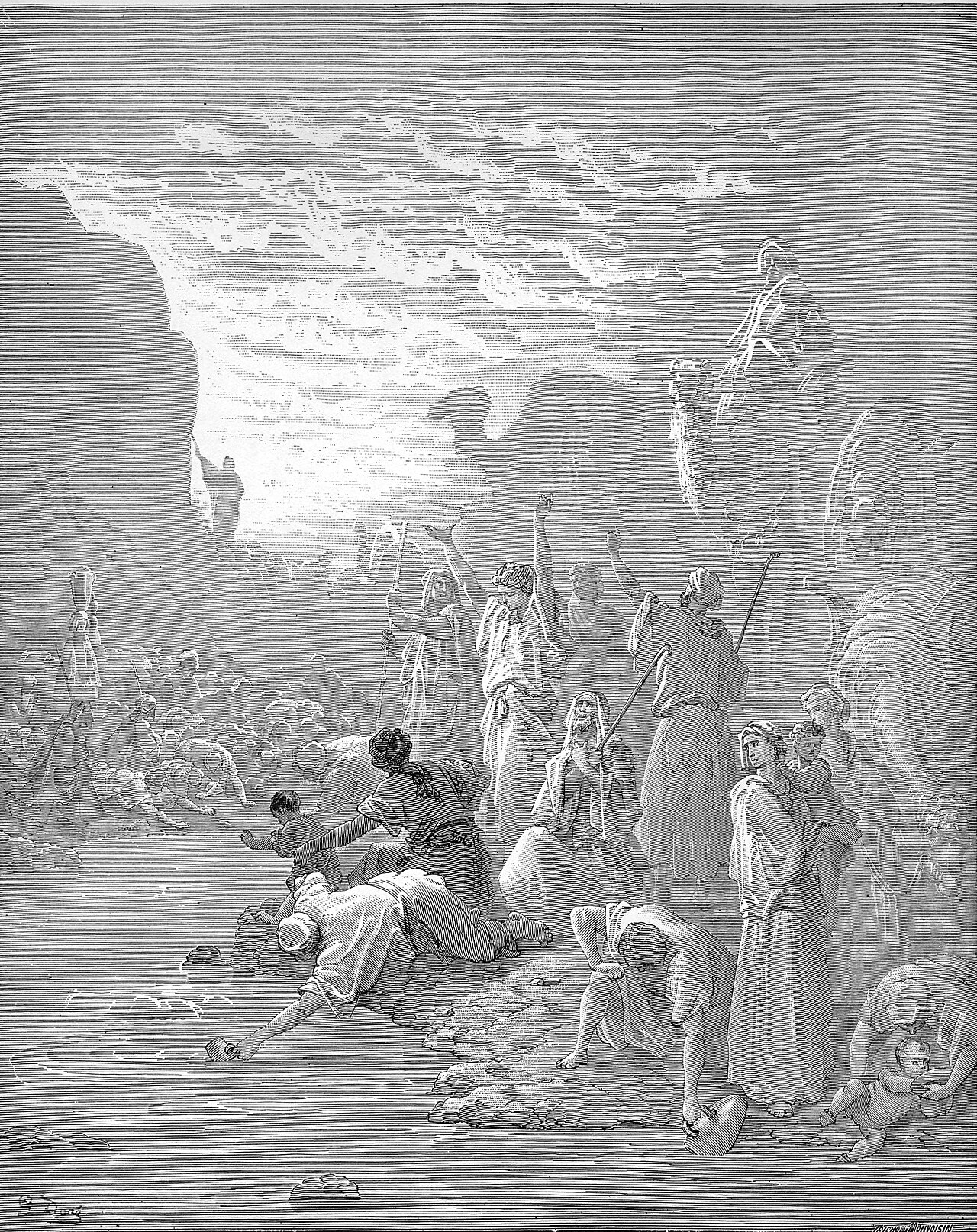
Massah means testing and Meribah means quarrel, so the place is named after what Israel did there. Their question, whether the LORD is among them or not, is asked under a pillar of cloud by people drinking water from a stone.
The record, by era
The Puritans and the Awakening3 voices
They do, in effect, suppose that Moses was an impostor, Aaron a deceiver, the pillar of cloud and fire a mere sham and illusion, which imposed upon their senses, that long series of miracles which had rescued them, served them, and fed them, a chain of cheats, and the promise of Canaan a banter upon them; it was all so, if the Lord was not among them.
And he called the name of the place Massah, and Meribah,....
There was thus a remembrance kept of sin, both for the disgrace of the sinners themselves (sin leaves a blot upon the name) and for warning to their seed to take heed of sinning after the similitude of their transgression.
The Nineteenth Century1 voice
A commentator
Albert Barnes1798–1870
Notes, Explanatory and Practical, on the Old and New Testaments (1832-1869)
proposed
Massah ...Meribah - See the margin. On the importance of this lesson see our Lord’s words, Mat 4:7.
The words behind it
19 Hebrew wordsEvery Hebrew word of this verse in the order it stands, with what it means and the door to its own study. The last column counts the times a word stands in the whole Bible: the rarer the word, the more the places it appears belong together.
| Hebrew | Sound | Meaning | Word study | In the Bible |
|---|---|---|---|---|
| וַיִּקְרָא֙ | vaiyikra' | and he called | H7121 → | 733 times |
| שֵׁ֣ם | shem | [the] name of | H8034 → | 864 times |
| הַמָּק֔וֹם | hamakom | the place | H4725 → | 401 times |
| מַסָּ֖ה | masah | Massah | H4532 → | |
| וּמְרִיבָ֑ה | umerivah | and Meribah | H4809 → | |
| עַל־ | ʾal- | on | H5921 → | 5755 times |
| רִ֣יב׀ | riv | [the] quarrel of | H7379 → | 61 times |
| בְּנֵ֣י | benei | [the] people of | H1121 → | 4930 times |
| יִשְׂרָאֵ֗ל | yisrael | Israel | H3478 → | 2507 times |
| וְעַ֨ל | veal | and because | H5921 → | 5755 times |
| נַסֹּתָ֤ם | nasotam | put to [the] test they | H5254 → | 36 times |
| אֶת־ | ʾet- | <obj.> | H853 → | 10935 times |
| יְהוָה֙ | yahweh | Yahweh | H3068 → | 6520 times |
| לֵאמֹ֔ר | lemor | <to> saying | H559 → | 5305 times |
| הֲיֵ֧שׁ | hayesh | ¿ [is] there | H3426 → | |
| יְהוָ֛ה | yahweh | Yahweh | H3068 → | 6520 times |
| בְּקִרְבֵּ֖נוּ | bekirbenu | in midst our | H7130 → | 227 times |
| אִם־ | ʾim- | or? | H518 → | 1069 times |
| אָֽיִן׃ פ | ʾayin | not | H369 → | 789 times |
וַיִּקְרָא֙and he called
vaiyikra'H7121 →733 times
שֵׁ֣ם[the] name of
shemH8034 →864 times
הַמָּק֔וֹםthe place
hamakomH4725 →401 times
מַסָּ֖הMassah
masahH4532 →
וּמְרִיבָ֑הand Meribah
umerivahH4809 →
עַל־on
ʾal-H5921 →5755 times
רִ֣יב׀[the] quarrel of
rivH7379 →61 times
בְּנֵ֣י[the] people of
beneiH1121 →4930 times
יִשְׂרָאֵ֗לIsrael
yisraelH3478 →2507 times
וְעַ֨לand because
vealH5921 →5755 times
נַסֹּתָ֤םput to [the] test they
nasotamH5254 →36 times
אֶת־<obj.>
ʾet-H853 →10935 times
יְהוָה֙Yahweh
yahwehH3068 →6520 times
לֵאמֹ֔ר<to> saying
lemorH559 →5305 times
הֲיֵ֧שׁ¿ [is] there
hayeshH3426 →
יְהוָ֛הYahweh
yahwehH3068 →6520 times
בְּקִרְבֵּ֖נוּin midst our
bekirbenuH7130 →227 times
אִם־or?
ʾim-H518 →1069 times
אָֽיִן׃ פnot
ʾayinH369 →789 times
A shaded row is a word that stands 400 times or fewer in the Bible.
The walk
8 stopsEach card is a verse this one points to, and under it the verses that one points to in turn. Where several paths arrive at the same place, that place is listed first: the text keeps returning to it.
Through
Psalms 95:8do not harden your hearts as you did at Meribah, in the day at Massah in the wilderness,
it leads to
- Numbers 20:13
These were the waters of Meribah, where the Israelites quarreled with the LORD, and He showed His holiness among them.
Reached by 2 separate paths from here.
- Hebrews 3:8–9
do not harden your hearts, as you did in the rebellion, in the day of testing in the wilderness,
- Numbers 14:11
And the LORD said to Moses, “How long will this people treat Me with contempt? How long will they refuse to believe in Me, despite all the signs I have performed among them?
- Hebrews 3:15–19
As it has been said: “Today, if you hear His voice, do not harden your hearts, as you did in the rebellion.”
- Numbers 14:22
not one of the men who have seen My glory and the signs I performed in Egypt and in the wilderness—yet have tested Me and disobeyed Me these ten times—
- Numbers 20:13
Through
Psalms 81:7You called out in distress, and I rescued you; I answered you from the cloud of thunder; I tested you at the waters of Meribah. Selah
it leads to
- Exodus 19:19
And as the sound of the ram’s horn grew louder and louder, Moses spoke and God answered him in the thunder.
- Exodus 2:23
After a long time, the king of Egypt died. The Israelites groaned and cried out under their burden of slavery, and their cry for deliverance from bondage ascended to God.
- Exodus 19:19
Through
Deuteronomy 9:22You continued to provoke the LORD at Taberah, at Massah, and at Kibroth-hattaavah.
it leads to
- Numbers 11:34
So they called that place Kibroth-hattaavah, because there they buried the people who had craved other food.
- Numbers 11:34
Where this verse is studied
On this page
Studies11
About Exodus
This page draws on Adam Clarke, Commentary on the Bible; Albert Barnes, Notes, Explanatory and Practical, on the Old and New Testaments (1832-1869); John Gill, Exposition of the Old Testament (1748-1763); Keil and Delitzsch, Biblical Commentary on the Old Testament: The Pentateuch and Matthew Henry, Commentary on the Whole Bible.