
Daniel 7:1
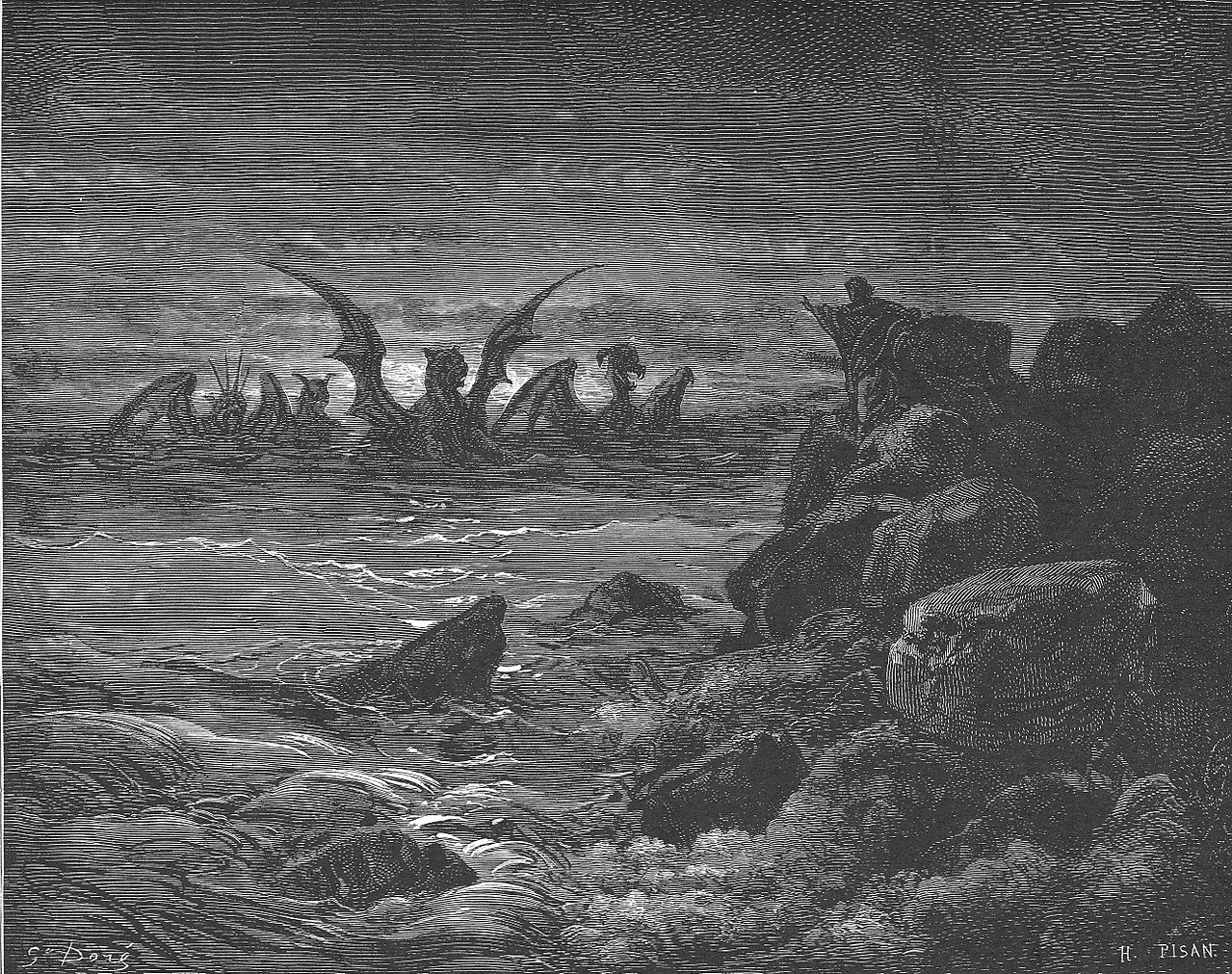
in Daniel 7In the first year of the reign of Belshazzar over Babylon, Daniel had a dream, and visions passed through his mind as he lay on his bed. He wrote down the dream, and this is the summary of his account.
BSB
The same verse in ASV and KJV ▾
ASV
In the first year of Belshazzar king of Babylon Daniel had a dream and visions of his head upon his bed: then he wrote the dream and told the sum of the matters.
KJV
In the first year of Belshazzar king of Babylon Daniel had a dream and visions of his head upon his bed: then he wrote the dream, and told the sum of the matters.
⋯
This verse in Daniel 7
Commentary
11 notes on this verseA commentator
Jamieson, Fausset & Brown1802–1910
Commentary Critical and Explanatory on the Whole Bible (1871)
Belshazzar--Good Hebrew manuscripts have "Belshazzar"; meaning "Bel is to be burnt with hostile fire" (Jer 50:2;
quarantine:debris (2026-07-29) — unbalanced-parens
This site's exposition
told the sum of the matters
on Daniel 7:1-3
Daniel dates his own vision to Belshazzar's first year, placing it chronologically before the feast of chapter 5 even though the book has already told that later story, and the bench reads the arrangement as thematic rather than strict order, the court narratives grouped first and the visions grouped after. The four winds striving upon the great sea and four beasts rising diverse one from another set the vision's grammar for the whole chapter: the sea as the troubled mass of nations in the older writers' reading, and the beasts as kingdoms rising out of that turmoil rather than settled powers. Gill and Keil both note the vision answers chapter 2's image from a different angle, the same four kingdoms now seen from the throne room rather than from a statue's metals.
The record, by era
The Church Fathers4 voices
Up to these words the blessed Daniel has written his prophecy more in the style of a historian. First, remember at the beginning he related what happened to those captured in war, and he adds how God, the author of all, was greatly concerned about …
Verse 1. "In the first year of Belshazzar, King of Babylon, Daniel beheld a dream. And a vision of his head upon his bed. And when he wrote the dream down, he comprehended it in a few words and gave a brief summary of it, saying..." This section which we now undertake to explain, and also the subsequent section which we are going to discuss, is historically prior to the two previous sections.
A commentator
Hippolytus of RomeHippolytus Exegetical Fragments - Of the visions of Daniel and Nebuchadnezzar · Written before 235.
proposed
1. In speaking of a "lioness from the sea," he meant the rising of the kingdom of Babylon, and that this was the "golden head of the image." And in speaking of its "eagle wings," be meant that king Nebuchadnezzar was exalted and that his glory was lifted up against God. Then he says "its wings were plucked off," i.e., that his glory was destroyed; for he was driven out of his kingdom. And the words, "A man's heart was given it, and it was made stand upon the feet of a man," mean that he came to himself again, and recognised that he was but a man, and gave the glory to God. Then after the lioness he sees a second beast, "like a bear," which signified the Persians. For after the Babylonians the Persians obtained the power. And in saying that "it had three ribs in its mouth," he pointed to the three nations, Persians, Medes, and Babylonians, which were expressed in the image by the silver after the gold. Then comes the third beast, "a leopard," which means the Greeks; for after the Persians, Alexander of Macedon had the power, when Darius was overthrown, which was also indicated by the brass in the image. And in saying that the beast "had four wings of a fowl, and four heads," he showed most clearly how the kingdom of Alexander was parted into four divisions. For in speaking of four heads, he meant the four kings that arose out of it. For Alexander, when dying, divided his kingdom into four parts. Then he says, "The fourth beast (was) dreadful and terrible: it had iron teeth, and claws of brass." Who, then, are meant by this but the Romans, whose kingdom, the kingdom that still stands, is expressed by the iron? "for," says he, "its legs are of iron." 2. After this, then, what remains, beloved, but the toes of the feet of the image, in which "part shall be of iron and part of clay mixed together? […]
"In the first year of Belshazzar king of the Chaldeans, Daniel saw a dream and the visions of his head were while he was upon his bed, and he wrote down the vision." [Daniel 7:1] And so as much as was revealed by the Spirit through visions to the blessed prophet, these things also he ungrudgingly described to others, so that he might not only, while prophesying the things which are to come, reveal them to himself, but also that it may be demonstrated to those who wish with faith to search the godly writings of the prophet.
The Puritans and the Awakening1 voice
In the first year of Belshazzar - This prophecy is written in Chaldee, to be a monument to him, of the reverence his father and grandfather shewed towards God, who had done such mighty works for them.
4 more voices on this verse
The Puritans and the Awakening2 voices
): He had visions of his head upon his bed, when he was asleep; so God sometimes revealed himself and his mind to the children of men, when deep sleep fell upon them ( Job xxxiii. 15 ); for when we are most retired from the world, and taken off from the things of sense, we are most fit for communion with God.
quarantine:debris (2026-07-29) — leading-punctuation+unbalanced-parens
In the first year of Belshazzar king of Babylon,....
The Nineteenth Century2 voices
In the first year of Belshazzar - This is the same Belshazzar who was slain at the taking of Babylon, as we have seen at the conclusion of chap. 5. That chapter should have followed both this and the succeeding. The reason why the fifth chapter was put in an improper place was, that all the historic parts might be together, and the prophetic be by themselves; and, accordingly, the former end with the preceding chapter, and the latter with this. The division therefore is not chronological but merely artificial. Told the sum of the matters - That he might not forget this extraordinary dream, he wrote down the leading particulars when he arose.
A commentator
Albert Barnes1798–1870
Notes, Explanatory and Practical, on the Old and New Testaments (1832-1869)
proposed
In the first year of Belshazzar king of Babylon - On the character and reign of Belshazzar, see Introduction to Dan. 5 Section II. He was the last of the kings of Babylon, and this fact may cast some light on the disclosures made in the dream. Daniel had a dream - Margin, as in Hebrew, saw. He saw a series of events in vision when he was asleep. The dream refers to that representation, and was of such a nature that it was proper to speak of it as if he saw it. Compare the notes at Dan 2:
The words behind it
18 Hebrew wordsEvery Hebrew word of this verse in the order it stands, with what it means and the door to its own study. The last column counts the times a word stands in the whole Bible: the rarer the word, the more the places it appears belong together.
| Hebrew | Sound | Meaning | Word study | In the Bible |
|---|---|---|---|---|
| בִּשְׁנַ֣ת | bishnat | in year | H8140 → | |
| חֲדָ֗ה | chadah | one | H2298 → | 14 times |
| לְבֵלְאשַׁצַּר֙ | leveleshatzar | of Belshazzar | H1113 → | 7 times |
| מֶ֣לֶךְ | melekh | [the] king of | H4430 → | 180 times |
| בָּבֶ֔ל | bavel | Babylon | H895 → | 25 times |
| דָּנִיֵּאל֙ | daniyel | Daniel | H1841 → | 57 times |
| חֵ֣לֶם | chelem | a dream | H2493 → | 22 times |
| חֲזָ֔ה | chazah | he saw | H2370 → | 31 times |
| וְחֶזְוֵ֥י | vechezvei | and [the] visions of | H2376 → | 12 times |
| רֵאשֵׁ֖הּ | resheh | head his | H7217 → | 14 times |
| עַֽל־ | ʾal- | on | H5922 → | 104 times |
| מִשְׁכְּבֵ֑הּ | mishkeveh | bed his | H4903 → | 6 times |
| בֵּאדַ֙יִן֙ | bedayin | <in> then | H116 → | 57 times |
| חֶלְמָ֣א | chelma' | dream the | H2493 → | 22 times |
| כְתַ֔ב | khetav | he wrote | H3790 → | 8 times |
| רֵ֥אשׁ | resh | [the] head of | H7217 → | 14 times |
| מִלִּ֖ין | milin | matters | H4406 → | 24 times |
| אֲמַֽר׃ | ʾamar | he said | H560 → | 71 times |
בִּשְׁנַ֣תin year
bishnatH8140 →
חֲדָ֗הone
chadahH2298 →14 times
לְבֵלְאשַׁצַּר֙of Belshazzar
leveleshatzarH1113 →7 times
מֶ֣לֶךְ[the] king of
melekhH4430 →180 times
בָּבֶ֔לBabylon
bavelH895 →25 times
דָּנִיֵּאל֙Daniel
daniyelH1841 →57 times
חֵ֣לֶםa dream
chelemH2493 →22 times
חֲזָ֔הhe saw
chazahH2370 →31 times
וְחֶזְוֵ֥יand [the] visions of
vechezveiH2376 →12 times
רֵאשֵׁ֖הּhead his
reshehH7217 →14 times
עַֽל־on
ʾal-H5922 →104 times
מִשְׁכְּבֵ֑הּbed his
mishkevehH4903 →6 times
בֵּאדַ֙יִן֙<in> then
bedayinH116 →57 times
חֶלְמָ֣אdream the
chelma'H2493 →22 times
כְתַ֔בhe wrote
khetavH3790 →8 times
רֵ֥אשׁ[the] head of
reshH7217 →14 times
מִלִּ֖יןmatters
milinH4406 →24 times
אֲמַֽר׃he said
ʾamarH560 →71 times
A shaded row is a word that stands 400 times or fewer in the Bible.
The walk
8 stopsEach card is a verse this one points to, and under it the verses that one points to in turn. Where several paths arrive at the same place, that place is listed first: the text keeps returning to it.
Through
Joel 2:28And afterward, I will pour out My Spirit on all people. Your sons and daughters will prophesy, your old men will dream dreams, your young men will see visions.
it leads to
- Acts 2:16–21
No, this is what was spoken by the prophet Joel:
- Ezekiel 39:29
And I will no longer hide My face from them, for I will pour out My Spirit on the house of Israel, declares the Lord GOD.”
- Acts 2:39
This promise belongs to you and your children and to all who are far off—to all whom the Lord our God will call to Himself.”
- Isaiah 32:15
until the Spirit is poured out upon us from on high. Then the desert will be an orchard, and the orchard will seem like a forest.
- Acts 2:2–4
Suddenly a sound like a mighty rushing wind came from heaven and filled the whole house where they were sitting.
- Acts 2:16–21
Through
Amos 3:7Surely the Lord GOD does nothing without revealing His plan to His servants the prophets.
it leads to
- John 15:15
No longer do I call you servants, for a servant does not understand what his master is doing. But I have called you friends, because everything I have learned from My Father I have…
- Genesis 18:17
And the LORD said, “Shall I hide from Abraham what I am about to do?
- Psalms 25:14
The LORD confides in those who fear Him, and reveals His covenant to them.
- John 15:15
Where this verse is studied
On this page
Studies21
On this verse
On this chapter
- The Son of Man in 1 Enoch
- Angelology
- Antichrist (the Word and the Figure)
- Apocalyptic Literature
- The Beast and the False Prophet
- The Major Prophets
- Revelation, the Canon's Closing Scroll
- Fire
- Jesus: Titles & Roles
- John on Patmos, Revelation 1
- Rome
- The Fourth Man in the Fire: Daniel 3
- The Ascension: Acts 1:1-11 · Luke 24:50-53
- The Horn
- The Throne
- The Throne Room
About Daniel
Who and where
2 names in this verse with a page on the site.
- PersonBabylonian Exile (6th century BCE)DanielExilic prophet and Judean court official serving under Nebuchadnezzar, Belshazzar, Darius the Mede, and Cyrus; traditionally named…
- PlaceBabil Governorate (archaeological site)BabylonAncient Mesopotamian city and imperial capital; site of the Israelite exile and a recurring biblical symbol of worldly power.
This page draws on 12 works. Open the list of works
This page draws on Adam Clarke, Commentary on the Bible; Albert Barnes, Notes, Explanatory and Practical, on the Old and New Testaments (1832-1869); Carl Friedrich Keil, Biblical Commentary on the Book of Daniel; Hippolytus of Rome, Hippolytus Exegetical Fragments - Of the visions of Daniel and Nebuchadnezzar; Hippolytus of Rome, Commentary on Daniel 4.1.1-2; Jamieson, Fausset & Brown, Commentary Critical and Explanatory on the Whole Bible; Jerome, St. Jerome, Commentary on Daniel, CHAPTER SEVEN; John Gill, Exposition of the Old Testament; John Gill, Exposition of the Old Testament (1748-1763); John Wesley, Explanatory Notes upon the Old Testament; Matthew Henry, Commentary on the Whole Bible and Theodoret of Cyrus, COMMENTARY ON DANIEL 7:1.