
Daniel 7:19
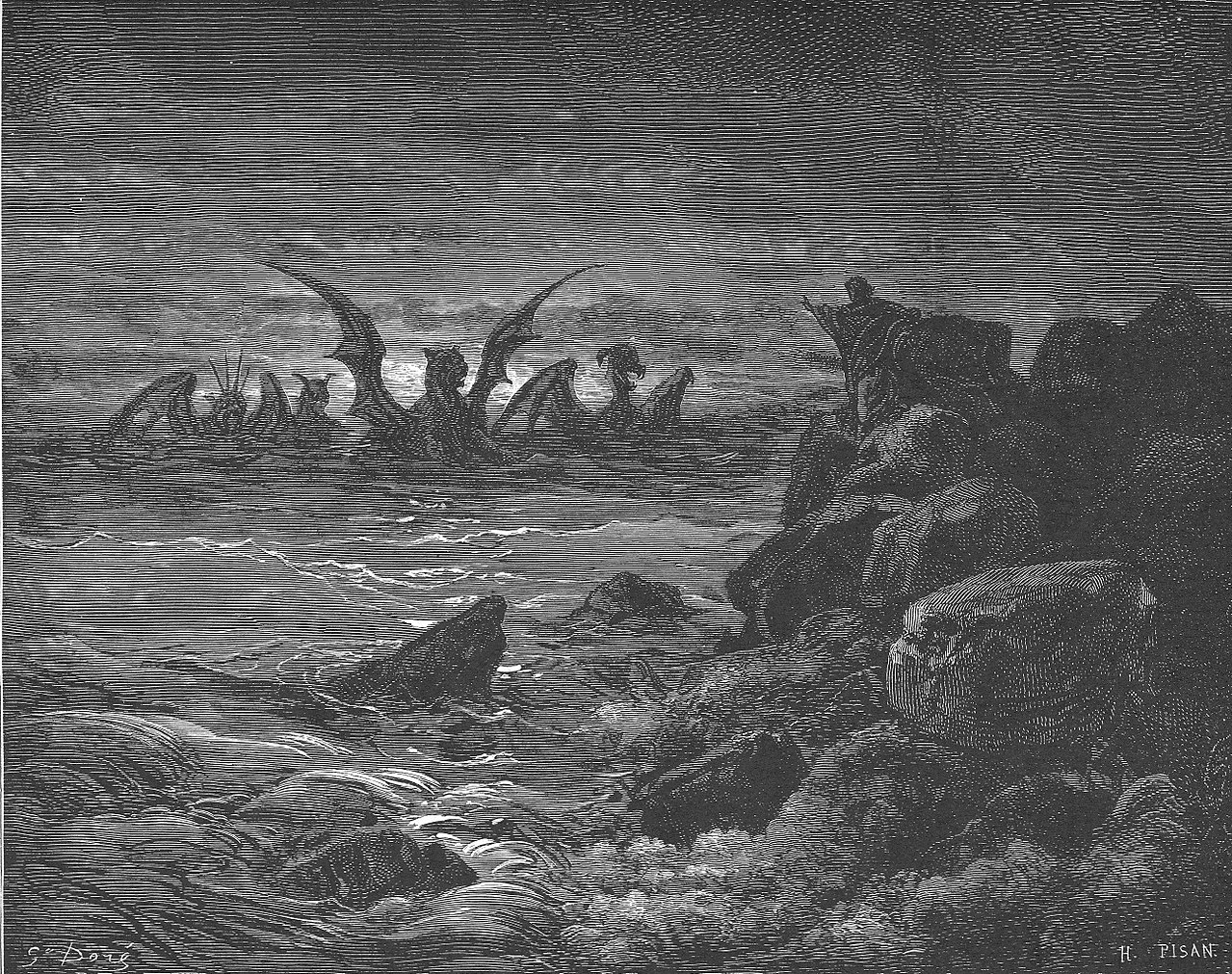
in Daniel 7Then I wanted to know the true meaning of the fourth beast, which was different from all the others—extremely terrifying—devouring and crushing with iron teeth and bronze claws, then trampling underfoot whatever was left.
BSB
The same verse in ASV and KJV ▾
ASV
Then I desired to know the truth concerning the fourth beast, which was diverse from all of them, exceeding terrible, whose teeth were of iron, and its nails of brass; which devoured, brake in pieces, and stamped the residue with its feet;
KJV
Then I would know the truth of the fourth beast, which was diverse from all the others, exceeding dreadful, whose teeth were of iron, and his nails of brass; which devoured, brake in pieces, and stamped the residue with his feet;
⋯
This verse in Daniel 7
Commentary
12 notes on this verseA commentator
Jamieson, Fausset & Brown1802–1910
Commentary Critical and Explanatory on the Whole Bible (1871)
To Balaam's "Asshur" correspond Daniel's two eastern kingdoms, Babylon and Medo-Persia; to "Chittim," the two western kingdoms, Greece and Rome (compare Ge 10:4, 11, 22). In Babel, Nimrod the hunter (revolter) founds the first kingdom of the world (Ge 10:8-13). The Babylonian world power takes up the thread interrupted at the building of Babel, and the kingdom of Nimrod.
This site's exposition
different from all the others
on Daniel 7:19-22
Daniel asks again about the fourth beast, and the retelling adds that its horn “was waging war against the saints and prevailing against them”. That lasts “until the Ancient of Days arrived and pronounced judgment in favor of the saints”, so the saints endure the conflict.
The record, by era
The Church Fathers5 voices
A commentator
Hippolytus of RomeHippolytus Exegetical Fragments - Of the visions of Daniel and Nebuchadnezzar · Written before 235.
proposed
1. In speaking of a "lioness from the sea," he meant the rising of the kingdom of Babylon, and that this was the "golden head of the image." And in speaking of its "eagle wings," be meant that king Nebuchadnezzar was exalted and that his glory was lifted up against God. Then he says "its wings were plucked off," i.e., that his glory was destroyed; for he was driven out of his kingdom. And the words, "A man's heart was given it, and it was made stand upon the feet of a man," mean that he came to himself again, and recognised that he was but a man, and gave the glory to God. Then after the lioness he sees a second beast, "like a bear," which signified the Persians. For after the Babylonians the Persians obtained the power. And in saying that "it had three ribs in its mouth," he pointed to the three nations, Persians, Medes, and Babylonians, which were expressed in the image by the silver after the gold. Then comes the third beast, "a leopard," which means the Greeks; for after the Persians, Alexander of Macedon had the power, when Darius was overthrown, which was also indicated by the brass in the image. And in saying that the beast "had four wings of a fowl, and four heads," he showed most clearly how the kingdom of Alexander was parted into four divisions. For in speaking of four heads, he meant the four kings that arose out of it. For Alexander, when dying, divided his kingdom into four parts. Then he says, "The fourth beast (was) dreadful and terrible: it had iron teeth, and claws of brass." Who, then, are meant by this but the Romans, whose kingdom, the kingdom that still stands, is expressed by the iron? "for," says he, "its legs are of iron." 2. After this, then, what remains, beloved, but the toes of the feet of the image, in which "part shall be of iron and part of clay mixed together? […]
"Then I desired to know the truth concerning the fourth beast and the other horn," which was seen while attacking and harshly afflicting the holy ones with his arms. This is Antiochus, who, as the angel reveals, would have made war and submitted the holy …
Take note of the iron teeth and the bronze claws that are mentioned. The kingdom of the Romans took tribute from all nations; thus he says that it had iron teeth. And since many of those who had started out in the Macedonian kingdom were …
But if so great a power is shown to have followed and to be still following the dispensation of His suffering, how great shall that be which shall follow His glorious advent! For He shall come on the clouds as the Son of man, so Daniel foretold, and His angels shall come with Him. These are the words: [quotes Daniel 7:9-28]
And so since all the prophets and apostles testify to this, but because the lawless disobey him and blaspheme and set at nothing what has been spoken and persecute and oppress his slaves, and because they do not expect these things which will be, let us ourselves see what will be, we who believe in the Word of truth and who are led by his Word to eternal life, who are taught by the prophets and who by the Spirit are illuminated, so that we, becoming wise through his grace, may observe the ancient things which were proclaimed and in due time happened and will happen.
5 more voices on this verse
The Puritans and the Awakening3 voices
Then I would know the truth of the fourth beast;....
Perhaps it was this that put Daniel into such a fright, and this part of the visions of his head troubled him more than any of the rest. But especially he desired to know what the little horn was, that had eyes, and a mouth that spoke very great things, and whose countenance was more fearless and formidable than that of any of his fellows,
Belshazzar's name here is, in the original, spelt differently from what it used to be; before it was Bel-she-azar--Bel is he that treasures up riches.
The Nineteenth Century2 voices
His nails of brass - This is not mentioned in the seventh verse, where the description of the beast is given. It might be added, for the first time, by the person who is now explaining the fourth beast. Houbigant thinks it has been lost out of the text: but such loss is not intimated by any MS.; nor does any of the ancient Versions acknowledge this addition in the seventh verse.
A commentator
Albert Barnes1798–1870
Notes, Explanatory and Practical, on the Old and New Testaments (1832-1869)
proposed
Then I would know the truth of the fourth beast - I desired to know particularly what was symbolized by that. He appears to have been satisfied with the most general intimations in regard to the first three beasts, for the kingdoms represented by them seemed to have nothing very remarkable. But it was different in regard to the fourth.
The words behind it
24 Hebrew wordsEvery Hebrew word of this verse in the order it stands, with what it means and the door to its own study. The last column counts the times a word stands in the whole Bible: the rarer the word, the more the places it appears belong together.
| Hebrew | Sound | Meaning | Word study | In the Bible |
|---|---|---|---|---|
| אֱדַ֗יִן | ʾedayin | then | H116 → | 57 times |
| צְבִית֙ | tzevit | I desired | H6634 → | 10 times |
| לְיַצָּבָ֔א | leyatzava' | to make certain | H3321 → | |
| עַל־ | ʾal- | concerning | H5922 → | 104 times |
| חֵֽיוְתָא֙ | cheiveta' | beast the | H2423 → | 20 times |
| רְבִיעָ֣יְתָ֔א | reviayeta' | <the> fourth | H7244 → | 6 times |
| דִּֽי־ | di- | which | H1768 → | 345 times |
| הֲוָ֥ת | havat | it was | H1934 → | 71 times |
| שָֽׁנְיָ֖ה | shaneyah | different | H8133 → | 21 times |
| מִן־ | min- | from | H4481 → | 109 times |
| כָּלְּהֵ֑ין | kalehon | all of them | H3606 → | 82 times |
| דְּחִילָ֣ה | dechilah | [it was] terrible | H1763 → | 6 times |
| יַתִּ֗ירָה | yatirah | exceedingly | H3493 → | 8 times |
| שִׁנַּ֤הּ | shinaiyah | tooth its | H8128 → | 3 times |
| דִּֽי־ | di- | of | H1768 → | 345 times |
| פַרְזֶל֙ | farzel | iron | H6523 → | 20 times |
| וְטִפְרַ֣יהּ | vetifraih | and claws its | H2953 → | |
| דִּֽי־ | di- | of | H1768 → | 345 times |
| נְחָ֔שׁ | nechash | bronze | H5174 → | 9 times |
| אָֽכְלָ֣ה | ʾakhelah | [it was] devouring | H399 → | 7 times |
| מַדֲּקָ֔ה | madakah | [it was] shattering | H1855 → | 10 times |
| וּשְׁאָרָ֖א | usheara' | and rest the | H7606 → | 12 times |
| בְּרַגְלַ֥יהּ | beraglaih | with feet its | H7271 → | 7 times |
| רָֽפְסָֽה׃ | rafesah | [it was] trampling | H7512 → |
אֱדַ֗יִןthen
ʾedayinH116 →57 times
צְבִית֙I desired
tzevitH6634 →10 times
לְיַצָּבָ֔אto make certain
leyatzava'H3321 →
עַל־concerning
ʾal-H5922 →104 times
חֵֽיוְתָא֙beast the
cheiveta'H2423 →20 times
רְבִיעָ֣יְתָ֔א<the> fourth
reviayeta'H7244 →6 times
דִּֽי־which
di-H1768 →345 times
הֲוָ֥תit was
havatH1934 →71 times
שָֽׁנְיָ֖הdifferent
shaneyahH8133 →21 times
מִן־from
min-H4481 →109 times
כָּלְּהֵ֑יןall of them
kalehonH3606 →82 times
דְּחִילָ֣ה[it was] terrible
dechilahH1763 →6 times
יַתִּ֗ירָהexceedingly
yatirahH3493 →8 times
שִׁנַּ֤הּtooth its
shinaiyahH8128 →3 times
דִּֽי־of
di-H1768 →345 times
פַרְזֶל֙iron
farzelH6523 →20 times
וְטִפְרַ֣יהּand claws its
vetifraihH2953 →
דִּֽי־of
di-H1768 →345 times
נְחָ֔שׁbronze
nechashH5174 →9 times
אָֽכְלָ֣ה[it was] devouring
ʾakhelahH399 →7 times
מַדֲּקָ֔ה[it was] shattering
madakahH1855 →10 times
וּשְׁאָרָ֖אand rest the
usheara'H7606 →12 times
בְּרַגְלַ֥יהּwith feet its
beraglaihH7271 →7 times
רָֽפְסָֽה׃[it was] trampling
rafesahH7512 →
A shaded row is a word that stands 400 times or fewer in the Bible.
The walk
5 stopsEach card is a verse this one points to, and under it the verses that one points to in turn. Where several paths arrive at the same place, that place is listed first: the text keeps returning to it.
Through
Daniel 7:7After this, as I watched in my vision in the night, suddenly a fourth beast appeared, and it was terrifying—dreadful and extremely strong—with large iron teeth. It devoured and crushed; then it trampled underfoot…
it leads to
- Revelation 13:1
Then I saw a beast with ten horns and seven heads rising out of the sea. There were ten royal crowns on its horns and blasphemous names on its heads.
- Revelation 12:3
Then another sign appeared in heaven: a huge red dragon with seven heads, ten horns, and seven royal crowns on his heads.
- Revelation 17:12
The ten horns you saw are ten kings who have not yet received a kingdom, but will receive one hour of authority as kings, along with the beast.
- Daniel 7:23–24
This is what he said: ‘The fourth beast is a fourth kingdom that will appear on the earth, different from all the other kingdoms, and it will devour the whole earth, trample it down,…
- Daniel 7:19–20
Then I wanted to know the true meaning of the fourth beast, which was different from all the others—extremely terrifying—devouring and crushing with iron teeth and bronze claws, then trampling underfoot whatever was left.
- Revelation 13:1
Where this verse is studied
On this page
Studies25
On this verse
On this chapter
About Daniel
This page draws on 12 works. Open the list of works
This page draws on Adam Clarke, Commentary on the Bible; Albert Barnes, Notes on the Book of Daniel; Albert Barnes, Notes, Explanatory and Practical, on the Old and New Testaments (1832-1869); Ephrem the Syrian, COMMENTARY ON DANIEL 7:19; Hippolytus of Rome, Hippolytus Exegetical Fragments - Of the visions of Daniel and Nebuchadnezzar; Hippolytus of Rome, Commentary on Daniel 4.12.1-7; Jamieson, Fausset & Brown, Commentary Critical and Explanatory on the Whole Bible; John Gill, Exposition of the Old Testament; John Gill, Exposition of the Old Testament (1748-1763); Justin Martyr, Dialogue with Trypho, Chapter XXXI; Matthew Henry, Commentary on the Whole Bible and Theodoret of Cyrus, COMMENTARY ON DANIEL 7:19.