
Daniel 7:6
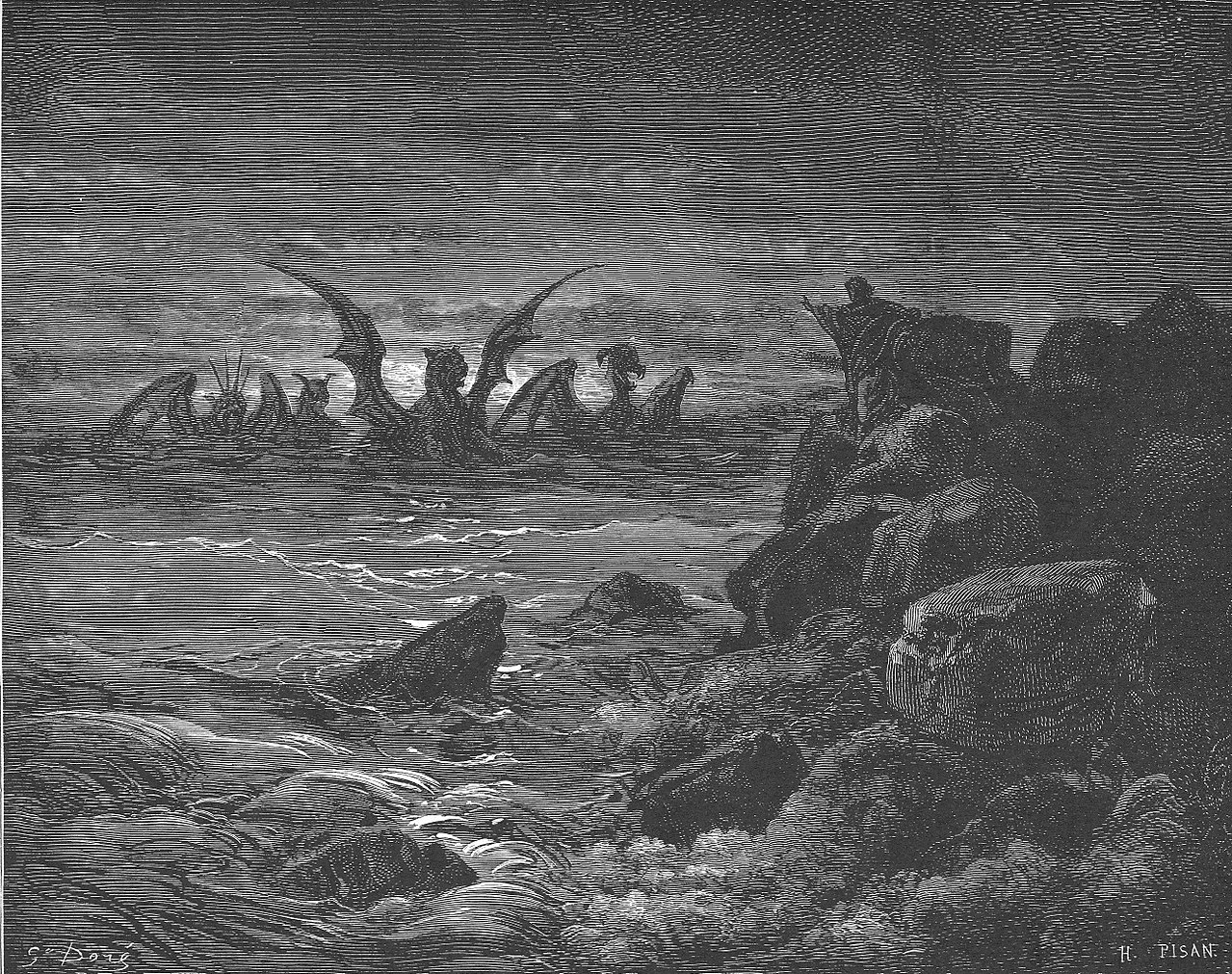
in Daniel 7Next, as I watched, another beast appeared. It was like a leopard, and on its back it had four wings like those of a bird. The beast also had four heads, and it was given authority to rule.
BSB
The same verse in ASV and KJV ▾
ASV
After this I beheld, and, lo, another, like a leopard, which had upon its back four wings of a bird; the beast had also four heads; and dominion was given to it.
KJV
After this I beheld, and lo another, like a leopard, which had upon the back of it four wings of a fowl; the beast had also four heads; and dominion was given to it.
⋯
This verse in Daniel 7
Commentary
14 notes on this verseVerse 6. "After this I beheld, and lo, there was another beast like unto a leopard, and it had four wings of a bird all its own, and there were four heads to the beast, and power was given to it." The third kingdom was that of the Macedonians, of which we read in connection with the image, "The belly and thighs were of bronze." It is compared to a leopard because it is very swift and hormetikos, and it charges headlong to shed blood, and with a single bound rushes to its death. "And it had four wings..."
This site's exposition
the wings of an eagle
on Daniel 7:4-6
Keil and Barnes, with the traditional reading, take the lion as Babylon: its wings the speed of Nebuchadnezzar's conquests. The bear raised on one side they read as Medo-Persia, Persia the stronger. The four-headed leopard is Greece under Alexander, split among his generals as chapters 8 and 11 describe.
This site's exposition
It was like a leopard
Jerome, Adam Clarke and John Wesley read the leopard as the Greek kingdom of Alexander, swift and at first smaller than the beast before it. Ephrem the Syrian read the leopard as Persia. Theodoret of Cyrus and Matthew Henry took the four heads as the kings who divided the kingdom.
The record, by era
The Church Fathers4 voices
Some of the historians recorded that these ruled two hundred forty-five years until Darius the chief, whom Alexander of Macedon deposed in the seventh year and transferred the kingdom of the Persians to the Greeks. Just as also Daniel says, "After this I was looking, and behold, another beast like a leopard and four wings of a bird were upon it and four heads were on the beast, and authority was given to it." [Daniel 7:6] And so having named a leopard, he signals the kingdom of the Greeks, which Alexander of Macedon began, and he compares them to a leopard on account of them being sharp in mind and resourceful in reasoning and relentless in heart, in which manner also the spotted creature is the model of the kingdom of the Greeks, quick to do evil and quick to drink the blood of men. He says, "Four wings of a bird were upon it and four heads were on the beast." [Daniel 7:6] For after the kingdom of Alexander was lifted up and grew in strength and was named in all the world, his kingdom was divided to his four chiefs. For while dying, Alexander distributed it to his companions who were of his race, four men, Seleucus, Demetrius, Ptolemy, and Philip, and these all put on crowns, just as Daniel predicts and was recorded in the first book of the Maccabees. [1 Maccabees 1:9]
These words concern the kingdom of the Persians. Indeed, what in the statue of Nebuchadnezzar had been indicated under the aspect of bronze, a very hard metal, here is seen under the image of the leopard, an extremely agile and harmful beast. [The beast] is …
The "four heads" refer to the division of the empire that took place after Alexander. Four kings were established instead of one. The rulership of Egypt was entrusted to Ptolemy, son of Lagos; the realm of the Orient was granted to Seleucus; Antigonus acquired Asia; …
A commentator
Hippolytus of RomeHippolytus Exegetical Fragments - Of the visions of Daniel and Nebuchadnezzar · Written before 235.
proposed
1. In speaking of a "lioness from the sea," he meant the rising of the kingdom of Babylon, and that this was the "golden head of the image." And in speaking of its "eagle wings," be meant that king Nebuchadnezzar was exalted and that his glory was lifted up against God. Then he says "its wings were plucked off," i.e., that his glory was destroyed; for he was driven out of his kingdom. And the words, "A man's heart was given it, and it was made stand upon the feet of a man," mean that he came to himself again, and recognised that he was but a man, and gave the glory to God. Then after the lioness he sees a second beast, "like a bear," which signified the Persians. For after the Babylonians the Persians obtained the power. And in saying that "it had three ribs in its mouth," he pointed to the three nations, Persians, Medes, and Babylonians, which were expressed in the image by the silver after the gold. Then comes the third beast, "a leopard," which means the Greeks; for after the Persians, Alexander of Macedon had the power, when Darius was overthrown, which was also indicated by the brass in the image. And in saying that the beast "had four wings of a fowl, and four heads," he showed most clearly how the kingdom of Alexander was parted into four divisions. For in speaking of four heads, he meant the four kings that arose out of it. For Alexander, when dying, divided his kingdom into four parts. Then he says, "The fourth beast (was) dreadful and terrible: it had iron teeth, and claws of brass." Who, then, are meant by this but the Romans, whose kingdom, the kingdom that still stands, is expressed by the iron? "for," says he, "its legs are of iron." 2. After this, then, what remains, beloved, but the toes of the feet of the image, in which "part shall be of iron and part of clay mixed together? […]
The Reformation1 voice
After other victories, he turned aside to visit Jerusalem. The next verse is also supposed to predict his conquests; and the facts detailed by Rycault, volume 1, pages 246-248, respecting the conquest of Judea, Arabia, and Egypt, at the commencement of the sixteenth century of the Christian era., are asserted to fulfill Daniel 11:41 to 43.
6 more voices on this verse
The Puritans and the Awakening3 voices
Cassander had Macedonia; and Ptolemeus had Egypt. Dominion was given to this beast; it was given of God, from whom alone promotion comes. (4.) The fourth beast was more fierce, and formidable, and mischievous, than any of them, unlike any of the other, nor is there any among the beasts of prey to which it might be compared,
Like a leopard - This leopard was the Grecian monarchy; a leopard is less than a lion, so was this monarchy at first, but yet durst fight with a lion; so did Alexander encounter Darius with an inferior force.
After this I beheld, and, lo another, like a leopard,....
The Nineteenth Century3 voices
A commentator
Jamieson, Fausset & Brown1802–1910
Commentary Critical and Explanatory on the Whole Bible (1871)
proposed
leopard--smaller than the lion; swift (Hab 1:8); cruel (Isa 11:6), the opposite of tame; springing suddenly from its hiding place on its prey (Ho 13:7); spotted. So Alexander, a small king, of a small kingdom, Macedon, attacked Darius at the head of the vast empire reaching from the Ægean Sea to the Indies.
quarantine:debris (2026-07-29) — starts-lowercase
Another like a leopard - four wings - four heads - This was the Macedonian or Greek empire; and Alexander the Great its king. Alexander and his subjects are fitly compared to a leopard. 1. The leopard is remarkable for its swiftness. Alexander and the Macedonians were very rapid in their conquests. 2. The leopard is a spotted animal; a proper emblem of the various nations, with their various customs and languages, which constituted the Macedonian empire.
A commentator
Albert Barnes1798–1870
Notes, Explanatory and Practical, on the Old and New Testaments (1832-1869)
proposed
After this I beheld, and, lo, another, like a leopard - That is, as before, after the bear had appeared - indicating that this was to be a succeeding kingdom or power. The beast which now appeared was a monster, and, as in the former cases, so in regard to this, there are several circumstances which demand explanation in order to understand the symbol. It may assist us, perhaps, in forming a correct idea of the symbol here introduced to have before us a representation of the animal as it appeared to Daniel. (a) The animal itself: “a leopard.” The word used here - נמר nemar - or in Hebrew נמר nâmêr - denotes a panther or leopard, so called from his spots. This is a well-known beast of prey, distinguished for blood-thirstiness and cruelty, and these characteristics are especially applicable to the female panther. The animal is referred to in the Scriptures as emblematic of the following things, or as having the following characteristics: (1) As next in dignity to the lion - of the same general nature. Compare Bochart, Hieroz. P. I. lib. iii. c. vii. Thus the lion and the panther, or leopard, are often united in the Scriptures. Compare Jer 5:6; Hos 13:7. See also in the Apocrypha, Ecclesiasticus 28:23. So also they are united in Homer, r Ὄυτε οἶν παρδάλιος τόσσον μένος, ὄυτε λέοντος. Oute oun pardalios tosson menos, oute leontos. “Neither had the leopard nor the lion such strength.” (2) As distinguished for cruelty, or a fierce nature, as contrasted with the gentle and tame animal. Isa 11:6, “and the leopard shall lie down with the kid.” In Jer 5:6, it is compared with the lion and the wolf: “A lion out of the forest shall slay them, and a wolf of the evenings shall spoil them, a leopard shall watch over their cities.” Compare Hos 13:7. (3) As distinguished for swiftness or fleetness. […]
The words behind it
20 Hebrew wordsEvery Hebrew word of this verse in the order it stands, with what it means and the door to its own study. The last column counts the times a word stands in the whole Bible: the rarer the word, the more the places it appears belong together.
| Hebrew | Sound | Meaning | Word study | In the Bible |
|---|---|---|---|---|
| בָּאתַ֨ר | batar | after | H870 → | 8 times |
| דְּנָ֜ה | denah | this | H1836 → | 58 times |
| חָזֵ֣ה | chazeh | seeing | H2370 → | 31 times |
| הֲוֵ֗ית | haveit | I was | H1934 → | 71 times |
| וַאֲר֤וּ | vaaru | and lo! | H718 → | 5 times |
| אָֽחֳרִי֙ | ʾochori | another | H317 → | 6 times |
| כִּנְמַ֔ר | kinmar | like a leopard | H5245 → | |
| וְלַ֨הּ | velah | and to it | ||
| גַּפִּ֥ין | gapin | wings | H1611 → | 3 times |
| אַרְבַּ֛ע | ʾarba' | four | H703 → | 8 times |
| דִּי־ | di- | of | H1768 → | 345 times |
| ע֖וֹף | of | a bird | H5776 → | |
| עַל־ | ʾal- | [were] on | H5922 → | 104 times |
| גַּבַּ֑הּ | gabaiyah | back its | H1355 → | |
| וְאַרְבְּעָ֤ה | vearbeah | and four | H703 → | 8 times |
| רֵאשִׁין֙ | reshin | heads | H7217 → | 14 times |
| לְחֵ֣יוְתָ֔א | lecheiveta' | [were] to beast the | H2423 → | 20 times |
| וְשָׁלְטָ֖ן | veshaltan | and dominion | H7985 → | 14 times |
| יְהִ֥יב | yehiv | it was given | H3052 → | 28 times |
| לַֽהּ׃ | lah | to it |
בָּאתַ֨רafter
batarH870 →8 times
דְּנָ֜הthis
denahH1836 →58 times
חָזֵ֣הseeing
chazehH2370 →31 times
הֲוֵ֗יתI was
haveitH1934 →71 times
וַאֲר֤וּand lo!
vaaruH718 →5 times
אָֽחֳרִי֙another
ʾochoriH317 →6 times
כִּנְמַ֔רlike a leopard
kinmarH5245 →
וְלַ֨הּand to it
velah
גַּפִּ֥יןwings
gapinH1611 →3 times
אַרְבַּ֛עfour
ʾarba'H703 →8 times
דִּי־of
di-H1768 →345 times
ע֖וֹףa bird
ofH5776 →
עַל־[were] on
ʾal-H5922 →104 times
גַּבַּ֑הּback its
gabaiyahH1355 →
וְאַרְבְּעָ֤הand four
vearbeahH703 →8 times
רֵאשִׁין֙heads
reshinH7217 →14 times
לְחֵ֣יוְתָ֔א[were] to beast the
lecheiveta'H2423 →20 times
וְשָׁלְטָ֖ןand dominion
veshaltanH7985 →14 times
יְהִ֥יבit was given
yehivH3052 →28 times
לַֽהּ׃to it
lah
A shaded row is a word that stands 400 times or fewer in the Bible.
The walk
8 stopsEach card is a verse this one points to, and under it the verses that one points to in turn. Where several paths arrive at the same place, that place is listed first: the text keeps returning to it.
Through
Revelation 13:2The beast I saw was like a leopard, with the feet of a bear and the mouth of a lion. And the dragon gave the beast his power and his throne and great authority.
it leads to
- Daniel 7:4–7
The first beast was like a lion, and it had the wings of an eagle. I watched until its wings were torn off and it was lifted up from the ground and made to…
- 1 Peter 5:8
Be sober-minded and alert. Your adversary the devil prowls around like a roaring lion, seeking someone to devour.
- Revelation 20:2
He seized the dragon, that ancient serpent who is the devil and Satan, and bound him for a thousand years.
- Revelation 12:9
And the great dragon was hurled down—that ancient serpent called the devil and Satan, the deceiver of the whole world. He was hurled to the earth, and his angels with him.
- Revelation 17:12
The ten horns you saw are ten kings who have not yet received a kingdom, but will receive one hour of authority as kings, along with the beast.
- Daniel 7:4–7
Through
Daniel 7:4The first beast was like a lion, and it had the wings of an eagle. I watched until its wings were torn off and it was lifted up from the ground and made to…
it leads to
- Isaiah 14:13–17
You said in your heart: “I will ascend to the heavens; I will raise my throne above the stars of God. I will sit on the mount of assembly, in the far reaches of…
- Jeremiah 4:7
A lion has gone up from his thicket, and a destroyer of nations has set out. He has left his lair to lay waste your land. Your cities will be reduced to ruins and…
- Habakkuk 1:6–8
For behold, I am raising up the Chaldeans—that ruthless and impetuous nation which marches through the breadth of the earth to seize dwellings not their own.
- Isaiah 14:13–17
Where this verse is studied
On this page
Studies25
On this verse
On this chapter
About Daniel
This page draws on 14 works. Open the list of works
This page draws on Adam Clarke, Commentary on the Bible; Albert Barnes, Notes on the Book of Daniel; Albert Barnes, Notes, Explanatory and Practical, on the Old and New Testaments (1832-1869); Carl Friedrich Keil, Biblical Commentary on the Book of Daniel; Ephrem the Syrian, COMMENTARY ON DANIEL 7:6; Hippolytus of Rome, Commentary on Daniel 4.3.5-8; Hippolytus of Rome, Hippolytus Exegetical Fragments - Of the visions of Daniel and Nebuchadnezzar; Jamieson, Fausset & Brown, Commentary Critical and Explanatory on the Whole Bible; Jerome, St. Jerome, Commentary on Daniel, CHAPTER SEVEN; John Calvin, Commentaries; John Gill, Exposition of the Old Testament (1748-1763); John Wesley, Explanatory Notes upon the Old Testament; Matthew Henry, Commentary on the Whole Bible and Theodoret of Cyrus, COMMENTARY ON DANIEL 7:6.