
Daniel 6:14
in Daniel 6As soon as the king heard this, he was deeply distressed and set his mind on delivering Daniel, and he labored until sundown to rescue him.
BSB
The same verse in ASV and KJV ▾
ASV
Then the king, when he heard these words, was sore displeased, and set his heart on Daniel to deliver him; and he labored till the going down of the sun to rescue him.
KJV
Then the king, when he heard these words, was sore displeased with himself, and set his heart on Daniel to deliver him: and he laboured till the going down of the sun to deliver him.
⋯
This verse in Daniel 6
Commentary
7 notes on this verseVerse 14. "And when the king heard this statement, he became quite grieved and applied himself on Daniel's behalf that he might deliver him." He realized that he had been tripped up by his own reply to their question, and also that envy was the motive of their plot. And so to avoid the appearance of acting against his own law, he wanted to deliver Daniel from danger by ingenuity and strategy rather than by exerting his royal authority.
This site's exposition
labored until sundown to rescue him
on Daniel 6:14-15
Darius is “deeply distressed,” sets “his mind on delivering Daniel,” and “labored until sundown to rescue him”. His search fails against the law he signed, and the plotters press it again: “no decree or ordinance established by the king can be changed”. The older commentators set this king, bound by his own law, beside Pilate washing his hands.
The record, by era
The Church Fathers1 voice
They said to him, "'Behold, Daniel, who is from the sons of the captivity of Judah, does not obey your decree and three times a day he asks from his God his petitions.' Then, the king when he heard the matter, was greatly grieved over it and he fought concerning Daniel in order to release him." [Daniel 6:13-14] For having known their machinations and that they hated Daniel because he was at that time wiser and more reputable than all of them and that they devised this plot against him, wanting to hand him over to beasts through a trap. Therefore the king questioned the satraps and asked whether he could be able to preserve him from danger.
The Puritans and the Awakening2 voices
Then the king, when he heard these words, was sore displeased with himself,....
Note, When men indulge a proud vain-glorious humour, and please themselves with that which feeds it, they know not what vexations they are preparing for themselves; their flatterers may prove their tormentors, and are but spreading a net for their feet.
The Nineteenth Century2 voices
The king - was sore displeased with himself - And well he might, when through his excessive folly he passed a law that, for its ostensible object, would have been a disgrace almost to an idiot. And set his heart on Daniel - He strove by every means to get the law annulled. He had no doubt spoken to several of his lords in private, and had gone from one to another till the going down of the sun.
A commentator
Albert Barnes1798–1870
Notes, Explanatory and Practical, on the Old and New Testaments (1832-1869)
proposed
Then the king, when he heard these words, was sore displeased with himself - That is, for having consented to such a decree without deliberation, or with so much haste - or for having consented to it at all. It is remarkable that it is not said that he was displeased with them for having proposed it; but it is clear that he saw that the guilt was his own for having given his assent to it, and that he had acted foolishly. There is no evidence as yet that he saw that the decree had been proposed for the purpose of securing the degradation and ruin of Daniel - though he ultimately perceived it Dan 6:24; or if he did perceive it, there was no way of preventing the consequences from coming on Daniel - and that was the point that now engrossed his attention. He was doubtless displeased with himself, (1) because he saw that he had done wrong in confirming such a decree, which interfered with what had been tolerated - the free exercise of religion by his subjects; (2) because he now saw that it was foolish, and unworthy of a king, thus to assent to a law for which there was no good reason, and the consequences of which he had not foreseen; and (3) because he now saw that he had involved the first officer of the realm, and a man of unsullied character, in ruin, unless some way could be devised by which the consequences of the statute could be averted. It is no uncommon thing for men to be displeased with themselves when they experience the unexpected consequences of their follies and their sins. An instance strongly resembling that here stated, in its main features, occurred at a later period in the history of Persia - an instance showing how the innocent may be involved in a general law, and how much perplexity and regret may be caused by the enactment of such a law. It occurred in Persia, in the persecution of Christians, 344 a.d. […]
How the passage was read
What the Jewish commentators add
did not pay heed to you, O king He did not pay heed or counsel to care about your decrees.
2 more on this passage, in their own words ▾
concerning the king’s decree concerning the infraction of the king’s decree, about which they had come to inform.
when..heard the thing [as translated,] when he heard the thing.
This section is reception history: how the passage was read and kept in the Jewish tradition. Where a reading parts from an essential of the Christian faith, the section says so at that point.
Texts and citation data: Sefaria; each excerpt follows its version’s licence. 2 further sources are cited on this chapter that carry no English text this site may quote or only restate the verse.
The words behind it
19 Hebrew wordsEvery Hebrew word of this verse in the order it stands, with what it means and the door to its own study. The last column counts the times a word stands in the whole Bible: the rarer the word, the more the places it appears belong together.
| Hebrew | Sound | Meaning | Word study | In the Bible |
|---|---|---|---|---|
| אֱדַ֨יִן | ʾedayin | then | H116 → | 57 times |
| מַלְכָּ֜א | malka' | king the | H4430 → | 180 times |
| כְּדִ֧י | kedi | as that | H1768 → | 345 times |
| מִלְּתָ֣א | mileta' | word the | H4406 → | 24 times |
| שְׁמַ֗ע | shema' | he heard | H8086 → | 9 times |
| שַׂגִּיא֙ | sagi' | exceedingly | H7690 → | 13 times |
| בְּאֵ֣שׁ | beesh | it was displeasing | H888 → | |
| עֲל֔וֹהִי | alohi | to him | H5922 → | 104 times |
| וְעַ֧ל | veal | and concerning | H5922 → | 104 times |
| דָּנִיֵּ֛אל | daniyel | Daniel | H1841 → | 57 times |
| שָׂ֥ם | sam | he set | H7761 → | 26 times |
| בָּ֖ל | bal | mind | H1079 → | |
| לְשֵׁיזָבוּתֵ֑הּ | lesheizavuteh | to deliver him | H7804 → | 9 times |
| וְעַד֙ | vead | and until | H5705 → | 35 times |
| מֶֽעָלֵ֣י | mealei | [the] goings in of | H4606 → | |
| שִׁמְשָׁ֔א | shimsha' | sun the | H8122 → | |
| הֲוָ֥א | hava' | he was | H1934 → | 71 times |
| מִשְׁתַּדַּ֖ר | mishtadar | striving | H7712 → | |
| לְהַצָּלוּתֵֽהּ׃ | lehatzaluteh | to rescue him | H5338 → | 3 times |
אֱדַ֨יִןthen
ʾedayinH116 →57 times
מַלְכָּ֜אking the
malka'H4430 →180 times
כְּדִ֧יas that
kediH1768 →345 times
מִלְּתָ֣אword the
mileta'H4406 →24 times
שְׁמַ֗עhe heard
shema'H8086 →9 times
שַׂגִּיא֙exceedingly
sagi'H7690 →13 times
בְּאֵ֣שׁit was displeasing
beeshH888 →
עֲל֔וֹהִיto him
alohiH5922 →104 times
וְעַ֧לand concerning
vealH5922 →104 times
דָּנִיֵּ֛אלDaniel
daniyelH1841 →57 times
שָׂ֥םhe set
samH7761 →26 times
בָּ֖לmind
balH1079 →
לְשֵׁיזָבוּתֵ֑הּto deliver him
lesheizavutehH7804 →9 times
וְעַד֙and until
veadH5705 →35 times
מֶֽעָלֵ֣י[the] goings in of
mealeiH4606 →
שִׁמְשָׁ֔אsun the
shimsha'H8122 →
הֲוָ֥אhe was
hava'H1934 →71 times
מִשְׁתַּדַּ֖רstriving
mishtadarH7712 →
לְהַצָּלוּתֵֽהּ׃to rescue him
lehatzalutehH5338 →3 times
A shaded row is a word that stands 400 times or fewer in the Bible.
The walk
8 stopsEach card is a verse this one points to, and under it the verses that one points to in turn. Where several paths arrive at the same place, that place is listed first: the text keeps returning to it.
Through
Daniel 3:13Then Nebuchadnezzar, furious with rage, summoned Shadrach, Meshach, and Abednego. So these men were brought before the king,
it leads to
- Daniel 3:19
At this, Nebuchadnezzar was filled with rage, and the expression on his face changed toward Shadrach, Meshach, and Abednego. He gave orders to heat the furnace seven times hotter than usual,
- Daniel 2:12
This response made the king so furious with anger that he gave orders to destroy all the wise men of Babylon.
- Esther 3:5–6
When Haman saw that Mordecai would not bow down or pay him homage, he was filled with rage.
- Luke 6:11
But the scribes and Pharisees were filled with rage and began to discuss with one another what they might do to Jesus.
- Luke 21:12
But before all this, they will seize you and persecute you. On account of My name they will deliver you to the synagogues and prisons, and they will bring you before kings and governors.
- Daniel 3:19
Through
Mark 6:26The king was consumed with sorrow, but because of his oaths and his guests, he did not want to refuse her.
it leads to
- Matthew 27:24–25
When Pilate saw that he was accomplishing nothing, but that instead a riot was breaking out, he took water and washed his hands before the crowd. “I am innocent of this man’s blood,” he…
- Matthew 14:9
The king was grieved, but because of his oaths and his guests, he ordered that her wish be granted
- Matthew 27:3–5
When Judas, who had betrayed Him, saw that Jesus was condemned, he was filled with remorse and returned the thirty pieces of silver to the chief priests and elders.
- Matthew 27:24–25
Where this verse is studied
On this page
About Daniel
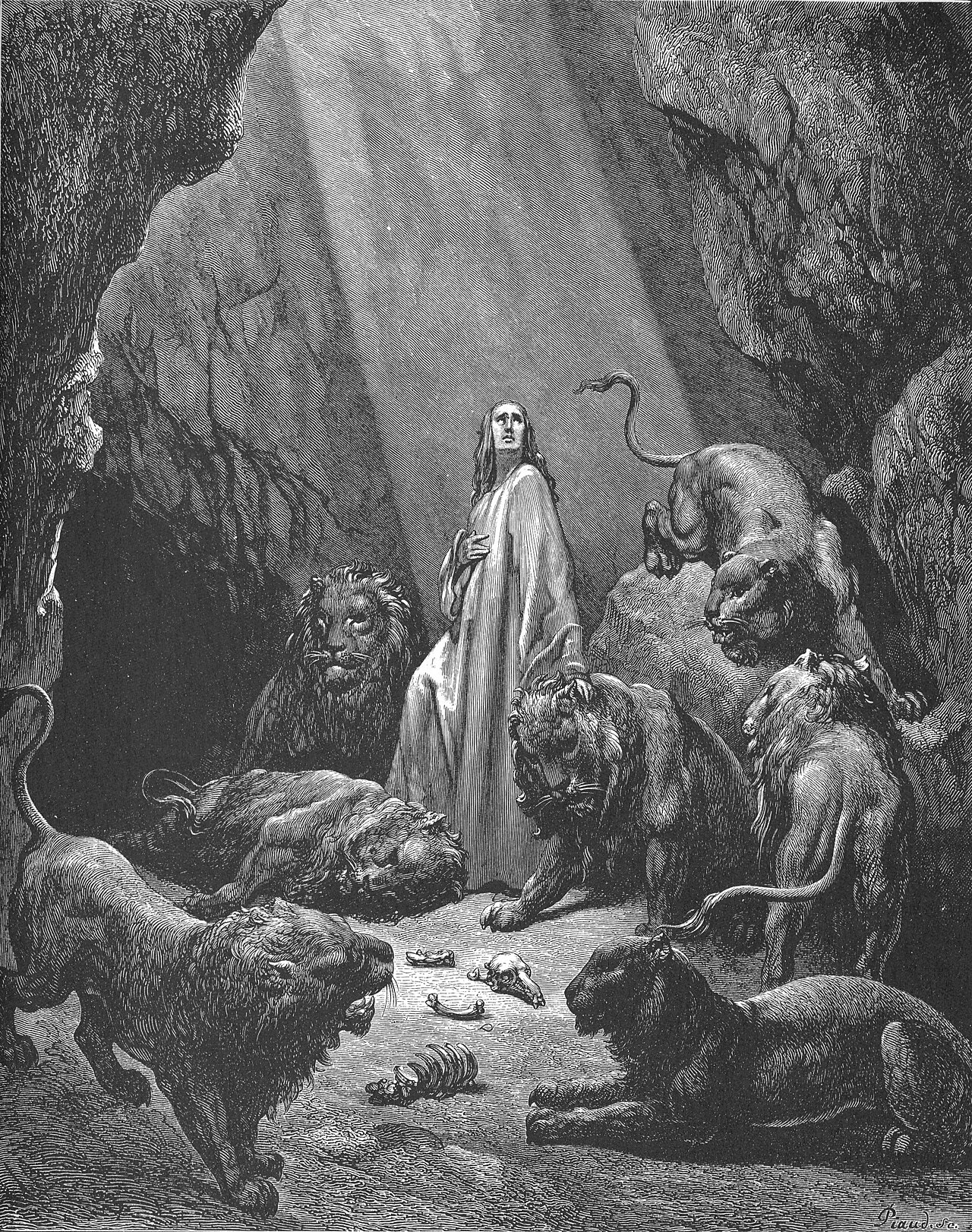
Who and where
1 name in this verse with a page on the site.
This page draws on Adam Clarke, Commentary on the Bible; Albert Barnes, Notes, Explanatory and Practical, on the Old and New Testaments (1832-1869); Hippolytus of Rome, Commentary on Daniel 3.25.3-4; Jerome, St. Jerome, Commentary on Daniel, CHAPTER SIX; John Gill, Exposition of the Old Testament; John Gill, Exposition of the Old Testament (1748-1763) and Matthew Henry, Commentary on the Whole Bible.