
Acts 4:34
in Acts 4There were no needy ones among them, because those who owned lands or houses would sell their property, bring the proceeds from the sales,
BSB
The same verse in ASV and KJV ▾
ASV
For neither was there among them any that lacked: for as many as were possessors of lands or houses sold them, and brought the prices of the things that were sold,
KJV
Neither was there any among them that lacked: for as many as were possessors of lands or houses sold them, and brought the prices of the things that were sold,
⋯
This verse in Acts 4
Commentary
16 notes on this verseNeither was there any among them that lacked,.... Bread to eat, or clothes to wear, or any of the necessaries of life; which shows their great charity, and gives a reason why they were in so much favour with the people, because they took so much care of their poor; and this flowed from the grace of God bestowed upon them: for as many as were possessors of lands and houses; or "vineyards", as the Ethiopic version reads, whether in Jerusalem or elsewhere; sold them and brought the prices of the things that were sold; whether lands, houses, or vineyards.
This site's exposition
There were no needy ones
on Acts 4:34-35
No one among them was needy, because owners sold property and the proceeds were given in response to need. The apostles distributed the gifts to anyone as he had need, the principle Paul commends in 2 Corinthians 8:13 to 15.
The record, by era
The Church Fathers5 voices
"For as many as were possessors of lands or houses sold them, and brought the price of the things that were sold, and laid them down at the Apostles' feet; and distribution was made unto every man according as he had need." A great mark of honor this, that "they laid them at the Apostles' feet." To them they left it to be the dispensers, made them the owners, that thenceforth all should be defrayed as from common, not from private, property. This was also a help to them against vain-glory. If this were done now, we should live more pleasant lives, both rich and poor, nor would it be more pleasant to the poor than to the rich themselves.
"And great grace," it says, "was upon them all; for neither was there any among them that lacked." This is why the grace was upon them all, for that "there was none that lacked:" that is, from the exceeding ardor of the givers, none was in want. For they did not give in part, and in part reserve: nor yet in giving all, give it as their own. And they lived moreover in great abundance: they removed all inequality from among them, and made a goodly order. "For as many as were possessors," etc. And with great respect they did this: for they did not presume to give into their hands, nor did they ostentatiously present, but brought to the Apostles' feet. To them they left it to be the dispensers, made them the owners, that thenceforth all should be defrayed as from common, not from private, property.
"Neither was there any among them that lacked." Their feeling was just as if they were under the paternal roof, all for awhile sharing alike. It is not to be said, that though indeed they maintained the rest, yet they did it with the feeling that the means whereof they maintained them were still their own. No, the admirable circumstance is this, that they first alienated their property, and so maintained the rest, on purpose that the maintenance might not come as of their own private means, but as of the common property.
How much gold think you would be collected? For my part, I conjecture-for of course it is not possible to speak exactly-that supposing all here, men and women, to empty out their whole property, lands, possessions, houses,-for I will not speak of slaves, since at that time there was no such thing, but doubtless such as were slaves they set at liberty,-perhaps ten hundred thousand pounds weight of gold would be the amount collected: nay, twice or thrice as much. For consider; at what number of juga is our city rated? How many of the population shall we say are Christians? shall we say an hundred thousand, and the rest Greeks and Jews? Then what thousands of pounds of gold would be collected! And what is the number of poor? I do not think more than fifty thousand. Then to feed that number daily, what abundance there would be! And yet if the food were received in common, all taking their meals together, it would require no such great outlay after all.
But, you will ask, what should we do after the money was spent? And do you think it ever could be spent? Would not the grace of God be ten thousand fold greater? Would not the grace of God be indeed richly poured out? Nay, should we not make it a heaven upon earth? If, where the numbers were three thousand and five thousand, the doing of this thing had such splendid success, and none of them complained of poverty, how much more glorious would this be in so vast a multitude? And even of those that are without, who would not contribute?
9 more voices on this verse
The Church Fathers4 voices
But, to show that it is the living separately that is expensive and causes poverty, let there be a house in which are ten children: and the wife and the man, let the one work at her wool, the other bring his earnings from his outdoor occupation: now tell me, in which way would these spend most? by taking their meals together and occupying one house, or by living separately? Of course, by living separately. For if the ten children must live apart, they would need ten several rooms, ten tables, ten attendants, and the income otherwise in proportion. Is it not for this very reason, that where there is a great number of servants, they have all one table, that the expense may not be so great? For so it is, division always makes diminution, concord and agreement make increase. The dwellers in the monasteries live just as the faithful did then: now did ever any of these die of hunger? was ever any of them not provided for with plenty of everything?
If we cannot serve God and mammon, can we be redeemed both by God and by mammon? For who will serve mammon more than the man whom mammon has ransomed? Finally, of what example do you avail yourself to warrant your averting by money the giving of you up? When did the apostles, dealing with the matter, in any time of persecution trouble, extricate themselves by money?
If this were done now, we should live more pleasant lives, both rich and poor, nor would it be more pleasant to the poor than to the rich themselves. And if you please, let us now for awhile depict it in words, and derive at least this pleasure from it, since you have no mind for it in your actions. For at any rate this is evident, even from the facts which took place then, that by selling their possessions they did not come to be in need, but made them rich that were in need.
They replied, saying, as if something had been entrusted to them, and this they speak as if concerning a debt. For by divine signs they were showing divine power of Him who had risen from the dead.
The Medieval Church1 voice
"There was no one among them who was in need." Therefore "great grace," because there was not a single poor person, that is, there was not a single person in need, owing to the extraordinary generosity of those who gave away their possessions, because they …
The Puritans and the Awakening2 voices
For neither was there any one among them that wanted - We may observe, this is added as the proof that great grace was upon them all. And it was the immediate, necessary consequence of it: yea, and must be to the end of the world. In all ages and nations, the same cause, the same degree of grace, could not but in like circumstances produce the same effect.
The apostles, Peter and John, went on in their work, and did not labour in vain. The Spirit enabled the ministers to do their part, and the people theirs. The preachers faithfully deliver the doctrine of Christ: They spoke unto the people, to all that were within hearing,
The Nineteenth Century2 voices
Neither was there any among them that lacked - It was customary with the Jews to call the poor together, to eat of the sacrifices, but as the priests, etc., were incensed against Christ and Christianity, consequently the Christian poor could have no advantage of this kind; therefore, by making a common stock for the present necessity, the poor were supplied; so there was none among them that lacked. This provision therefore of the community of goods, which could be but temporary, was made both suitably and seasonably. See Bp. Pearce, and see the note on Act 2:44.
A commentator
Albert Barnes1798–1870
Notes, Explanatory and Practical, on the Old and New Testaments (1832-1869)
proposed
That lacked - That was in want, or whose needs were not supplied by the others. As many as ... - The word used here is employed in a large, indefinite sense; but it would be improper to press it so as to suppose that every individual that became a Christian sold at once all his property. The sense doubtless is, that this was done “when it was necessary:” they parted with whatever property was needful to supply the needs of their poor brethren. That it was by no means considered a matter of “obligations,” or enjoined by the apostles, is apparent from the case of Ananias, Act 5:4. The fact that “Joses” is particularly mentioned Act 4:36 shows that it was by no means a universal practice thus to part with all their possessions. He was “one” instance in which it was done. Perhaps there were many other similar instances; but all that the passage requires us to believe is, that they parted with whatever was “needful” to supply the needs of the poor. This was an eminent and instructive instance of Christian liberality, and of the power of the gospel in overcoming one of the strongest passions that ever exist in the human bosom - the love of money. Many of the early Christians were poor. They were collected from the lower orders of the people. But “all” Were not so. Some of them, it seems, were people of affluence; but the effect of religion was to bring them all, in regard to feeling, at least, on a level. They felt that they were members of one family, and they therefore imparted their property cheerfully to their brethren. Besides this, they were about to go to other lands to preach the gospel, and they cheerfully parted with their property that they might go and proclaim the unsearchable riches of Christ. See the notes on Act 2:44.
The words behind it
20 Greek wordsEvery Greek word of this verse in the order it stands, with what it means and the door to its own study. The last column counts the times a word stands in the whole Bible: the rarer the word, the more the places it appears belong together.
| Greek | Sound | Meaning | Word study | In the Bible |
|---|---|---|---|---|
| οὐδὲ | oude | Not even | G3761 → | 141 times |
| γὰρ | gar | for | G1063 → | 1039 times |
| ἐνδεής | endees | in need | G1729 → | |
| τις | tis | anyone | G5100 → | 528 times |
| ἦν | en | there was | G1510 → | 2333 times |
| ἐν | en | among | G1722 → | 2738 times |
| αὐτοῖς· | autois | them; | G846 → | 5565 times |
| ὅσοι | hosoi | as many as | G3745 → | 110 times |
| γὰρ | gar | for | G1063 → | 1039 times |
| κτήτορες | ktetores | [were] owners | G2935 → | |
| χωρίων | chorion | of lands | G5564 → | 10 times |
| ἢ | e | or | G2228 → | 342 times |
| οἰκιῶν | oikion | houses | G3614 → | 93 times |
| ὑπῆρχον | huperchon | were | G5225 → | 60 times |
| πωλοῦντες | polountes | selling [them] | G4453 → | 22 times |
| ἔφερον | epheron | they were bringing | G5342 → | 66 times |
| τὰς | tas | the | G3588 → | 19766 times |
| τιμὰς | timas | proceeds | G5092 → | 41 times |
| τῶν | ton | of what | G3588 → | 19766 times |
| πιπρασκομένων | pipraskomenon | is sold | G4097 → | 9 times |
οὐδὲNot even
oudeG3761 →141 times
γὰρfor
garG1063 →1039 times
ἐνδεήςin need
endeesG1729 →
τιςanyone
tisG5100 →528 times
ἦνthere was
enG1510 →2333 times
ἐνamong
enG1722 →2738 times
αὐτοῖς·them;
autoisG846 →5565 times
ὅσοιas many as
hosoiG3745 →110 times
γὰρfor
garG1063 →1039 times
κτήτορες[were] owners
ktetoresG2935 →
χωρίωνof lands
chorionG5564 →10 times
ἢor
eG2228 →342 times
οἰκιῶνhouses
oikionG3614 →93 times
ὑπῆρχονwere
huperchonG5225 →60 times
πωλοῦντεςselling [them]
polountesG4453 →22 times
ἔφερονthey were bringing
epheronG5342 →66 times
τὰςthe
tasG3588 →19766 times
τιμὰςproceeds
timasG5092 →41 times
τῶνof what
tonG3588 →19766 times
πιπρασκομένωνis sold
pipraskomenonG4097 →9 times
A shaded row is a word that stands 400 times or fewer in the Bible.
The walk
8 stopsEach card is a verse this one points to, and under it the verses that one points to in turn. Where several paths arrive at the same place, that place is listed first: the text keeps returning to it.
Through
Luke 12:33Sell your possessions and give to the poor. Provide yourselves with purses that will not wear out, an inexhaustible treasure in heaven, where no thief approaches and no moth destroys.
it leads to
- Luke 18:22
On hearing this, Jesus told him, “You still lack one thing: Sell everything you own and give to the poor, and you will have treasure in heaven. Then come, follow Me.”
Reached by 3 separate paths from here.
- Acts 4:34–35
There were no needy ones among them, because those who owned lands or houses would sell their property, bring the proceeds from the sales,
- Luke 18:22
Through
Luke 16:9I tell you, use worldly wealth to make friends for yourselves, so that when it is gone, they will welcome you into eternal dwellings.
it leads to
- Matthew 19:21
Jesus told him, “If you want to be perfect, go, sell your possessions and give to the poor, and you will have treasure in heaven. Then come, follow Me.”
Reached by 2 separate paths from here.
- 1 Timothy 6:17–19
Instruct those who are rich in the present age not to be conceited and not to put their hope in the uncertainty of wealth, but in God, who richly provides all things for us…
Reached by 2 separate paths from here.
- Proverbs 19:17
Kindness to the poor is a loan to the LORD, and He will repay the lender.
Reached by 2 separate paths from here.
- Matthew 19:21
Through
Mark 10:21Jesus looked at him, loved him, and said to him, “There is one thing you lack: Go, sell everything you own and give to the poor, and you will have treasure in heaven. Then…
it leads to
- Matthew 6:19–21
Do not store up for yourselves treasures on earth, where moth and rust destroy, and where thieves break in and steal.
Reached by 2 separate paths from here.
- Matthew 6:19–21
Through
Deuteronomy 2:7Indeed, the LORD your God has blessed you in all the work of your hands. He has watched over your journey through this vast wilderness. The LORD your God has been with you these…
it leads to
- Nehemiah 9:21
For forty years You sustained them in the wilderness, so that they lacked nothing. Their clothes did not wear out and their feet did not swell.
- Luke 22:35
Then Jesus asked them, “When I sent you out without purse or bag or sandals, did you lack anything?” “Nothing,” they answered.
- Nehemiah 9:21
Where this verse is studied
On this page
Studies8
On this verse
On this chapter
About Acts
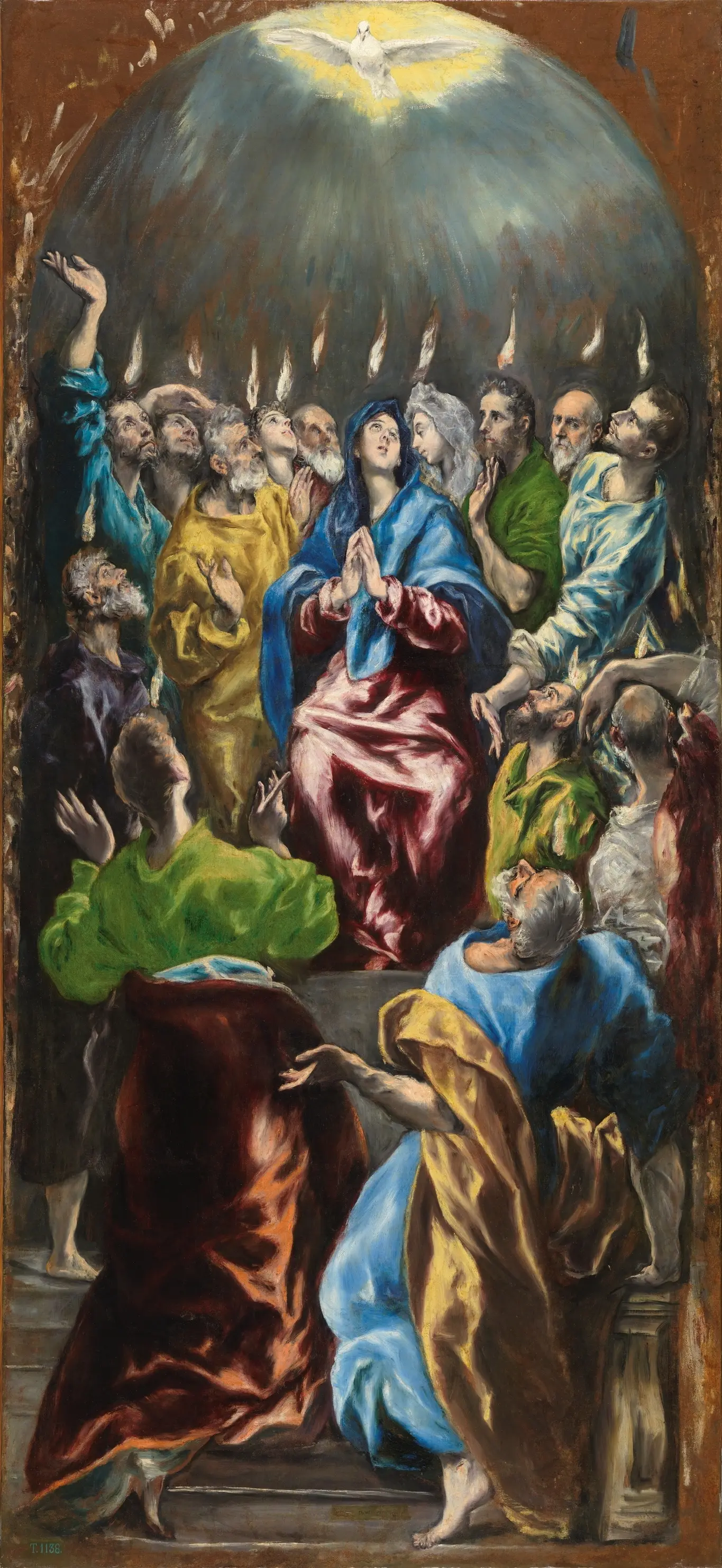
This page draws on 10 works. Open the list of works
This page draws on Adam Clarke, Commentary on the Bible; Albert Barnes, Notes, Explanatory and Practical, on the Old and New Testaments (1832-1869); Jamieson, Fausset & Brown, Commentary Critical and Explanatory on the Whole Bible; John Chrysostom, Homily on Acts 11; John Gill, Exposition of the New Testament (1746-1748); John Wesley, Explanatory Notes upon the New Testament; Matthew Henry, Commentary on the Whole Bible; Oecumenius, Commentary on Acts; Tertullian, On Flight in Persecution and Theophylact of Ohrid, Commentary on Acts.