
2 Samuel 2:24
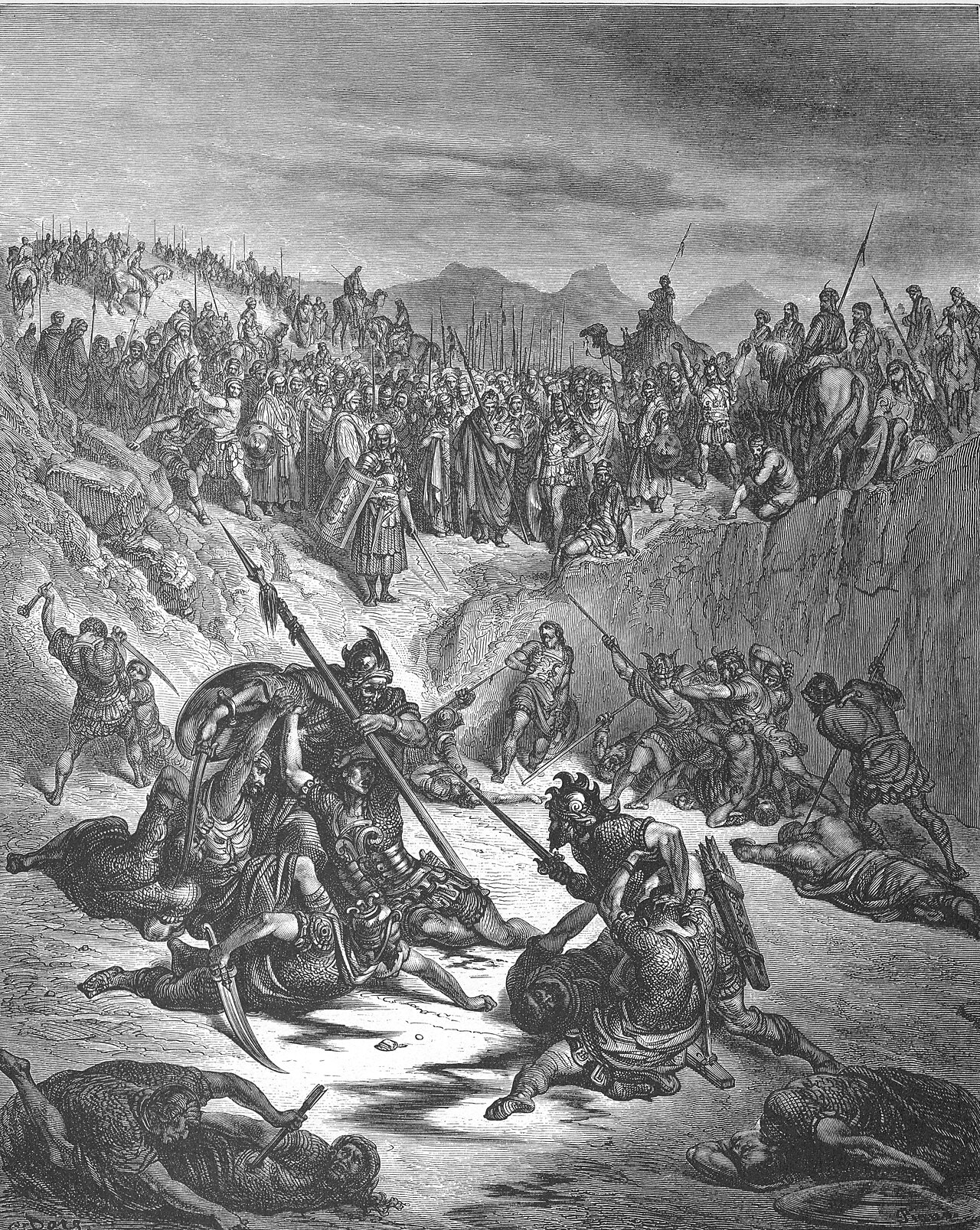
in 2 Samuel 2But Joab and Abishai pursued Abner. By sunset, they had gone as far as the hill of Ammah opposite Giah on the way to the wilderness of Gibeon.
BSB
The same verse in ASV and KJV ▾
ASV
But Joab and Abishai pursued after Abner: and the sun went down when they were come to the hill of Ammah, that lieth before Giah by the way of the wilderness of Gibeon.
KJV
Joab also and Abishai pursued after Abner: and the sun went down when they were come to the hill of Ammah, that lieth before Giah by the way of the wilderness of Gibeon.
⋯
This verse in 2 Samuel 2
Commentary
5 notes on this verseA commentator
Jamieson, Fausset & Brown1802–1910
Commentary Critical and Explanatory on the Whole Bible (1871)
Asahel pursued after Abner--To gain the general's armor was deemed the grandest trophy. Asahel, ambitious of securing Abner's, had outstripped all other pursuers, and was fast gaining on the retreating commander. Abner, conscious of possessing more physical power, and unwilling that there should be "blood" between himself and Joab, Asahel's brother, twice urged him to desist.
This site's exposition
the hill of Ammah
on 2 Samuel 2:24-25
Joab and Abishai keep after Abner until sundown, and the children of Benjamin gather themselves into one troop on a hilltop, the tribe of Saul's own house standing by Ish-bosheth's general. The loyalty is tribal as much as political, the same Benjamin that gave Israel its first king now closing ranks around his son's captain. The chase has reached its limit, and the next verses turn from pursuit to parley.
The record, by era
The Puritans and the Awakening2 voices
30 And Joab returned from following Abner: and when he had gathered all the people together, there lacked of David's servants nineteen men and Asahel. 31 But the servants of David had smitten of Benjamin, and of Abner's men, so that three hundred and threescore men died. 32 And they took up Asahel, and buried him in the sepulchre of his father, which was in Bethlehem.
quarantine:scripture (2026-07-29) — scripture-overlap:98%@v30-32
Joab also and Abishai pursued after Abner,.... Or rather but Joab, &c. (n).
The Nineteenth Century1 voice
A commentator
Albert Barnes1798–1870
Notes, Explanatory and Practical, on the Old and New Testaments (1832-1869)
proposed
Ammah ... Giah - Local, and otherwise unknown names.
The words behind it
19 Hebrew wordsEvery Hebrew word of this verse in the order it stands, with what it means and the door to its own study. The last column counts the times a word stands in the whole Bible: the rarer the word, the more the places it appears belong together.
| Hebrew | Sound | Meaning | Word study | In the Bible |
|---|---|---|---|---|
| וַֽיִּרְדְּפ֛וּ | vaiyirdefu | and they pursued | H7291 → | 143 times |
| יוֹאָ֥ב | yoav | Joab | H3097 → | 144 times |
| וַאֲבִישַׁ֖י | vaavishai | and Abishai | H52 → | 25 times |
| אַחֲרֵ֣י | ʾacharei | after | H310 → | 715 times |
| אַבְנֵ֑ר | ʾavner | Abner | H74 → | 63 times |
| וְהַשֶּׁ֣מֶשׁ | vehashemesh | and the sun | H8121 → | 134 times |
| בָּ֔אָה | baah | it set | H935 → | 2568 times |
| וְהֵ֗מָּה | vehemah | and they | H1992 → | 553 times |
| בָּ֚אוּ | bau | they came | H935 → | 2568 times |
| עַד־ | ʾad- | to | H5704 → | 1261 times |
| גִּבְעַ֣ת | givat | [the] hill of | H1389 → | 68 times |
| אַמָּ֔ה | ʾamah | Ammah | H522 → | |
| אֲשֶׁר֙ | ʾasher | which | H834 → | 5497 times |
| עַל־ | ʾal- | [is] on | H5921 → | 5755 times |
| פְּנֵי־ | penei- | [the] face of | H6440 → | 2123 times |
| גִ֔יחַ | giach | Giah | H1520 → | |
| דֶּ֖רֶךְ | derekh | [the] way of | H1870 → | 707 times |
| מִדְבַּ֥ר | midbar | [the] wilderness of | H4057 → | 270 times |
| גִּבְעֽוֹן׃ | givon | Gibeon | H1391 → | 38 times |
וַֽיִּרְדְּפ֛וּand they pursued
vaiyirdefuH7291 →143 times
יוֹאָ֥בJoab
yoavH3097 →144 times
וַאֲבִישַׁ֖יand Abishai
vaavishaiH52 →25 times
אַחֲרֵ֣יafter
ʾachareiH310 →715 times
אַבְנֵ֑רAbner
ʾavnerH74 →63 times
וְהַשֶּׁ֣מֶשׁand the sun
vehashemeshH8121 →134 times
בָּ֔אָהit set
baahH935 →2568 times
וְהֵ֗מָּהand they
vehemahH1992 →553 times
בָּ֚אוּthey came
bauH935 →2568 times
עַד־to
ʾad-H5704 →1261 times
גִּבְעַ֣ת[the] hill of
givatH1389 →68 times
אַמָּ֔הAmmah
ʾamahH522 →
אֲשֶׁר֙which
ʾasherH834 →5497 times
עַל־[is] on
ʾal-H5921 →5755 times
פְּנֵי־[the] face of
penei-H6440 →2123 times
גִ֔יחַGiah
giachH1520 →
דֶּ֖רֶךְ[the] way of
derekhH1870 →707 times
מִדְבַּ֥ר[the] wilderness of
midbarH4057 →270 times
גִּבְעֽוֹן׃Gibeon
givonH1391 →38 times
A shaded row is a word that stands 400 times or fewer in the Bible.
About 2 Samuel
This page draws on Albert Barnes, Notes on the Old Testament; Albert Barnes, Notes, Explanatory and Practical, on the Old and New Testaments (1832-1869); Jamieson, Fausset & Brown, Commentary Critical and Explanatory on the Whole Bible; John Gill, Exposition of the Old Testament; John Gill, Exposition of the Old Testament (1748-1763) and Matthew Henry, Commentary on the Whole Bible.