
2 Samuel 2:15
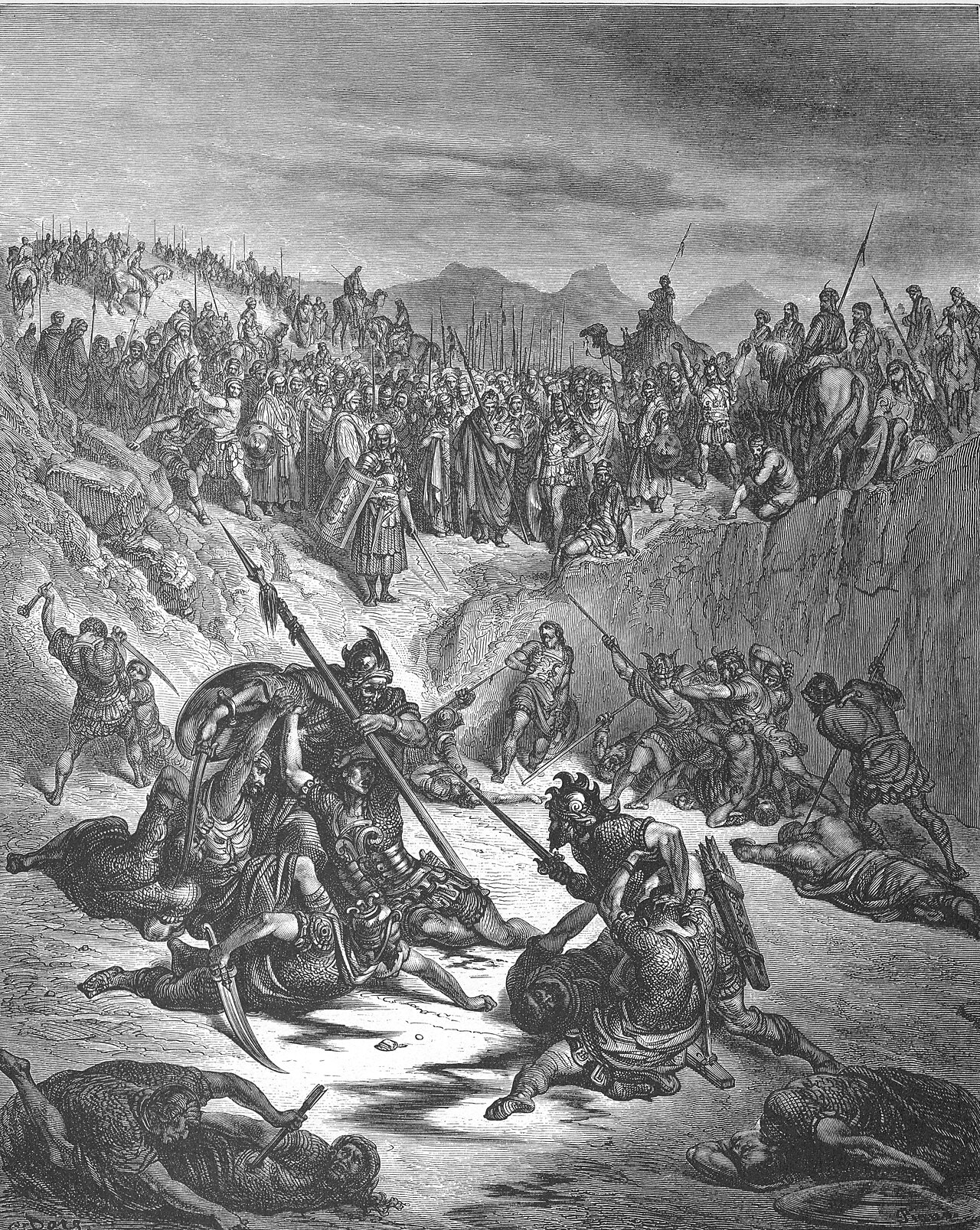
in 2 Samuel 2So they got up and were counted off—twelve for Benjamin and Ish-bosheth son of Saul, and twelve for David.
BSB
The same verse in ASV and KJV ▾
ASV
Then they arose and went over by number: twelve for Benjamin, and for Ish-bosheth the son of Saul, and twelve of the servants of David.
KJV
Then there arose and went over by number twelve of Benjamin, which pertained to Ish–bosheth the son of Saul, and twelve of the servants of David.
⋯
This verse in 2 Samuel 2
Commentary
5 notes on this verseThen there arose and went over by number twelve of Benjamin,.... Whom Abner had picked out of that tribe, being his own, and whom he knew to be stout and courageous men, and closely attached to him.
This site's exposition
Let the young men now arise, and play before us
on 2 Samuel 2:14-16
Abner proposes that the young men arise and play before them, and Joab agrees, but the game is twelve against twelve with swords, and every pair falls together, each man's blade in his fellow's side. The place is named Helkath-hazzurim from what happened there, a field remembered by its dead rather than by any victor. What began as a contest between champions ends as mutual slaughter with no survivor on either side of the pairs.
This site's exposition
twelve for Benjamin
The twelve of Abner all came from Benjamin, his own tribe. John Gill reads them as men Abner picked for their courage and their loyalty to him. Matthew Henry reads their eagerness as ambition to please their commander.
The record, by era
The Puritans and the Awakening1 voice
), having perhaps been bred up in a foolish ambition thus to serve the humour of their commander-in-chief. But, (2.) However it began, it ended in blood (
quarantine:debris (2026-07-29) — leading-punctuation
The Nineteenth Century1 voice
A commentator
Jamieson, Fausset & Brown1802–1910
Commentary Critical and Explanatory on the Whole Bible (1871)
proposed
Abner the son of Ner, captain of Saul's host took Ish-bosheth--Here was the establishment of a rival kingdom, which, however, would probably have had no existence but for Abner. Ish-bosheth--or "Esh-baal" (1Ch 8:33;
quarantine:debris (2026-07-29) — unbalanced-parens
How the passage was read
What the Jewish commentators add
On the verses either side of this one
The Plain of Swords. Yonasan translates the plain of Killing on account of the swords just like you say [in Scriptures] (Tehilim, 44) 2 Rashi is showing how the word צוּר, sharpness, is used in reference to a sword. "You also turned back the sharpness of his sword."
This section is reception history: how the passage was read and kept in the Jewish tradition. Where a reading parts from an essential of the Christian faith, the section says so at that point.
Texts and citation data: Sefaria; each excerpt follows its version’s licence. 7 further sources are cited on this chapter that carry no English text this site may quote or only restate the verse.
The words behind it
14 Hebrew wordsEvery Hebrew word of this verse in the order it stands, with what it means and the door to its own study. The last column counts the times a word stands in the whole Bible: the rarer the word, the more the places it appears belong together.
| Hebrew | Sound | Meaning | Word study | In the Bible |
|---|---|---|---|---|
| וַיָּקֻ֖מוּ | vaiyakumu | and they arose | H6965 → | 628 times |
| וַיַּעַבְר֣וּ | vaiyaavru | and they passed by | H5674 → | 556 times |
| בְמִסְפָּ֑ר | vemispar | by number | H4557 → | 134 times |
| שְׁנֵ֧ים | sheneim | two [plus] | H8147 → | 768 times |
| עָשָׂ֣ר | ʾasar | ten | H6240 → | 338 times |
| לְבִנְיָמִ֗ן | levinyamin | for Benjamin | H1144 → | 166 times |
| וּלְאִ֥ישׁ | uleish | and for Ish- | H378 → | 22 times |
| בֹּ֙שֶׁת֙ | boshet | bosheth | H378 → | 22 times |
| בֶּן־ | ben- | [the] son of | H1121 → | 4930 times |
| שָׁא֔וּל | shaul | Saul | H7586 → | 402 times |
| וּשְׁנֵ֥ים | usheneim | and two [plus] | H8147 → | 768 times |
| עָשָׂ֖ר | ʾasar | ten | H6240 → | 338 times |
| מֵעַבְדֵ֥י | meavdei | from [the] servants of | H5650 → | 799 times |
| דָוִֽד׃ | david | David | H1732 → | 999 times |
וַיָּקֻ֖מוּand they arose
vaiyakumuH6965 →628 times
וַיַּעַבְר֣וּand they passed by
vaiyaavruH5674 →556 times
בְמִסְפָּ֑רby number
vemisparH4557 →134 times
שְׁנֵ֧יםtwo [plus]
sheneimH8147 →768 times
עָשָׂ֣רten
ʾasarH6240 →338 times
לְבִנְיָמִ֗ןfor Benjamin
levinyaminH1144 →166 times
וּלְאִ֥ישׁand for Ish-
uleishH378 →22 times
בֹּ֙שֶׁת֙bosheth
boshetH378 →22 times
בֶּן־[the] son of
ben-H1121 →4930 times
שָׁא֔וּלSaul
shaulH7586 →402 times
וּשְׁנֵ֥יםand two [plus]
usheneimH8147 →768 times
עָשָׂ֖רten
ʾasarH6240 →338 times
מֵעַבְדֵ֥יfrom [the] servants of
meavdeiH5650 →799 times
דָוִֽד׃David
davidH1732 →999 times
A shaded row is a word that stands 400 times or fewer in the Bible.
About 2 Samuel
Who and where
2 names in this verse with a page on the site.
- PersonUnited MonarchyDavidSecond king of united Israel, shepherd-turned-monarch, ancestor of the Messiah, and traditional author of many Psalms.
- PersonUnited monarchySaulIsrael's first king, head and shoulders above the people; began in humility, ended in rejection — sparing what God devoted, consul…
This page draws on Adam Clarke, Commentary on the Bible; Jamieson, Fausset & Brown, Commentary Critical and Explanatory on the Whole Bible; John Gill, Exposition of the Old Testament (1748-1763); John Gill, Exposition of the Old Testament and Matthew Henry, Commentary on the Whole Bible.