
2 Kings 6:26
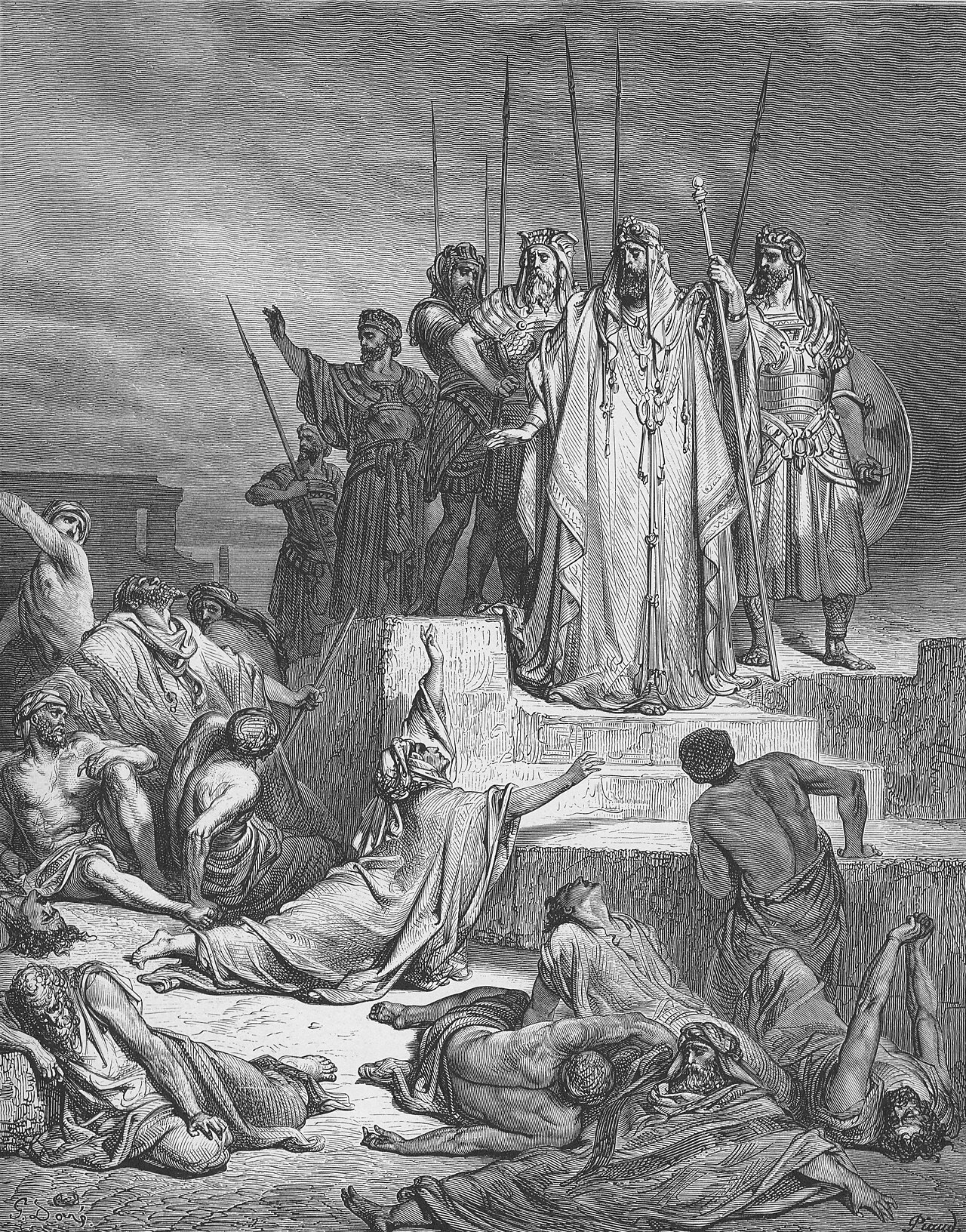
in 2 Kings 6As the king of Israel was passing by on the wall, a woman cried out to him, “Help me, my lord the king!”
BSB
The same verse in ASV and KJV ▾
ASV
And as the king of Israel was passing by upon the wall, there cried a woman unto him, saying, Help, my lord, O king.
KJV
And as the king of Israel was passing by upon the wall, there cried a woman unto him, saying, Help, my lord, O king.
⋯
This verse in 2 Kings 6
Commentary
6 notes on this verseA commentator
Albert Barnes1798–1870
Notes, Explanatory and Practical, on the Old and New Testaments (1832-1869)
The walls of fortified towns had a broad space at the top, protected toward the exterior by battlements, along which the bulk of the defenders were disposed, and from which they hurled their missiles and shot their arrows. The king seems to have been going his rounds, to inspect the state of the garrison and the defenses.
This site's exposition
there cried a woman unto him
on 2 Kings 6:26-27
A woman appeals to the king as he walks the wall, and his first answer names the real source of help correctly before he can act on it, if the Lord do not help thee, whence shall I help thee. The barnfloor and winepress are the ordinary places grain and wine come from in a working land, and both stand empty in a siege, so the king's question is an honest description of a kingdom with nothing left to give, not an evasion of hers.
The record, by era
The Church Fathers1 voice
"Some time later King Ben-hadad of Aram mustered his entire army; he marched against Samaria and laid siege to it." This is that Ben-hadad who had been condemned to death by God; and Ahab had received the order to execute him. But he spared his …
The Puritans and the Awakening3 voices
Whither should the subject, in distress, go for help but to the prince, who is, by office, the protector of right and the avenger of wrong? He returns but a melancholy answer (
quarantine:debris (2026-07-29) — unbalanced-parens
And as the king of Israel was passing by upon the wall, &c. To spy out the motion and situation of the enemy, and to give orders for the annoyance of them, and to see that his soldiers did their duty: there cried a woman to him, saying, help, my lord, O king; desired his assistance and help in a cause depending between her and another woman.
Concerning the sons of the prophets, and their condition and character. The college here spoken of seems to be that at Gilgal, for there Elisha was ( ch. iv. 38 ), and it was near Jordan; and, probably, wherever Elisha resided as many as could of the sons of the prophets flocked to him for the advantage of his instructions, counsels, and prayers.
The words behind it
13 Hebrew wordsEvery Hebrew word of this verse in the order it stands, with what it means and the door to its own study. The last column counts the times a word stands in the whole Bible: the rarer the word, the more the places it appears belong together.
| Hebrew | Sound | Meaning | Word study | In the Bible |
|---|---|---|---|---|
| וַֽיְהִי֙ | vayhi | and he was | H1961 → | 3559 times |
| מֶ֣לֶךְ | melekh | [the] king of | H4428 → | 2525 times |
| יִשְׂרָאֵ֔ל | yisrael | Israel | H3478 → | 2507 times |
| עֹבֵ֖ר | ʾover | passing by | H5674 → | 556 times |
| עַל־ | ʾal- | on | H5921 → | 5755 times |
| הַחֹמָ֑ה | hachomah | the wall | H2346 → | 133 times |
| וְאִשָּׁ֗ה | veishah | and a woman | H802 → | 781 times |
| צָעֲקָ֤ה | tzaakah | she cried out | H6817 → | 55 times |
| אֵלָיו֙ | ʾelav | to him | H413 → | 5510 times |
| לֵאמֹ֔ר | lemor | <to> saying | H559 → | 5305 times |
| הוֹשִׁ֖יעָה | hoshiah | save ! | H3467 → | 206 times |
| אֲדֹנִ֥י | ʾadoni | O lord my | H113 → | 333 times |
| הַמֶּֽלֶךְ׃ | hamelekh | the king | H4428 → | 2525 times |
וַֽיְהִי֙and he was
vayhiH1961 →3559 times
מֶ֣לֶךְ[the] king of
melekhH4428 →2525 times
יִשְׂרָאֵ֔לIsrael
yisraelH3478 →2507 times
עֹבֵ֖רpassing by
ʾoverH5674 →556 times
עַל־on
ʾal-H5921 →5755 times
הַחֹמָ֑הthe wall
hachomahH2346 →133 times
וְאִשָּׁ֗הand a woman
veishahH802 →781 times
צָעֲקָ֤הshe cried out
tzaakahH6817 →55 times
אֵלָיו֙to him
ʾelavH413 →5510 times
לֵאמֹ֔ר<to> saying
lemorH559 →5305 times
הוֹשִׁ֖יעָהsave !
hoshiahH3467 →206 times
אֲדֹנִ֥יO lord my
ʾadoniH113 →333 times
הַמֶּֽלֶךְ׃the king
hamelekhH4428 →2525 times
A shaded row is a word that stands 400 times or fewer in the Bible.
The walk
8 stopsEach card is a verse this one points to, and under it the verses that one points to in turn. Where several paths arrive at the same place, that place is listed first: the text keeps returning to it.
Through
Luke 18:3And there was a widow in that town who kept appealing to him, ‘Give me justice against my adversary.’
it leads to
- Isaiah 1:17
Learn to do right; seek justice and correct the oppressor. Defend the fatherless and plead the case of the widow.”
- Jeremiah 5:28
They have grown fat and sleek, and have excelled in the deeds of the wicked. They have not taken up the cause of the fatherless, that they might prosper; nor have they defended the…
- Job 22:9
You sent widows away empty-handed, and the strength of the fatherless was crushed.
- Deuteronomy 27:19
‘Cursed is he who withholds justice from the foreigner, the fatherless, or the widow.’ And let all the people say, ‘Amen!’
- Isaiah 1:17
Through
Isaiah 10:3What will you do on the day of reckoning when devastation comes from afar? To whom will you flee for help? Where will you leave your wealth?
it leads to
- Hosea 9:7
The days of punishment have come; the days of retribution have arrived—let Israel know it. The prophet is called a fool, and the inspired man insane, because of the greatness of your iniquity and…
- Luke 19:44
They will level you to the ground—you and the children within your walls. They will not leave one stone on another, because you did not recognize the time of your visitation from God.”
- Job 31:14
what will I do when God rises to judge? How will I answer when called to account?
- Hosea 9:7
Through
Acts 21:28crying out, “Men of Israel, help us! This is the man who teaches everywhere against our people and against our law and against this place. Furthermore, he has brought Greeks into the temple and…
it leads to
- Acts 24:5–6
We have found this man to be a pestilence, stirring up dissension among the Jews all over the world. He is a ringleader of the sect of the Nazarenes,
- Acts 24:5–6
Where this verse is studied
On this page
About 2 Kings
This page draws on Albert Barnes, Notes, Explanatory and Practical, on the Old and New Testaments (1832-1869); Ephrem the Syrian, ON THE SECOND BOOK OF KINGS 6:24; John Gill, Exposition of the Old Testament (1748-1763); John Wesley, Explanatory Notes upon the Old Testament; Keil, The Books of the Kings and Matthew Henry, Commentary on the Whole Bible.