
2 Kings 6:14
in 2 Kings 6the king of Aram sent horses, chariots, and a great army. They went there by night and surrounded the city.
BSB
The same verse in ASV and KJV ▾
ASV
Therefore sent he thither horses, and chariots, and a great host: and they came by night, and compassed the city about.
KJV
Therefore sent he thither horses, and chariots, and a great host: and they came by night, and compassed the city about.
⋯
This verse in 2 Kings 6
Commentary
5 notes on this verseThis site's exposition
Go and see where he is
on 2 Kings 6:13-14
The king of Aram sends to find one man and learns that “Elisha is in Dothan”, a town north of Samaria. He sends “horses, chariots, and a great army”, which surround the city by night for a single unarmed prophet. A king who cannot out-hear Elisha tries to out-number him.
This site's exposition
surrounded the city
The city they surrounded was Dothan, which John Gill places in Manasseh near Shechem, the Dothan of Genesis 37:17. Albert Barnes notes that its name still clings to a marked hill with a strong spring at its foot. The army closed on it by night.
The record, by era
The Puritans and the Awakening2 voices
Therefore sent he thither horses and chariots, and a great host,.... To terrify the inhabitants from attempting to defend the prophet, but deliver him up at once: and they came by night; that they might come upon them unawares, and their design not be discovered, so as to have timely help from Samaria, which was not far off: and compassed the city about; that the prophet might not make his escape out of it.
Naaman could tell him that Elisha dwelt not in any strong-hold, nor was attended with any guards, nor had any such great interest in the people that he needed to fear a tumult among them; what occasion then was there for this great force?
The Nineteenth Century1 voice
He sent thither horses - It is strange he did not think that he who could penetrate his secrets with respect to the Israelitish army, could inform himself of all his machinations against his own life.
How the passage was read
What the Jewish commentators add
On the verses either side of this one
Where he is. Where he is. 6 See Shir Hashirim:7 for a similar expression. 7 According to Malbim, this was not a hostile act. The king sent his men to invite Elisha to his court in the hope of winning him over.
This section is reception history: how the passage was read and kept in the Jewish tradition. Where a reading parts from an essential of the Christian faith, the section says so at that point.
Texts and citation data: Sefaria; each excerpt follows its version’s licence. 5 further sources are cited on this chapter that carry no English text this site may quote or only restate the verse.
The words behind it
11 Hebrew wordsEvery Hebrew word of this verse in the order it stands, with what it means and the door to its own study. The last column counts the times a word stands in the whole Bible: the rarer the word, the more the places it appears belong together.
| Hebrew | Sound | Meaning | Word study | In the Bible |
|---|---|---|---|---|
| וַיִּשְׁלַח־ | vaiyishlach- | and he sent | H7971 → | 845 times |
| שָׁ֛מָּה | shamah | there towards | H8033 → | 834 times |
| סוּסִ֥ים | susim | horses | H5483 → | 140 times |
| וְרֶ֖כֶב | verekhev | and chariotry | H7393 → | 119 times |
| וְחַ֣יִל | vechayil | and an army | H2428 → | 246 times |
| כָּבֵ֑ד | kaved | massive | H3515 → | |
| וַיָּבֹ֣אוּ | vaiyavou | and they came | H935 → | 2568 times |
| לַ֔יְלָה | laylah | night | H3915 → | 233 times |
| וַיַּקִּ֖פוּ | vaiyakifu | and they surrounded | H5362 → | |
| עַל־ | ʾal- | <on> | H5921 → | 5755 times |
| הָעִֽיר׃ | hair | the city | H5892 → | 1090 times |
וַיִּשְׁלַח־and he sent
vaiyishlach-H7971 →845 times
שָׁ֛מָּהthere towards
shamahH8033 →834 times
סוּסִ֥יםhorses
susimH5483 →140 times
וְרֶ֖כֶבand chariotry
verekhevH7393 →119 times
וְחַ֣יִלand an army
vechayilH2428 →246 times
כָּבֵ֑דmassive
kavedH3515 →
וַיָּבֹ֣אוּand they came
vaiyavouH935 →2568 times
לַ֔יְלָהnight
laylahH3915 →233 times
וַיַּקִּ֖פוּand they surrounded
vaiyakifuH5362 →
עַל־<on>
ʾal-H5921 →5755 times
הָעִֽיר׃the city
hairH5892 →1090 times
A shaded row is a word that stands 400 times or fewer in the Bible.
The walk
8 stopsEach card is a verse this one points to, and under it the verses that one points to in turn. Where several paths arrive at the same place, that place is listed first: the text keeps returning to it.
Through
1 Samuel 23:26Saul was proceeding along one side of the mountain, and David and his men along the other side. Even though David was hurrying to get away, Saul and his men were closing in on…
it leads to
- Psalms 17:9
from the wicked who assail me, from my mortal enemies who surround me.
- 2 Samuel 15:14
And David said to all the servants with him in Jerusalem, “Arise and let us flee, or we will not escape from Absalom! We must leave quickly, or he will soon overtake us, heap…
- Psalms 22:16
For dogs surround me; a band of evil men encircles me; they have pierced my hands and feet.
- 2 Corinthians 1:8
We do not want you to be unaware, brothers, of the hardships we encountered in the province of Asia. We were under a burden far beyond our ability to endure, so that we despaired…
- Psalms 17:9
Through
Matthew 26:47While Jesus was still speaking, Judas, one of the Twelve, arrived, accompanied by a large crowd armed with swords and clubs, sent from the chief priests and elders of the people.
it leads to
- Matthew 26:55
At that time Jesus said to the crowd, “Have you come out with swords and clubs to arrest Me as you would an outlaw? Every day I sat teaching in the temple courts, and…
- Acts 1:16
“Brothers, the Scripture had to be fulfilled which the Holy Spirit foretold through the mouth of David concerning Judas, who became a guide for those who arrested Jesus.
- Matthew 26:55
Through
Matthew 26:55At that time Jesus said to the crowd, “Have you come out with swords and clubs to arrest Me as you would an outlaw? Every day I sat teaching in the temple courts, and…
it leads to
- Mark 12:35
While Jesus was teaching in the temple courts, He asked, “How can the scribes say that the Christ is the Son of David?
- John 8:2
Early in the morning He went back into the temple courts. All the people came to Him, and He sat down to teach them.
- Mark 12:35
Where this verse is studied
About 2 Kings
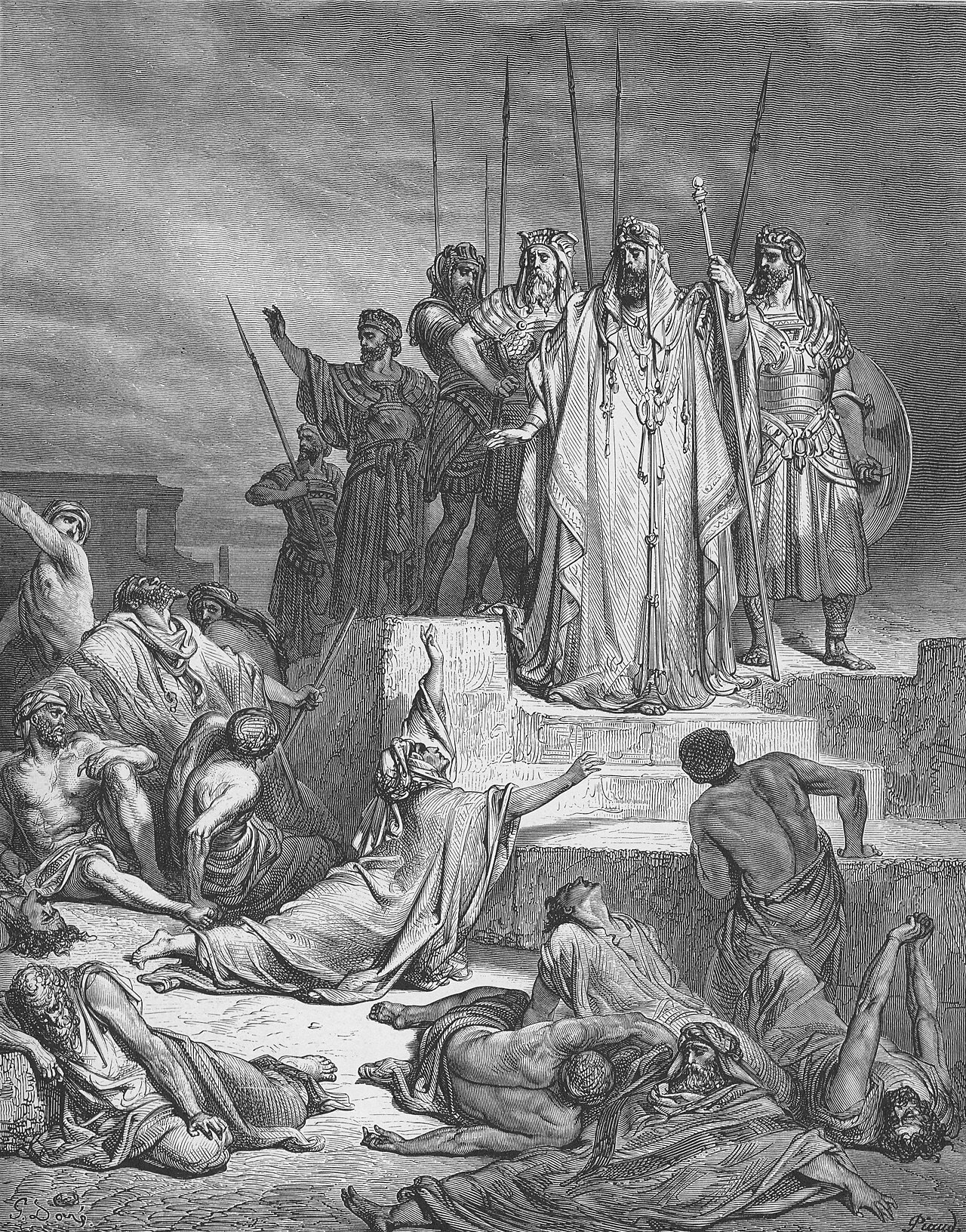
This page draws on Adam Clarke, Commentary on the Bible; Albert Barnes, Notes, Explanatory and Practical, on the Old and New Testaments; F. W. Farrar, The Second Book of Kings (Expositor's Bible); John Gill, Exposition of the Old Testament; John Gill, Exposition of the Old Testament (1748-1763) and Matthew Henry, Commentary on the Whole Bible.