
2 Kings 19:37
in 2 Kings 19One day, while he was worshiping in the temple of his god Nisroch, his sons Adrammelech and Sharezer put him to the sword and escaped to the land of Ararat. And his son Esar-haddon reigned in his place.
BSB
The same verse in ASV and KJV ▾
ASV
And it came to pass, as he was worshipping in the house of Nisroch his god, that Adrammelech and Sharezer smote him with the sword: and they escaped into the land of Ararat. And Esar-haddon his son reigned in his stead.
KJV
And it came to pass, as he was worshipping in the house of Nisroch his god, that Adrammelech and Sharezer his sons smote him with the sword: and they escaped into the land of Armenia. And Esarhaddon his son reigned in his stead.
⋯
This verse in 2 Kings 19
Commentary
6 notes on this verseA commentator
Albert Barnes1798–1870
Notes, Explanatory and Practical, on the Old and New Testaments (1832-1869)
The death of Sennacherib, which took place many years afterward (680 B.C.), is related here, as, from the divine point of view, the sequel to his Syrian expeditions. Nisroch his god - Nisroch has not been as yet identified with any known Assyrian deity. The word may not be the name of a god at all but the name of the temple, as Josephus understood it. Assyrian temples were almost all distinguished by special names.
This site's exposition
his sons Adrammelech and Sharezer put him
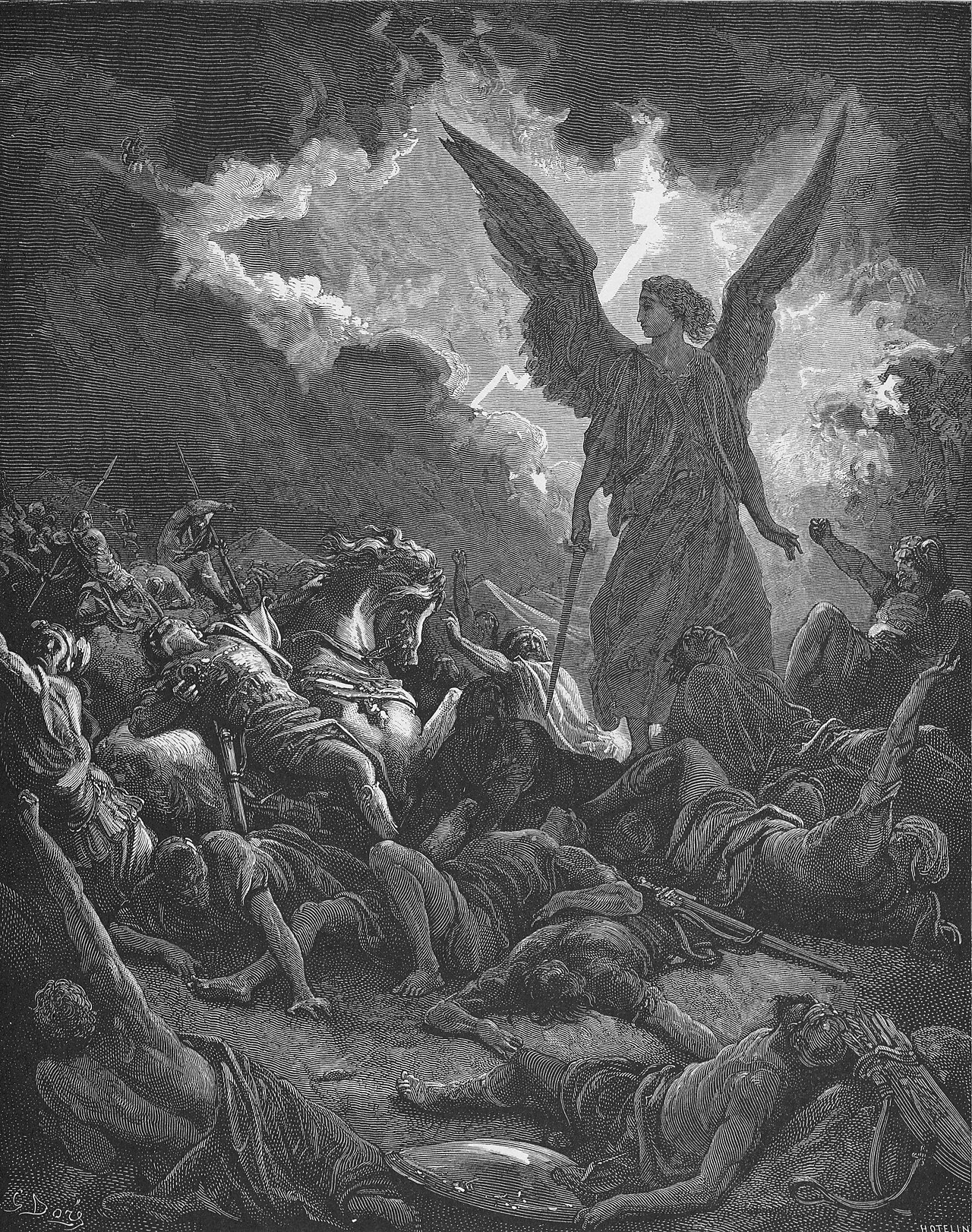
The sword promised at verse 7 arrives, while Sennacherib is "worshiping in the temple of his god Nisroch", and his own sons strike him down. The king who mocked every god that failed its worshippers dies unprotected in his own god's house, and "his son Esar-haddon reigned in his place".
The record, by era
The Puritans and the Awakening2 voices
Justly is his blood mingled with his sacrifices, since he will not be convinced by such a plain and dear-bought demonstration of his folly in worshipping idols. His sons that murdered him were suffered to escape, and no pursuit was made after them, his subjects perhaps being weary of the government of so proud a man and thinking themselves well rid of him.
2 And he sent Eliakim, which was over the household, and Shebna the scribe, and the elders of the priests, covered with sackcloth, to Isaiah the prophet the son of Amoz. 3 And they said unto him, Thus saith Hezekiah, This day is a day of trouble, and of rebuke, and blasphemy: for the children are come to the birth, and there is not strength to bring forth.
quarantine:scripture (2026-07-29) — verbatim-scripture
The Nineteenth Century2 voices
A commentator
Jamieson, Fausset & Brown1802–1910
Commentary Critical and Explanatory on the Whole Bible (1871)
proposed
as he was worshipping in the house of Nisroch--Assarae, or Asshur, the head of the Assyrian Pantheon, represented not as a vulture-headed figure (that is now ascertained to be a priest), but as a winged figure in a circle, which was the guardian deity of Assyria.
quarantine:debris (2026-07-29) — starts-lowercase
Nisroch his god - We know nothing of this deity; he is nowhere else mentioned. Smote him with the sword - The rabbins say that his sons had learned that he intended to sacrifice them to this god, and that they could only prevent this by slaying him. The same writers add, that he consulted his wise men how it was that such miracles should be wrought for the Israelites; who told him that it was because of the merit of Abraham who had offered his only son to God: he then said, I will offer to him my two sons; which when they heard, they rose up and slew him. When a rabbin cannot untie a knot, he feels neither scruple nor difficulty to cut it.
The words behind it
19 Hebrew wordsEvery Hebrew word of this verse in the order it stands, with what it means and the door to its own study. The last column counts the times a word stands in the whole Bible: the rarer the word, the more the places it appears belong together.
| Hebrew | Sound | Meaning | Word study | In the Bible |
|---|---|---|---|---|
| וַיְהִי֩ | vayhi | and it was | H1961 → | 3559 times |
| ה֨וּא | hu' | he | H1931 → | 1879 times |
| מִֽשְׁתַּחֲוֶ֜ה | mishtachaveh | [was] bowing down | H7812 → | 172 times |
| בֵּ֣ית׀ | beit | [the] house of | H1004 → | 2046 times |
| נִסְרֹ֣ךְ | nisrokh | Nisroch | H5268 → | |
| אֱלֹהָ֗יו | ʾelohav | god his | H430 → | 2601 times |
| וְֽאַדְרַמֶּ֨לֶךְ | veadramelekh | and Adrammelech | H152 → | |
| וְשַׂרְאֶ֤צֶר בָּנָיו֙ | vesaretzer banav | and Sharezer sons his | H8272 →H1121 → | 4930 times |
| הִכֻּ֣הוּ | hikuhu | they struck down him | H5221 → | 499 times |
| בַחֶ֔רֶב | vacherev | with the sword | H2719 → | 413 times |
| וְהֵ֥מָּה | vehemah | and they | H1992 → | 553 times |
| נִמְלְט֖וּ | nimletu | they escaped | H4422 → | 95 times |
| אֶ֣רֶץ | ʾeretz | [the] land of | H776 → | 2504 times |
| אֲרָרָ֑ט | ʾararat | Ararat | H780 → | |
| וַיִּמְלֹ֛ךְ | vaiyimlokh | and he became king | H4427 → | 348 times |
| אֵֽסַר־ | ʾesar- | Esar- | H634 → | |
| חַדֹּ֥ן | chadon | -haddon | H634 → | |
| בְּנ֖וֹ | beno | son his | H1121 → | 4930 times |
| תַּחְתָּֽיו׃ פ | tachtav | in place of him | H8478 → | 505 times |
וַיְהִי֩and it was
vayhiH1961 →3559 times
ה֨וּאhe
hu'H1931 →1879 times
מִֽשְׁתַּחֲוֶ֜ה[was] bowing down
mishtachavehH7812 →172 times
בֵּ֣ית׀[the] house of
beitH1004 →2046 times
נִסְרֹ֣ךְNisroch
nisrokhH5268 →
אֱלֹהָ֗יוgod his
ʾelohavH430 →2601 times
וְֽאַדְרַמֶּ֨לֶךְand Adrammelech
veadramelekhH152 →
וְשַׂרְאֶ֤צֶר בָּנָיו֙and Sharezer sons his
הִכֻּ֣הוּthey struck down him
hikuhuH5221 →499 times
בַחֶ֔רֶבwith the sword
vacherevH2719 →413 times
וְהֵ֥מָּהand they
vehemahH1992 →553 times
נִמְלְט֖וּthey escaped
nimletuH4422 →95 times
אֶ֣רֶץ[the] land of
ʾeretzH776 →2504 times
אֲרָרָ֑טArarat
ʾararatH780 →
וַיִּמְלֹ֛ךְand he became king
vaiyimlokhH4427 →348 times
אֵֽסַר־Esar-
ʾesar-H634 →
חַדֹּ֥ן-haddon
chadonH634 →
בְּנ֖וֹson his
benoH1121 →4930 times
תַּחְתָּֽיו׃ פin place of him
tachtavH8478 →505 times
A shaded row is a word that stands 400 times or fewer in the Bible.
The walk
8 stopsEach card is a verse this one points to, and under it the verses that one points to in turn. Where several paths arrive at the same place, that place is listed first: the text keeps returning to it.
Through
Jeremiah 51:27“Raise a banner in the land! Blow the ram’s horn among the nations! Prepare the nations against her. Summon the kingdoms against her—Ararat, Minni, and Ashkenaz. Appoint a captain against her; bring up horses…
it leads to
- Genesis 10:3
The sons of Gomer: Ashkenaz, Riphath, and Togarmah.
- 1 Chronicles 1:6
The sons of Gomer: Ashkenaz, Riphath, and Togarmah.
- Genesis 8:4
On the seventeenth day of the seventh month, the ark came to rest on the mountains of Ararat.
- Jeremiah 25:14
For many nations and great kings will enslave them, and I will repay them according to their deeds and according to the work of their hands.’”
- Genesis 10:3
Through
Ezra 4:2they approached Zerubbabel and the heads of the families, saying, “Let us build with you because, like you, we seek your God and have been sacrificing to Him since the time of King Esar-haddon…
it leads to
- 2 Kings 17:24
Then the king of Assyria brought people from Babylon, Cuthah, Avva, Hamath, and Sepharvaim and settled them in the towns of Samaria to replace the Israelites. They took possession of Samaria and lived in…
- Galatians 2:4
This issue arose because some false brothers had come in under false pretenses to spy on our freedom in Christ Jesus, in order to enslave us.
- 2 Kings 17:24
Through
2 Kings 19:7Behold, I will put a spirit in him so that he will hear a rumor and return to his own land, where I will cause him to fall by the sword.’”
it leads to
- 2 Kings 7:6
For the Lord had caused the Arameans to hear the sound of chariots, horses, and a great army, so that they said to one another, “Look, the king of Israel must have hired the…
- 2 Kings 7:6
Through
Deuteronomy 32:31For their rock is not like our Rock, even our enemies concede.
it leads to
- Exodus 14:25
He caused their chariot wheels to wobble, so that they had difficulty driving. “Let us flee from the Israelites,” said the Egyptians, “for the LORD is fighting for them against Egypt!”
- Exodus 14:25
Where this verse is studied
On this page
Studies5
On this verse
What the record shows
2 entries- Adrammelech (Arda-Mulissu) — attested in contemporary inscriptionundisputed
Letter to Esarhaddon (Nineveh archive)
Biblical figure (Son and assassin of Sennacherib, early 7th c. BC) identified in extra-biblical epigraphy.
Counterpoint: The Assyrian letters name the assassin Arda-Mulissu, not "Adrammelech" — the Hebrew form is a garbled spelling, and some scholars have instead linked it to the divine name Adad-milki. Simo Parpola's identification ("The Murderer of Sennacherib," 1980) is now widely accepted, but it rests on the sons' roles and the date rather than on an exact match of the name.
- Esarhaddon — attested in contemporary inscriptionundisputed
Multiple Assyrian inscriptions
Biblical figure (King of Assyria, 680-669 BC) identified in extra-biblical epigraphy.
About 2 Kings
Who and where
1 name in this verse with a page on the site.
This page draws on Adam Clarke, Commentary on the Bible; Albert Barnes, Notes, Explanatory and Practical, on the Old and New Testaments (1832-1869); F. W. Farrar, The Second Book of Kings (Expositor's Bible); Jamieson, Fausset & Brown, Commentary Critical and Explanatory on the Whole Bible; Keil, The Books of the Kings and Matthew Henry, Commentary on the Whole Bible.