
1 Samuel 2:8
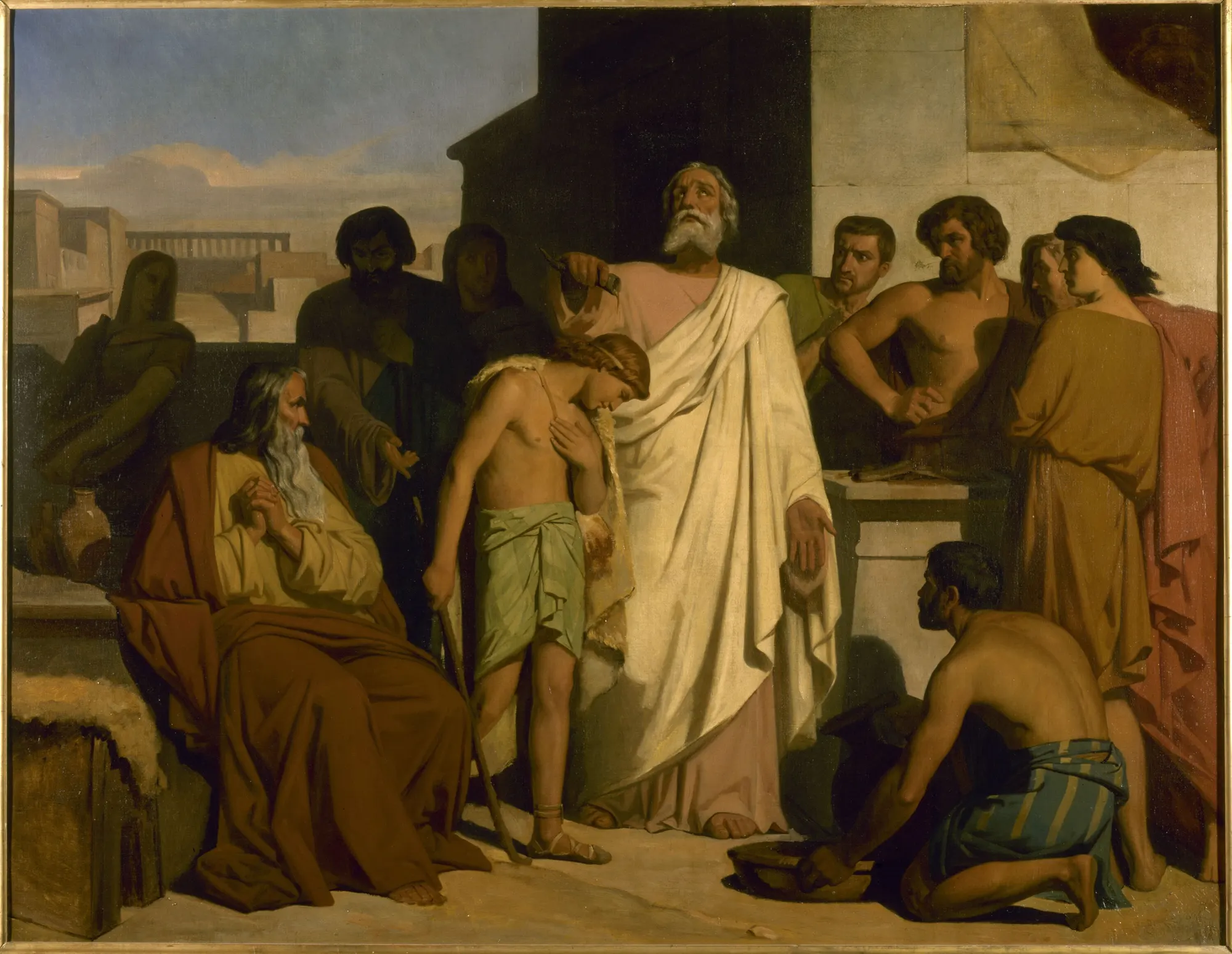
in 1 Samuel 2He raises the poor from the dust and lifts the needy from the ash heap. He seats them among princes and bestows on them a throne of honor. For the foundations of the earth are the LORD’s, and upon them He has set the world.
BSB
The same verse in ASV and KJV ▾
ASV
He raiseth up the poor out of the dust, He lifteth up the needy from the dunghill, To make them sit with princes, And inherit the throne of glory: For the pillars of the earth are Jehovah’s, And he hath set the world upon them.
KJV
He raiseth up the poor out of the dust, and lifteth up the beggar from the dunghill, to set them among princes, and to make them inherit the throne of glory: for the pillars of the earth are the Lord’s, and he hath set the world upon them.
⋯
This verse in 1 Samuel 2
Commentary
16 notes on this verseThrone - That is, a glorious throne or kingdom. Pillars - The foundations of the earth, which God created, and upholds, and wherewith he sustains the earth, and all its inhabitants, as a house is supported with pillars; and therefore it is not strange if he disposeth of persons and things therein as he pleaseth.
This site's exposition
The LORD brings death and gives life
on 1 Samuel 2:6-8
Hannah's God “brings death and gives life”, and the hand that “raises the poor from the dust” also seats them “among princes”. Verse 8 closes on “the foundations of the earth are the LORD’s”, grounding the reversals to come in the power that holds up creation.
This site's exposition
He raises the poor from the dust
Adam Clarke sets Joseph beside this line, a prisoner raised to sit among princes. John Wesley ties the two halves together: the LORD who holds up the foundations of the earth may seat whom He wills. Hannah had just been lifted in the same way.
The record, by era
The Church Fathers1 voice
Are these words going to be regarded as simply the words of one mere woman giving thanks for the birth of her son? Are people's minds so turned away from the light of truth that they do not feel that the words poured out by this woman transcend the limit of her own thoughts? Surely, anyone who is appropriately moved by the events whose fulfillment has already begun, even in this earthly pilgrimage, must listen to these words and observe and recognize that through this woman (whose very name, Hannah, means "God's grace"), there speaks, by the spirit of prophecy, the Christian religion itself, the City of God itself, whose king and founder is Christ. There speaks, in fact, the grace of God itself, from which the proud are estranged so that they fall, with which the humble are filled so that they rise up, which was in fact the chief theme that rang out in her hymn of praise. Now it may be that someone will be ready to say that the woman didn't utter a prophecy but merely praised God in an outburst of exultation for the son who was granted in answer to her prayer. If so, what is the meaning of this passage, "He has made weak the bow of the mighty ones, and the weak have girded themselves with strength. Those who were full of bread have been reduced to want, and the hungry have passed over the earth. Because the barren woman has given birth to seven, while she who has many children has become weak." Had Hannah herself really borne seven children, although she was barren? She had only one son when she spoke these words; and even afterwards she did not give birth to seven, or to six, which would have made Samuel the seventh. She had in fact three male and two female children. […]
The Medieval Church4 voices
A commentator
Gregory the DialogistCommentary on 1 Kings, Book 1, Chapter 3 · Written before 604.
proposed
The needy and poor one is understood as the gentile people, who is said to be raised from the dust and lifted from the dung, because when he is received into the faith of the Redeemer, both his lesser and graver sins are forgiven. For since dust is easily shaken off, while filth that defiles with dung fouls horribly, dust signifies lighter sins and dung graver sins. Rightly also the needy one is said to be raised from the dust, and the poor one lifted from the dung. For he was sleeping among those things from which he could be roused by a light touch of grace. But he was lying among those things because, having fallen into graver sins, he needed the hand of great help. But now let us hear to what height of honor the needy one who is raised from the dust, and the poor one who is lifted from the dung, is advanced.
A commentator
Gregory the DialogistCommentary on 1 Kings, Book 1, Chapter 3 · Written before 604.
proposed
That he may sit with princes, and hold the throne of glory. Now who are designated as princes in this place if not the holy apostles? Concerning these princes, indeed, it is said to God through the Psalmist: You shall make them princes over all the earth; they shall remember your name, O Lord (Ps. 44:17, 18). What does it mean that the poor man sits with princes, except that the order of preachers, chosen from among the nations, obtains in the holy Church the height of apostolic authority? He sits with princes, indeed, because from the throne of heavenly teaching he sets forth the doctrine of salvation. And he holds the throne of glory, because he spreads the fragrance of good reputation among those over whom he stands preeminent in dignity. Or certainly he holds the throne of glory and sits with princes, because he both shines with the honor of sublimity and gleams with miracles. But He who is raised up to such sublime dignity indicates how one ought to use it.
A commentator
Gregory the DialogistCommentary on 1 Kings, Book 1, Chapter 3 · Written before 604.
proposed
The hinges of the earth are the extremities of the earth. By the name of hinges, he wished to designate those chosen preachers from among the nations. They are called the extremities of the earth because they are brought forth from the lowly and, in a certain sense, despised condition of the Gentiles. They are indeed called the hinges of the Lord on account of the mortification of their own will. They are truly the Lord's, because they do not seek their own interests, but those of Jesus Christ. But when they are called the Lord's, a certain singular holiness is indicated in them. Let those who are the Lord's consider that the world is placed upon them, not beneath them. For what is designated by the name of the world but the fullness of the faithful subject to the holy Church? God placed the world upon the hinges of the earth, because preachers are set over the holy Church for this purpose: that they may relieve the weakness of others and carry the feeble toward the heavenly homeland, as though bearing a weight placed upon them. Therefore, they should not always look upon themselves as superiors, but sometimes as subjects, so that by discipline they may preside over the restraining of vices, yet by the esteem and obedience of their ministry they may often be subordinate to those over whom they hold the charge of governance. And because the burdens that preachers bear are great...
He raises the needy from the dust, etc. He raises Christ from the dead, so that His flesh may not see corruption; and He lifts Him to the heavens, that He may not be overcome by the persecutors, the Jews, whose traditions the Apostle considers …
8 more voices on this verse
The Medieval Church3 voices
To sit with princes, etc. He himself explains this verse, when questioned by those whom he made poor so that he might enrich them; he humbled them on earth so that he might exalt them in heaven; when asked what reward they would have in …
For the foundations of the earth are the Lord's, etc. He has not only set up high promontories and cliffs as defenses against the heat of marine tempests for the earthly world but much more so, to maintain the state of his Church, so that …
A commentator
Gregory the DialogistCommentary on 1 Kings, Book 2, Chapter 1 · Written before 604.
proposed
20. For dust is the subtle deliberation of illicit thought, which renders foul the mind in which it has settled. For what is designated by dung except the foulness and boldness of committed wickedness? Hence the prophet too, beholding the life of carnal people buried under the filth of foul deeds, says: "The beasts have rotted in their dung" (Joel 1:17). Therefore, the gifts of God are enumerated in fitting order in the conversion of the wicked.
The Puritans and the Awakening2 voices
He raiseth up the poor out of the dust, and lifteth up the beggar from the dunghill,.... This is but a further illustration of what is before expressed.
Let not those whom Providence has thus preferred be upbraided with the dust and dunghill they are raised out of, for the meaner their beginnings were the more they are favoured, and God is glorified, in their advancement, if it be by lawful and honourable means.
The Nineteenth Century3 voices
A commentator
Charles Spurgeon1834–1892
The Metropolitan Tabernacle Pulpit, Sermon No. 3256: “Beggars Becoming Princes” (lightly modernized text, CCEL edition) · Written before 1892.
proposed
GOD sometimes does this in Providence. History records several very remarkable instances of persons who have sprung from the lowest ranks of society, or from the depths of poverty, yet who have mounted to a throne. When a certain king, in the olden days, was led in chains behind the chariot of his conqueror, he was constantly observed to look at the wheel and smile.
A commentator
Charles Spurgeon1834–1892
The Metropolitan Tabernacle Pulpit, Sermon No. 3256: “Beggars Becoming Princes” (lightly modernized text, CCEL edition) · Written before 1892.
proposed
GOD sometimes does this in Providence. History records several very remarkable instances of persons who have sprung from the lowest ranks of society, or from the depths of poverty, yet who have mounted to a throne. When a certain king, in the olden days, was led in chains behind the chariot of his conqueror, he was constantly observed to look at the wheel and smile. And when he was asked why he did so, he said that it was because he noticed that those spokes of the wheel which were uppermost, at one time became the lowest not long after, while those which were lowest, in their turn took their place on high—and he would not wonder if it should be the same with him—and that he would again become a king and that his conqueror would be a captive. So strange are the workings of Providence that, however low anyone may be in temporal circumstances, he need not give way to despair, but he may cherish hopes of better times coming to him. About that matter, however, I have nothing to say tonight. I am going to speak of the far greater changes that have been worked by Divine Grace. We know that many who were "poor" in a spiritual sense, such "beggars," as words can surely describe, have been, by Sovereign Grace, lifted up from the dunghill of their natural degradation, set among the princes of the blood royal of Heaven, and are even now inheriting the Throne of Glory, or are on their way to it! It is concerning this poverty and its cure that I want to talk to you in the hope that the Holy Spirit may so guide my words that they shall be for the encouragement of those who are seeking salvation by Christ Jesus. In our text we see, first, man's sad plight And, secondly, God's Infinite Grace. I. First, then, here is MAN'S SAD PLIGHT. He is described both by his character and by his position. He is a beggar—that is his character. He is on a dunghill—that is his position.
To set them among princes - There have been many cases where, in the course of God’s providence, a person has been raised from the lowest and most abject estate to the highest; from the plough to the imperial dignity: from the dungeon to the throne; from the dunghill to nobility. The story of Cincinnatus is well known; so is that of the patriarch Joseph; but there is one not less in point, that of Roushen Akhter, who was brought out of a dungeon, and exalted to the throne of Hindustan.
The words behind it
19 Hebrew wordsEvery Hebrew word of this verse in the order it stands, with what it means and the door to its own study. The last column counts the times a word stands in the whole Bible: the rarer the word, the more the places it appears belong together.
| Hebrew | Sound | Meaning | Word study | In the Bible |
|---|---|---|---|---|
| מֵקִ֨ים | mekim | [he is] raising up | H6965 → | 628 times |
| מֵעָפָ֜ר | meafar | from [the] dust | H6083 → | |
| דָּ֗ל | dal | [the] poor | H1800 → | |
| מֵֽאַשְׁפֹּת֙ | meashpot | from [the] ash heap | H830 → | |
| יָרִ֣ים | yarim | he lifts up | H7311 → | 190 times |
| אֶבְי֔וֹן | ʾevyon | [the] needy | H34 → | |
| לְהוֹשִׁיב֙ | lehoshiv | to cause [them] to dwell | H3427 → | 1079 times |
| עִם־ | ʾim- | with | H5973 → | 1050 times |
| נְדִיבִ֔ים | nedivim | noble [people] | H5081 → | |
| וְכִסֵּ֥א | vekhise' | and a throne of | H3678 → | 135 times |
| כָב֖וֹד | khavod | honor | H3519 → | 200 times |
| יַנְחִלֵ֑ם | yanchilem | he makes inherit them | H5157 → | |
| כִּ֤י | ki | for | H3588 → | 4482 times |
| לַֽיהוָה֙ | layahweh | [belong] to Yahweh | H3068 → | 6520 times |
| מְצֻ֣קֵי | metzukei | [the] pillars of | H4690 → | |
| אֶ֔רֶץ | ʾeretz | [the] earth | H776 → | 2504 times |
| וַיָּ֥שֶׁת | vaiyashet | and he set | H7896 → | |
| עֲלֵיהֶ֖ם | ʾaleihem | on them | H5921 → | 5755 times |
| תֵּבֵֽל׃ | tevel | [the] world | H8398 → |
מֵקִ֨ים[he is] raising up
mekimH6965 →628 times
מֵעָפָ֜רfrom [the] dust
meafarH6083 →
דָּ֗ל[the] poor
dalH1800 →
מֵֽאַשְׁפֹּת֙from [the] ash heap
meashpotH830 →
יָרִ֣יםhe lifts up
yarimH7311 →190 times
אֶבְי֔וֹן[the] needy
ʾevyonH34 →
לְהוֹשִׁיב֙to cause [them] to dwell
lehoshivH3427 →1079 times
עִם־with
ʾim-H5973 →1050 times
נְדִיבִ֔יםnoble [people]
nedivimH5081 →
וְכִסֵּ֥אand a throne of
vekhise'H3678 →135 times
כָב֖וֹדhonor
khavodH3519 →200 times
יַנְחִלֵ֑םhe makes inherit them
yanchilemH5157 →
כִּ֤יfor
kiH3588 →4482 times
לַֽיהוָה֙[belong] to Yahweh
layahwehH3068 →6520 times
מְצֻ֣קֵי[the] pillars of
metzukeiH4690 →
אֶ֔רֶץ[the] earth
ʾeretzH776 →2504 times
וַיָּ֥שֶׁתand he set
vaiyashetH7896 →
עֲלֵיהֶ֖םon them
ʾaleihemH5921 →5755 times
תֵּבֵֽל׃[the] world
tevelH8398 →
A shaded row is a word that stands 400 times or fewer in the Bible.
The walk
8 stopsEach card is a verse this one points to, and under it the verses that one points to in turn. Where several paths arrive at the same place, that place is listed first: the text keeps returning to it.
Through
James 2:5Listen, my beloved brothers: Has not God chosen the poor of this world to be rich in faith and to inherit the kingdom He promised those who love Him?
it leads to
- Matthew 5:3
“Blessed are the poor in spirit, for theirs is the kingdom of heaven.
- Luke 6:20
Looking up at His disciples, Jesus said: “Blessed are you who are poor, for yours is the kingdom of God.
- Revelation 2:9
I know your affliction and your poverty—though you are rich! And I am aware of the slander of those who falsely claim to be Jews, but are in fact a synagogue of Satan.
- 1 Corinthians 1:26–28
Brothers, consider the time of your calling: Not many of you were wise by human standards; not many were powerful; not many were of noble birth.
- 2 Corinthians 8:9
For you know the grace of our Lord Jesus Christ, that though He was rich, yet for your sakes He became poor, so that you through His poverty might become rich.
- Matthew 5:3
Through
Daniel 6:3Soon, by his extraordinary spirit, Daniel distinguished himself among the administrators and satraps. So the king planned to set him over the whole kingdom.
it leads to
- Daniel 5:14
I have heard that the spirit of the gods is in you, and that you have insight, intelligence, and extraordinary wisdom.
- Proverbs 22:29
Do you see a man skilled in his work? He will be stationed in the presence of kings; he will not stand before obscure men.
- Genesis 41:38–41
So Pharaoh asked them, “Can we find anyone like this man, in whom the Spirit of God abides?”
- Daniel 5:14
Where this verse is studied
On this page
About 1 Samuel
This page draws on 10 works. Open the list of works
This page draws on Adam Clarke, Commentary on the Bible; Albert Barnes, Notes on the Old Testament; Augustine of Hippo, City of God 17.4; Bede, Commentary on Samuel; Charles Spurgeon, The Metropolitan Tabernacle Pulpit, Sermon No. 3256: “Beggars Becoming Princes” (lightly modernized text, CCEL edition); Gregory the Dialogist, Commentary on 1 Kings, Book 1, Chapter 3; Gregory the Dialogist, Commentary on 1 Kings, Book 2, Chapter 1; John Gill, Exposition of the Old Testament (1748-1763); John Wesley, Explanatory Notes upon the Old Testament and Matthew Henry, Commentary on the Whole Bible.