
1 Kings 19:14
in 1 Kings 19“I have been very zealous for the LORD, the God of Hosts,” he replied, “but the Israelites have forsaken Your covenant, torn down Your altars, and killed Your prophets with the sword. I am the only one left, and they are seeking my life as well.”
BSB
The same verse in ASV and KJV ▾
ASV
And he said, I have been very jealous for Jehovah, the God of hosts; for the children of Israel have forsaken thy covenant, thrown down thine altars, and slain thy prophets with the sword; and I, even I only, am left; and they seek my life, to take it away.
KJV
And he said, I have been very jealous for the Lord God of hosts: because the children of Israel have forsaken thy covenant, thrown down thine altars, and slain thy prophets with the sword; and I, even I only, am left; and they seek my life, to take it away.
⋯
This verse in 1 Kings 19
Commentary
6 notes on this verseThese separate altars, though breaking in upon the unity of the church, yet, being erected and attended by those that sincerely aimed at the glory of God and served him faithfully, the seeming schism was excused. God owned them for his altars, as well as that at Jerusalem, and the putting of them down is charged upon Israel as a crying sin.
This site's exposition
wrapped his face in his mantle
on 1 Kings 19:13-14
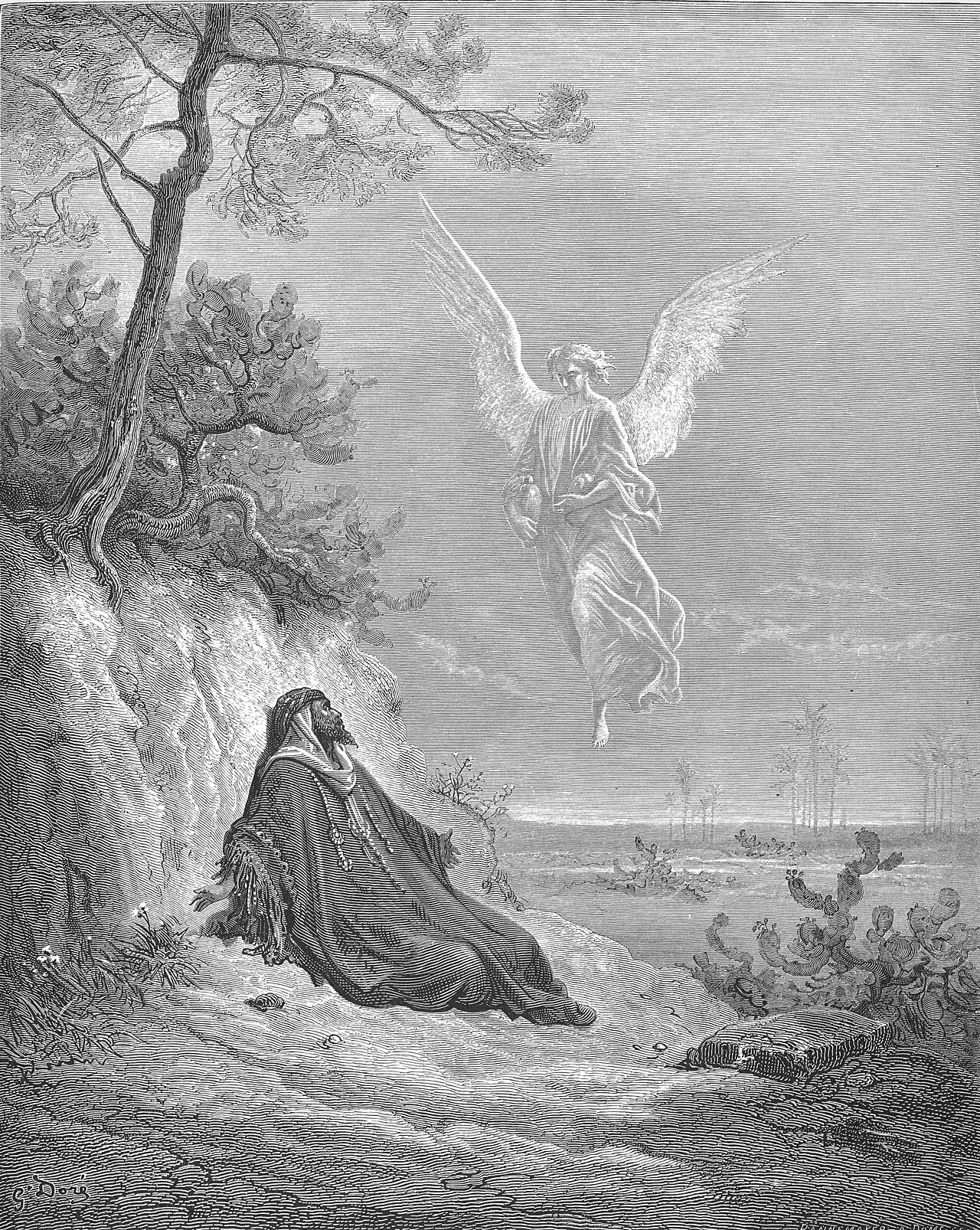
Elijah covers his face before the voice speaks, the same instinct that made Moses hide his face at the burning bush, afraid to look upon God. Asked the identical question a second time, he gives the identical answer, word for word, from I have been very jealous to I, even I only, am left: the display at Horeb has not moved him from his complaint. The mantle he wraps around his own face here is the same garment about to be laid on a successor six verses later.
This site's exposition
torn down Your altars
Matthew Henry notes that these altars stood outside Jerusalem, raised in the north by faithful worshippers of the LORD. God counted them as His own, and their destruction is charged to Israel as a sin. The altar Elijah repaired on Carmel at 18:30 was one of them.
The record, by era
The Church Fathers1 voice
"When Elijah heard it, he wrapped his face in his mantle and went out and stood at the entrance of the cave. Then there came a voice to him that said, 'What are you doing here, Elijah?' He answered, 'I have been very zealous for …
The Puritans and the Awakening1 voice
And he said,.... Elijah, in answer to the question put, and he says the same as before: I have been very jealous,.... which the question was designed to draw from him, in order to give him some instructions and directions; which would suggest to him, that though he should not deal severely with Israel, nor with Ahab and his house, yet he would hereafter by the kings he should anoint over Syria and Israel, and by the prophet he should anoint in his room, as instruments of his vengeance.
The Nineteenth Century1 voice
A commentator
Jamieson, Fausset & Brown1802–1910
Commentary Critical and Explanatory on the Whole Bible (1871)
proposed
In the solitude of Sinai, God appeared to instruct him. "What doest thou here, Elijah?" was a searching question addressed to one who had been called to so arduous and urgent a mission as his.
How the passage was read
What the Jewish commentators add
On the verses either side of this one
He wrapped his face. [Targum Yonoson rendered,] “and he wrapped his face,” 8 In the same manner that Moshe covered his face at the “burning bush” in Shemos:6. and so it states, “wrapped up [לוטה] in a cloth.” 9 I Shmuel:10.
This section is reception history: how the passage was read and kept in the Jewish tradition. Where a reading parts from an essential of the Christian faith, the section says so at that point.
Texts and citation data: Sefaria; each excerpt follows its version’s licence. 3 further sources are cited on this chapter that carry no English text this site may quote or only restate the verse.
The words behind it
25 Hebrew wordsEvery Hebrew word of this verse in the order it stands, with what it means and the door to its own study. The last column counts the times a word stands in the whole Bible: the rarer the word, the more the places it appears belong together.
| Hebrew | Sound | Meaning | Word study | In the Bible |
|---|---|---|---|---|
| וַיֹּאמֶר֩ | vaiyomer | and he said | H559 → | 5305 times |
| קַנֹּ֨א | kano' | certainly <to be zealous> | H7065 → | 34 times |
| קִנֵּ֜אתִי | kineti | I have been zealous | H7065 → | 34 times |
| לַיהוָ֣ה׀ | layahweh | for Yahweh | H3068 → | 6520 times |
| אֱלֹהֵ֣י | ʾelohei | [the] God of | H430 → | 2601 times |
| צְבָא֗וֹת | tzevaot | hosts | H6635 → | 485 times |
| כִּֽי־ | ki- | for | H3588 → | 4482 times |
| עָזְב֤וּ | ʾazevu | they have forsaken | H5800 → | 215 times |
| בְרִֽיתְךָ֙ | veritekha | covenant your | H1285 → | 284 times |
| בְּנֵ֣י | benei | [the] people of | H1121 → | 4930 times |
| יִשְׂרָאֵ֔ל | yisrael | Israel | H3478 → | 2507 times |
| אֶת־ | ʾet- | <obj.> | H853 → | 10935 times |
| מִזְבְּחֹתֶ֣יךָ | mizbechoteikha | altars your | H4196 → | 401 times |
| הָרָ֔סוּ | harasu | they have torn down | H2040 → | 43 times |
| וְאֶת־ | veet | and <obj.> | H853 → | 10935 times |
| נְבִיאֶ֖יךָ | nevieikha | prophets your | H5030 → | 314 times |
| הָרְג֣וּ | haregu | they have killed | H2026 → | 167 times |
| בֶחָ֑רֶב | vecharev | with the sword | H2719 → | 413 times |
| וָאִוָּתֵ֤ר | vaivater | and I am left | H3498 → | 106 times |
| אֲנִי֙ | ʾani | I | H589 → | 874 times |
| לְבַדִּ֔י | levadi | to alone me | H905 → | 200 times |
| וַיְבַקְשׁ֥וּ | vayvakshu | and they have sought | H1245 → | 225 times |
| אֶת־ | ʾet- | <obj.> | H853 → | 10935 times |
| נַפְשִׁ֖י | nafshi | life my | H5315 → | 754 times |
| לְקַחְתָּֽהּ׃ ס | lekachtah | to take away it | H3947 → | 966 times |
וַיֹּאמֶר֩and he said
vaiyomerH559 →5305 times
קַנֹּ֨אcertainly <to be zealous>
kano'H7065 →34 times
קִנֵּ֜אתִיI have been zealous
kinetiH7065 →34 times
לַיהוָ֣ה׀for Yahweh
layahwehH3068 →6520 times
אֱלֹהֵ֣י[the] God of
ʾeloheiH430 →2601 times
צְבָא֗וֹתhosts
tzevaotH6635 →485 times
כִּֽי־for
ki-H3588 →4482 times
עָזְב֤וּthey have forsaken
ʾazevuH5800 →215 times
בְרִֽיתְךָ֙covenant your
veritekhaH1285 →284 times
בְּנֵ֣י[the] people of
beneiH1121 →4930 times
יִשְׂרָאֵ֔לIsrael
yisraelH3478 →2507 times
אֶת־<obj.>
ʾet-H853 →10935 times
מִזְבְּחֹתֶ֣יךָaltars your
mizbechoteikhaH4196 →401 times
הָרָ֔סוּthey have torn down
harasuH2040 →43 times
וְאֶת־and <obj.>
veetH853 →10935 times
נְבִיאֶ֖יךָprophets your
nevieikhaH5030 →314 times
הָרְג֣וּthey have killed
hareguH2026 →167 times
בֶחָ֑רֶבwith the sword
vecharevH2719 →413 times
וָאִוָּתֵ֤רand I am left
vaivaterH3498 →106 times
אֲנִי֙I
ʾaniH589 →874 times
לְבַדִּ֔יto alone me
levadiH905 →200 times
וַיְבַקְשׁ֥וּand they have sought
vayvakshuH1245 →225 times
אֶת־<obj.>
ʾet-H853 →10935 times
נַפְשִׁ֖יlife my
nafshiH5315 →754 times
לְקַחְתָּֽהּ׃ סto take away it
lekachtahH3947 →966 times
A shaded row is a word that stands 400 times or fewer in the Bible.
The walk
8 stopsEach card is a verse this one points to, and under it the verses that one points to in turn. Where several paths arrive at the same place, that place is listed first: the text keeps returning to it.
Through
Hebrews 8:9It will not be like the covenant I made with their fathers when I took them by the hand to lead them out of the land of Egypt, because they did not abide by…
it leads to
- Jeremiah 31:32
It will not be like the covenant I made with their fathers when I took them by the hand to lead them out of the land of Egypt—a covenant they broke, though I was…
- Jeremiah 31:32
Through
Isaiah 1:4Alas, O sinful nation, a people laden with iniquity, a brood of evildoers, children of depravity! They have forsaken the LORD; they have despised the Holy One of Israel and turned their backs on…
it leads to
- Isaiah 5:24
Therefore, as a tongue of fire consumes the straw, and as dry grass shrivels in the flame, so their roots will decay and their blossoms will blow away like dust; for they have rejected…
- Jeremiah 2:17
Have you not brought this on yourself by forsaking the LORD your God when He led you in the way?
- Jeremiah 2:13
“For My people have committed two evils: They have forsaken Me, the fountain of living water, and they have dug their own cisterns—broken cisterns that cannot hold water.
- Isaiah 5:24
Through
Hosea 6:7But they, like Adam, have transgressed the covenant; there they were unfaithful to Me.
it leads to
- Genesis 3:11
“Who told you that you were naked?” asked the LORD God. “Have you eaten from the tree of which I commanded you not to eat?”
- Hosea 5:7
They have been unfaithful to the LORD; for they have borne illegitimate children. Now the New Moon will devour them along with their land.
- Hosea 8:1
Put the ram’s horn to your lips! An eagle looms over the house of the LORD, because the people have transgressed My covenant and rebelled against My law.
- Job 31:33
if I have covered my transgressions like Adam by hiding my guilt in my heart,
- Genesis 3:11
Where this verse is studied
On this page
Studies4
About 1 Kings
This page draws on Ephrem the Syrian, ON THE FIRST BOOK OF KINGS 19:13; Jamieson, Fausset & Brown, Commentary Critical and Explanatory on the Whole Bible; John Gill, Exposition of the Old Testament (1748-1763); John Wesley, Explanatory Notes upon the Old Testament and Matthew Henry, Commentary on the Whole Bible.