
1 Kings 18:24
in 1 Kings 18Then you may call on the name of your god, and I will call on the name of the LORD. The God who answers by fire, He is God.” And all the people answered, “What you say is good.”
BSB
The same verse in ASV and KJV ▾
ASV
And call ye on the name of your god, and I will call on the name of Jehovah; and the God that answereth by fire, let him be God. And all the people answered and said, It is well spoken.
KJV
And call ye on the name of your gods, and I will call on the name of the Lord: and the God that answereth by fire, let him be God. And all the people answered and said, It is well spoken.
⋯
This verse in 1 Kings 18
Commentary
7 notes on this verseThe God that answereth by fire - Elijah gave them every advantage when he granted that the God who answered by fire should be acknowledged as the true God; for as the Baal who was worshipped here was incontestably Apollo, or the sun, he was therefore the god of fire, and had only to work in his own element.
This site's exposition
I, even I only
on 1 Kings 18:22-24
Elijah states the odds as he feels them, one prophet of the LORD against four hundred and fifty, though Obadiah's hundred in the caves say the arithmetic of despair is not the whole truth, and 19:18 will say it louder with seven thousand. The test he proposes gives Baal every advantage: fire is the storm god's own advertised power, and his prophets choose their bullock first. The God that answereth by fire, let him be God, and all the people call the terms fair.
This site's exposition
The God who answers by fire
John Wesley notes that Elijah asks for an answer by fire even though the land needed water. Wesley reads the fire as the sign of an accepted offering, the atonement made before the judgment of drought could lift. Rain follows at verse 45.
The record, by era
The Puritans and the Awakening2 voices
Elijah does not say, The God that answers by water, tho' that was the thing the country needed, but that answers by fire, let him be God; because the atonement was to be made, before the judgment could be removed. The God therefore that has power to pardon sin, and to signify that by consuming the sin-offering, must needs be the God that can relieve us against the calamity.
And call ye on the name of your gods,....
The Nineteenth Century2 voices
A commentator
Jamieson, Fausset & Brown1802–1910
Commentary Critical and Explanatory on the Whole Bible (1871)
proposed
In vain did they continue invoking their senseless deity from morning till noon, and from noon till evening, uttering the most piercing cries, using the most frantic gesticulations, and mingling their blood with the sacrifice. Elijah exposed their folly and imposture with the severest irony and, as the day was far advanced, commenced his operations.
A commentator
Albert Barnes1798–1870
Notes, Explanatory and Practical, on the Old and New Testaments (1832-1869)
proposed
The God that answereth by fire - God had frequently before consumed offerings with supernatural fire Lev 9:24; Jdg 6:21. The Baal-worshippers were no doubt in the habit of attributing thunder and lightning to their gods - the great Nature-power - and thus had no excuse for declining Elijah’s challenge.
The words behind it
20 Hebrew wordsEvery Hebrew word of this verse in the order it stands, with what it means and the door to its own study. The last column counts the times a word stands in the whole Bible: the rarer the word, the more the places it appears belong together.
| Hebrew | Sound | Meaning | Word study | In the Bible |
|---|---|---|---|---|
| וּקְרָאתֶ֞ם | ukeratem | and you will call | H7121 → | 733 times |
| בְּשֵׁ֣ם | beshem | on [the] name of | H8034 → | 864 times |
| אֱלֹֽהֵיכֶ֗ם | ʾeloheikhem | god your | H430 → | 2601 times |
| וַֽאֲנִי֙ | vaani | and I | H589 → | 874 times |
| אֶקְרָ֣א | ʾekra' | I will call | H7121 → | 733 times |
| בְשֵׁם־ | veshem- | on [the] name of | H8034 → | 864 times |
| יְהוָ֔ה | yahweh | Yahweh | H3068 → | 6520 times |
| וְהָיָ֧ה | vehayah | and he will be | H1961 → | 3559 times |
| הָאֱלֹהִ֛ים | haelohim | the god | H430 → | 2601 times |
| אֲשֶׁר־ | ʾasher- | who | H834 → | 5497 times |
| יַעֲנֶ֥ה | yaaneh | he will answer | H6030 → | 331 times |
| בָאֵ֖שׁ | vaesh | by <the> fire | H784 → | 378 times |
| ה֣וּא | hu' | he | H1931 → | 1879 times |
| הָאֱלֹהִ֑ים | haelohim | <the> God | H430 → | 2601 times |
| וַיַּ֧עַן | vaiyaan | and it answered | H6030 → | 331 times |
| כָּל־ | kol- | all | H3605 → | 5413 times |
| הָעָ֛ם | haam | the people | H5971 → | 1873 times |
| וַיֹּאמְר֖וּ | vaiyomeru | and they said | H559 → | 5305 times |
| ט֥וֹב | tov | [is] good | H2896 → | 538 times |
| הַדָּבָֽר׃ | hadavar | the word | H1697 → | 1440 times |
וּקְרָאתֶ֞םand you will call
ukeratemH7121 →733 times
בְּשֵׁ֣םon [the] name of
beshemH8034 →864 times
אֱלֹֽהֵיכֶ֗םgod your
ʾeloheikhemH430 →2601 times
וַֽאֲנִי֙and I
vaaniH589 →874 times
אֶקְרָ֣אI will call
ʾekra'H7121 →733 times
בְשֵׁם־on [the] name of
veshem-H8034 →864 times
יְהוָ֔הYahweh
yahwehH3068 →6520 times
וְהָיָ֧הand he will be
vehayahH1961 →3559 times
הָאֱלֹהִ֛יםthe god
haelohimH430 →2601 times
אֲשֶׁר־who
ʾasher-H834 →5497 times
יַעֲנֶ֥הhe will answer
yaanehH6030 →331 times
בָאֵ֖שׁby <the> fire
vaeshH784 →378 times
ה֣וּאhe
hu'H1931 →1879 times
הָאֱלֹהִ֑ים<the> God
haelohimH430 →2601 times
וַיַּ֧עַןand it answered
vaiyaanH6030 →331 times
כָּל־all
kol-H3605 →5413 times
הָעָ֛םthe people
haamH5971 →1873 times
וַיֹּאמְר֖וּand they said
vaiyomeruH559 →5305 times
ט֥וֹב[is] good
tovH2896 →538 times
הַדָּבָֽר׃the word
hadavarH1697 →1440 times
A shaded row is a word that stands 400 times or fewer in the Bible.
The walk
8 stopsEach card is a verse this one points to, and under it the verses that one points to in turn. Where several paths arrive at the same place, that place is listed first: the text keeps returning to it.
Through
1 Kings 18:38Then the fire of the LORD fell and consumed the sacrifice, the wood, the stones, and the dust, and it licked up the water in the trench.
it leads to
- 1 Chronicles 21:26
And there he built an altar to the LORD and offered burnt offerings and peace offerings. He called upon the LORD, who answered him with fire from heaven on the altar of burnt offering.
Reached by 3 separate paths from here.
- Leviticus 9:24
Fire came out from the presence of the LORD and consumed the burnt offering and the fat portions on the altar. And when all the people saw it, they shouted for joy and fell…
Reached by 2 separate paths from here.
- 2 Chronicles 7:1
When Solomon had finished praying, fire came down from heaven and consumed the burnt offering and the sacrifices, and the glory of the LORD filled the temple.
- 1 Chronicles 21:26
Through
Leviticus 9:24Fire came out from the presence of the LORD and consumed the burnt offering and the fat portions on the altar. And when all the people saw it, they shouted for joy and fell…
it leads to
- Judges 6:21
Then the angel of the LORD extended the tip of the staff that was in his hand and touched the meat and the unleavened bread. And fire flared from the rock and consumed the…
Reached by 3 separate paths from here.
- 1 Kings 18:38–39
Then the fire of the LORD fell and consumed the sacrifice, the wood, the stones, and the dust, and it licked up the water in the trench.
- Judges 6:21
Through
2 Chronicles 7:1When Solomon had finished praying, fire came down from heaven and consumed the burnt offering and the sacrifices, and the glory of the LORD filled the temple.
it leads to
- 1 Kings 18:38
Then the fire of the LORD fell and consumed the sacrifice, the wood, the stones, and the dust, and it licked up the water in the trench.
Reached by 2 separate paths from here.
- 1 Kings 18:38
Through
2 Chronicles 7:3When all the Israelites saw the fire coming down and the glory of the LORD above the temple, they bowed down on the pavement with their faces to the ground, and they worshiped and…
it leads to
- 2 Chronicles 5:13
The trumpeters and singers joined together to praise and thank the LORD with one voice. They lifted up their voices, accompanied by trumpets, cymbals, and musical instruments, in praise to the LORD: “For He…
- 2 Chronicles 20:21
Then Jehoshaphat consulted with the people and appointed those who would sing to the LORD and praise the splendor of His holiness. As they went out before the army, they were singing: “Give thanks…
- 2 Chronicles 5:13
Where this verse is studied
On this page
Studies5
On this verse
About 1 Kings
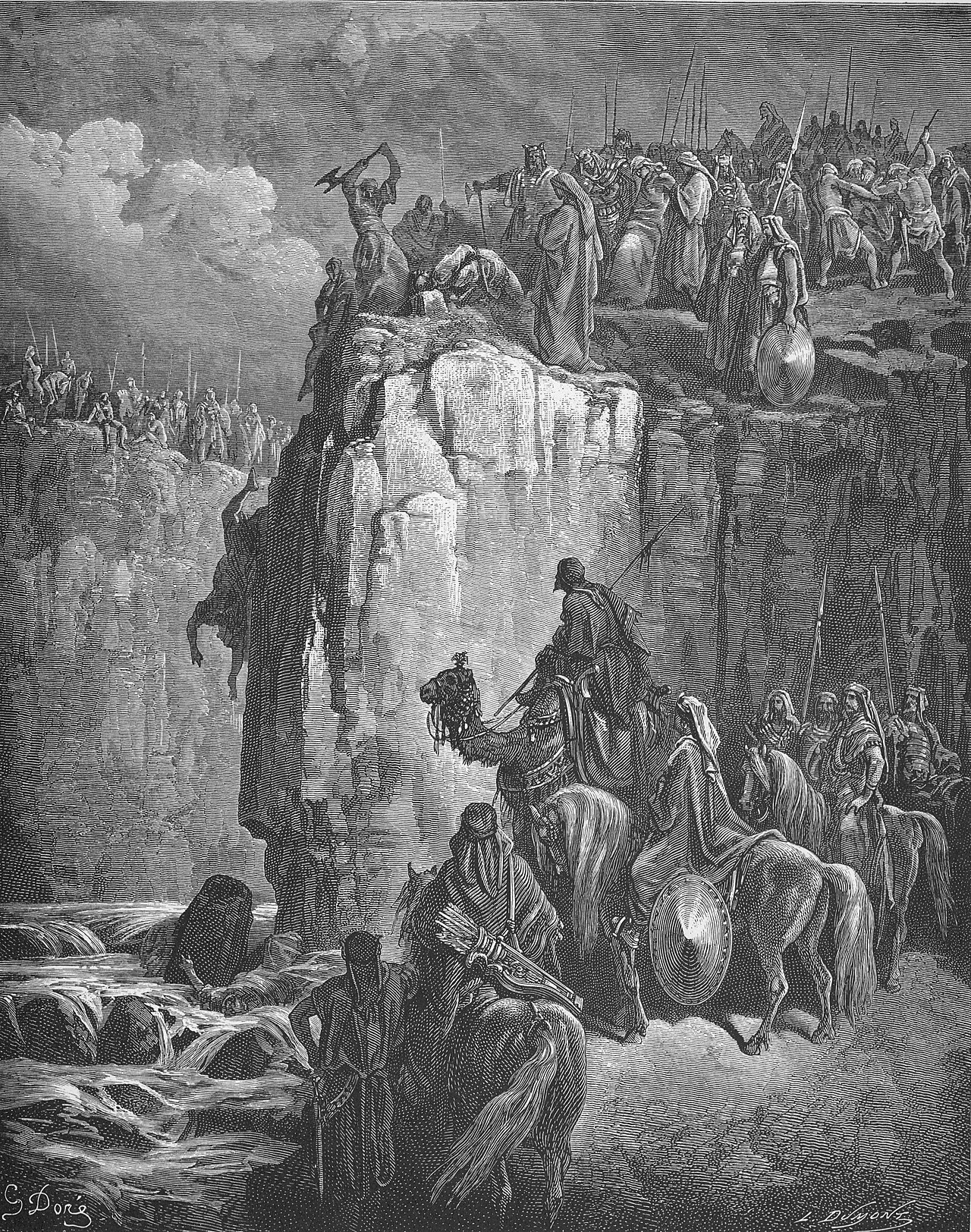
This page draws on Adam Clarke, Commentary on the Bible; Albert Barnes, Notes, Explanatory and Practical, on the Old and New Testaments (1832-1869); F. W. Farrar, The First Book of Kings (Expositor's Bible); Jamieson, Fausset & Brown, Commentary Critical and Explanatory on the Whole Bible; John Gill, Exposition of the Old Testament (1748-1763); John Wesley, Explanatory Notes upon the Old Testament and Matthew Henry, Commentary on the Whole Bible.