
1 Kings 13:29
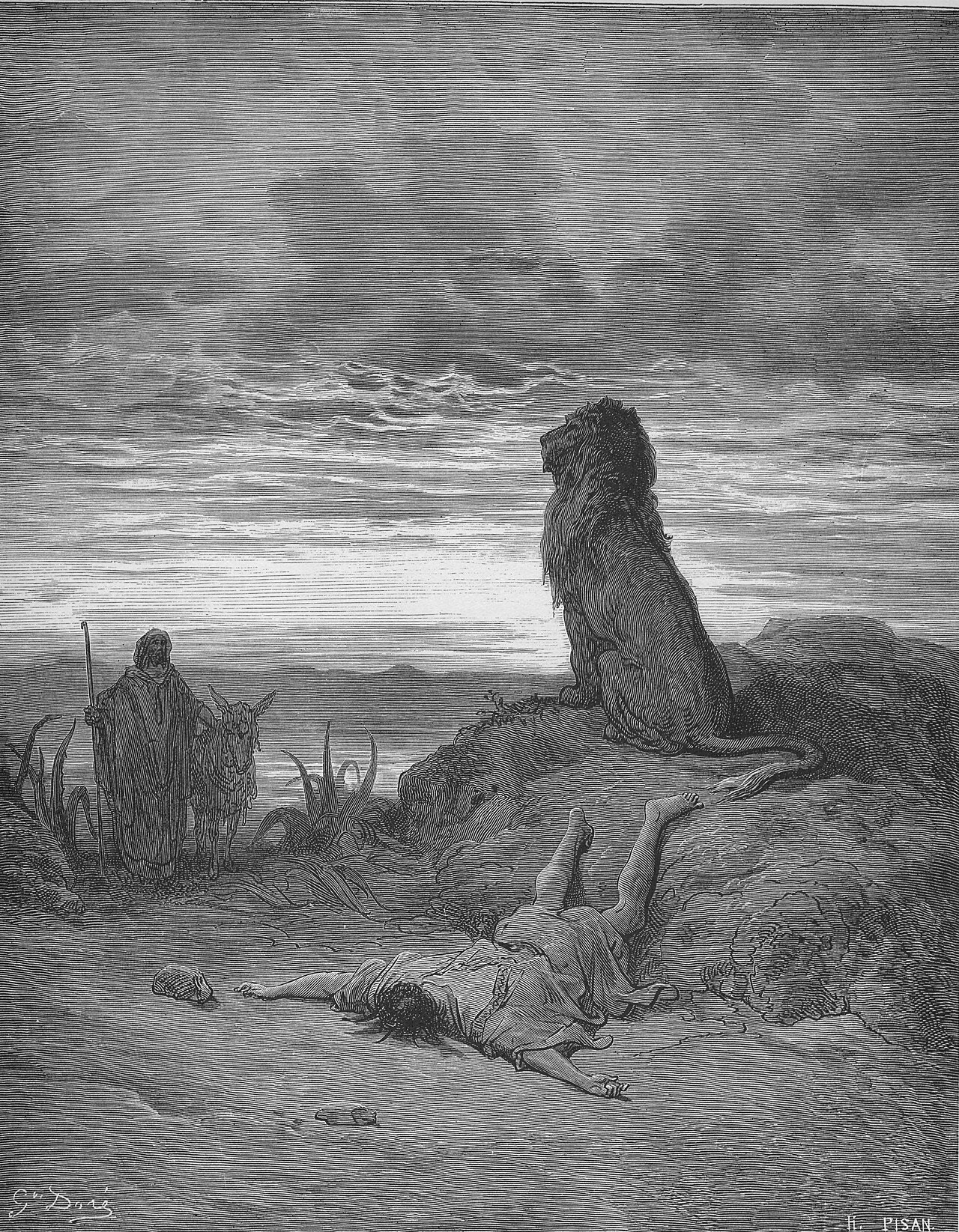
in 1 Kings 13So the old prophet lifted up the body of the man of God, laid it on the donkey, and brought it back to his own city to mourn for him and bury him.
BSB
The same verse in ASV and KJV ▾
ASV
And the prophet took up the body of the man of God, and laid it upon the ass, and brought it back; and he came to the city of the old prophet, to mourn, and to bury him.
KJV
And the prophet took up the carcase of the man of God, and laid it upon the ass, and brought it back: and the old prophet came to the city, to mourn and to bury him.
⋯
This verse in 1 Kings 13
Commentary
3 notes on this verseIf there by any truth in the vulgar opinion, surely the corpse bled afresh when he touched it, for he was in effect the murderer, and it was but a poor reparation for the injury to inter the dead body.
This site's exposition
took up the carcase of the man of God
on 1 Kings 13:29-30
The old prophet lifts the body himself, carries it home on the ass, and buries it in his own grave, the funeral rites of a man mourning someone he calls brother though they met only once. Gill notes the man of God could not lie in his fathers' sepulchre as the sentence required, since he died far from Judah, so the old prophet's own grave becomes the only honor left to give him. The lament, Alas, my brother, is the ordinary funeral cry of the period, the same form Jeremiah later uses at 22:18.
The record, by era
The Puritans and the Awakening1 voice
And the prophet took up the carcass of the man of God,.... The lion perhaps made off as soon as he came, or, if he stayed, the prophet was not afraid of him, seeing he did not attempt to devour the carcass, nor touch the ass, nor do any hurt to those that passed by: and laid it upon the ass, and brought it back; to his own city: and the old prophet came to the city to mourn, and to bury him; to perform the funeral rites, according to the custom of the place.
The words behind it
17 Hebrew wordsEvery Hebrew word of this verse in the order it stands, with what it means and the door to its own study. The last column counts the times a word stands in the whole Bible: the rarer the word, the more the places it appears belong together.
| Hebrew | Sound | Meaning | Word study | In the Bible |
|---|---|---|---|---|
| וַיִּשָּׂ֨א | vaiyisa' | and he picked up | H5375 → | 656 times |
| הַנָּבִ֜יא | hanavi' | the prophet | H5030 → | 314 times |
| אֶת־ | ʾet- | <obj.> | H853 → | 10935 times |
| נִבְלַ֧ת | nivlat | [the] corpse of | H5038 → | 48 times |
| אִישׁ־ | ʾish- | [the] man of | H376 → | 1663 times |
| הָאֱלֹהִ֛ים | haelohim | <the> God | H430 → | 2601 times |
| וַיַּנִּחֵ֥הוּ | vaiyanichehu | and he placed him | H5117 → | 142 times |
| אֶֽל־ | ʾel- | to | H413 → | 5510 times |
| הַחֲמ֖וֹר | hachamor | the donkey | H2543 → | 96 times |
| וַיְשִׁיבֵ֑הוּ | vayshivehu | and he brought back him | H7725 → | 1056 times |
| וַיָּבֹ֗א | vaiyavo' | and he came | H935 → | 2568 times |
| אֶל־ | ʾel- | to | H413 → | 5510 times |
| עִיר֙ | ʾir | [the] city of | H5892 → | 1090 times |
| הַנָּבִ֣יא | hanavi' | the prophet | H5030 → | 314 times |
| הַזָּקֵ֔ן | hazaken | <the> old | H2205 → | 178 times |
| לִסְפֹּ֖ד | lispod | to mourn | H5594 → | 30 times |
| וּלְקָבְרֽוֹ׃ | ulekavero | and to bury him | H6912 → | 133 times |
וַיִּשָּׂ֨אand he picked up
vaiyisa'H5375 →656 times
הַנָּבִ֜יאthe prophet
hanavi'H5030 →314 times
אֶת־<obj.>
ʾet-H853 →10935 times
נִבְלַ֧ת[the] corpse of
nivlatH5038 →48 times
אִישׁ־[the] man of
ʾish-H376 →1663 times
הָאֱלֹהִ֛ים<the> God
haelohimH430 →2601 times
וַיַּנִּחֵ֥הוּand he placed him
vaiyanichehuH5117 →142 times
אֶֽל־to
ʾel-H413 →5510 times
הַחֲמ֖וֹרthe donkey
hachamorH2543 →96 times
וַיְשִׁיבֵ֑הוּand he brought back him
vayshivehuH7725 →1056 times
וַיָּבֹ֗אand he came
vaiyavo'H935 →2568 times
אֶל־to
ʾel-H413 →5510 times
עִיר֙[the] city of
ʾirH5892 →1090 times
הַנָּבִ֣יאthe prophet
hanavi'H5030 →314 times
הַזָּקֵ֔ן<the> old
hazakenH2205 →178 times
לִסְפֹּ֖דto mourn
lispodH5594 →30 times
וּלְקָבְרֽוֹ׃and to bury him
ulekaveroH6912 →133 times
A shaded row is a word that stands 400 times or fewer in the Bible.
Where this verse is studied
On this page
About 1 Kings
This page draws on Adam Clarke, Commentary on the Bible; John Gill, Exposition of the Old Testament; John Gill, Exposition of the Old Testament (1748-1763) and Matthew Henry, Commentary on the Whole Bible.