
1 Kings 13:21
in 1 Kings 13and the prophet cried out to the man of God who had come from Judah, “This is what the LORD says: ‘Because you have defied the word of the LORD and have not kept the commandment that the LORD your God gave you,
BSB
The same verse in ASV and KJV ▾
ASV
and he cried unto the man of God that came from Judah, saying, Thus saith Jehovah, Forasmuch as thou hast been disobedient unto the mouth of Jehovah, and hast not kept the commandment which Jehovah thy God commanded thee,
KJV
And he cried unto the man of God that came from Judah, saying, Thus saith the Lord, Forasmuch as thou hast disobeyed the mouth of the Lord, and hast not kept the commandment which the Lord thy God commanded thee,
⋯
This verse in 1 Kings 13
Commentary
7 notes on this verseA commentator
Albert Barnes1798–1870
Notes, Explanatory and Practical, on the Old and New Testaments (1832-1869)
Forasmuch as thou hast disobeyed the mouth of the Lord - It was his duty not to have suffered himself to be persuaded. He should have felt that his obedience was being tried, and should have required, ere he considered himself released, “the same, or as strong, evidence,” as that on which he had received the obligation. Disobedience to certain positive commands of God, was one which it was at this time very important to punish signally, since it was exactly the sin of Jeroboam and his adherents.
This site's exposition
While they were sitting at the table
on 1 Kings 13:20-22
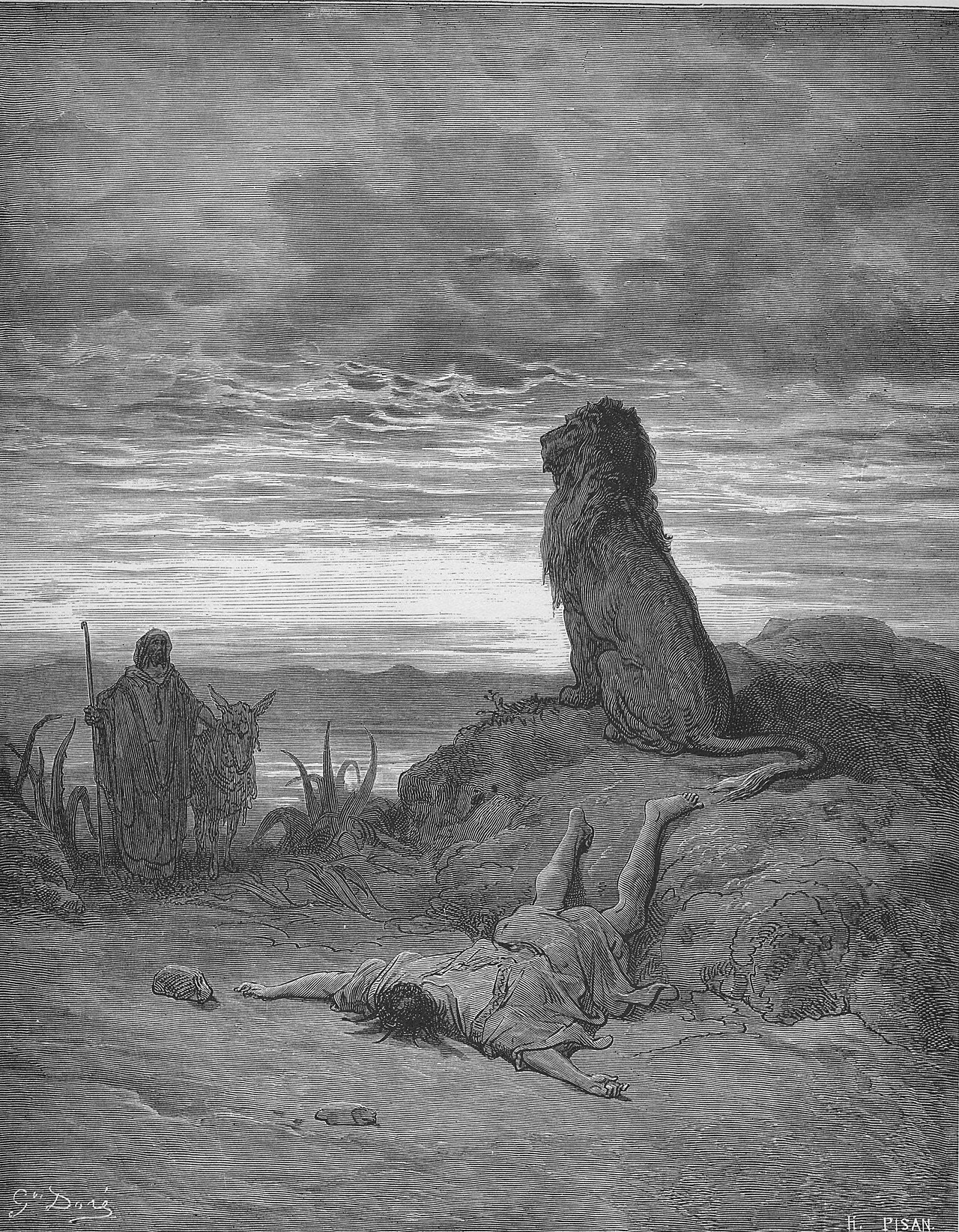
While the two men sit at the meal that broke the charge, the word of the LORD comes to the old prophet. He tells his guest, “you have defied the word of the LORD and have not kept the commandment”. The prophet who lied now speaks a true judgment.
This site's exposition
Because you have defied the word
Albert Barnes notes that the man of God broke a plain command of God, the same sin Jeroboam committed with his calves and his feast. The judgment on him puts that sin before all Bethel. Matthew Henry names it in one word, disobedience.
The record, by era
The Puritans and the Awakening3 voices
It was, in one word, disobedience to an express command. Judgment is given upon it: Thy carcase shall not come to the sepulchre of thy fathers, that is, "Thou shalt never reach thy own house, but shalt be a carcase quickly, nor shall thy dead body be brought to the place of thy fathers' sepulchres, to be interred." 2.
And he cried unto the man of God that came from Judah,....
(2.) To put the greater mortification upon the prophet that was deceived, and to show what those must expect who hearken to the great deceiver. Those that yield to him as a tempter will be terrified by him as a tormentor; whom he now fawns upon he will afterwards fly upon, and whom he now draws into sin he will do what he can to drive to despair.
The Nineteenth Century1 voice
And he - That is, according to the above interpretation, the voice of God from heaven addressing the man of God, the old prophet having nothing to do in this business.
The words behind it
24 Hebrew wordsEvery Hebrew word of this verse in the order it stands, with what it means and the door to its own study. The last column counts the times a word stands in the whole Bible: the rarer the word, the more the places it appears belong together.
| Hebrew | Sound | Meaning | Word study | In the Bible |
|---|---|---|---|---|
| וַיִּקְרָ֞א | vaiyikra' | and he called out | H7121 → | 733 times |
| אֶל־ | ʾel- | to | H413 → | 5510 times |
| אִ֣ישׁ | ʾish | [the] man of | H376 → | 1663 times |
| הָאֱלֹהִ֗ים | haelohim | <the> God | H430 → | 2601 times |
| אֲשֶׁר־ | ʾasher- | who | H834 → | 5497 times |
| בָּ֤א | ba' | he had come | H935 → | 2568 times |
| מִֽיהוּדָה֙ | mihudah | from Judah | H3063 → | 819 times |
| לֵאמֹ֔ר | lemor | <to> saying | H559 → | 5305 times |
| כֹּ֖ה | koh | thus | H3541 → | 577 times |
| אָמַ֣ר | ʾamar | he says | H559 → | 5305 times |
| יְהוָ֑ה | yahweh | Yahweh | H3068 → | 6520 times |
| יַ֗עַן | yaan | because | H3282 → | 99 times |
| כִּ֤י | ki | for | H3588 → | 4482 times |
| מָרִ֙יתָ֙ | marita | you have been disobedient to | H4784 → | |
| פִּ֣י | pi | [the] mouth of | H6310 → | 498 times |
| יְהוָ֔ה | yahweh | Yahweh | H3068 → | 6520 times |
| וְלֹ֤א | velo' | and not | H3808 → | 5168 times |
| שָׁמַ֙רְתָּ֙ | shamarta | you have kept | H8104 → | 468 times |
| אֶת־ | ʾet- | <obj.> | H853 → | 10935 times |
| הַמִּצְוָ֔ה | hamitzvah | the command | H4687 → | 181 times |
| אֲשֶׁ֥ר | ʾasher | which | H834 → | 5497 times |
| צִוְּךָ֖ | tzivekha | he commanded you | H6680 → | 494 times |
| יְהוָ֥ה | yahweh | Yahweh | H3068 → | 6520 times |
| אֱלֹהֶֽיךָ׃ | ʾeloheikha | God your | H430 → | 2601 times |
וַיִּקְרָ֞אand he called out
vaiyikra'H7121 →733 times
אֶל־to
ʾel-H413 →5510 times
אִ֣ישׁ[the] man of
ʾishH376 →1663 times
הָאֱלֹהִ֗ים<the> God
haelohimH430 →2601 times
אֲשֶׁר־who
ʾasher-H834 →5497 times
בָּ֤אhe had come
ba'H935 →2568 times
מִֽיהוּדָה֙from Judah
mihudahH3063 →819 times
לֵאמֹ֔ר<to> saying
lemorH559 →5305 times
כֹּ֖הthus
kohH3541 →577 times
אָמַ֣רhe says
ʾamarH559 →5305 times
יְהוָ֑הYahweh
yahwehH3068 →6520 times
יַ֗עַןbecause
yaanH3282 →99 times
כִּ֤יfor
kiH3588 →4482 times
מָרִ֙יתָ֙you have been disobedient to
maritaH4784 →
פִּ֣י[the] mouth of
piH6310 →498 times
יְהוָ֔הYahweh
yahwehH3068 →6520 times
וְלֹ֤אand not
velo'H3808 →5168 times
שָׁמַ֙רְתָּ֙you have kept
shamartaH8104 →468 times
אֶת־<obj.>
ʾet-H853 →10935 times
הַמִּצְוָ֔הthe command
hamitzvahH4687 →181 times
אֲשֶׁ֥רwhich
ʾasherH834 →5497 times
צִוְּךָ֖he commanded you
tzivekhaH6680 →494 times
יְהוָ֥הYahweh
yahwehH3068 →6520 times
אֱלֹהֶֽיךָ׃God your
ʾeloheikhaH430 →2601 times
A shaded row is a word that stands 400 times or fewer in the Bible.
The walk
5 stopsEach card is a verse this one points to, and under it the verses that one points to in turn. Where several paths arrive at the same place, that place is listed first: the text keeps returning to it.
Through
Esther 6:13Haman told his wife Zeresh and all his friends everything that had happened. His advisers and his wife Zeresh said to him, “Since Mordecai, before whom your downfall has begun, is Jewish, you will…
it leads to
- Proverbs 28:18
He who walks with integrity will be kept safe, but whoever is perverse in his ways will suddenly fall.
- Hosea 14:9
Whoever is wise, let him understand these things; whoever is discerning, let him know them. For the ways of the LORD are right, and the righteous walk in them but the rebellious stumble in…
- Genesis 40:19
Within three days Pharaoh will lift off your head and hang you on a tree. Then the birds will eat the flesh of your body.”
- Genesis 41:8
In the morning his spirit was troubled, so he summoned all the magicians and wise men of Egypt. Pharaoh told them his dreams, but no one could interpret them for him.
- Daniel 5:26–28
And this is the interpretation of the message: MENE means that God has numbered the days of your reign and brought it to an end.
- Proverbs 28:18
Where this verse is studied
About 1 Kings
Who and where
1 name in this verse with a page on the site.
This page draws on Adam Clarke, Commentary on the Bible; Albert Barnes, Notes, Explanatory and Practical, on the Old and New Testaments (1832-1869); John Gill, Exposition of the Old Testament (1748-1763); Keil, The Books of the Kings and Matthew Henry, Commentary on the Whole Bible.