
Psalm 68
35 verses · Processional hymn
A father of the fatherless, and a defender of the widows, is God in His holy habitation.
Introduction
David, the Ark Procession, Book 2: The Elohistic Psalter, Poetry, Psalms Overview.
David's name stands over this psalm, and it was sung as the ark of the covenant was carried up to Jerusalem, the city he had taken. It is one of the longest and hardest songs in the Psalter, a hymn for a state procession with singers in front, players behind and the tribes marching in order. It gathers the whole road from Sinai through the wilderness to Zion into one march. Listen for the old marching cry at the start, for the care God shows the orphan and the widow, and for the tribes called out by name as they pass.
Context
- Who
- Israelites watching the ark arrive in the city David had taken
- What
- A processional hymn celebrating God's march from Sinai to Zion and His rule over the nations.
- Where
- A procession climbing to the sanctuary, with singers leading, players following, and the tribal companies named in order
- When
- The reign of David, about 1000 BC, when the ark was brought up to Jerusalem.
- Why
- To celebrate God taking up His dwelling in Jerusalem and to call every kingdom to praise Him.
Historical context
The heading calls the psalm David's and calls it both a psalm and a song, and the man it names was by then the king who held Jerusalem and was bringing the ark of the covenant into it, about 1000 BC. The song belongs to a state occasion rather than to a private trouble. The proclaimers of verse 11 are a company of women, since the Hebrew participle is feminine and carrying word of a victory home was work women did in Israel, and the spoil of verse 12 was shared with the household at home. Verse 27 names the tribes in the order of the march, with Benjamin first, the tribe of Saul, almost wiped out under the Judges and holding Zion inside its territory, so the smallest company walked first and lived nearest the holy place.
Significance
For the people watching, the psalm said that the God who had gone ahead of them in the wilderness had now come to stay in one city, so the march that began at Sinai had an address at the end of it. It also told them what kind of God had moved in, since verse 5 calls Him a father of the fatherless and a defender of the widows, the two people in any Israelite town with no one to speak for them.
This chapter in Jewish lifeWhat this chapter is in Jewish life and reading.
How it is read
Rashi reads the whole psalm as one long word spoken over Israel's history, and he keeps saying so. The praise called for in verse 5 is "the entire matter until the end of the psalm" (Rashi on Psalms 68:6:1). The solitary whom God settles in a house is Israel, gathered "each one from the place where he was lost" into a complete nation (Rashi on Psalms 68:7:1). The mountain of God is Sinai, and the mountain the lofty peaks lurk against is the Temple Mount. Rashi calls its sanctity perpetual, since after it was chosen the Shechinah rested nowhere else (Rashi on Psalms 68:16:1 and 68:17:1). The hairy pate of verse 22 he reads as Esau (Rashi on Psalms 68:22:1). The verse that matters most for a Christian reader is verse 19 in the Hebrew numbering, where someone ascends on high and takes captives. Rashi names him plainly, "Moses the son of Amram ascended on high and took captives" (Rashi on Psalms 68:19:1), the ascent being Sinai and the captives the Torah. The apostle Paul reads the same line of Christ's ascension at Ephesians 4:8, and this site sets out that reading and the change from receiving to giving at scripts/data/chapter-study/psalms-68.json. The two readings stand at the same verse and go different ways, and this site holds the apostle's. Only Radak stands in the corpus here besides Rashi, at Radak on Psalms 68:1:1, cited by reference alone. Rashi is quoted here from the Judaica Press complete Tanach with Rashi, translated by A. J. Rosenberg, under CC-BY.
What the rabbis say
The corpus records forty places where the Midrash and the Talmud draw on this psalm, cited here by reference. Midrash Tehillim treats it at 68:1 and 68:2, and cites its verses again at 17:8 and 114:1. Verse 18, the chariots of God, is drawn into the Babylonian Talmud at Avodah Zarah 3b:13, and verse 19, the ascent on high, into Avot DeRabbi Natan 2:3. Verse 20 stands at Beitzah 16a:5 and verse 21 at Berakhot 8a:12, both in the Babylonian Talmud. Verse 15 is read at Berakhot 15b:29 and verse 10 at Chagigah 12b:13. Sinai draws the midrashim to verses 8, 9 and 17, at Midrash Tanchuma Buber, Devarim 1:1, Midrash Tanchuma, Bamidbar 7:1 and Bamidbar Rabbah 1:8.
Sources: Rashi, Rashi on Psalms 68:2 to 68:24, the Judaica Press complete Tanach with Rashi, translated by A. J. Rosenberg, CC-BY, 1040 to 1105; Midrash Tehillim, 68:1, 68:2, 17:8 and 114:1, cited by reference; Babylonian Talmud, Avodah Zarah 3b:13, Beitzah 16a:5, Berakhot 8a:12 and 15b:29, cited by reference; MannaFest, Psalm 68 chapter study, scripts/data/chapter-study/psalms-68.json, on Ephesians 4:8, 2026; The Sefaria corpus, scripts/data/sources/sefaria/psalms/68.json, fetched 2026-09-19, 2026.
Psalms 68:1-3
His enemies are scattered: The opening words are the ark's own marching prayer. Numbers 10:35 has Moses say at every setting out, May Your enemies be scattered. Smoke blown away and wax melting are the pictures of that scattering, and the righteous are glad before the same presence.
Psalms 68:1
Let God arise, and let his enemies be scattered. This psalm is understood both in a special sense and in a general sense. In the special sense, of the Lord himself, that he should rise from the dead and scatter his enemies — that is, the devil and his army, or the Jews. But in the general sense, whenever we are in tribulation and distress, and we say, "Arise, why do you sleep, O Lord? and help us"; just as the apostles too, in the little boat, wake the Lord who was sleeping, saying: "Master, save us, we perish."
Jerome · written before 420 · Homily 7, on Psalm 67patristic
as wax melts before the fire: Both pictures measure how little resistance God's enemies have. Albert Barnes notes smoke moves at the slightest breath and wax loses its hardness near the fire, so the mightiest armies melt away before God. Jerome read the melting wax as sinners laying aside their hardness and turning to repentance.
Psalms 68:2
“As smoke fails, let them fail: not that they should be reduced to nothing, but that they should rest from their sins. As wax flows away before the face of fire. Just as wax is melted, and does not lose its nature, but grows soft: so let these too not perish, but lay aside their hardness, and thus turn to repentance, and be saved. So let sinners perish from before the face of God: because sinners are not worthy to see God.”
Jerome · written before 420 · Homily 7, on Psalm 67patristic
1 more voice on this verse
Psalms 68:2
“As smoke is driven away, so drive them away,.... This both describes the character of wicked men, Christ's enemies; as their darkness and ignorance, their will worship and superstition, and their detestableness to God, Rev 9:2; and the manner of their destruction; which is as easily brought about as smoke is driven by the wind, and is as irretrievable, like smoke that vanisheth into air (o); see Psa 37:20; as wax melteth before fire; whereby its consistency, form, and strength, are lost.”
glad and rejoice before God: The line answers verse 2 across one presence. The fire is where the righteous rejoice, and Charles Spurgeon calls that presence the dread of the wicked and the delight of the saints. Albert Barnes notes that the Hebrew doubles the word, rejoicing with gladness, for joy multiplied and prolonged.
Psalms 68:3
“But let the righteous be glad. The presence of God on the throne of grace is an overflowing source of delight to the godly; and let them not fail to drink of the streams which are meant to make them glad. Let them rejoice before God. The courtiers of the happy God should wear the garments of gladness, for in his presence is fulness of joy. That presence, which is the dread and death of the wicked, is the desire and delight of the saints. Yea, let them exceedingly rejoice.”
Charles Spurgeon · The Treasury of David, Vol. 3 (1872)Particular Baptist
3 more voices on this verse
Psalms 68:3
Lastly, there followeth, "And let just men be joyous, and exult in the sight of God, let them delight in gladness" [Psalm 68:3]. For then shall they hear, "Come, ye blessed of My Father, receive ye the kingdom." "Let them be joyous," therefore, that have toiled, "and exult in the sight of God." For there will not be in this exultation, as though it were before men, any empty boasting; but (it will be) in the sight of Him who unerringly looketh into that which He hath granted.
Augustine of Hippo · written before 430 · Exposition on Psalm 68patristic
Psalms 68:3
“But let the righteous be glad - That is, Let them be prosperous and happy; let them be under thy protecting care, and partake of thy favor. While the wicked are driven away like smoke, let the righteous live, and flourish, and be safe. Compare Psa 32:11. Let them rejoice beore God - In the presence of God; or as admitted to his presence. The wicked will be driven far off; the righteous will be admitted to his presence, and will rejoice before him. Yea, let them exceedingly rejoice - Margin, as in Hebrew, rejoice with gladness.”
Psalms 68:3
“And let the just feast. Those who remain in their righteousness, who have no vices, let them be delighted in the Lord. Let them exult in the sight of God, and let them be delighted with gladness. It is great confidence, to exult in the sight of the Lord. Just as a steward who has badly handled and lost the substance entrusted to him by his master fears his master's presence; so also he who has managed it well exults in his master's presence.”
Jerome · written before 420 · Homily 7, on Psalm 67patristic
Psalms 68:4-6
Sing praises to His name: The name in verse 4 is YAH, the short form that stands inside every hallelujah. Verses 5 and 6 name Him by what He does: a father to the fatherless, a defender of widows, settling the lonely in families. The rebellious get the sun-scorched land.
Psalms 68:4
“Sing to God, sing a psalm to his name. "Sing" — in Scripture this always signifies contemplation (theoria): that is, consider the mysteries and the meaning of divine Scripture. But "to make melody" (psallere) Scripture signifies as a good work: for example, that the hearing should furnish its own work, and likewise the mouth, and the eyes, and the hands, and all the members should as it were agree, and thus strike the psaltery in the virtues. Make a way for him who ascends above the sunset: the Lord is his name.”
Jerome · written before 420 · Homily 7, on Psalm 67patristic
1 more voice on this verse
Psalms 68:4
“Jah - Is an abbreviation of the name Jehovah, which the Heathens pronounced Jao. Before him - Before the ark where he is present, as David is said to dance before the Lord, upon this occasion, 2 Sam. vi, 14.”
John Wesley · Explanatory Notes upon the Old Testament (1765)evangelical
in His holy habitation: God's care for the fatherless and the widows is set in His holy habitation, the seat of the great King. Charles Spurgeon saw it in the wilderness, where many widows and fatherless were left, and the tabernacle stood as the Palace of Justice. They suffered no want or wrong.
Psalms 68:5
“A father of the fatherless, and a judge of the widows, is God in his holy habitation. In the wilderness the people were like an orphan nation, but God was more than a father to them. As the generation which came out of Egypt gradually died away, there were many widows and fatherless ones in the camp, but they suffered no want or wrong, for the righteous laws and the just administrators whom God had appointed, looked well to the interests of the needy. The tabernacle was the Palace of Justice; the ark was the seat of the great King.”
Charles Spurgeon · The Treasury of David, Vol. 3 (1872)Particular Baptist
settles the lonely in families: The word for families is literally a house, so God settles the lonely at home. Albert Barnes reads it as a dwelling given to those alone and forsaken, the care shown to the fatherless and the widows in verse 5. The rebellious dwell in a land without one.
Psalms 68:7-10
when You went out before Your people: Verse 8 calls God the One on Sinai, a title taken from where He gave the law. The earth shook and the heavens poured rain at His coming, and verse 9 turns that rain into provision for a weary inheritance. He fed the poor from His own bounty.
Psalms 68:7
“O God, when thou wentest forth before thy people,.... In the pillar of cloud, and in the pillar of fire, as the Targum adds; and this divine Person was the Son of God, the Angel of his presence, in whom his name was, even his name JAH or Jehovah before mentioned; when thou didst march through the wilderness; at the head of the Israelites, leading, guiding, and directing them; providing for them all things necessary, and protecting them against their enemies.”
the One on Sinai: Matthew Henry reads Sinai itself, that vast mountain, as shaken before God, and he compares Judges 5:4-5. The earth shook before God and the heavens poured rain on the people He led. Henry adds that such terror would encourage the faith of Israel.
Psalms 68:8
“The earth was moved, for the heavens dripped down from before the face of the God of Sinai. The heavens dripped down: that is, the manna. Sinai is interpreted as "temptation." Therefore God dwells in those who are tempted and overcome; but in those who are among delights, he does not dwell.”
Jerome · written before 420 · Homily 7, on Psalm 67patristic
1 more voice on this verse
Psalms 68:8
“Sinai itself, that vast mountain, that long ridge of mountains, was moved at the presence of God; see Judg. v. 4, 5; This terrible appearance of the Divine Majesty, as it would possess them with a fear and dread of him, so it would encourage their faith in him and dependence upon him.”
Matthew Henry · Commentary on the Whole Bible (1707-1721)puritan
You sent abundant rain: Albert Barnes renders the abundant rain literally as a rain of free gifts and reads it as the manna God sent to the people daily. The verb means to shake out, as the rain poured from the heavens of verse 8. So God refreshed His weary inheritance in the wasteland.
Psalms 68:9
“Thou, O God, didst send a plentiful rain. The march of God was not signalized solely by displays of terror, for goodness and bounty were also made conspicuous. Such rain as never fell before dropped on the desert sand, bread from heaven and winged fowl fell all around the host; good gifts were poured upon them, rivers leaped forth from rocks. The earth shook with fear, and in reply, the Lord, as from a cornucopia, shook out blessings upon it; so the original may be rendered. Whereby thou didst confirm thine inheritance, when it was weary.”
Charles Spurgeon · The Treasury of David, Vol. 3 (1872)Particular Baptist
2 more voices on this verse
Psalms 68:9
“This looks further to the spiritual provision made for God's Israel; the Spirit of grace and the gospel of grace are the plentiful rain with which God confirms his inheritance, and from which their fruit is found, Isa. xlv. Christ himself is this rain, Ps. lxxii.”
Matthew Henry · Commentary on the Whole Bible (1707-1721)puritan
Psalms 68:9
Damasus cleansed not, Peter cleansed not, Ambrose cleansed not, Gregory cleansed not; for ours is the ministry, but the sacraments are yours. For human power cannot confer what is divine, but it is, O Lord, your gift and that of the Father, as you have spoken by the prophets, saying, "I will pour out of my Spirit on all flesh, and their sons and their daughters shall prophesy." This is that typical dew from heaven, this is that gracious rain, as we read: "A gracious rain, dividing for his inheritance."
Ambrose of Milan · written before 397 · On the Holy Spirit 1.18patristic
Your flock settled therein: The word for flock is literally a living creature, and Albert Barnes shows it can mean a company of people, as in 2 Samuel 23:11. He places the flock in the land of the inheritance. There the poor lived on the bounty of God.
Psalms 68:10
“Your animals dwell in it; that is, in the inheritance. But by "animals" he meant those who live in God, that is, the holy ones. You have prepared in your sweetness for the poor man, O God. "Blessed are the poor in spirit." You have prepared the rain, that is, the law.”
Jerome · written before 420 · Homily 7, on Psalm 67patristic
1 more voice on this verse
Psalms 68:10
“Thy congregation hath dwelt therein,.... That is, in the Lord's inheritance, in the midst of his church and people. The word for "congregation" signifies "beasts" or "living creatures" (w): some understand them of the Gentiles, who, before the Gospel came among them, were comparable to such; but, under the Gospel dispensation, being called and taken out by it, were put among the people of God, and dwelt in his inheritance.”
Psalms 68:11-14
The Lord gives the command: The proclaimers of verse 11 are women. The participle is feminine in Hebrew, and what they announce is verse 12, kings and their armies in flight and the plunder divided at home. Verse 13 sets the dove's silver wings against the sheepfolds, and verse 14 lays snow on Zalmon.
Psalms 68:11
“The Lord will give the word to those who preach the gospel with great power. In the Hebrew it has "the women who preach the gospel"; that is, to those women who were made evangelists to the apostles, where he says "Go, tell my brothers," and the rest. Or else it signifies the souls which have believed in Christ. But according to the Seventy translators he speaks to the apostles, because the Lord gave them the power to preach the gospel.”
Jerome · written before 420 · Homily 7, on Psalm 67patristic
The Hebrew doubles the verb, the kings flee, they flee, and Albert Barnes reads it as flight in haste and alarm. He takes verses 12 and 13 as the song of the great company of women in verse 11. Their song ends with the plunder divided at home.
Psalms 68:12
“Kings of armies did flee apace,.... Or "they fled, they fled" (y); or "they flee, they flee".”
2 more voices on this verse
Psalms 68:12
“Kings of armies--that is, with their armies. she that . . . at home--Mostly women so remained, and the ease of victory appears in that such, without danger, quietly enjoyed the spoils.”
Jamieson, Fausset & Brown · Commentary Critical and Explanatory on the Whole Bible (1871)reformed
Psalms 68:12
“The king of the powers of the beloved. "King," the Father; "of the powers," that is, of the holy ones; "of the beloved," of the Son. "Behold my beloved Son, hear him." "Of the beloved." If anyone loves someone, he always has him on his lips: therefore the Holy Spirit, because of the love which he has for the Son, frequently makes mention of him. And to the beauty of the house to divide the spoils. The apostles themselves divide in the churches the spoils, which they have taken from the idols.”
Jerome · written before 420 · Homily 7, on Psalm 67patristic
lie down among the sheepfolds: Charles Spurgeon called the verse a nut for the learned to crack, and the older English translations read pots where the BSB has sheepfolds. He asked whether the women who wait at home would be covered in the plunder like a dove with silver wings and gold feathers.
Psalms 68:13
“Though ye have lain among the pots,.... Kimchi takes these words to be the words of the women, or of the psalmist addressing the Israelites going out to war; that though they should lie in a low, dark, and disagreeable place, in the camp, in the open field, exposed to wind and weather; yet they should be fair and beautiful, and be loaded with gold and silver, the spoil of the enemy.”
2 more voices on this verse
Psalms 68:13
“Though ye have lien among the pots. Does he mean that the women at home, who had been meanly clad as they performed their household work, would be so gorgeously arrayed in the spoil, that they would be like doves of silver wing and golden plumage? Or, would he say that Israel, which had been begrimed in the brick kilns of Egypt, should come forth lustrous and happy in triumph and liberty? Or, did the song signify that the ark should be brought from its poor abode with Obededom into a fairer dwelling place?”
Charles Spurgeon · The Treasury of David, Vol. 3 (1872)Particular Baptist
Psalms 68:13
“Some translate this, "When ye shall lie between the borders, ye shall," &c., comparing the peaceful rest in the borders or limits of the promised land to the proverbial beauty of a gentle dove.”
Jamieson, Fausset & Brown · Commentary Critical and Explanatory on the Whole Bible (1871)reformed
like the snow falling on Zalmon: The simile is obscure. Charles Spurgeon saw the Almighty scatter the kings as easily as wind drives the snow off the slopes of Zalmon, a sight a traveller described. So the kings of the land were scattered like falling snow.
Psalms 68:14
“When the almighty scattered kings in it, it was white as snow in Salmon. The victory was due to the Almighty arm alone; he scattered the haughty ones who came against his people, and he did it as easily as snow is driven from the bleak sides of Salmon. The word white appears to be imported into the text, and by leaving it out the sense is easy.”
Charles Spurgeon · The Treasury of David, Vol. 3 (1872)Particular Baptist
2 more voices on this verse
Psalms 68:14
“When the Almighty scattered kings in it,.... His inheritance, his congregation, the church, Psa 68:9. Which some understand of his diffusing, and spreading and giving, in large numbers, ministers and preachers of the Gospel, pastors and teachers; who are kings and spiritual governors, are over churches, and have the rule over them in the Lord: and so Jarchi interprets them of the disciples of the wise men.”
Psalms 68:14
While the heavenly one distinguishes kings over her. By "kings" he meant the holy ones, who reign over their own passions. These holy ones, then, are divided among the churches: for example, Paul among the Gentiles, Peter among the circumcision. They shall be made white as snow in Selmon. This is what he says: although they are holy, yet nevertheless in this world they are as it were a shadow, knowing in part. For Selmon is interpreted "shadow."
Jerome · written before 420 · Homily 7, on Psalm 67patristic
Psalms 68:15-16
A mountain of God is Mount Bashan: Mount Bashan east of the Jordan is a range of many peaks. Verse 16 asks why those peaks gaze in envy, and the answer is the choice itself: God chose this mountain for His dwelling. The LORD will surely dwell there forever.
Psalms 68:15
“Here the priests on the summit of the chosen hill begin to extol the Lord for his choice of Zion as his dwelling place. The hill of God is as the hill of Bashan, or more accurately, "a hill of God is Bashan, "that is to say, Bashan is an eminent mountain, far exceeding Zion in height. According to the Hebrew custom, every great or remarkable thing is thus designated. Where we talk of the Devil's Dyke, the Devil's Ditch, the Devil's Punch Bowl, etc.”
Charles Spurgeon · The Treasury of David, Vol. 3 (1872)Particular Baptist
Why do you gaze in envy: The verb for gaze in envy occurs only here. Albert Barnes draws on its Arabic sense, to watch closely, so the peaks eye the smaller hill of Zion askance. John Wesley draws the lesson a hill despised by the mountains is precious to God, who chose it for His dwelling.
Psalms 68:16
Why do you suppose the curdled mountains? This he says to the Jews, who think that Moses and the prophets are like the Savior. The mountain in which it is well pleasing to God to dwell. It signifies the fleshly presence of the Savior, that the deity dwelt in a body: for in no other did the Holy Spirit dwell continuously, except in the Savior, John saying, "He upon whom you shall see the Spirit descending and remaining on him, this is he."
Jerome · written before 420 · Homily 7, on Psalm 67patristic
Psalms 68:17-18
The chariots of God are tens of thousands—: Verse 18 stands behind Ephesians 4:8, which reads, He led captives away, and gave gifts to men. The psalm has Him receiving gifts from men, and Paul has Him giving them; Delitzsch points to the Aramaic Targum, which already reads gave. Tens of thousands of chariots stand in His sanctuary.
Psalms 68:17
The chariot of God is ten thousandfold manifold. Hyperbolically he speaks of the ministering powers and spirits, that they are innumerable, as he said in Daniel: "Thousands of thousands ministered." And in Ezekiel he describes the cherubim as having four wings in four corners, four faces, whose charioteer is God. And "cherubim" is interpreted "multitude of knowledge."
Jerome · written before 420 · Homily 7, on Psalm 67patristic
2 more voices on this verse
Psalms 68:17
“As in Sinai - God is no less gloriously, though less terribly present here, than he was in Sinai, when the great God attended with thousands of his angels, solemnly appeared to deliver the law. Yea, here is a greater privilege than Sinai had, The Lord Jehovah descending from heaven into an human body, as appears by his ascending thither again, which the next verse describes.”
John Wesley · Explanatory Notes upon the Old Testament (1765)evangelical
Psalms 68:17
“The word "angels" was perhaps introduced in our version, from De 33:2, and Ga 3:19. They are, of course, implied as conductors of the chariots. as . . . Sinai, in the holy place--that is, He has appeared in Zion as once in Sinai.”
Jamieson, Fausset & Brown · Commentary Critical and Explanatory on the Whole Bible (1871)reformed
You have ascended on high: Charles Spurgeon saw the ark carried to the summit of Zion, and the Lord Jesus, its antitype, ascending into the heavens in triumph. John Wesley names the captives as death, sin and the devil, led in triumph as in Colossians 2:15. Matthew Henry dwells on the rebellious, pardoned and preferred.
Psalms 68:18
“Thou hast ascended on high. The ark was conducted to the summit of Zion; God himself took possession of the high places of the earth, being extolled and very high. The antitype of the ark, the Lord Jesus, has ascended into the heavens with signal marks of triumph. To do battle with our enemies, the Lord descended and left his throne; but now the fight is finished, he returns to his glory; high above all things is he now exalted. Thou hast led captivity captive. A multitude of the sons of men are the willing captives of Messiah's power.”
Charles Spurgeon · The Treasury of David, Vol. 3 (1872)Particular Baptist
4 more voices on this verse
Psalms 68:18
It does not escape our notice that some copies have likewise, according to Luke: "How much more shall your heavenly Father give a good gift to them that ask him." This good gift is the grace of the Spirit, which the Lord Jesus shed forth from heaven, after having been fixed to the gibbet of the cross, returning with the triumphal spoils of death deprived of its power, as you find it written: "Ascending up on high he led captivity captive, and gave good gifts to people."
Ambrose of Milan · written before 397 · On the Holy Spirit 1.5.66patristic
Psalms 68:18
“Captivity - Those whom thou hast taken captive; death and sin, and the devil, and all the enemies of Christ, and of his people, whom Christ led in triumph, having spoiled them, and making a shew of them openly, Colossiansii, 15.”
John Wesley · Explanatory Notes upon the Old Testament (1765)evangelical
Psalms 68:18
“He who descended is the same who has ascended. As then ascension was an element of His triumph, so is it now; and He, who, in His humiliation, must be recognized as our vicarious sacrifice and the High Priest of our profession, must also be adored as Head of His Church and author of all her spiritual benefits.”
Jamieson, Fausset & Brown · Commentary Critical and Explanatory on the Whole Bible (1871)reformed
Psalms 68:18
“This magnifies the grace of Christ exceedingly that through him rebels are, upon their submission, not only pardoned, but preferred. They have commissions given them under Christ, which some say, in our law, amounts to the reversing of an attainder. Christ came to a rebellious world, not to condemn it, but that through him it might be saved.”
Matthew Henry · Commentary on the Whole Bible (1707-1721)puritan
Cross references
Psalms 68:18
- Quoted inEphesians 4:8This is why it says: “When He ascended on high, He led captives away, and gave gifts to men.”
'When he ascended up on high, he led captivity captive' ('he saith')
ConnectionsEphesians 4:8
Psalms 68:19-20
who daily bears our burden: The verb in verse 19 is amas, to carry a load, and what He carries daily is the burden. Verse 20 calls Him the rescuer from death. The noun there is totsa'ot, a plural for the ways out, and Barnes reads every escape from dying as God's to give.
Psalms 68:19
“Blessed be the Lord day by day. He who makes progress can bless God daily. For what does it profit me, if I blessed yesterday, and today I cannot bless? The God of our salvations will make our journey prosperous. Be secure, O sinner, do not doubt that you can daily bless God: for behold, he says, God will make our journey prosperous. Therefore God helps us, and works together with us. Of our salvations. He said it well in the plural, "of salvations": because however many sins we have committed, so many salvations also do we have. Diapsalma.”
Jerome · written before 420 · Homily 7, on Psalm 67patristic
1 more voice on this verse
Psalms 68:19
“So constant are they, and so unwearied is he in doing us good, that he daily loads us with them, according as the necessity of every day requires. (2.) He will at length be unto us the God of salvation, of everlasting salvation, the salvation of God, which he will show to those that order their conversation aright ( Ps. l. 23 ), the salvation of the soul.”
Matthew Henry · Commentary on the Whole Bible (1707-1721)puritan
our rescuer from death: The line answers the daily burden of verse 19. Adam Clarke hears the exodus in the ways out from death, while Charles Spurgeon pictures the gates of the grave that only God can open. Jerome ties it to the resurrection: Christ rose and raised His people with Him.
Psalms 68:20
“Our God is the God of saving, and the outcomes of death belong to the Lord: because he himself rose from the dead, and made us rise together with him. Otherwise, the devil is the entrance of death: but the Lord leads out.”
Jerome · written before 420 · Homily 7, on Psalm 67patristic
Psalms 68:21-23
crush the heads of His enemies: God crushes the heads of His enemies. Those hairy crowns belong to men who persist in guilty ways. Verse 22 has the Lord retrieving them from Bashan and from the depths of the sea, and verse 23 asks for their blood underfoot.
Psalms 68:21
“But God shall wound the head of his enemies. The Preserver is also the Destroyer. He smites his foes on the crown of their pride. The seed of the woman crushes the serpent's head. There is no defence against the Lord, he can in a moment smite with utter destruction the lofty crests of his haughty foes. And the hairy scalp of such an one as goeth on still in his trespasses.”
Charles Spurgeon · The Treasury of David, Vol. 3 (1872)Particular Baptist
1 more voice on this verse
Psalms 68:21
“But nevertheless God will shatter the heads of his enemies: of the devil, and all his powers. "You have shattered the heads of the dragon in the water." As many as the sins are, so many heads does the devil have. The crown of the hair of those who walk in their own trespasses. For his head is so shattered, that there does not remain in him any power by which he may goad those who sin.”
Jerome · written before 420 · Homily 7, on Psalm 67patristic
The verse leaves unstated whom the Lord will bring up. Charles Spurgeon drops a phrase the older English translators inserted and reads it of the enemies of verse 21. From Bashan or from the depths of the sea, the foes of God cannot flee Him.
Psalms 68:22
“This verse, by the insertion of the words, my people, is made to bear the meaning which the translators thought best; but, if their interpolated word is omitted, we probably get nearer to the sense. The Lord said, I will bring again from Bashan, I will bring again from the depths of the sea. Though his foes should endeavour to escape, they should not be able.”
Charles Spurgeon · The Treasury of David, Vol. 3 (1872)Particular Baptist
1 more voice on this verse
Psalms 68:22
“The Lord has said, From Basan I will turn back: that is, from the confusion of this world I will turn back the human race; that is, through my passion and cross, which these people think foolishness and confusion, I will turn back my people. Since indeed Basan is interpreted "confusion." I will turn back in the depths of the sea: that is, from the deep vices and sins of this world, from the commotion and the waves I will turn back my people.”
Jerome · written before 420 · Homily 7, on Psalm 67patristic
the tongues of your dogs: Albert Barnes gives the Hebrew literally as crush, so the foot crushes the foes and the blood follows. Charles Spurgeon hears in the blood and the dogs the stern joy of warriors, in language natural to the East. He also reads it as a desire to crush all evil.
Psalms 68:23
“That thy foot may be dipped in the blood of thine enemies. Vengeance shall be awarded to the oppressed people, and that most complete and terrible. And the tongue of thy dogs in the same. So overwhelming should be the defeat of the foe that dogs should lick their blood. Here "the stern joy which warriors feel" expresses itself in language most natural to the oriental ear.”
Charles Spurgeon · The Treasury of David, Vol. 3 (1872)Particular Baptist
Psalms 68:24-27
They have seen Your procession: The order of the procession is given: singers first, then musicians, then the maidens with tambourines. Verse 27 puts Benjamin at the head of the tribes, the youngest, and Gill names Benjamin as the tribe of Saul, Israel's first king. Judah, Zebulun and Naphtali follow.
Psalms 68:24
“They have seen your entrances, O God: because in the sight of five hundred men and all the apostles and the cherubim and all the angels you ascended into the heavens. The entrances of my God, of my king who is in the holy place. Because you who are the God of all and the Lord of those who rule and the King of kings, in a special way you are my God, just as also the God of Abraham and the God of Isaac and the God of Jacob and the God of the Hebrews.”
Jerome · written before 420 · Homily 7, on Psalm 67patristic
1 more voice on this verse
Psalms 68:24
“They - Men saw and observed it. Goings - The procession of the ark to Zion, the solemnity whereof is particularly described in the following verses. The sanctuary - The tabernacle prepared for it.”
John Wesley · Explanatory Notes upon the Old Testament (1765)evangelical
The singers lead the way: and the musicians follow, and Charles Spurgeon reads the order as the song leading the music, never drowned by it. The maidens playing tambourines move among them in the procession of God the King into the sanctuary. Joy leads the march.
Psalms 68:25
“The singers went before, the players on instruments followed after. This was the order of the march, and God is to be worshipped evermore with due decorum. First the singers, and lastly the musicians, for the song must lead the music, and not the music drown the singing. In the midst of the vocal and instrumental band, or all around them, were the maidens: among them were the damsels playing with timbrels.”
Charles Spurgeon · The Treasury of David, Vol. 3 (1872)Particular Baptist
1 more voice on this verse
Psalms 68:25
The princes went before, joined with those making melody. The apostles themselves went before, and those who through them believed followed: or certainly the churches. But he says "of the timbrel-players" because their body is dead to sin. And Miriam the sister of Moses and Aaron, holding a timbrel in Exodus, went before those making melody, and said: "Let us sing to the Lord, for gloriously has he been honored."
Jerome · written before 420 · Homily 7, on Psalm 67patristic
from the fountain of Israel: Albert Barnes reads the fountain of Israel as Jacob, the source from which all his people flow like a stream from a fountain. So the great congregation that blesses God is the whole of Israel, the tribes that follow in verse 27. They bless the LORD as one family.
Psalms 68:26
Bless ye God in the congregations. Let the assembled company magnify the God whose ark they followed. United praise is like the mingled perfume which Aaron made, it should all be presented unto God. He blesses us; let him be blessed. Even the Lord, from the fountain of Israel. A parallel passage to that in Deborah's song: "They that are delivered from the noise of archers in the places of drawing water, there shall they rehearse the righteous acts of the Lord."
Charles Spurgeon · The Treasury of David, Vol. 3 (1872)Particular Baptist
1 more voice on this verse
Psalms 68:26
“In the churches bless God. O you who glory in abstinence, do this in the churches, and do not defend heresy for your own selves. These things can be said to Tatian, who is the chief of the Encratites. The Lord from the fountains of Israel. The Manichaean cannot bless the Lord, because he does not bless from the fountains of Israel: that is, because he does not receive the Old Testament.”
Jerome · written before 420 · Homily 7, on Psalm 67patristic
Benjamin, the youngest, ruling them: Benjamin, the youngest, a small tribe, marches first, ruling them. Charles Spurgeon notes that Zion stood within the land of Benjamin, so the tribe leads the procession and dwells nearest the sanctuary. The princes of Judah, Zebulun and Naphtali follow in their company.
Psalms 68:27
“There is Benjamin the young lad in ecstasy of mind. He means holy Paul: "there," in the church: "the young lad," the last of all the apostles, of the tribe of Benjamin. The princes of Judah their leaders. The apostles are the princes of Judah, that is, of the Lord, just as Jacob says: "Judah, may your brothers praise you." The princes of Zabulon, the princes of Nephthalim.”
Jerome · written before 420 · Homily 7, on Psalm 67patristic
1 more voice on this verse
Psalms 68:27
“There is little Benjamin with their ruler. The tribe was small, having been greatly reduced in numbers, but it had the honour of including Zion within its territory. "And of Benjamin he said, The beloved of the Lord shall dwell in safety by him; and the Lord shall cover him all the day long, and he shall dwell between his shoulders." Little Benjamin had been Jacob's darling, and now the tribe is made to march first in the procession, and to dwell nearest to the holy place. The princes of Judah and their council.”
Charles Spurgeon · The Treasury of David, Vol. 3 (1872)Particular Baptist
Psalms 68:28-31
Summon Your power, O God: Verse 29 ties the nations' gifts to the temple at Jerusalem. Verse 30 asks God to rebuke the beast in the reeds and the herd of bulls until it submits and brings bars of silver. Envoys come from Egypt and Cush stretches out her hands.
Psalms 68:28
“Thy God hath commanded thy strength. His decree had ordained the nation strong, and his arm had made them so. As a commander in chief, the Lord made the valiant men pass in battle array, and bade them be strong in the day of conflict. This is a very rich though brief sentence, and, whether applied to an individual believer, or to the whole church, it is full of consolation. Strengthen, O God, that which thou hast wrought for us. As all power comes from God at first, so its continual maintenance is also of him.”
Charles Spurgeon · The Treasury of David, Vol. 3 (1872)Particular Baptist
Because of Your temple at Jerusalem: The word for temple means a palace, the dwelling of God as King, and Barnes notes it can name the tabernacle David set up. Kings will bring gifts to the King who dwells there. Verse 18 already has God receive gifts from men.
Psalms 68:29
“Because of thy temple at Jerusalem shall kings bring presents unto thee. The palace of God, which towered above Jerusalem, is prophesied as becoming a wonder to all lands, and when it grew from the tabernacle of David to the temple of Solomon, it was so. So splendid was that edifice that the queen of far off Sheba came with her gifts; and many neighbouring princes, overawed by the wealth and power therein displayed, came with tribute to Israel's God. The church of God, when truly spiritual, wins for her God the homage of the nations.”
Charles Spurgeon · The Treasury of David, Vol. 3 (1872)Particular Baptist
1 more voice on this verse
Psalms 68:29
“This was in part fulfilled by the accession of many proselytes to the Jewish religion in the days of David and Solomon; but it was to have its full accomplishment in the conversion of the Gentile nations to the faith of Christ, and the making of them fellow-heirs, and of the same body, with the seed of Israel, Eph. iii.”
Matthew Henry · Commentary on the Whole Bible (1707-1721)puritan
Rebuke the beast in the reeds: Adam Clarke and Charles Spurgeon read the beast in the reeds as Egypt, and Clarke names the crocodile or hippopotamus as its emblem. Kimchi, cited by John Gill, took the reeds as spears. John Wesley reads the bulls as fierce adversaries and the calves as the people depending on them.
Psalms 68:30
“Rebuke the company of spearmen; or, the beasts of the reeds, as the margin more correctly renders it. Speak to Egypt, let its growing power and jealousy be kept in order, by a word from thee. Israel remembers her old enemy, already plotting the mischief, which would break out under Jeroboam, and begs for a rebuking word from her Omnipotent Friend. Antichrist also, that great red dragon, needs the effectual word of the Lord to rebuke its insolence.”
Charles Spurgeon · The Treasury of David, Vol. 3 (1872)Particular Baptist
1 more voice on this verse
Psalms 68:30
“Rebuke the company of spearmen,.... Or, "of the reed" (d); that is, men that use and fight with spears, like to reeds, as Kimchi and Ben Melech interpret it.”
Envoys will arrive from Egypt: The word for envoys occurs nowhere else, and Albert Barnes reads it as nobles, the princes of the nations coming to God. Egypt and Cush stand for the kingdoms of the earth called to sing to God in verse 32. They come with hands stretched out.
Psalms 68:31
“Princes shall come out of Egypt. Old foes shall be new friends. Solomon shall find a spouse in Pharaoh's house. Christ shall gather a people from the realm of sin. Great sinners shall yield themselves to the sceptre of grace, and great men shall become good men, by coming to God. Ethiopia shall soon stretch out her hands unto God. Cush shall hasten to present peace offerings. Sheba's queen shall come from the far south. Candace's chamberlain shall ask of Him who was led as a lamb to the slaughter.”
Charles Spurgeon · The Treasury of David, Vol. 3 (1872)Particular Baptist
1 more voice on this verse
Psalms 68:31
“Legates shall come out of Egypt. Egypt is interpreted "darkness": out of the darkness of this world. Ethiopia shall stretch out her hand before to God. Because we who were black with sins and passions went before the Israelite people, and believe in the Savior: just as she who had a flow of blood went before the daughter of the ruler of the synagogue, and is healed.”
Jerome · written before 420 · Homily 7, on Psalm 67patristic
Psalms 68:32-35
Sing to God, O kingdoms of the earth: The call widens to every kingdom of the earth. Verse 34 tells them to ascribe the power to God, and verse 35 says He gives that same strength and power to His people. The last line is Blessed be God.
Psalms 68:32
And so, since God is spiritual light and Christ in sacred Scripture is called "Sun of Justice" and "orient," the east should be dedicated to his worship. For everything beautiful should be dedicated to God from whom everything that is good receives its goodness. Also, the divine David says, "Sing to God, all you kingdoms of the earth: sing to the Lord; who mounts above the heaven of heavens, to the east."
John Damascene · written before 749 · Orthodox Faith 4:12patristic
1 more voice on this verse
Psalms 68:32
“To Him who is presented as riding in triumph through His ancient heavens and proclaiming His presence--to Him who, in nature, and still more in the wonders of His spiritual government, out of His holy place (Ps 43:3), is terrible, who rules His Church, and, by His Church, rules the world in righteousness--let all nations and kingdoms give honor and power and dominion evermore.”
Jamieson, Fausset & Brown · Commentary Critical and Explanatory on the Whole Bible (1871)reformed
who rides upon the highest heavens: The rider of verse 4 returns. Charles Spurgeon marks the turn: God was first described marching through the desert, and now He rides in the heavens of the primeval ages. Matthew Henry hears the mighty voice as thunder, or as the thunder in which God spoke to Israel at Sinai.
Psalms 68:33
“Of old - From the beginning of the world; whereas the ark was only some hundred years old. A voice - His gospel, published by Christ and his apostles, assisted by the Holy Spirit sent from heaven; which might well be called God's voice, and that a mighty voice, because it produced such great and wonderful effects.”
John Wesley · Explanatory Notes upon the Old Testament (1765)evangelical
3 more voices on this verse
Psalms 68:33
Who ascends above the heaven of heaven to the east. Because above he said, Who ascends above the sunset; here he says, to the east. For when the passions and the sun of iniquity set for us, the sun of righteousness rises for us: that is, the Lord ascends over us, and dwells in us. Behold, he will give to his voice a voice of power. "Lazarus, come forth."
Jerome · written before 420 · Homily 7, on Psalm 67patristic
Psalms 68:33
To him that rideth upon the heavens of heavens, which were of old. Before, he was described in his earthly manifestations, as marching through the desert; now, in his celestial glory, as riding in the heavens of the primeval ages. Long ere this heaven and earth were made, the loftier abodes of the Deity stood fast; before men or angels were created, the splendours of the Great King were as great as now, and his triumphs as glorious. Our knowledge reaches but to a small fragment of the life of God, whose "goings forth were of old, even from everlasting."
Charles Spurgeon · The Treasury of David, Vol. 3 (1872)Particular Baptist
Psalms 68:33
“Because of his awful and terrible majesty: He sends out his voice, and that a mighty voice. This may refer either generally to the thunder, which is called the voice of the Lord and is said to be powerful and full of majesty ( Ps. xxix. 3, 4 ), or in particular to that thunder in which God spoke to Israel at Mount Sinai.”
Matthew Henry · Commentary on the Whole Bible (1707-1721)puritan
Ascribe the power to God: The verb is literally give, and Albert Barnes compares Psalm 29:1. He reads the two halves together: God's majesty shows in His protection of Israel, and His power in the clouds. Matthew Henry adds that it is folly to contend with such power and wisdom to submit to it.
Psalms 68:34
Behold, he will give to his voice a voice of power; his magnificence is over Israel. The magnificence of God is in Israel, who sees God. And his power is in the clouds, that is, in the prophets and apostles. "I have commanded my clouds, that they rain no rain upon Israel."
Jerome · written before 420 · Homily 7, on Psalm 67patristic
1 more voice on this verse
Psalms 68:34
“Excellency - His excellent power and goodness. Is over - Dwells among them. He is indeed the universal Lord, but in a special manner, he is the God of Israel.”
John Wesley · Explanatory Notes upon the Old Testament (1765)evangelical
awesome in Your sanctuary: Charles Spurgeon saw the majesty of God flash from His sanctuary, from its threefold courts and above all the holy of holies. That same God gives strength and power to His people, so that one of them shall chase a thousand. He is strong and makes strong.
Psalms 68:35
“Nor is any attribute of God more dreadful to sinners than his holiness. Because of the grace bestowed upon his people: The God of Israel is he that gives strength and power unto his people, which the gods of the nations, that were vanity and a lie, could not give to their worshippers; how should they help them, when they could not help themselves?”
Matthew Henry · Commentary on the Whole Bible (1707-1721)puritan
1 more voice on this verse
Psalms 68:35
“O God, thou art terrible out of thy holy places. You inspire awe and fear. Thy saints obey with fear and trembling, and thine enemies flee in dismay. From thy threefold courts, and especially from the holy of holies, thy majesty flashes forth and makes the sons of men prostrate themselves in awe. The God of Israel is he that giveth strength and power unto his people. In this thou, who art Israel's God by covenant, art terrible to thy foes by making thy people strong, so that one shall chase a thousand, and two put ten thousand to flight.”
Charles Spurgeon · The Treasury of David, Vol. 3 (1872)Particular Baptist
How this psalm is built
The form: A hymn of praise sung as the ark goes up, for the God who marched from Sinai to Zion, as Gunkel classes it.
The patterns in this chapter
| Device | What it does | Where to see it |
|---|---|---|
| The ark's own marching words at the head of the psalm | The psalm opens with the words Moses said at every setting out of the ark, which Numbers 10:35 records. Gill reads the opening either as prayer or as prophecy, following Kimchi, and holds that the sense is the same on either reading. Verses 2 and 3 then set the wicked and the righteous before the same presence.John Gill, Exposition of the Old Testament, 1748 to 1763, on Psalm 68:1. | Psalm 68:1, Psalm 68:2, Psalm 68:3 |
| The short name YAH and the ark it is sung before | Verse 4 calls God by the short form of the name, which Wesley explains as the abbreviation of Jehovah. Wesley reads the rejoicing before Him as rejoicing before the ark where He is present, and points to David dancing before the LORD in 2 Samuel 6:14. The name and the procession stand in the same line.John Wesley, Explanatory Notes upon the Old Testament, 1765, on Psalm 68:4. | Psalm 68:4 |
| A mountain of God, which is the Hebrew for a great mountain | Verse 15 calls Mount Bashan a mountain of God and a mountain of many peaks. Spurgeon reads the phrase as the Hebrew custom of marking anything great or remarkable, so the line grants Bashan its height before verse 16 asks why those peaks gaze in envy. The answer is the choice of the smaller hill.Charles Spurgeon, The Treasury of David, Vol. 3, 1872, on Psalm 68:15. | Psalm 68:15, Psalm 68:16 |
| The order of the procession, singers, players, maidens and tribes | Verse 25 gives the march in order, the singers leading and the musicians following, with the maidens playing tambourines among them. Spurgeon holds that the song must lead and the music follow after it. At verse 27 he notes that little Benjamin marches first and dwells nearest the holy place, with Judah, Zebulun and Naphtali behind.Charles Spurgeon, The Treasury of David, Vol. 3, 1872, on Psalm 68:25 and 68:27. | Psalm 68:24, Psalm 68:25, Psalm 68:27 |
| Sinai named twice, once on the march and once in the sanctuary | Verse 8 calls God the One on Sinai, and verse 17 says the Lord is in His sanctuary as He was at Sinai. Jamieson, Fausset and Brown read the second line as saying that He has appeared in Zion as He once appeared in Sinai. The two lines carry the psalm from the mountain of the law to the hill of the temple.Jamieson, Fausset and Brown, Commentary Critical and Explanatory on the Whole Bible, 1871, on Psalm 68:17. | Psalm 68:8, Psalm 68:17 |
In the New Testament
7 more paragraphs on the patterns
Ephesians 4:8 quotes Psalm 68:18 and reads the ascent of the psalm as the ascent of Christ. The psalm has God receiving gifts from men, and the apostle has Him giving gifts to men. Delitzsch accounts for the change by the Aramaic Targum, which already reads gave at this verse.
Ambrose quotes the same line and calls the good gifts of it the grace of the Spirit, which the Lord shed forth from heaven after the cross. Wesley reads the captivity of verse 18 as death and sin and the devil, led in triumph. Henry reads the gifts received from the rebellious as rebels pardoned and then given commissions.
Inside the psalm
Sinai stands twice. Verse 8 calls God the One on Sinai, and verse 17 says the Lord is in His sanctuary as He was at Sinai. Jamieson, Fausset and Brown read the second as God appearing in Zion as He once appeared in Sinai.
The rain of verses 8 and 9 does two things in two lines. It falls at the coming of God and then refreshes a weary inheritance, so the same weather is both the terror and the provision. Henry reads the plentiful rain of verse 9 as the figure of grace confirming the inheritance.
Where it stands in the Psalter
Psalm 68 stands in Book II, which runs from Psalm 42 to Psalm 72, inside the second Davidic collection of Psalms 51 to 71. Book II is the Elohistic Psalter, where Elohim stands in the places Book I gives to the LORD. Verse 4 keeps the short name YAH even so, which Wesley marks as the abbreviation of Jehovah.
Keep studying
Studies6
People and groups1
Sources for this chapter
The summary
Jamieson, Fausset & Brown, Commentary Critical and Explanatory; John Calvin, Commentaries; John Wesley, Notes on the Old Testament and Matthew Henry, Complete Commentary.
The form and classifications
Charles Spurgeon, The Treasury of David, Vol. 3, 1872, on Psalm 68:18; Hermann Gunkel, Einleitung in die Psalmen, 1933, as set out for students in C. Hassell Bullock, Encountering the Book of Psalms, 2001; the type this site publishes for Psalm 68 and Jerome, Homily 7, on Psalm 67, 420, on Psalm 68:1.
The exposition
Adam Clarke, Commentary on the Bible; Albert Barnes; Charles Spurgeon; Franz Delitzsch, Biblical Commentary on the Psalms; Jamieson, Fausset & Brown, Commentary Critical and Explanatory on the Whole Bible; Jerome, Homily 7, on Psalm 67; John Calvin, Commentary on the Book of Psalms; John Gill; John Wesley, Explanatory Notes upon the Old Testament and Matthew Henry, Commentary on the Whole Bible.
The painting
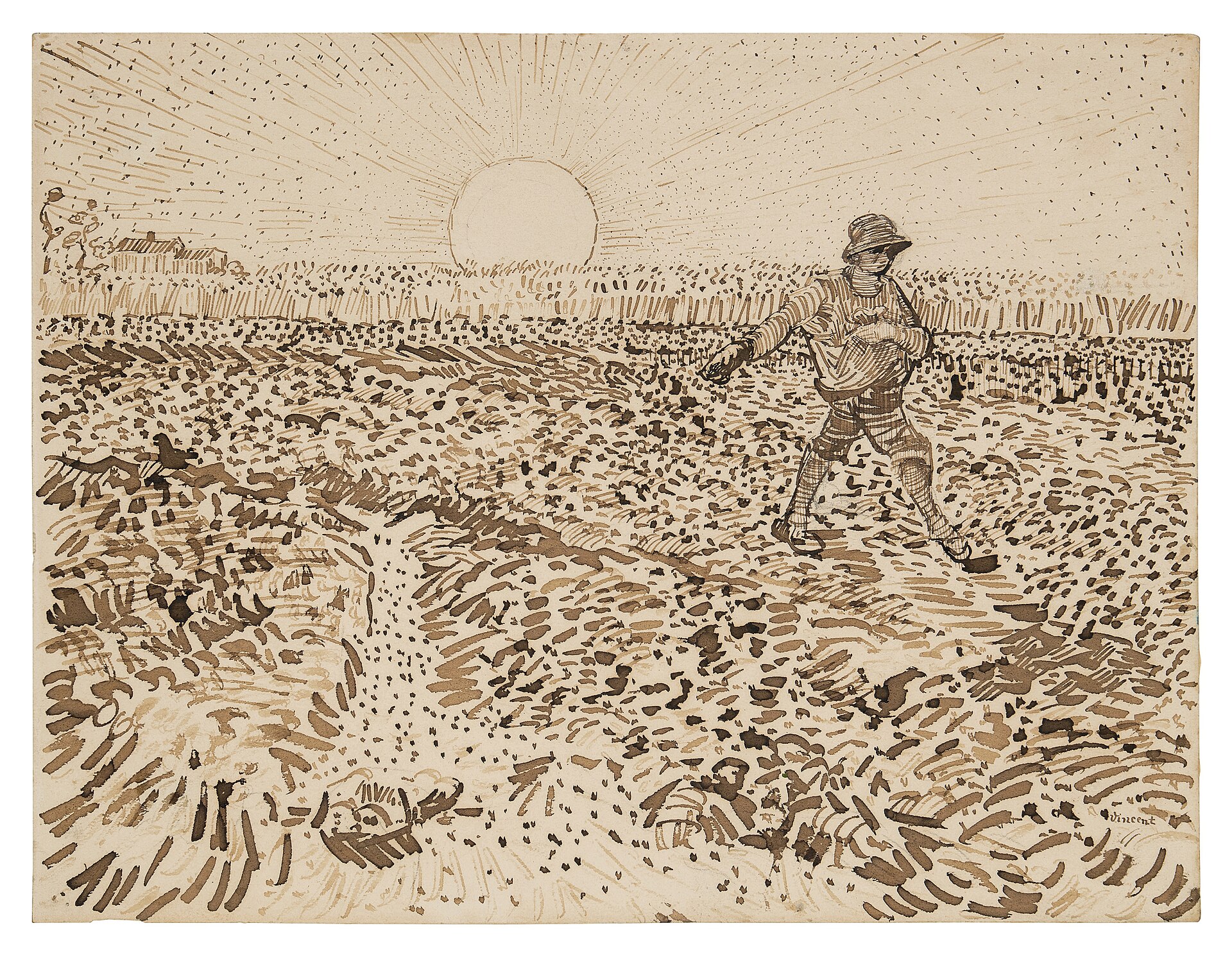
Sower with Setting Sun. Vincent van Gogh, mid July 1888. Sotheby's, New York, 18 November 2025, lot 4. Public domain.