
Psalm 107
43 verses · Psalm of thanksgiving
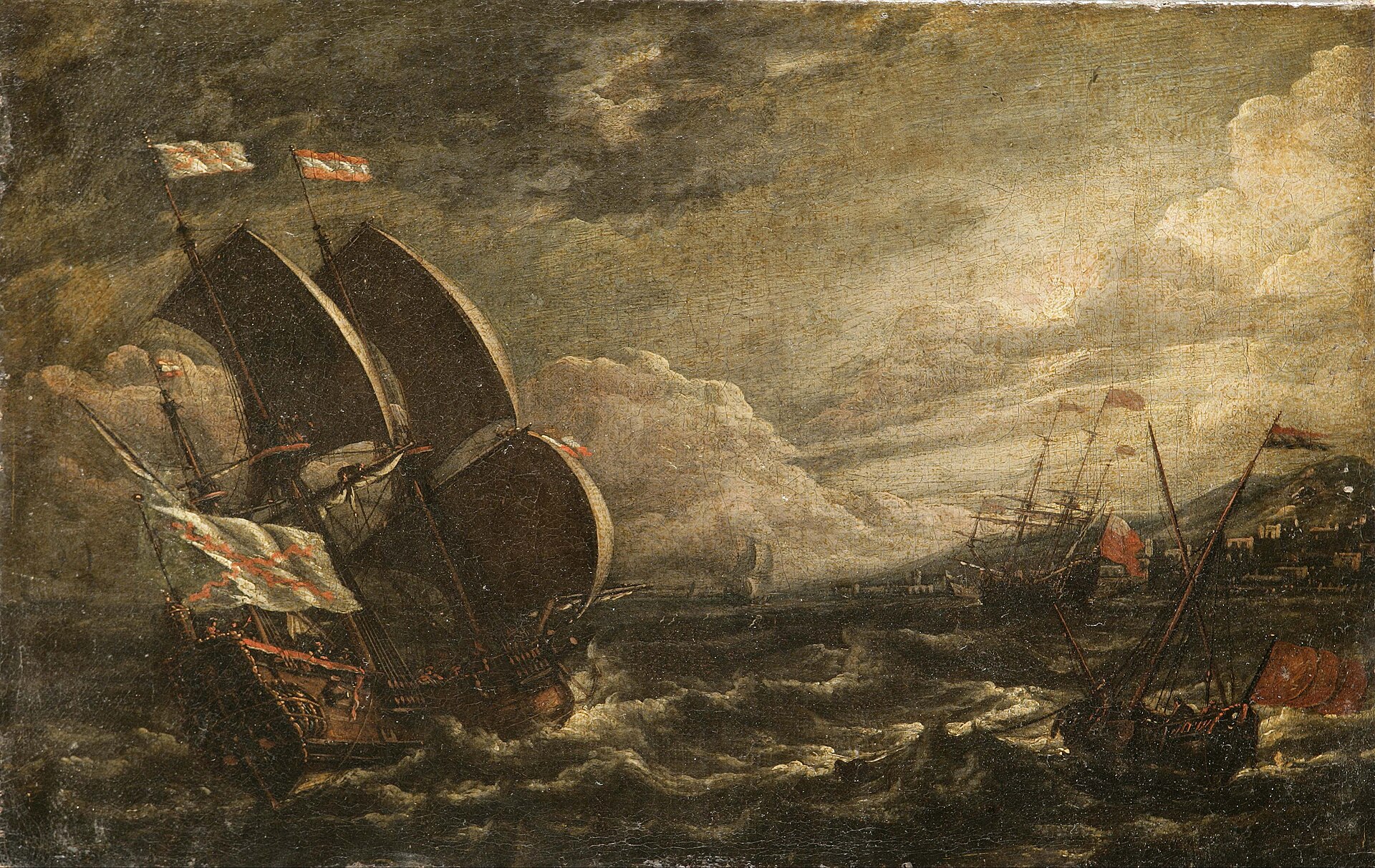
He calmed the storm to a whisper, and the waves of the sea were hushed.
Introduction
Author unstated, the Redeemed Gathered Home, Book 5: The return and the great Hallelujah, Poetry, Psalms Overview.
This psalm opens the fifth book of the Psalter and names no writer. It was sung by people brought home from many lands, and it calls on everyone who has been rescued to say so aloud. It tells four stories of trouble: travellers lost in the desert, prisoners in chains, the sick near death, and sailors caught in a storm. Each story runs the same course, from distress to a cry to rescue to thanks. Listen for the two lines that return in every story, and for the closing call to the wise to think these things through.
Context
- Who
- Israelites brought home from the lands they had been scattered into, and anyone else who had been in trouble and come out of it
- What
- A thanksgiving that calls four groups of rescued people to praise God for His loving devotion.
- Where
- A gathering of worshippers brought home to the land from many directions.
- When
- Undated; most likely the return from exile, from about 538 BC.
- Why
- To make the redeemed say aloud what God has done for them, and to teach the wise to consider it.
Historical context
The psalm opens Book V of the Psalter with people coming home, gathered from east and west, from north and south, where the fourth Hebrew word is yam, the sea, which the Berean renders south. Its four troubles were the ordinary hazards of that world. A traveller in the desert who missed a track could die of thirst within a day, and a walled town meant water, food and a gate that shut at night. A prisoner was held in irons in a dark room until someone decided to release him. The sick man loathes all food, and the sailors of verse 23 are merchants trading on the Mediterranean, seen from the shore by a people with little seafaring of their own. The sacrifices of thanksgiving at verse 22 were the offerings of Leviticus 7:12 to 15, eaten on the day they were offered, so thanks was a meal the neighbours shared.
Significance
To people just gathered from four directions, the four rescues were their own story told four ways. Verse 2 says let the redeemed of the LORD say so, and the rest of the psalm is the saying, done aloud and in company, in the assembly of the people and the council of the elders.
This chapter in Jewish lifeWhat this chapter is in Jewish life and reading.
What is done
Rashi reads this psalm as the list of those who owe a thanksgiving, and he says so at each of its four pictures. Of the desert travellers he writes that those who travel in the deserts "must also give thanks because sometimes they stray and suffer from hunger and thirst" (Rashi on Psalms 107:4:1, Rashi on Psalms, The Judaica Press complete Tanach with Rashi, translated by A. J. Rosenberg, CC-BY).
Of the prisoners he writes that those imprisoned in a dungeon "are required to give thanks when they emerge from their prison", and of the sick in verse 17 that they too "are among those who are required to give thanks" (Rashi on Psalms 107:10:1 and 107:17:1, same edition). The corpus carries the Talmud on all four pictures of the psalm in one place, at Berakhot 54b:12 to 54b:17, which is the tractate on blessings.
How it is read
The psalm opens Book V of the Psalter as the thanksgiving of the redeemed, four pictures of trouble and rescue each closing with the same refrain (src/components/book/dossier-content/psalms-structure.ts). Rashi reads the redeemed of verse 2 in the same practical way, as those who say it "when He redeems them from the hands of an oppressor" (Rashi on Psalms 107:2:1, same edition).
His comment on verse 11 states a principle the whole psalm then rests on, that trouble does not befall a person except because of his iniquity (Rashi on Psalms 107:11:1). The reader should see what that costs, since it makes each of the four rescues a rescue from a deserved trouble, and the site names the position rather than softening it.
Ibn Ezra comments on sixteen verses of this chapter and Sefaria holds no English version of any of them, so the corpus carries their references alone and they are cited here (Ibn Ezra on Psalms 107:3:1 and the fifteen references beside it).
What the rabbis say
Rashi records a scribal tradition about the writing of this chapter. He notes that there are markers in it, six inverted letters of the Hebrew alphabet, and that they were expounded as limits on the promise: those who cry out before the verdict has been promulgated are answered, and those who cry out after it are not (Rashi on Psalms 107:17:1, same edition). The site reports it as what the rabbis taught.
The corpus records forty places where the Midrash and the Talmud cite this psalm, twenty seven under Midrash and thirteen under Talmud, which is the heaviest Talmud weight in these thirty chapters. It carries the locator for each one with no text. Six of those Talmud citations stand on one page at Berakhot 54b, and the Babylonian Talmud reads the psalm further at Rosh Hashanah 16b:6, Berakhot 57a:12, Bava Batra 73b:1 and Pesachim 111a:13.
The Jerusalem Talmud cites verse 11 at Kiddushin 4:1:6, verse 13 at Taanit 2:2:11 and verse 28 at Berakhot 4:3:10. Midrash Tehillim treats the psalm at 107:1 and 107:4 and reads its verses from two other psalms at 5:1 and 19:1. The site reports where the rabbis cite the verse and reports no saying, because the locator carries none.
Sources: Rashi, Rashi on Psalms 107, in The Judaica Press complete Tanach with Rashi, translated by A. J. Rosenberg, CC-BY; MannaFest, the thanksgiving of the redeemed at the head of Book V, at src/components/book/dossier-content/psalms-structure.ts, 2026; Ibn Ezra, Ibn Ezra on Psalms 107, cited by reference; Sefaria holds no English version; The Midrash and the Talmud, the forty locators on Psalms 107 in scripts/data/sources/sefaria/psalms/107.json.
Psalms 107:1-3
Give thanks to the LORD: Book V of the Psalter opens here. The call is to thank the LORD for His loving devotion, and verse 2 hands it to the redeemed, gathered from four directions. The Hebrew of the fourth is yam, the sea, which the Berean gives as south.
Psalms 107:1
“Give thanks to the Lord, for he is good, for his mercy endures for ever. Therefore confess to him your sins, because he is good and forgives sins. But if he were not good, he would not say to you, "Give thanks"; and, "Give thanks to him, for his mercy endures for ever." This is mercy: for the rest, above there is justice. "For his mercy endures for ever." As long as you are in this age, give thanks.”
Jerome · written before 420 · Homily 33, on Psalm 106patristic
1 more voice on this verseWhat preachers and commentators have said about this verse, in their own words.
Psalms 107:1
“In the fountain he is good; in the streams his mercy endures for ever and never fails. A particular demand hereof from the redeemed of the Lord, which may well be applied spiritually to those that have an interest in the great Redeemer and are saved by him from sin and hell.”
Matthew Henry · Commentary on the Whole Bible (1707-1721)puritan
Let the redeemed of the LORD say so: Redeemed of the LORD is the name Isaiah 62:12 gives the people of Zion. The enemy is tsar in Hebrew. The refrain of verses 6, 13, 19 and 28 uses the same word for trouble.
Psalms 107:2
“Let them say so who have been redeemed by the Lord, whom he redeemed from the hand of the enemy. He is speaking properly about the calling of the Gentiles: for this psalm holds this mystery. "Who have been redeemed" — in the Lord's passion. "Let them say so who have been redeemed": for he himself is the savior and the redeemer and the price. "Let them say so who have been redeemed": he himself redeemed, he himself gives the price, his own blood. But why did he give as the price his own blood?”
Jerome · written before 420 · Homily 33, on Psalm 106patristic
gathered from the lands: Gathered answers the last prayer of the book before it, at Psalm 106:47, to be gathered from the nations. Deuteronomy 30:3 and 4 promised that the LORD would gather His scattered people. Isaiah 43:5 and 6 names east, west, north and south.
Psalms 107:3
“And gathered them out of the lands,.... This cannot have respect to the bringing of the children of Israel out of Egypt; for they were not then brought out of several countries, but from one land only: nor to the Babylonish captivity; for, though some might be gathered out of different provinces, yet not from east, west, north, and south, as here expressed. It best suits with the gathering of the redeemed in the effectual calling, and particularly the calling of the Gentiles in Gospel times; to which the title of the Syriac version before mentioned has respect.”
1 more voice on this verse
Psalms 107:3
“And gathered them out of the lands, from the east, and from the west, from the north, and from the south. Gathering follows upon redeeming. The captives of old were restored to their own land from every quarter of the earth, and even from beyond the sea; for the word translated south is really the sea.”
Charles Spurgeon · The Treasury of David, Vol. 5 (1878)Particular Baptist
Psalms 107:4-9
wandered in desert wastelands: The first of four rescues is wanderers in desert wastelands with no road to a city and no food or water. Each one turns on the same cry to the LORD in their trouble, and here He led them on a straight path. He fills the hungry with good things.
Psalms 107:4
“They wandered in the wilderness in a solitary way,.... Not the people of Israel, as the Targum. These seem not to be particularly intended, whatever allusion there may be to their passage through the wilderness to Canaan's land; but rather, in general, travellers through waste places, especially the wild deserts of Arabia; where the wind blowing the sand, covers the roads with it, so that frequently travellers lose their way, and wander about, till directed to it by one providence or another.”
1 more voice on this verse
Psalms 107:4
“They wandered in the wilderness. They wandered, for the track was lost, no vestige of a road remained; worse still, they wandered in a wilderness, where all around was burning sand. They were lost in the worst possible place, even as the sinner is who is lost in sin; they wandered up and down in vain searches and researches as a sinner does when he is awakened and sees his lost estate; but it ended in nothing, for they still continued in the wilderness, though they had hoped to escape from it. In a solitary way.”
Charles Spurgeon · The Treasury of David, Vol. 5 (1878)Particular Baptist
They were hungry and thirsty: This is the distress of the first stanza, and verse 9 answers it, the thirsty satisfied and the hungry filled. Fainted is the verb of Jonah 2:7, where Jonah's life was ebbing away. Soul here means the life itself.
Psalms 107:5
“Hungry and thirsty, their soul fainted in them. The spirits sink when the bodily frame becomes exhausted by long privations. Who can keep his courage up when he is ready to fall to the ground at every step through utter exhaustion? The supply of food is all eaten, the water is spent in the bottles, and there are neither fields nor streams in the desert, the heart therefore sinks in dire despair. Such is the condition of an awakened conscience before it knows the Lord Jesus; it is full of unsatisfied cravings, painful needs, and heavy fears.”
Charles Spurgeon · The Treasury of David, Vol. 5 (1878)Particular Baptist
Then they cried out to the LORD: This is the hinge of the first stanza and the line the psalm repeats at verses 13, 19 and 28. Judges 3:9 records the same cry, when Israel cried out and the LORD raised up a deliverer. The last verb moves from delivered to saved to brought out.
Psalms 107:6
“Then they cried unto the Lord in their trouble. Not till they were in extremities did they pray, but the mercy is that they prayed then, and prayed in the right manner, with a cry, and to the right person, even to the Lord. Nothing else remained for them to do; they could not help themselves, or find help in others, and therefore they cried to God.”
Charles Spurgeon · The Treasury of David, Vol. 5 (1878)Particular Baptist
1 more voice on this verse
Psalms 107:6
"And they cried out to the Lord when they were in tribulation." "To the Lord," he says, "when I was in tribulation I cried out, and he heard me." Then are we heard by the Lord, when not a mere voice but tribulation cries out to the Lord.
Jerome · written before 420 · Homily 33, on Psalm 106patristic
He led them on a straight path: Verse 7 answers verse 4: the wanderers who found no path to a city now reach a city where they can live. Straight is yashar, the word for upright. Jeremiah 31:9 promises the exiles a level path home.
Psalms 107:7
"And he led them into the right way." Because "they did not find the way of the city of habitation," therefore "he led them into the right way." So he shows that before they did indeed find ways, but crooked ones and not right. "And he led them into the right way." The Way led them into a way. The Lord himself and Savior led them into the right way. The Way led them into the right way: he made them walk in himself, being himself both the leader and the way.
Jerome · written before 420 · Homily 33, on Psalm 106patristic
1 more voice on this verse
Psalms 107:7
“It is applicable to our condition in this world; we are here as in a wilderness, have here no continuing city, but dwell in tents as strangers and pilgrims. But we are under the guidance of his wise and good providence, and, if we commit ourselves to it, we shall be led in the right way to the city that has foundations.”
Matthew Henry · Commentary on the Whole Bible (1707-1721)puritan
Let them give thanks to the LORD: This second refrain returns at verses 15, 21 and 31. Loving devotion is chesed, the word of verse 1, so each rescue ends where the psalm began. His wonders to the sons of men are the rescues just told.
For He satisfies the thirsty: For gives the ground of the thanks in verse 8, and the line answers the hunger and thirst of verse 5. Mary's song at Luke 1:53 takes up the line, praising the God who fills the hungry. Both halves use nefesh, the soul of verse 5.
Psalms 107:9
“For he satisfieth the longing soul. This is the summary of the lost traveller's experience. He who in a natural sense has been rescued from perishing in a howling wilderness ought to bless the Lord who brings hint again to eat bread among men. The spiritual sense is, however, the more rich in instruction. The Lord sets us longing and then completely satisfies us.”
Charles Spurgeon · The Treasury of David, Vol. 5 (1878)Particular Baptist
Psalms 107:10-16
prisoners in affliction and chains: The second rescue is prisoners in affliction and chains. They sat in darkness and the shadow of death, and this stanza names its own cause, rebellion against the words of God. He brought them out, and verse 16 breaks gates of bronze and bars of iron.
Psalms 107:10
“Such as sit in darkness and in the shadow of death. The cell is dark of itself, and the fear of execution casts a still denser gloom over the prison. Such is the cruelty of man to man that tens of thousands have been made to linger in places only fit to be tombs; unhealthy, suffocating, filthy sepulchres, where they have sickened and died of broken hearts. Meanwhile the dread of sudden death has been the most hideous part of the punishment; the prisoners have felt as if the chill shade of death himself froze them to the very marrow.”
Charles Spurgeon · The Treasury of David, Vol. 5 (1878)Particular Baptist
1 more voice on this verse
Psalms 107:10
“Their sufferings were for their rebellion against (Ps 105:28) the words, or purposes, or promises, of God for their benefit. When humbled they cry to God, who delivers them from bondage, described as a dark dungeon with doors and bars of metal, in which they are bound in iron--that is, chains and fetters. shadow of death--darkness with danger (Ps 23:4).”
Jamieson, Fausset & Brown · Commentary Critical and Explanatory on the Whole Bible (1871)reformed
despised the counsel of the Most High: Rebelled and counsel are two words from Psalm 106, at verses 7 and 13, where the fathers rebelled and failed to wait for His counsel. Most High is Elyon, the title of Genesis 14:19. The chains of verse 10 follow the rejected word.
Psalms 107:11
“Because they rebelled against the words of God,.... All afflictions, as captivity and imprisonment, are generally for sin; which is a rebellion against God, and a transgression of his laws. Adam rebelled against the words of God, not giving credit to them, but believing the words of the devil; and so brought himself and all his posterity into that state of darkness, captivity, and death, before described.”
He humbled their hearts with hard labor: He is the subject of humbled, so the hard labor came from His hand on rebels. There was no one to help, as in Psalm 22:11 and Lamentations 1:7, the cry of one left alone. That trouble sets up the cry of verse 13.
Psalms 107:12
“Therefore he brought down their heart with labour. In eastern prisons men are frequently made to labour like beasts of the field. As they have no liberty, so they have no rest. This soon subdues the stoutest heart, and makes the proud boaster sing another tune. Trouble and hard toil are enough to tame a lion. God has methods of abating the loftiness of rebellious looks; the cell and the mill make even giants tremble. They fell down, and there was none to help.”
Charles Spurgeon · The Treasury of David, Vol. 5 (1878)Particular Baptist
He saved them from their distress: The prisoners cry out in their trouble in the same words as the wanderers of verse 6, and here He saved them from their distress. They had rebelled against the words of God in verse 11. The LORD still heard them.
Psalms 107:13
“Then they cried unto the Lord in their trouble. Not a prayer till then. While there was any to help below they would not look above. No cries till their hearts were brought down and their hopes were all dead— then they cried, but not before. So many a man offers what he calls prayer when he is in good case and thinks well of himself, but in very deed the only real cry to God is that which is forced out of him by a sense of utter helplessness and misery.”
Charles Spurgeon · The Treasury of David, Vol. 5 (1878)Particular Baptist
He brought them out of darkness: Each word of verse 10 is undone here, the darkness, the shadow of death and the chains. Shadow of death is tsalmaveth, the word of Psalm 23:4. Isaiah 42:7 gives the Servant this work, bringing those who sit in darkness out of the prison house.
Psalms 107:14
“He brought them out of darkness,.... In which they were by nature, into marvellous light; to see their interest in Christ, and his salvation; and to have the light of joy and comfort in him. And the shadow of death; quickening them by his Spirit and grace; causing them to live by faith upon him; entitling them to eternal life, and securing them from eternal death.”
1 more voice on this verse
Psalms 107:14
“He brought them out of darkness and the shadow of death. The Lord in providence fetches out prisoners from their cells and bids them breathe the sweet fresh air again, and then he takes off their fetters, and gives liberty to their aching limbs. So also he frees men from care and trouble, and especially from the misery and slavery of sin. This he does with his own hand, for in the experience of all the saints it is certified that there is no jail delivery unless by the Judge himself. And brake their bands in sunder.”
Charles Spurgeon · The Treasury of David, Vol. 5 (1878)Particular Baptist
Let them give thanks to the LORD: The thanks refrain closes the prisoners' stanza as it closed the wanderers' at verse 8. Here it comes from men who had rebelled against the words of God in verse 11. Loving devotion to the guilty is the wonder they tell.
Psalms 107:15
“O that men would praise the Lord for his goodness,.... Or, "confess to the Lord his goodness or grace", or "mercy" (g); own and acknowledge it, in delivering them from such a state of darkness and death, of thraldom and captivity; see Rom 6:17. And for his wonderful works to the children of men! or, "confess" them before them; relate and declare them to them, what wonderful things he has done for them; that they may be affected with them, and that they may praise his name together; See Gill on Psa 107:9. (g) So Pagninus, Montanus, Cocceius, Michaelis.”
He has broken down the gates of bronze: Isaiah 45:2 gives Cyrus the same words, gates of bronze broken and bars of iron cut, as the LORD opens doors before him. For ties the line to the thanks of verse 15. Verse 9 does the same for the first stanza.
Psalms 107:16
“For he hath broken the gates of brass, and cut the bars of Zion in sunder. This verse belongs to that which precedes it, and Sums up the mercy experienced by captives. The Lord breaks the strongest gates and bars when the time comes to set free his prisoners: and spiritually the Lord Jesus has broken the most powerful of spiritual bonds and made us free indeed. Brass and iron are as tow before the flame of Jesus' love. The gates of hell shall not prevail against us, neither shall the bars of the grave detain us.”
Charles Spurgeon · The Treasury of David, Vol. 5 (1878)Particular Baptist
Psalms 107:17-22
Fools, in their rebellious ways: The third rescue is the sick, called fools for their rebellious ways and their own iniquities. They loathed all food and came to the gates of death, and He sent forth His word to heal them. Verse 22 asks for sacrifices of thanksgiving.
Psalms 107:17
“Fools because of their transgression, and because of their iniquities, are afflicted. Many sicknesses are the direct result of foolish acts. Thoughtless and lustful men by drunkenness, gluttony, and the indulgence of their passions fill their bodies with diseases of the worst kind. Sin is at the bottom of all sorrow, but some sorrows are the immediate results of wickedness: men by a course of transgression afflict themselves and are fools for their pains.”
Charles Spurgeon · The Treasury of David, Vol. 5 (1878)Particular Baptist
1 more voice on this verse
Psalms 107:17
“It is the sin of the soul that is the cause of sickness; we bring it upon ourselves both meritoriously and efficiently: Fools, because of their transgression, are thus afflicted; they are thus corrected for the sins they have committed and thus cured of their evil inclinations to sin.”
Matthew Henry · Commentary on the Whole Bible (1707-1721)puritan
They loathed all food: Job 33:20 to 22 describes the same illness, a man who turns from food as his soul draws near to the Pit. Gates of death pictures death as a walled city, as in Psalm 9:13. The Pit returns in verse 20.
Psalms 107:18
“Their soul abhorreth all manner of meat. Appetite departs from men when they are sick: the best of food is nauseous to them, their stomach turns against it. And they draw near unto the gates of death. From want of food, and from the destructive power of their malady, they slide gradually down till they lie at the door of the grave; neither does the skill of the physician suffice to stay their downward progress.”
Charles Spurgeon · The Treasury of David, Vol. 5 (1878)Particular Baptist
4 more voices on this verse
Psalms 107:18
"Their soul abhorred all manner of meat" [Psalm 107:18]. Now they suffer satiety. They are sick of satiety. They are in danger from satiety. Unless perchance you think they could be killed with famine, but cannot with satiety. See what follows. When he had said, "Their soul abhorred all manner of meat," lest you should think them, as it were, safe of their fullness, and not rather see that they would die of satiety: "And they came near," he says, "even unto the gates of death." What then remains?
Augustine of Hippo · written before 430 · Exposition on Psalm 107patristic
Psalms 107:18
“Their soul abhorreth all manner of meat,.... Not only bread and common food, but dainty meat, the most delicious fare, Job 33:20, in which they most delighted in time of health, and too much indulged themselves in; and by that means brought diseases upon them, which caused this loathing in them, as is common.”
Psalms 107:18
“Their soul abhorreth all manner of meat - All food; all that is to be eaten. The word rendered “abhorreth” is a word which is used with reference to anything that is abominable or loathsome; that from which we turn away with disgust. The language is expressive of sickness, when we loathe all food. And they draw near unto the gates of death - They are sick, and are ready to die. The reference is to the under world - the world where the dead are supposed to dwell.”
Psalms 107:18
“Their soul abhorreth all manner of meat - A natural description of a sick man: appetite is gone, and all desire for food fails; nutriment is no longer necessary, for death has seized upon the whole frame. See a similar image, Job 33:20 (note).”
Adam Clarke · Commentary on the Bible (1810-1826)evangelical
Then they cried out to the LORD: The sick cry out to the LORD in their trouble, in the words of verses 6 and 13. The fools of verse 17 suffered for their iniquities, and He saved them from their distress. James 5:15 joins prayer for the sick with forgiveness.
Psalms 107:19
“Then they cry unto the Lord in their trouble. They join the praying legion at last. Saul also is among the prophets. The fool lays aside his motley in prospect of the shroud, and betakes himself to his knees. What a cure for the soul sickness of body is often made to be by the Lord's grace! And he saveth them out of their distresses. Prayer is as effectual on a sick bed as in the wilderness or in prison; it may be tried in all places and circumstances with certain result.”
Charles Spurgeon · The Treasury of David, Vol. 5 (1878)Particular Baptist
He sent forth His word and healed them: His word is sent like a messenger, as in Psalm 147:15 and Isaiah 55:11. The centurion of Matthew 8:8 asked Jesus to heal his servant by a word. The Pit is the grave.
Psalms 107:20
“He sent his word and healed them. Man is not healed by medicine alone, but by the word which proceedeth out of the mouth of God is man restored from going down to the grave. A word will do it, a word has done it thousands of times. And delivered them from their destructions. They escape though dangers had surrounded them, dangers many and deadly. The word of the Lord has a great delivering power; he has but to speak and the armies of death flee in an instant.”
Charles Spurgeon · The Treasury of David, Vol. 5 (1878)Particular Baptist
1 more voice on this verse
Psalms 107:20
“This may be applied to the miraculous cures which Christ wrought when he was upon earth, by a word's speaking; he said, Be clean, Be whole, and the work was done. It may also be applied to the spiritual cures which the Spirit of grace works in regeneration; he sends his word, and heals souls, convinces, converts, sanctifies them, and all by the word.”
Matthew Henry · Commentary on the Whole Bible (1707-1721)puritan
Let them give thanks to the LORD: The refrain of thanks returns for the healed. Psalm 103:3 joins the same two mercies, the LORD who forgives all iniquities and heals all diseases. The fools of verse 17 suffered both iniquities and affliction.
Psalms 107:21
“Oh that men would praise the Lord for his goodness, and for his wonderful works to the children of men. It is marvellous that men can be restored from sickness and yet refuse to bless the Lord. It would seem impossible that they should forget such great mercy, for we should expect to see both themselves and the friends to whom they are restored uniting in a lifelong act of thanksgiving. Yet when ten are healed it is seldom that more than one returns to give glory to God. Alas, where are the nine?”
Charles Spurgeon · The Treasury of David, Vol. 5 (1878)Particular Baptist
Let them offer sacrifices of thanksgiving: Sacrifices of thanksgiving here are the thank offerings of Leviticus 7:12 to 15, eaten on the day they were offered. Psalm 116:17 promises one after rescue from death. Hebrews 13:15 calls praise a sacrifice.
Psalms 107:23-26
went out to sea in ships: The fourth rescue is sailors at work on the sea. They saw the works of the LORD in the deep, and then He spoke, and a tempest lifted the waves. They rose to the heavens and sank to the depths, and their courage melted.
Psalms 107:23
“They that go down to the sea in ships. Navigation was so little practised among the Israelites that mariners were invested with a high mystery, and their craft was looked upon as one of singular daring degree of and peril. Tales of the sea thrilled all hearts with awe, and he who had been to Ophir or to Tarshish and had returned alive was looked upon as a man of renown, an ancient mariner to be listened to with reverent attention.”
Charles Spurgeon · The Treasury of David, Vol. 5 (1878)Particular Baptist
They saw the works of the LORD: This stanza begins with the LORD's works seen before the danger, and the wonders here match the wonders thanked in verse 31. Deep is metsulah, the word of Jonah 2:3. There Jonah was hurled into the heart of the seas.
Psalms 107:24
“These see the works of the Lord. Beyond the dwellers on the land they see the Lord's greatest works, or at least such as stayers at home judge to be so when they hear the report thereof. Instead of the ocean proving to be a watery wilderness, it is full of God's creatures, and if we were to attempt to escape from his presence by flying to the uttermost parts of it, we should only rush into Jehovah's arms, and find ourselves in the very centre of his workshop. And his wonders in the deep.”
Charles Spurgeon · The Treasury of David, Vol. 5 (1878)Particular Baptist
4 more voices on this verse
Psalms 107:24
“They then who do their business on mighty waters, "they have seen the works of the Lord, and His wonders in the deep" [Psalm 107:24]. For what is deeper than human hearts? Hence often break forth winds; storms of sedition, and dissensions, disturb the ship. And what is done in them? God, willing that both they who steer, and they who are conveyed, should cry unto Him, "He spoke, and the breath of the storm stood" [Psalm 107:25]. What is, stood? Abode, continued, still disturbs, long tosses; rages, and passes not away.”
Augustine of Hippo · written before 430 · Exposition on Psalm 107patristic
Psalms 107:24
“These see the works of the Lord,.... In creation, the sea itself, its flux and reflux; the creatures in it, fishes of various forms and sizes: and in providence, in preserving ships and men in the most imminent danger, and even to a miracle; sometimes causing the wind to change or to subside in a moment, whereby deliverance is wrought.”
Psalms 107:24
“These see the works of the Lord - Splendid, Divinely impressive, and glorious in fine weather. His wonders in the deep - Awfully terrible in a tempest.”
Adam Clarke · Commentary on the Bible (1810-1826)evangelical
Psalms 107:24
“These see the works of the Lord - They - sailors - have a special opportunity to see the works of God. They see manifestations of his power which are not seen on the land. They see things which seem to come “directly” from God; which are “immediately” produced by him - not as the things which occur on the land, which are the result of “growth,” and which are slowly developed. They seem in the solitariness and grandeur of the ocean to stand more directly in the presence of the great God.”
He spoke and raised a tempest: Tempest translates the Hebrew for a stormy wind, the phrase of Psalm 148:8, where it fulfills His word. Jonah 1:4 gives the same order of events, the LORD sending a great wind on the sea. Here the storm comes at His word, with no sin named.
Psalms 107:25
“For he commandeth - Hebrew, “he says;” that is, He speaks the word, and it is done. The mere expression of his will raises up the storm, and throws the sea into commotion. And raiseth the stormy wind - Margin, as in Hebrew, “Maketh to stand.” The “stormy wind” is literally, the wind of the tempest. Which lifteth up the waves thereof - The waves of the ocean. The wind seems to take them up, and lift them on high.”
2 more voices on this verse
Psalms 107:25
“For he commandeth: his word is enough for anything, he has but to will it and the tempest rages. And raiseth the stormy wiled. It seemed to he asleep before, but it knows its Master's bidding, and is up at once in all its fury. Which lifteth up the waves thereof. The glassy surface of the sea is broken, and myriads of white heads appear and rage and toss themselves to and fro as the wind blows upon them.”
Charles Spurgeon · The Treasury of David, Vol. 5 (1878)Particular Baptist
Psalms 107:25
“For he commandeth - And what less than the command of God can raise up such winds as seem to heave old Ocean from his bed?”
Adam Clarke · Commentary on the Bible (1810-1826)evangelical
their courage melted in their anguish: Courage renders nefesh, the soul, which melts in anguish. The sailors of Jonah 1:5 were afraid in the same way, each crying to his own god. Mark 4:37 and 38 shows the disciples in such waves, waking Jesus asleep in the stern.
Psalms 107:26
“They mount up to the heaven. Borne aloft on the crest of the wave, the sailors and their vessels appear to climb the skies, but it is only for a moment, for very soon in the trough of the sea they go down again to the depths. As if their vessel were but a sea bird, the mariners are tossed "up and down, up and down, from the base of the wave to the billow's crown." Their soul is melted because of trouble.”
Charles Spurgeon · The Treasury of David, Vol. 5 (1878)Particular Baptist
Psalms 107:27-32
They reeled and staggered like drunkards: Their skill was useless, and they reeled and staggered like drunkards. The storm He calmed to a whisper, the waves were hushed, and He brought them to the harbor they wanted. Verse 32 moves the thanks into the people's assembly and the council of the elders.
Psalms 107:27
“They reel to and fro, and stagger like a drunken man,.... Through the agitation of the water, and motion of the ship, not being able to stand upon deck. And are at their wit's end; or, "all their wisdom is swallowed up" (n); their wisdom in naval affairs, their art of navigation, their skill in managing ships, all nonplussed and baffled; they know not what method to take to save the vessel and themselves; their knowledge fails them, they are quite confounded and almost distracted.”
1 more voice on this verse
Psalms 107:27
“They reel to and fro, and stagger like a drunken man. The violent motion of the vessel prevents their keeping their legs, and their fears drive them out of all power to use their brains, and therefore they look like intoxicated men. And are at their wit's end. What more can they do? They have used every expedient known to navigation, but the ship is so strained and beaten about that they know not how to keep her afloat. Here too the spiritual mariner's log agrees with that of the sailor on the sea. We have staggered frightfully!”
Charles Spurgeon · The Treasury of David, Vol. 5 (1878)Particular Baptist
He brought them out of their distress: The fourth cry closes the sea stanza with brought them out, the verb used of the prisoners led out of darkness in verse 14. Jonah 1:14 records the sailors of Jonah's ship crying out to the LORD in such a storm. The pattern holds at sea.
Psalms 107:28
“Then they cry unto the Lord in their trouble. Though at their wit's end, they had wit enough to pray; their heart was melted, and it ran out in cries for help. This was well and ended well, for it is written, And he brought them out of their distresses. Prayer is good in a storm. We may pray staggering and reeling, and pray when we are at our wit's end. God will hear us amid the thunder and answer us out of the storm.”
Charles Spurgeon · The Treasury of David, Vol. 5 (1878)Particular Baptist
1 more voice on this verse
Psalms 107:28
“Even heathen mariners, in a storm, cried every man to his god; but those that have the Lord for their God have a present and powerful help in that and every other time of need, so that when they are at their wits' end they are not at their faith's end.”
Matthew Henry · Commentary on the Whole Bible (1707-1721)puritan
He calmed the storm to a whisper: Whisper translates demamah, the word for the gentle whisper Elijah heard at 1 Kings 19:12. Mark 4:39 shows Jesus calm the storm and hush the waves of the sea with a word. His disciples then asked who He was.
Psalms 107:29
“He maketh the storm a calm - He causes the storm to stand dumb, and hushes the waves. See the original, where sense and sound emphatically meet: - גליהם ויחשו לדממה סארה יקם galleyhem vaiyecheshu lidemamah searah yakem He shall cause the whirlwind to stand dumb, and he shall hush their billows.”
Adam Clarke · Commentary on the Bible (1810-1826)evangelical
4 more voices on this verse
Psalms 107:29
“He maketh the storm a calm,.... As Christ did by a word speaking, Mar 4:39. So that the waves thereof are still; and roar and toss no more, but subside; and the sea becomes smooth and quiet, its raging ceases: the angry sea, as Horace (p) calls it, becomes calm and peaceable; see Psa 89:9. (p) "Nec horret iratum mare", Horat. Epod. Ode 2. v. 6. "Nec maris ira manet", Ovid. Metamorph. l. 12. Fab. 7.”
Psalms 107:29
“He maketh the storm a calm - God does this, and God only can do it. The fact, therefore, that Jesus did it Mat 8:26, proves that he was divine. There can be no more striking proof of divine power than the ability to calm the raging waves of the ocean by a word. This is literally, “He places the tempest to silence.” So that the waves thereof are still - Are lulled. The ocean ceases to be agitated, and the surface becomes smooth. Nothing is more still than the ocean in a calm.”
Psalms 107:29
“He maketh the storm a calm. He reveals his power in the sudden and marvellous transformations which occur at his bidding. He commanded the storm and now he ordains a calm: God is in all natural phenomena, and we do well to recognise his working. So that the waves thereof are still. They bow in silence at his feet. Where huge billows leaped aloft there is scarce a ripple to be seen. When God makes peace it is peace indeed, the peace of God which passeth all understanding.”
Charles Spurgeon · The Treasury of David, Vol. 5 (1878)Particular Baptist
Psalms 107:29
“The winds fall, and only by their soft and gentle murmurs serve to lull the waves asleep again, so that the surface of the sea becomes smooth and smiling. By this Christ proved himself to be more than a man that even the winds and the seas obeyed him. (2.) The seamen are made easy: They are glad because they are quiet, quiet from the noise, quiet from the fear of evil.”
Matthew Henry · Commentary on the Whole Bible (1707-1721)puritan
the harbor they desired: The silence answers the waves the LORD raised in verse 25, and those on the sea rejoiced. John 6:21 tells how the disciples took Jesus into the boat and it came to the shore where they were going. The calm and the landing come together.
Psalms 107:30
“Then are they glad because they be quiet. No one can appreciate this verse unless he has been in a storm at sea. No music can be sweeter than the rattling of the chain as the shipmen let down the anchor; and no place seems more desirable than the little cove, or the wide bay, in which the ship rests in peace. So he bringeth them unto their desired haven. The rougher the voyage the more the mariners long for port, and heaven becomes more and more "a desired haven", as our trials multiply.”
Charles Spurgeon · The Treasury of David, Vol. 5 (1878)Particular Baptist
Let them give thanks to the LORD: The thanks refrain closes the last of the four stanzas. His wonders here are the waves He raised and hushed in verses 25 and 29. Acts 27:35 shows Paul giving thanks to God before the whole crew in a storm at sea.
Psalms 107:31
“Oh that men would praise the Loud for his goodness, and for his wonderful works to the children of men! Let the sea sound forth Jehovah's praises because of his delivering grace. As the sailor touches the shore let him lift the solemn hymn to heaven, and let others who see him rescued from the jaws of death unite in his thanksgiving.”
Charles Spurgeon · The Treasury of David, Vol. 5 (1878)Particular Baptist
1 more voice on this verse
Psalms 107:31
“O that men - The intercalary verse, or burden, as before. See Psa 107:8.”
Adam Clarke · Commentary on the Bible (1810-1826)evangelical
in the council of the elders: Rescue from death was told in public, as in Psalm 116:18 and 19, vows paid in the presence of all His people. The council of the elders is the seat where the town's older men sat, as at Ruth 4:2. The sailors' thanks reach the whole community.
Psalms 107:32
“Let them exalt him also in the congregation of the people. Thanks for such mercies should be given in public in the place where men congregate for worship. And praise him in the assembly of the elders. The praise should be presented with great solemnity in the presence of men of years, experience, and influence. High and weighty service should be rendered for great and distinguished favours, and therefore let the sacrifice be presented with due decorum and with grave seriousness.”
Charles Spurgeon · The Treasury of David, Vol. 5 (1878)Particular Baptist
Psalms 107:33-38
He turns rivers into deserts: and fruitful land into fields of salt, and verse 34 gives the reason, the wickedness of the people. Verse 35 turns it the other way, with pools of water where the desert was, and the hungry settle there. He blesses them, and they multiply.
Psalms 107:33
“He turneth rivers into a wilderness,.... A country abounding with rivers, as the country round about Sodom and the land of Canaan were, Gen 13:10. Such an one is sometimes, by the just judgment of God, turned into a desert. And the water springs into dry ground: what was like a well watered garden becomes like dry and barren earth, on which nothing grows.”
1 more voice on this verse
Psalms 107:33
“He punishes the wicked by destroying the sources of fertility, or, in mercy, gives fruitfulness to deserts, which become the homes of a busy and successful agricultural population. By a permitted misrule and tyranny, this scene of prosperity is changed to one of adversity.”
Jamieson, Fausset & Brown · Commentary Critical and Explanatory on the Whole Bible (1871)reformed
fruitful land into fields of salt: Fields of salt recall the land of Sodom. Deuteronomy 29:23 warns of a land burned with sulfur and salt like Sodom and Gomorrah. Genesis 13:10 says that land had once been well watered, like the garden of the LORD.
Psalms 107:34
“A fruitful land into barrenness. This has been done in many instances, and notably in the case of the psalmist's own country, which was once the glory of all lands and is now almost a desert. For the wickedness of them that dwell therein. Sin is at the bottom of sorrow. It first made the ground sterile in father Adam's day, and it continues to have a blighting effect upon all that it touches.”
Charles Spurgeon · The Treasury of David, Vol. 5 (1878)Particular Baptist
He turns a desert into pools of water: Verse 35 undoes verse 33 with the same verb, turns, and the same kinds of ground. Isaiah 41:18 makes this promise to the poor and needy who seek water. Isaiah 35:7 sees the parched ground become a pool.
Psalms 107:35
“He turneth the wilderness into a standing water. With another turn of his hand he more than restores that which in judgment he took away. He does his work of mercy on a royal scale, for a deep lake is seen where before there was only a sandy waste. It is not by natural laws, working by some innate force, that this wonder is wrought, but by himself—He turneth. And dry ground into watersprings. Continuance, abundance, and perpetual freshness are all implied in watersprings, and these are created where all was dry.”
Charles Spurgeon · The Treasury of David, Vol. 5 (1878)Particular Baptist
1 more voice on this verse
Psalms 107:35
“The land of Canaan, which was once the glory of all lands for fruitfulness, is said to be, at this day, a fruitless, useless, worthless spot of ground, as was foretold, Deut. xxix.”
Matthew Henry · Commentary on the Whole Bible (1707-1721)puritan
a city in which to dwell: repeats the words of verse 4, where the wanderers found no such city. The wanderers were led to one in verse 7, and here the hungry build one. Hungry also recalls verse 9.
Psalms 107:36
“And there he maketh the hungry to dwell, where none could dwell before. They will appreciate the change and prize his grace; as the barrenness of the land caused their hunger so will its fertility banish it for ever, and they will settle down a happy and thankful people to bless God for every handful of corn which the land yields to them. None are so ready to return a revenue of praise to God for great mercies as those who have known the lack of them.”
Charles Spurgeon · The Treasury of David, Vol. 5 (1878)Particular Baptist
1 more voice on this verse
Psalms 107:36
And He settled there the hungry, and they established a city for habitation, the church. There He sowed fields according to the fallen seed into good and rich land yielding a hundredfold, and planted vineyards. For the vines are the disciples of the Lord, who also bore fruit of birth. And He blessed them and they multiplied greatly. But the Lord, who saves both humans and animals, did not deem the smallest among them to be insignificant; for it is written: "And He did not diminish their cattle."
Origen of Alexandria · written before 253 · Commentary on the Gospel of John 28:212-15patristic
They sow fields and plant vineyards: Fields and vineyards are the promise of Amos 9:14, where the people who return plant vineyards and drink their wine. Deuteronomy 28:30 had warned of a vineyard planted by one who would never eat its fruit. Here they reap the harvest they sow.
Psalms 107:37
“And sow the fields, and plant vineyards, which may yield fruits of increase. Men work when God works. His blessing encourages the sower, cheers the planter, and rewards the labourer. Not only necessaries but luxuries are enjoyed, wine as well as corn, when the heavens are caused to yield the needed rain to fill the watercourses. Divine visitations bring great spiritual riches, foster varied works of faith and labours of love, and cause every good fruit to abound to our comfort and to God's praise. When God sends the blessing it does not supersede, but encourages and develops human exertion.”
Charles Spurgeon · The Treasury of David, Vol. 5 (1878)Particular Baptist
they multiply greatly: Bless and multiply stand together as at Genesis 1:28, and Exodus 1:7 says the people of Israel multiplied greatly in Egypt. Deuteronomy 7:13 promises that He will bless their herds. The blessing comes from the LORD.
Psalms 107:39-42
decreased and humbled by oppression: Verse 39 turns again, and oppression humbles the same people. He pours out contempt on the nobles, the same line as Job 12:21, and sends them wandering in a trackless wasteland. He lifts the needy, the upright rejoice, and all iniquity shuts its mouth.
Psalms 107:39
“Again they are minished,.... Or "lessened", in their families, cattle, and substance; either the same persons as before, or others. The Targum paraphrases it, "but when they sin, they are lessened:'' for sin is the cause of it, as follows: and brought low through oppression, affliction and sorrow; either because of their oppression of the poor, the evil they do to them, and the sorrow they bring upon them; or they are brought into a low estate through the tyranny and oppression of others, and by the afflictions and sorrows they are brought into by them.”
1 more voice on this verse
Psalms 107:39
“Again they are minished and brought low through oppression, affliction, and sorrow. As they change in character, so do their circumstances alter. Under the old dispensation, this was very clearly to be observed; Israel's ups and downs were the direct consequences of her sins and repentance. Trials are of various kinds; here we have three words for affliction, and there are numbers more: God has many rods and we have many smarts; and all because we have many sins. Nations and churches soon diminish in number when they are diminished in grace.”
Charles Spurgeon · The Treasury of David, Vol. 5 (1878)Particular Baptist
He pours out contempt on the nobles: The second half of the line comes from Job 12:24, where the chiefs of the land are made to wander in a trackless waste. The nobles now wander like the lost of verse 4. Mary sings the same reversal at Luke 1:52, rulers brought down and the humble lifted.
Psalms 107:40
“In these two verses we see how the Lord at will turns the wheel of providence. Paying no respect to man's imaginary grandeur, he puts princes down and makes them wander in banishment as they had made their captives wander when they drove them from land to land: at the same time, having ever a tender regard for the poor and needy, the Lord delivers the distressed and sets them in a position of comfort and happiness.”
Charles Spurgeon · The Treasury of David, Vol. 5 (1878)Particular Baptist
He lifts the needy from affliction: Hannah sings the same at 1 Samuel 2:8, and Psalm 113:7 repeats her words, the needy lifted from the ash heap. Families like flocks answers the herds of verse 38. The oppressed of verse 39 are the ones raised.
Psalms 107:41
“Yet setteth he the poor on high from affliction - Margin, “after.” The sense is not materially different. The idea is, that while he thus humbles princes, bringing them down from their lofty position, he has respect to the poor in their condition of suffering and trial, and raises them from that depressed state, and gives them prosperity. Thus he orders the circumstances of people, and shows his sovereignty. And maketh him families like flock - Numerous as a flock. Large families were accounted a blessing among the Hebrews. See the notes at Psa 107:38.”
1 more voice on this verse
Psalms 107:41
“Yet setteth he the poor on high from affliction,.... On the other hand, the Lord sometimes exalteth men of low degree, raiseth men of mean extract and parentage, who have made a poor figure in life, to high places of honour, free from adversity and distress; as David from the sheepfold, and from following the ewes great with young, to be king of Israel.”
all iniquity shuts its mouth: Job 5:16 has nearly the same line, where Eliphaz says the poor have hope and injustice shuts its mouth. The upright see what the wise are told to consider in verse 43. Iniquity is pictured as a speaker silenced.
Psalms 107:42
“The righteous shall see it, and rejoice. Divine providence causes joy to God's true people; they see the hand of the Lord in all things, and delight to study the ways of his justice and of his grace. And all iniquity shall stop her mouth. What can she say? God's providence is often so conclusive in its arguments of fact, that there is no replying or questioning. It is not long that the impudence of ungodliness can be quiet, but when God's judgments are abroad it is driven to hold its tongue.”
Charles Spurgeon · The Treasury of David, Vol. 5 (1878)Particular Baptist
Let him who is wise: The last verse turns the psalm into a lesson. The wise man is told to pay heed to these things and to consider the loving devotion of the LORD. Hosea 14:9 closes the same way, telling whoever is wise to understand these things.
Psalms 107:43
“Those who notice providence shall never be long without a providence notice. It is wise to observe what the Lord doth, for he is wonderful in counsel; has given us eyes to see with, and it is foolish to close them when there is most to observe; but we must observe wisely, otherwise we may soon confuse ourselves and others with hasty reflections upon the dealings of the Lord. In a thousand ways the lovingkindness of the Lord is shown, and if we will prudently watch, we shall come to a better understanding of it.”
Charles Spurgeon · The Treasury of David, Vol. 5 (1878)Particular Baptist
How this psalm is built
The form: A thanksgiving for redemption, sung by people the LORD has gathered out of four directions, as Henry classes it.
A Fruitful land turned to desert and salt for its people's wickedness
Psalm 107:33-34
B Desert turned to pools, and the hungry settled there to build a city
Psalm 107:35-36
C They sow, plant and multiply, and then are decreased and humbled by oppression
Psalm 107:37-39
B′ Contempt poured on the nobles, who wander in a trackless wasteland
Psalm 107:40
A′ The needy lifted from affliction and their families increased like flocks
Psalm 107:41
The patterns in this chapter
| Device | What it does | Where to see it |
|---|---|---|
| Then they cried out to the LORD in their trouble | The line stands four times, at verses 6, 13, 19 and 28, once in each rescue. It is the turn of every stanza, and it is always the people who speak first and the LORD who answers.Matthew Henry, Commentary on the Whole Bible, 1710, on Psalm 107:6. | Psalm 107:6, Psalm 107:13, Psalm 107:19, Psalm 107:28 |
| Let them give thanks to the LORD for His loving devotion | A second refrain answers the first, at verses 8, 15, 21 and 31. Each rescue ends where the psalm began, in the debt of thanks the first verse called for. The two refrains together hold the four stanzas in one shape.Charles Spurgeon, The Treasury of David, Vol. 5, 1878, on Psalm 107:8. | Psalm 107:8, Psalm 107:15, Psalm 107:21, Psalm 107:31 |
| Four kinds of trouble | The stanzas take four conditions in turn: the lost in the desert at verses 4 to 9, prisoners in irons at verses 10 to 16, the sick who loathe food at verses 17 to 22, and sailors in a storm at verses 23 to 32. The list is built to leave no one outside it.Albert Barnes, Notes, Explanatory and Practical, on the Old and New Testaments, 1832 to 1869, on Psalm 107:4. | Psalm 107:4, Psalm 107:10, Psalm 107:17, Psalm 107:23 |
| Rivers into deserts, deserts into pools | Verses 33 to 41 turn twice. Fruitful land becomes salt at verses 33 and 34, desert becomes water at verses 35 to 38, the settled people are humbled at verse 39, and the needy are lifted at verse 41. The reversal runs one way and then back, with the wickedness of verse 34 and the lifting of verse 41 at the two ends.Matthew Henry, Commentary on the Whole Bible, 1710, on Psalm 107:33. | Psalm 107:33, Psalm 107:35, Psalm 107:39, Psalm 107:41 |
| Let him who is wise pay heed | The last verse steps out of the recital and speaks to one hearer. Hosea 14:9 closes the same way, telling whoever is wise to understand these things, which places this psalm's ending in the wisdom writers' own manner.Charles Spurgeon, The Treasury of David, Vol. 5, 1878, on Psalm 107:43. | Psalm 107:43 |
What the repetition is doing
9 more paragraphs on the patterns
The four stanzas are the same story told four times, so that a reader in any of the four conditions finds the psalm already speaking. The repetition is the argument, and the two refrains are the structure. Seeing where they fall maps the psalm without any outside help.
The stanza that names its own cause
The second stanza is the only one that says why the trouble came. Verse 11 says these prisoners rebelled against the words of God and despised the counsel of the Most High, and the third stanza calls its sufferers fools for their rebellious ways. The psalm is willing to say that some trouble is earned, and it gives the same rescue in both cases.
The lines it shares
Verse 40, He pours out contempt on the nobles, stands word for word at Job 12:21 in Job's own speech about what God does to rulers, and the psalm uses it to the same end. Verse 43 closes as Hosea 14:9 closes, telling whoever is wise to understand these things, which places this psalm's ending in the manner of the wisdom writers.
The storm stanza and the Gospels
Verse 29 says He calmed the storm to a whisper and the waves of the sea were hushed, which is what Mark 4:39 records of Jesus on the lake. The connection has been drawn since the early church and is worth making, and a reader should know that the psalm does not make it. What the psalm claims is that stilling a sea is something the LORD does, and the Gospel writers report that Jesus did it.
The debated setting
Whether the four rescues are remembered history or representative cases is argued both ways. Read as history, the desert wandering, the captivity and the gathering point to the exile and the return. Read as representative, they are four kinds of human trouble chosen to leave nobody outside. The psalm's own verse 3, gathered from the lands, tells in favour of the first, and its refrains are built for the second, so both readings have something in the text.
Keep studying
Sources for this chapter
The summary
Jamieson, Fausset & Brown, Commentary Critical and Explanatory; John Calvin, Commentaries; John Wesley, Notes on the Old Testament and Matthew Henry, Complete Commentary.
The form and classifications
Adam Clarke, Commentary on the Bible, 1832, on Psalm 107:1; Charles Spurgeon, The Treasury of David, Vol. 5, 1878, on Psalm 107:43 and Matthew Henry, Commentary on the Whole Bible, 1710, on Psalm 107:1.
The exposition
Adam Clarke, Commentary on the Bible; Albert Barnes, Notes on the Book of Psalms; Charles Spurgeon, The Treasury of David; Franz Delitzsch, Biblical Commentary on the Psalms; John Gill, Exposition of the Old Testament and Matthew Henry, Commentary on the Whole Bible.
The painting
A Storm at Sea. Lorenzo a Castro, from 1664 until 1686. Wikimedia Commons. Public domain.