
Psalms 107:23
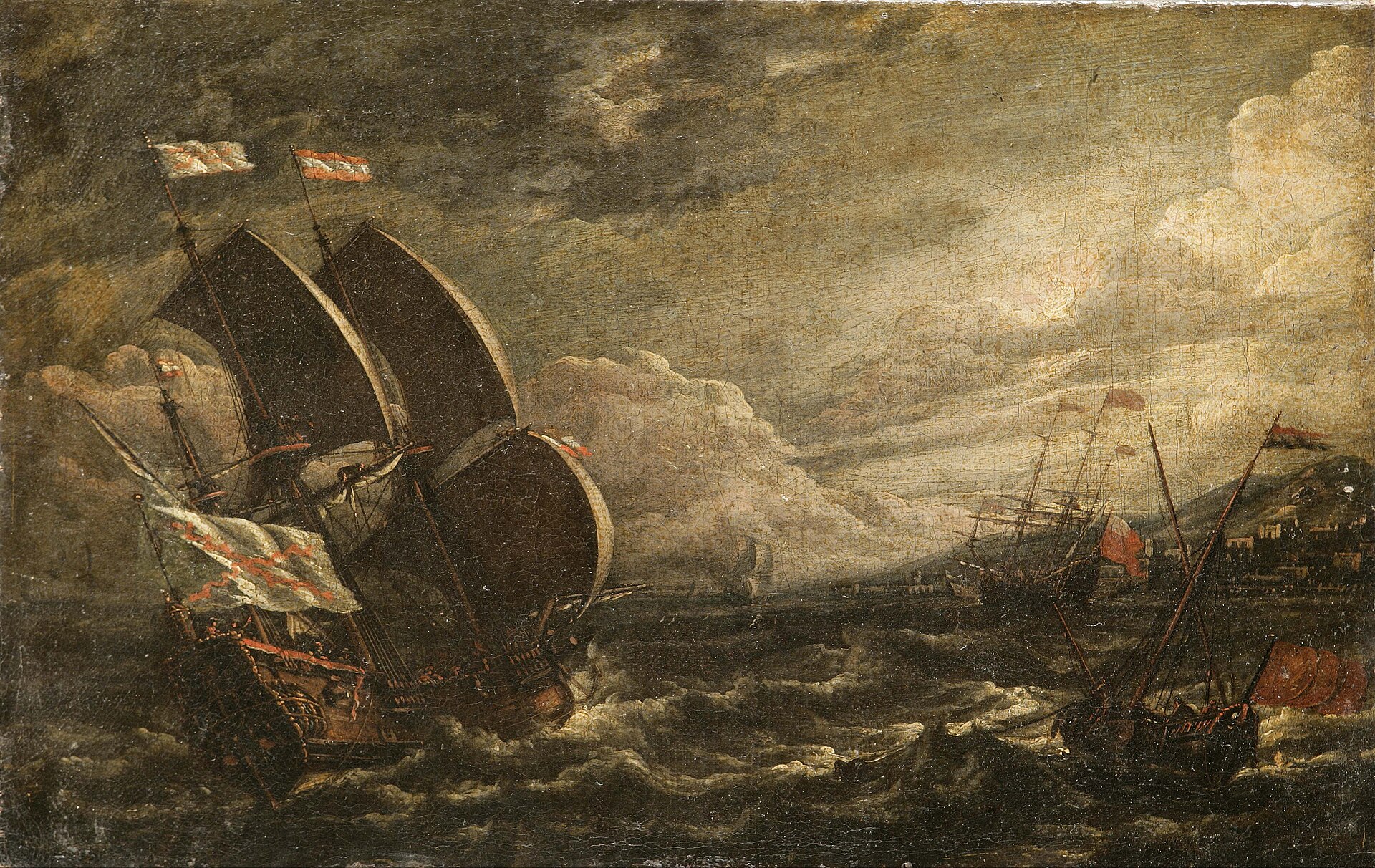
in Psalms 107Others went out to sea in ships, conducting trade on the mighty waters.
BSB
The same verse in ASV and KJV ▾
ASV
They that go down to the sea in ships, That do business in great waters;
KJV
They that go down to the sea in ships, that do business in great waters;
⋯
This verse in Psalms 107
Commentary
12 notes on this verseIn relation to the most profound depth of spiritual meanings, the Psalm reads: "They who sailed the sea in ships, trading on the deep waters." The man goes down to the sea in ships who approaches the Scriptures in a spirit of extreme reverence in …
This site's exposition
went out to sea in ships
on Psalms 107:23-26
The fourth rescue is sailors at work on the sea. They saw the works of the LORD in the deep, and then He spoke, and a tempest lifted the waves. They rose to the heavens and sank to the depths, and their courage melted.
The record, by era
The Church Fathers2 voices
A commentator
Desert FathersThe Desert Fathers, Sayings of the Early Christian Monks · Written before 500.
proposed
[Syncletica] also said, 'We have no security in this world. The Apostle said, "Let him that thinks he stands, take heed lest he fall" (1 Cor. 10:12). We are sailing on uncharted seas, as the psalmist David said, "Our life is like a sea." Yet …
..."They who go down on the sea in ships, doing their business on the mighty waters" (ver. 23); that is, amongst many peoples. For that waters are often put for peoples, the Apocalypse of John is witness, when on John's asking what those waters were, it was answered him, they are peoples. They then who do their business on mighty waters, "they have seen the works of the Lord, and His wonders in the deep" (ver. 24). For what is deeper than human hearts? hence often break forth winds; storms of sedition, and dissensions, disturb the ship.
The Puritans and the Awakening3 voices
They that go down to the sea in ships,.... This is the fourth instance of persons in distress crying to the Lord for help, and, having it, are laid under obligation to praise him; the case of seafaring men: so the Targum introduces it, "mariners that go down to the sea in ships;'' the same form of expression as here is used in Isa 42:
These are put for all similar perils, in which those that cry unto God have ever found him a very present help. He specifies the varieties and vicissitudes of events concerning nations and families, in all which God's hand is to be eyed by his own people, with joyful acknowledgments of his goodness,
It especially appears in storms at sea, which are much more terrible than at land. How dangerous and dreadful a tempest at sea is. Then wonders begin to appear in the deep, when God commands and raises the strong wind, which fulfils his word, Ps. cxlviii.
5 more voices on this verse
The Nineteenth Century5 voices
They that go down to the sea in ships. Navigation was so little practised among the Israelites that mariners were invested with a high mystery, and their craft was looked upon as one of singular daring degree of and peril. Tales of the sea thrilled all hearts with awe, and he who had been to Ophir or to Tarshish and had returned alive was looked upon as a man of renown, an ancient mariner to be listened to with reverent attention.
A commentator
Jamieson, Fausset & Brown1802–1910
Commentary Critical and Explanatory on the Whole Bible (1871)
proposed
Here are set forth the perils of seafaring, futility of man's, and efficiency of God's, help. go . . . sea--alluding to the elevation of the land at the coast.
They that go down to the sea in ships. Navigation was so little practised among the Israelites that mariners were invested with a high mystery, and their craft was looked upon as one of singular daring degree of and peril. Tales of the sea thrilled all hearts with awe, and he who had been to Ophir or to Tarshish and had returned alive was looked upon as a man of renown, an ancient mariner to be listened to with reverent attention. Voyages were looked on as descending to an abyss, "going down to the sea in ships"; whereas now our bolder and more accustomed sailors talk of the "high seas." That do business in great waters. If they had not had business to do, they would never have ventured on the ocean, for we never read in the Scriptures of any man taking his pleasure on the sea: so averse was the Israelitish mind to seafaring, that we do not hear of even Solomon himself keeping a pleasure boat. The Mediterranean was "the great sea" to David and his countrymen, and they viewed those who had business upon it with no small degree of admiration.
They that go down to the sea in ships - This is the Fourth comparison. Their captivity was as dangerous and alarming as a dreadful tempest at sea to a weather-beaten mariner.
A commentator
Albert Barnes1798–1870
Notes, Explanatory and Practical, on the Old and New Testaments (1832-1869)
proposed
They that go down to the sea in ships - The scene here changes again. From those that wander in the desert - from those who are in prison - from those who are sick - the eye of the psalmist turns to those who encounter the perils of the ocean, and he finds there occasion for praise to God. The phrase “go down” or “descend” is employed here because the sea is lower than the land, and because we “descend” when we embark on board of a vessel. That do business ... - Whose business or employment is on the ocean.
The words behind it
7 Hebrew wordsEvery Hebrew word of this verse in the order it stands, with what it means and the door to its own study. The last column counts the times a word stands in the whole Bible: the rarer the word, the more the places it appears belong together.
| Hebrew | Sound | Meaning | Word study | In the Bible |
|---|---|---|---|---|
| יוֹרְדֵ֣י | yordei | [those who] went down | H3381 → | 381 times |
| הַ֭יָּם | haiyom | <of> the sea | H3220 → | 396 times |
| בָּאֳנִיּ֑וֹת | booniyot | in ships | H591 → | 31 times |
| עֹשֵׂ֥י | ʾosei | [those who] did | H6213 → | 2628 times |
| מְ֝לָאכָ֗ה | melakhah | <of> business | H4399 → | |
| בְּמַ֣יִם | bemayim | on [the] waters | H4325 → | 581 times |
| רַבִּֽים׃ | rabim | many | H7227 → | 454 times |
יוֹרְדֵ֣י[those who] went down
yordeiH3381 →381 times
הַ֭יָּם<of> the sea
haiyomH3220 →396 times
בָּאֳנִיּ֑וֹתin ships
booniyotH591 →31 times
עֹשֵׂ֥י[those who] did
ʾoseiH6213 →2628 times
מְ֝לָאכָ֗ה<of> business
melakhahH4399 →
בְּמַ֣יִםon [the] waters
bemayimH4325 →581 times
רַבִּֽים׃many
rabimH7227 →454 times
A shaded row is a word that stands 400 times or fewer in the Bible.
The walk
8 stopsEach card is a verse this one points to, and under it the verses that one points to in turn. Where several paths arrive at the same place, that place is listed first: the text keeps returning to it.
Through
Psalms 48:7With a wind from the east You wrecked the ships of Tarshish.
it leads to
- Jeremiah 18:17
I will scatter them before the enemy like the east wind. I will show them My back and not My face in the day of their calamity.”
Reached by 2 separate paths from here.
- Ezekiel 27:25–26
The ships of Tarshish carried your merchandise. And you were filled with heavy cargo in the heart of the sea.
- 1 Kings 22:48
Jehoshaphat built ships of Tarshish to go to Ophir for gold, but they never set sail, because they were wrecked at Ezion-geber.
- Jeremiah 18:17
Through
Isaiah 42:10Sing to the LORD a new song—His praise from the ends of the earth—you who go down to the sea, and all that is in it, you islands, and all who dwell in them.
it leads to
- Psalms 33:3
Sing to Him a new song; play skillfully with a shout of joy.
- Psalms 40:3
He put a new song in my mouth, a hymn of praise to our God. Many will see and fear and put their trust in the LORD.
- Isaiah 42:4
He will not grow weak or discouraged before He has established justice on the earth. In His law the islands will put their hope.”
- Romans 15:9–11
so that the Gentiles may glorify God for His mercy. As it is written: “Therefore I will praise You among the Gentiles; I will sing hymns to Your name.”
- Psalms 33:3
Through
Ezekiel 27:26Your oarsmen have brought you onto the high seas, but the east wind will shatter you in the heart of the sea.
it leads to
- Psalms 48:7
With a wind from the east You wrecked the ships of Tarshish.
- Psalms 48:7
Where this verse is studied
About Psalms
This page draws on 10 works. Open the list of works
This page draws on Adam Clarke, Commentary on the Bible; Albert Barnes, Notes, Explanatory and Practical, on the Old and New Testaments (1832-1869); Augustine of Hippo, Exposition on Psalm 107; Bonaventure, Collations on the Hexaemeron, Collation 13; Charles Spurgeon, The Treasury of David, Vol. 5; Desert Fathers, The Desert Fathers, Sayings of the Early Christian Monks; Franz Delitzsch, Biblical Commentary on the Psalms; Jamieson, Fausset & Brown, Commentary Critical and Explanatory on the Whole Bible; John Gill, Exposition of the Old Testament (1748-1763) and Matthew Henry, Commentary on the Whole Bible.