
Psalms 107:24
in Psalms 107They saw the works of the LORD, and His wonders in the deep.
BSB
The same verse in ASV and KJV ▾
ASV
These see the works of Jehovah, And his wonders in the deep.
KJV
These see the works of the Lord, and his wonders in the deep.
⋯
This verse in Psalms 107
Commentary
12 notes on this verseThis site's exposition
went out to sea in ships
on Psalms 107:23-26
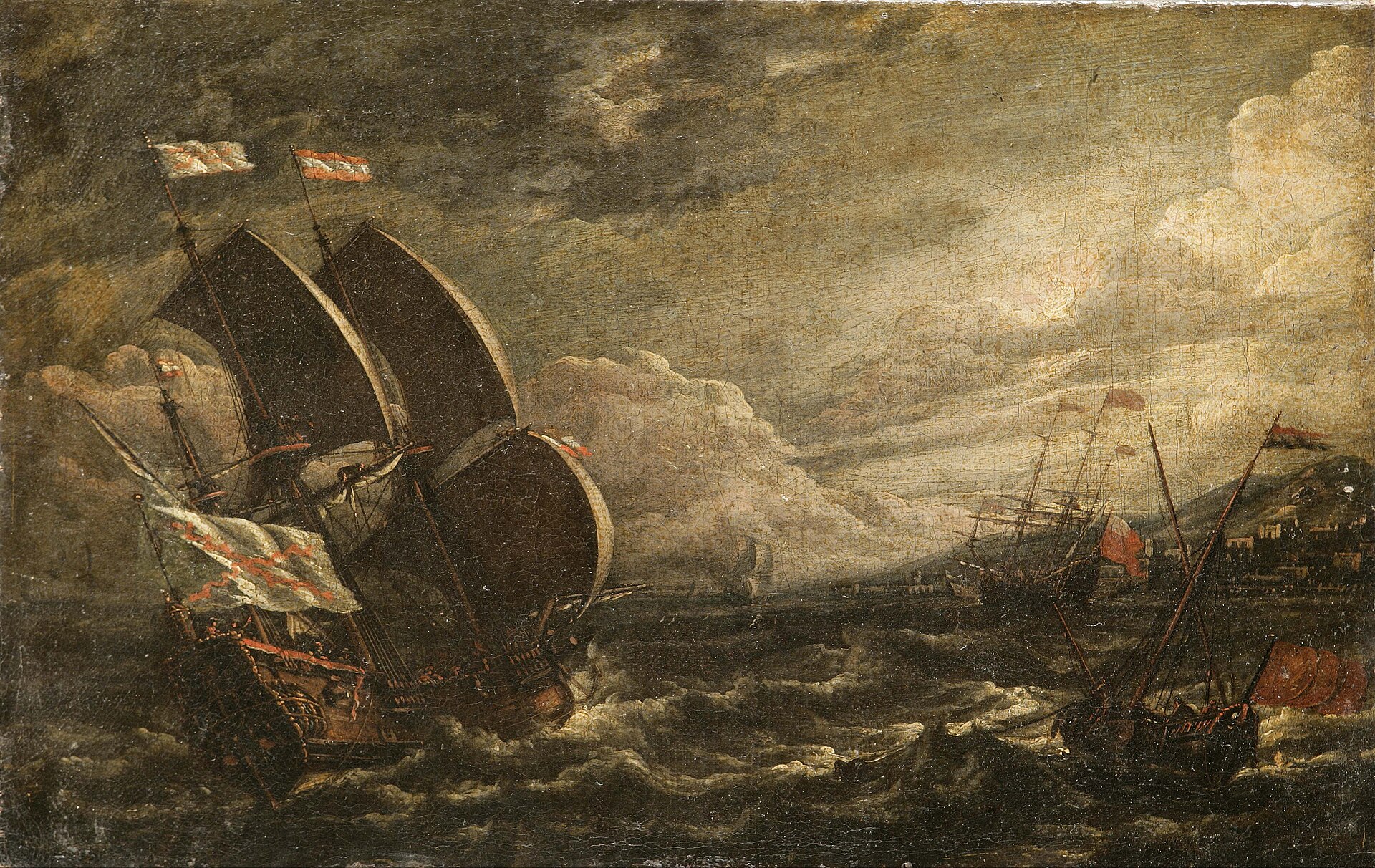
The fourth rescue is sailors at work on the sea. They saw the works of the LORD in the deep, and then He spoke, and a tempest lifted the waves. They rose to the heavens and sank to the depths, and their courage melted.
This site's exposition
They saw the works of the LORD
This stanza begins with the LORD's works seen before the danger, and the wonders here match the wonders thanked in verse 31. Deep is metsulah, the word of Jonah 2:3. There Jonah was hurled into the heart of the seas.
The record, by era
The Church Fathers2 voices
They then who do their business on mighty waters, "they have seen the works of the Lord, and His wonders in the deep" [Psalm 107:24]. For what is deeper than human hearts? Hence often break forth winds; storms of sedition, and dissensions, disturb the ship. And what is done in them? God, willing that both they who steer, and they who are conveyed, should cry unto Him, "He spoke, and the breath of the storm stood" [Psalm 107:25]. What is, stood? Abode, continued, still disturbs, long tosses; rages, and passes not away. "For He spoke, and the breath of the storm stood." And what did that breath of the storm?
A commentator
Desert FathersThe Desert Fathers, Sayings of the Early Christian Monks · Written before 500.
proposed
[Syncletica] also said, 'We have no security in this world. The Apostle said, "Let him that thinks he stands, take heed lest he fall" (1 Cor. 10:12). We are sailing on uncharted seas, as the psalmist David said, "Our life is like a sea." Yet …
The Puritans and the Awakening3 voices
These see the works of the Lord,.... In creation, the sea itself, its flux and reflux; the creatures in it, fishes of various forms and sizes: and in providence, in preserving ships and men in the most imminent danger, and even to a miracle; sometimes causing the wind to change or to subside in a moment, whereby deliverance is wrought.
These are put for all similar perils, in which those that cry unto God have ever found him a very present help. He specifies the varieties and vicissitudes of events concerning nations and families, in all which God's hand is to be eyed by his own people, with joyful acknowledgments of his goodness,
It especially appears in storms at sea, which are much more terrible than at land. How dangerous and dreadful a tempest at sea is. Then wonders begin to appear in the deep, when God commands and raises the strong wind, which fulfils his word, Ps. cxlviii.
5 more voices on this verse
The Nineteenth Century5 voices
A commentator
Jamieson, Fausset & Brown1802–1910
Commentary Critical and Explanatory on the Whole Bible (1871)
proposed
Here are set forth the perils of seafaring, futility of man's, and efficiency of God's, help. go . . . sea--alluding to the elevation of the land at the coast.
These see the works of the Lord. Beyond the dwellers on the land they see the Lord's greatest works, or at least such as stayers at home judge to be so when they hear the report thereof. Instead of the ocean proving to be a watery wilderness, it is full of God's creatures, and if we were to attempt to escape from his presence by flying to the uttermost parts of it, we should only rush into Jehovah's arms, and find ourselves in the very centre of his workshop. And his wonders in the deep.
These see the works of the Lord. Beyond the dwellers on the land they see the Lord's greatest works, or at least such as stayers at home judge to be so when they hear the report thereof. Instead of the ocean proving to be a watery wilderness, it is full of God's creatures, and if we were to attempt to escape from his presence by flying to the uttermost parts of it, we should only rush into Jehovah's arms, and find ourselves in the very centre of his workshop. And his wonders in the deep. They see wonders in it and on it. It is in itself a wonder and it swarms with wonders. Seamen, because they have fewer objects around them, are more observant of those they have than landsmen are, and hence they are said to see the wonders in the deep. At the same time, the ocean really does contain many of the more striking of God's creatures, and it is the scene of many of the more tremendous of the physical phenomena by which the power and more majesty of the Lord are revealed among men. The chief wonders alluded to by the Psalmist are a sudden storm and the calm which follows it. All believers have not the same deep experience; but for wise ends, that they may do business for him, the Lord sends some of his saints to the sea of soul trouble, and there they see, as others do not, the wonders of divine grace. Sailing over the deeps of inward depravity, the waste waters of poverty, the billows of persecution, and the rough waves of temptation, they need God above all others, and they find him.
These see the works of the Lord - Splendid, Divinely impressive, and glorious in fine weather. His wonders in the deep - Awfully terrible in a tempest.
A commentator
Albert Barnes1798–1870
Notes, Explanatory and Practical, on the Old and New Testaments (1832-1869)
proposed
These see the works of the Lord - They - sailors - have a special opportunity to see the works of God. They see manifestations of his power which are not seen on the land. They see things which seem to come “directly” from God; which are “immediately” produced by him - not as the things which occur on the land, which are the result of “growth,” and which are slowly developed. They seem in the solitariness and grandeur of the ocean to stand more directly in the presence of the great God. And his wonders in the deep - In the abyss; in that which is distinguished for its “depth,” as the mountains are for their height. Compare Psa 148:7.
The words behind it
6 Hebrew wordsEvery Hebrew word of this verse in the order it stands, with what it means and the door to its own study. The last column counts the times a word stands in the whole Bible: the rarer the word, the more the places it appears belong together.
| Hebrew | Sound | Meaning | Word study | In the Bible |
|---|---|---|---|---|
| הֵ֣מָּה | hemah | they | H1992 → | 553 times |
| רָ֭אוּ | rau | they saw | H7200 → | 1300 times |
| מַעֲשֵׂ֣י | maasei | [the] works of | H4639 → | 236 times |
| יְהוָ֑ה | yahweh | Yahweh | H3068 → | 6520 times |
| וְ֝נִפְלְאוֹתָ֗יו | venifleotav | and wonders his | H6381 → | 71 times |
| בִּמְצוּלָֽה׃ | bimtzulah | in [the] deep | H4688 → | 11 times |
הֵ֣מָּהthey
hemahH1992 →553 times
רָ֭אוּthey saw
rauH7200 →1300 times
מַעֲשֵׂ֣י[the] works of
maaseiH4639 →236 times
יְהוָ֑הYahweh
yahwehH3068 →6520 times
וְ֝נִפְלְאוֹתָ֗יוand wonders his
venifleotavH6381 →71 times
בִּמְצוּלָֽה׃in [the] deep
bimtzulahH4688 →11 times
A shaded row is a word that stands 400 times or fewer in the Bible.
The walk
5 stopsEach card is a verse this one points to, and under it the verses that one points to in turn. Where several paths arrive at the same place, that place is listed first: the text keeps returning to it.
Through
Psalms 95:5The sea is His, for He made it, and His hands formed the dry land.
it leads to
- Genesis 1:9–10
And God said, “Let the waters under the sky be gathered into one place, so that the dry land may appear.” And it was so.
- Proverbs 8:29
when He set a boundary for the sea, so that the waters would not surpass His command, when He marked out the foundations of the earth.
- Psalms 33:7
He piles up the waters of the sea; He puts the depths into storehouses.
- Psalms 146:6
the Maker of heaven and earth, the sea, and everything in them. He remains faithful forever.
- Jonah 1:9
“I am a Hebrew,” replied Jonah. “I worship the LORD, the God of the heavens, who made the sea and the dry land.”
- Genesis 1:9–10
Where this verse is studied
About Psalms
This page draws on 10 works. Open the list of works
This page draws on Adam Clarke, Commentary on the Bible; Albert Barnes, Notes, Explanatory and Practical, on the Old and New Testaments (1832-1869); Augustine of Hippo, Exposition on Psalm 107; Charles Spurgeon, The Treasury of David; Charles Spurgeon, The Treasury of David, Vol. 5; Desert Fathers, The Desert Fathers, Sayings of the Early Christian Monks; Franz Delitzsch, Biblical Commentary on the Psalms; Jamieson, Fausset & Brown, Commentary Critical and Explanatory on the Whole Bible; John Gill, Exposition of the Old Testament (1748-1763) and Matthew Henry, Commentary on the Whole Bible.