
Psalms 107:30
in Psalms 107They rejoiced in the silence, and He guided them to the harbor they desired.
BSB
The same verse in ASV and KJV ▾
ASV
Then are they glad because they are quiet; So he bringeth them unto their desired haven.
KJV
Then are they glad because they be quiet; so he bringeth them unto their desired haven.
⋯
This verse in Psalms 107
Commentary
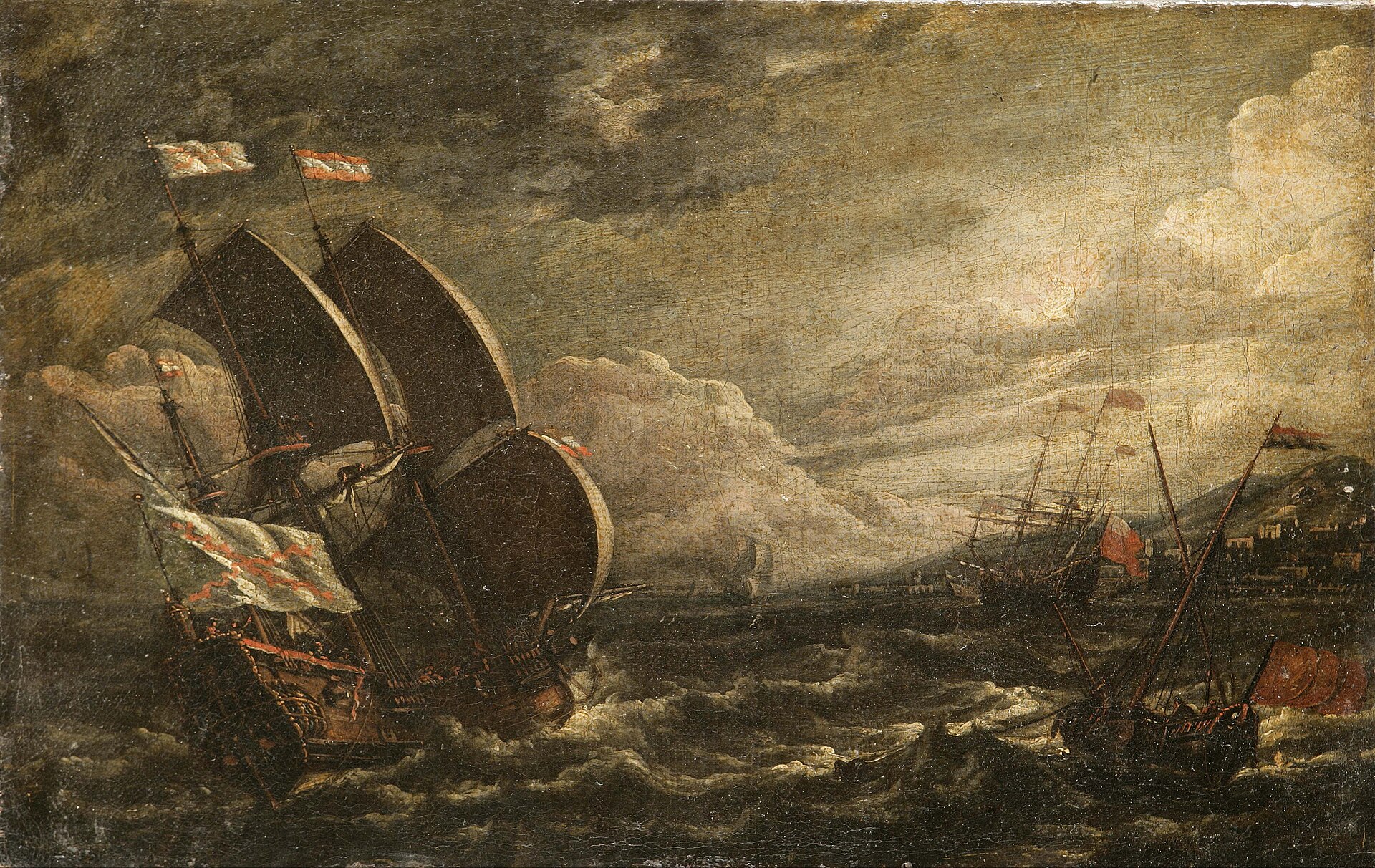
14 notes on this verseThen are they glad because they be quiet. No one can appreciate this verse unless he has been in a storm at sea. No music can be sweeter than the rattling of the chain as the shipmen let down the anchor; and no place seems more desirable than the little cove, or the wide bay, in which the ship rests in peace. So he bringeth them unto their desired haven. The rougher the voyage the more the mariners long for port, and heaven becomes more and more "a desired haven", as our trials multiply.
This site's exposition
They reeled and staggered like drunkards
on Psalms 107:27-32
Their skill was useless, and they reeled and staggered like drunkards. The storm He calmed to a whisper, the waves were hushed, and He brought them to the harbor they wanted. Verse 32 moves the thanks into the people's assembly and the council of the elders.
This site's exposition
the harbor they desired
The silence answers the waves the LORD raised in verse 25, and those on the sea rejoiced. John 6:21 tells how the disciples took Jesus into the boat and it came to the shore where they were going. The calm and the landing come together.
The record, by era
The Church Fathers2 voices
"And they were glad, because they were still, and He brought them into the haven of their desire" [Psalm 107:30]. "Let His mercies confess unto the Lord, and His wonders towards the sons of men" [Psalm 107:31]. Everywhere, without exception, let not our merits, not our strength, not our wisdom, "confess unto the Lord," but, "His mercies." Let Him be loved in every deliverance of ours, who has been invoked in every distress.
A commentator
Desert FathersThe Desert Fathers, Sayings of the Early Christian Monks · Written before 500.
proposed
[Syncletica] also said, 'We have no security in this world. The Apostle said, "Let him that thinks he stands, take heed lest he fall" (1 Cor. 10:12). We are sailing on uncharted seas, as the psalmist David said, "Our life is like a sea." Yet …
The Puritans and the Awakening3 voices
Then are they glad because they be quiet,.... The mariners are glad that the waves are quiet, and they free from danger, and at ease and in repose themselves. So he bringeth them unto their desired haven; the port, city, border or tract of land (q), they are bound to; which they desire to be at, and eagerly look out for, and rejoice when arrived at it.
These are put for all similar perils, in which those that cry unto God have ever found him a very present help. He specifies the varieties and vicissitudes of events concerning nations and families, in all which God's hand is to be eyed by his own people, with joyful acknowledgments of his goodness,
How justly it is expected that all those who have had a safe passage over the sea, and especially who have been delivered from remarkable perils at sea, should acknowledge it with thankfulness, to the glory of God.
6 more voices on this verse
The Nineteenth Century6 voices
A commentator
Jamieson, Fausset & Brown1802–1910
Commentary Critical and Explanatory on the Whole Bible (1871)
proposed
Here are set forth the perils of seafaring, futility of man's, and efficiency of God's, help. go . . . sea--alluding to the elevation of the land at the coast.
Then are they glad because they be quiet. No one can appreciate this verse unless he has been in a storm at sea. No music can be sweeter than the rattling of the chain as the shipmen let down the anchor; and no place seems more desirable than the little cove, or the wide bay, in which the ship rests in peace. So he bringeth them unto their desired haven. The rougher the voyage the more the mariners long for port, and heaven becomes more and more "a desired haven", as our trials multiply. By storms and by favourable breezes, though tempest and fair weather, the great Pilot and Ruler of the sea brings mariners to port, and his people to heaven. He must have the glory of the successful voyage of time, and when we are moored in the river of life above we shall take care that his praises are not forgotten. We should long ago have been wrecked if it had not been for his preserving hand, and our only hope of outliving the storms of the future is based upon his wisdom, faithfulness and power. Our heavenly haven shall ring with shouts of grateful joy when once we reach its blessed shore.
A commentator
Charles Spurgeon1834–1892
The Metropolitan Tabernacle Pulpit, Sermon No. 3316: “Their Desired Haven” (lightly modernized text, CCEL edition) · Written before 1892.
proposed
TAKEN strictly, according to its original context, the text plainly and powerfully reminds us that our Providential mercies ought never be forgotten—and more especially those remarkable mercies which concern the safety of our life in times of great peril. If there are any of you who have been exposed to storms at sea, or who have in any other way been brought near death's door, and have then been strikingly rescued, should you not devote your life to Him who has spared and prolonged it? Do you think it was without a design that God brought you into the peril? And is it without a purpose that He has lengthened out your span of life? Oh, I pray you, if you have hitherto been ungrateful, let this tenderness of His in sparing your useless life—(for remember it has been useless to Him)—excite in you a hundredfold tenderness! A tenderness of repentance for the past, and of holy desire for the future. In such an assembly as this I have surely some who have either been restored from a bed of sickness when they were almost given over, or who have been preserved from accidents on land, or have had hairbreadth escapes at sea. Oh, praise the Lord for His goodness and for His wonderful works toward you! And at the foot of the Cross of Calvary dedicate your few remaining days to the service of the Preserver of men! But this evening, while remembering these important Truths of God, we intend to use the text with yet another objective. This natural voyage on the sea may be a very excellent type and picture of the spiritual voyage which all men undertake in their soul's life. And we should first interpret the text as it concerns the seeking sinner on the sea of soul-trouble, brought at length by the gracious Pilot to his desired haven of peace through believing.
A commentator
Charles Spurgeon1834–1892
The Metropolitan Tabernacle Pulpit, Sermon No. 3316: “Their Desired Haven” (lightly modernized text, CCEL edition) · Written before 1892.
proposed
TAKEN strictly, according to its original context, the text plainly and powerfully reminds us that our Providential mercies ought never be forgotten—and more especially those remarkable mercies which concern the safety of our life in times of great peril. If there are any of you who have been exposed to storms at sea, or who have in any other way been brought near death's door, and have then been strikingly rescued, should you not devote your life to Him who has spared and prolonged it? Do you think it was without a design that God brought you into the peril?
Then are they glad because they be quiet - The turbulence of the sea being hushed, and the waves still, they rejoice to see an end to the tempest; and thus, having fine weather, a smooth sea, and fair wind, they are speedily brought to the desired haven.
A commentator
Albert Barnes1798–1870
Notes, Explanatory and Practical, on the Old and New Testaments (1832-1869)
proposed
Then are they glad because they be quiet - Because the storm subsides, and they have the feeling of safety from danger. So he bringeth them - Rather, “And he guides them.” Unto their desired haven - The word translated “haven” occurs nowhere else. By some it is rendered “shore,” but the word “haven” or “port” seems best to express the sense of the passage: “the haven of their desire.” No one can appreciate this fully who has not been long at sea, and who has not experienced the intense desire once more to see “land.” Even then no one experiences it fully who has not some object there which he desires to see, or to accomplish. If his business is there, if it is his native land, if his father, mother, wife, or children are there, if it is the place of his father’s sepulchre, and the place where he was born and reared, how intense becomes the desire to see that land once more. So God brings his people to rest in heaven - their haven, their home. After being tossed by the tempests of life, after encountering its storms and dangers, after the fear and agitation experienced, he stills the storms; the way becomes smooth and calm; the end of the voyage is serene; and death is like the ship smoothly gliding into port with its sails all set. The soul enters heaven - the desired haven - the port that was longed for; a safe haven, beyond all storms or tempests; an eternal home!
The words behind it
7 Hebrew wordsEvery Hebrew word of this verse in the order it stands, with what it means and the door to its own study. The last column counts the times a word stands in the whole Bible: the rarer the word, the more the places it appears belong together.
| Hebrew | Sound | Meaning | Word study | In the Bible |
|---|---|---|---|---|
| וַיִּשְׂמְח֥וּ | vaiyismechu | and they rejoiced | H8055 → | 155 times |
| כִֽי־ | khi- | for | H3588 → | 4482 times |
| יִשְׁתֹּ֑קוּ | yishtoku | they were quiet | H8367 → | |
| וַ֝יַּנְחֵ֗ם | vaiyanchem | and he guided them | H5148 → | 39 times |
| אֶל־ | ʾel- | to | H413 → | 5510 times |
| מְח֥וֹז | mechoz | [the] harbor of | H4231 → | |
| חֶפְצָֽם׃ | cheftzam | desire their | H2656 → | 39 times |
וַיִּשְׂמְח֥וּand they rejoiced
vaiyismechuH8055 →155 times
כִֽי־for
khi-H3588 →4482 times
יִשְׁתֹּ֑קוּthey were quiet
yishtokuH8367 →
וַ֝יַּנְחֵ֗םand he guided them
vaiyanchemH5148 →39 times
אֶל־to
ʾel-H413 →5510 times
מְח֥וֹז[the] harbor of
mechozH4231 →
חֶפְצָֽם׃desire their
cheftzamH2656 →39 times
A shaded row is a word that stands 400 times or fewer in the Bible.
The walk
5 stopsEach card is a verse this one points to, and under it the verses that one points to in turn. Where several paths arrive at the same place, that place is listed first: the text keeps returning to it.
Through
John 6:21Then they were willing to take Him into the boat, and at once the boat reached the shore where they were heading.
it leads to
- Mark 6:51
Then He climbed into the boat with them, and the wind died down. And the disciples were utterly astounded,
- Matthew 14:32–33
And when they had climbed back into the boat, the wind died down.
- Psalms 24:7–10
Lift up your heads, O gates! Be lifted up, O ancient doors, that the King of Glory may enter!
- Revelation 3:20
Behold, I stand at the door and knock. If anyone hears My voice and opens the door, I will come in and dine with him, and he with Me.
- Song of Solomon 3:4
I had just passed them when I found the one I love. I held him and would not let go until I had brought him to my mother’s house, to the chamber of the…
- Mark 6:51
Where this verse is studied
About Psalms
This page draws on 12 works. Open the list of works
This page draws on Adam Clarke, Commentary on the Bible; Albert Barnes, Notes on the Book of Psalms; Albert Barnes, Notes, Explanatory and Practical, on the Old and New Testaments (1832-1869); Augustine of Hippo, Exposition on Psalm 107; Charles Spurgeon, The Treasury of David, Vol. 5; Charles Spurgeon, The Treasury of David; Charles Spurgeon, The Metropolitan Tabernacle Pulpit, Sermon No. 3316: “Their Desired Haven” (lightly modernized text, CCEL edition); Desert Fathers, The Desert Fathers, Sayings of the Early Christian Monks; Jamieson, Fausset & Brown, Commentary Critical and Explanatory on the Whole Bible; John Gill, Exposition of the Old Testament; John Gill, Exposition of the Old Testament (1748-1763) and Matthew Henry, Commentary on the Whole Bible.