
Psalms 107:31
in Psalms 107Let them give thanks to the LORD for His loving devotion and His wonders to the sons of men.
BSB
The same verse in ASV and KJV ▾
ASV
Oh that men would praise Jehovah for his lovingkindness, And for his wonderful works to the children of men!
KJV
Oh that men would praise the Lord for his goodness, and for his wonderful works to the children of men!
⋯
This verse in Psalms 107
Commentary
9 notes on this verseThis site's exposition
They reeled and staggered like drunkards
on Psalms 107:27-32
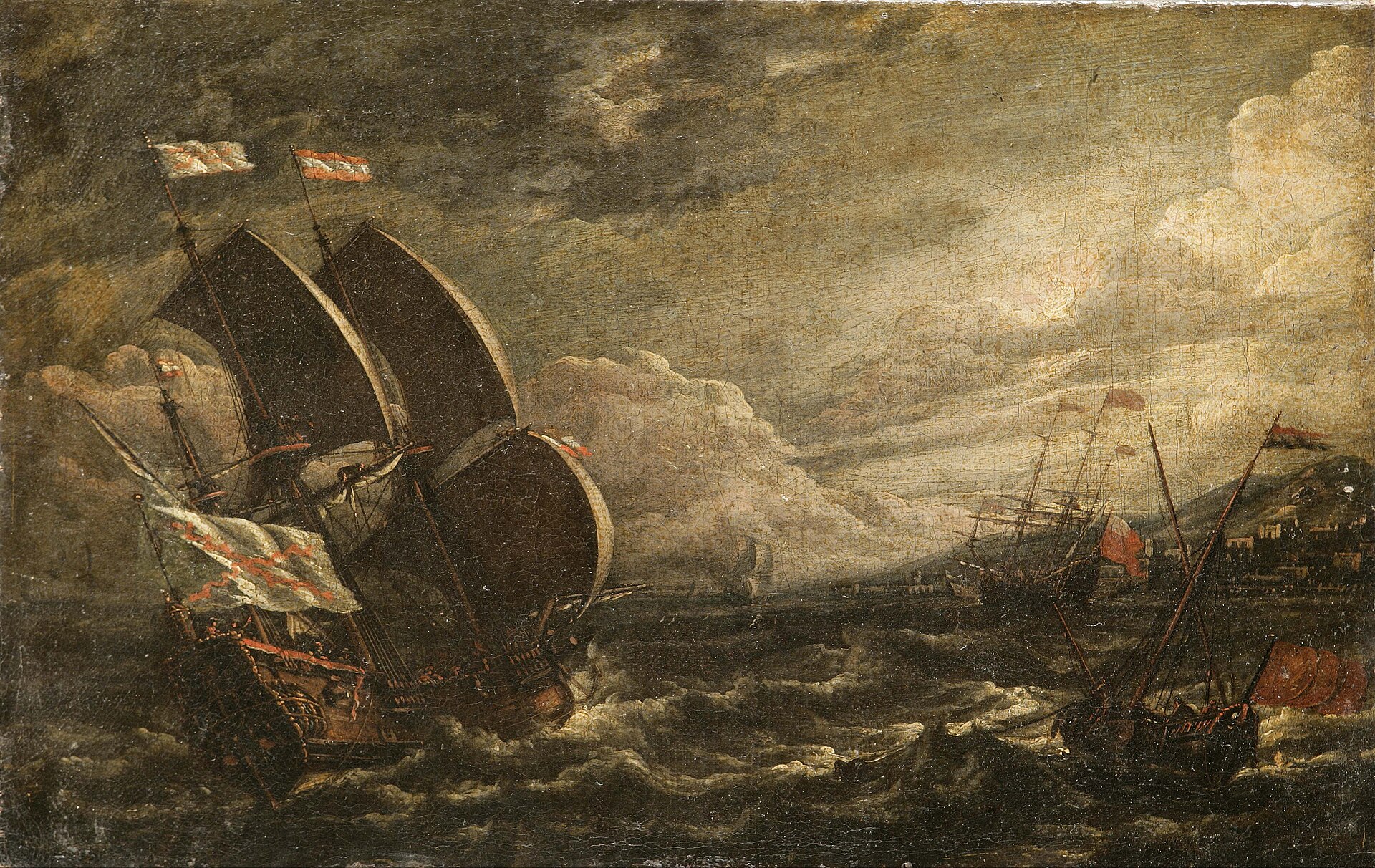
Their skill was useless, and they reeled and staggered like drunkards. The storm He calmed to a whisper, the waves were hushed, and He brought them to the harbor they wanted. Verse 32 moves the thanks into the people's assembly and the council of the elders.
This site's exposition
Let them give thanks to the LORD
The thanks refrain closes the last of the four stanzas. His wonders here are the waves He raised and hushed in verses 25 and 29. Acts 27:35 shows Paul giving thanks to God before the whole crew in a storm at sea.
The record, by era
The Church Fathers1 voice
"And they were glad, because they were still, and He brought them into the haven of their desire" [Psalm 107:30]. "Let His mercies confess unto the Lord, and His wonders towards the sons of men" [Psalm 107:31]. Everywhere, without exception, let not our merits, not our strength, not our wisdom, "confess unto the Lord," but, "His mercies." Let Him be loved in every deliverance of ours, who has been invoked in every distress.
The Puritans and the Awakening2 voices
Oh that men would praise the Lord for his goodness,....
These are put for all similar perils, in which those that cry unto God have ever found him a very present help. He specifies the varieties and vicissitudes of events concerning nations and families, in all which God's hand is to be eyed by his own people, with joyful acknowledgments of his goodness,
The Nineteenth Century2 voices
A commentator
Jamieson, Fausset & Brown1802–1910
Commentary Critical and Explanatory on the Whole Bible (1871)
proposed
Here are set forth the perils of seafaring, futility of man's, and efficiency of God's, help. go . . . sea--alluding to the elevation of the land at the coast.
Oh that men would praise the Loud for his goodness, and for his wonderful works to the children of men! Let the sea sound forth Jehovah's praises because of his delivering grace. As the sailor touches the shore let him lift the solemn hymn to heaven, and let others who see him rescued from the jaws of death unite in his thanksgiving.
2 more voices on this verse
The Nineteenth Century2 voices
O that men - The intercalary verse, or burden, as before. See Psa 107:8.
A commentator
Albert Barnes1798–1870
Notes, Explanatory and Practical, on the Old and New Testaments (1832-1869)
proposed
Oh that men... - See Psa 107:8, note; Psa 107:15, note; Psa 107:21, note. Assuredly they who are thus delivered from the dangers of the sea should praise the Lord; they who have seen the wonders of God on the great ocean should “never” forget God.
The words behind it
6 Hebrew wordsEvery Hebrew word of this verse in the order it stands, with what it means and the door to its own study. The last column counts the times a word stands in the whole Bible: the rarer the word, the more the places it appears belong together.
| Hebrew | Sound | Meaning | Word study | In the Bible |
|---|---|---|---|---|
| יוֹד֣וּ | yodu | let them give thanks | H3034 → | 114 times |
| לַיהוָ֣ה | layahweh | to Yahweh | H3068 → | 6520 times |
| חַסְדּ֑וֹ | chasdo | covenant loyalty his | H2617 → | 247 times |
| וְ֝נִפְלְאוֹתָ֗יו | venifleotav | and wonders his | H6381 → | 71 times |
| לִבְנֵ֥י | livnei | to [the] children of | H1121 → | 4930 times |
| אָדָֽם׃ | ʾadam | humankind | H120 → | 551 times |
יוֹד֣וּlet them give thanks
yoduH3034 →114 times
לַיהוָ֣הto Yahweh
layahwehH3068 →6520 times
חַסְדּ֑וֹcovenant loyalty his
chasdoH2617 →247 times
וְ֝נִפְלְאוֹתָ֗יוand wonders his
venifleotavH6381 →71 times
לִבְנֵ֥יto [the] children of
livneiH1121 →4930 times
אָדָֽם׃humankind
ʾadamH120 →551 times
A shaded row is a word that stands 400 times or fewer in the Bible.
The walk
8 stopsEach card is a verse this one points to, and under it the verses that one points to in turn. Where several paths arrive at the same place, that place is listed first: the text keeps returning to it.
Through
Psalms 103:2Bless the LORD, O my soul, and do not forget all His kind deeds—
it leads to
- Psalms 116:12
How can I repay the LORD for all His goodness to me?
- Isaiah 63:7
I will make known the LORD’s loving devotion and His praiseworthy acts, because of all that the LORD has done for us—the many good things for the house of Israel according to His great…
- Psalms 105:5
Remember the wonders He has done, His marvels, and the judgments He has pronounced,
- Luke 17:15–18
When one of them saw that he was healed, he came back, praising God in a loud voice.
- Deuteronomy 6:12
be careful not to forget the LORD who brought you out of the land of Egypt, out of the house of slavery.
- Psalms 116:12
Through
Revelation 15:3and they sang the song of God’s servant Moses and of the Lamb: “Great and wonderful are Your works, O Lord God Almighty! Just and true are Your ways, O King of the nations!
it leads to
- Psalms 111:2
Great are the works of the LORD; they are pondered by all who delight in them.
- Exodus 15:1–18
Then Moses and the Israelites sang this song to the LORD: “I will sing to the LORD, for He is highly exalted. The horse and rider He has thrown into the sea.
- Psalms 139:14
I praise You, for I am fearfully and wonderfully made. Marvelous are Your works, and I know this very well.
- Psalms 111:2
Where this verse is studied
About Psalms
This page draws on 9 works. Open the list of works
This page draws on Adam Clarke, Commentary on the Bible; Albert Barnes, Notes on the Book of Psalms; Albert Barnes, Notes, Explanatory and Practical, on the Old and New Testaments (1832-1869); Augustine of Hippo, Exposition on Psalm 107; Charles Spurgeon, The Treasury of David; Charles Spurgeon, The Treasury of David, Vol. 5; Jamieson, Fausset & Brown, Commentary Critical and Explanatory on the Whole Bible; John Gill, Exposition of the Old Testament (1748-1763) and Matthew Henry, Commentary on the Whole Bible.