
Psalms 107:28
in Psalms 107Then they cried out to the LORD in their trouble, and He brought them out of their distress.
BSB
The same verse in ASV and KJV ▾
ASV
Then they cry unto Jehovah in their trouble, And he bringeth them out of their distresses.
KJV
Then they cry unto the Lord in their trouble, and he bringeth them out of their distresses.
⋯
This verse in Psalms 107
Commentary
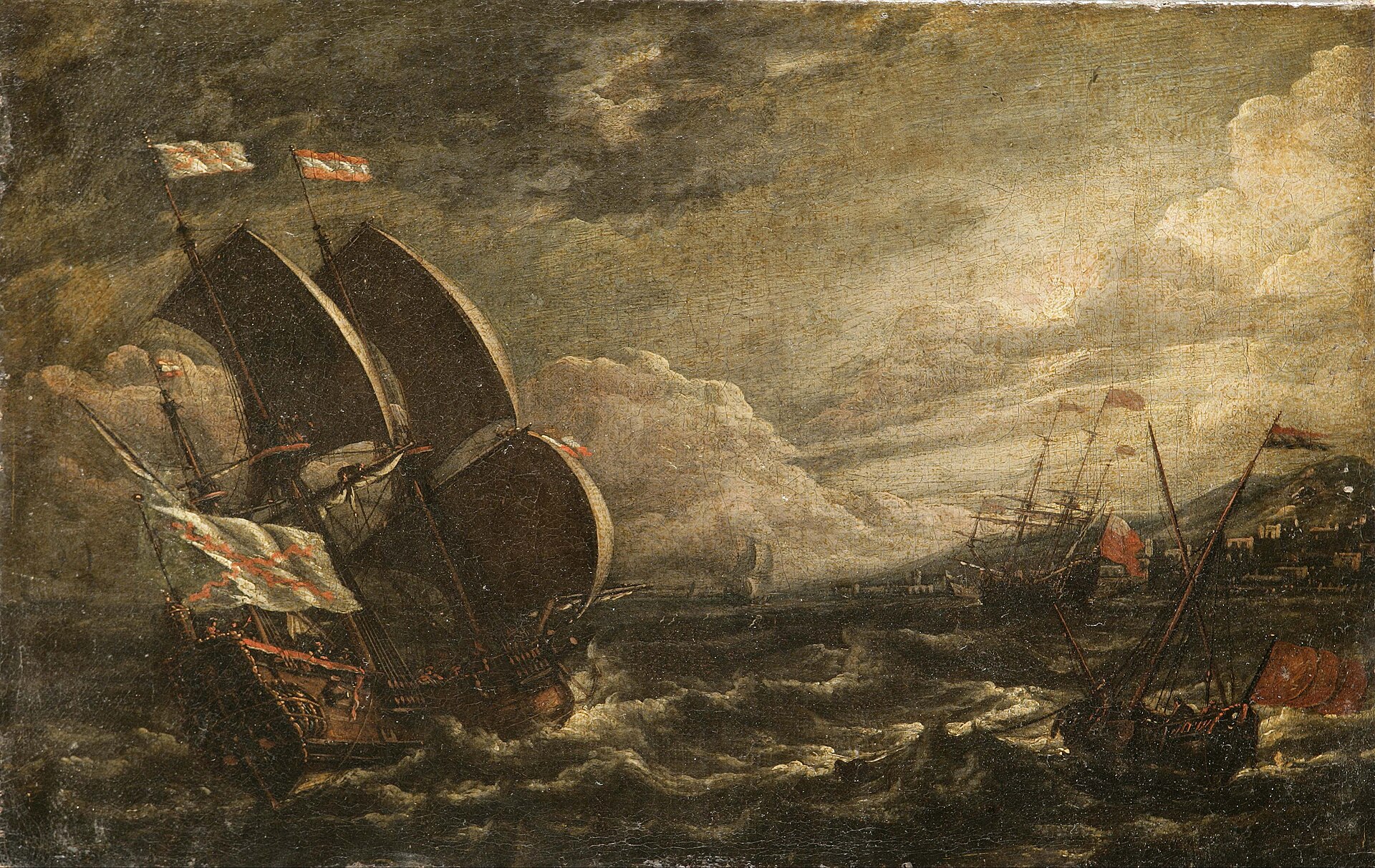
11 notes on this verseThen they cry unto the Lord in their trouble. Though at their wit's end, they had wit enough to pray; their heart was melted, and it ran out in cries for help. This was well and ended well, for it is written, And he brought them out of their distresses. Prayer is good in a storm. We may pray staggering and reeling, and pray when we are at our wit's end. God will hear us amid the thunder and answer us out of the storm.
This site's exposition
They reeled and staggered like drunkards
on Psalms 107:27-32
Their skill was useless, and they reeled and staggered like drunkards. The storm He calmed to a whisper, the waves were hushed, and He brought them to the harbor they wanted. Verse 32 moves the thanks into the people's assembly and the council of the elders.
This site's exposition
He brought them out of their distress
The fourth cry closes the sea stanza with brought them out, the verb used of the prisoners led out of darkness in verse 14. Jonah 1:14 records the sailors of Jonah's ship crying out to the LORD in such a storm. The pattern holds at sea.
The record, by era
The Church Fathers2 voices
A commentator
Desert FathersThe Desert Fathers, Sayings of the Early Christian Monks · Written before 500.
proposed
[Syncletica] also said, 'We have no security in this world. The Apostle said, "Let him that thinks he stands, take heed lest he fall" (1 Cor. 10:12). We are sailing on uncharted seas, as the psalmist David said, "Our life is like a sea." Yet …
"And they cried out unto the Lord when they were troubled, and He delivered them from their distresses" (ver. 28). "And He commanded the storm, and it stood unto clear air" (ver. 29), "and the waves of it were still." Hear on this point the voice of a steersman, one that was in peril, was brought low, was freed. "I would not," he saith, "have you ignorant, brethren, of our distress, which befell us in Asia, that "we were pressed above strength, and above measure" (I see all his "wisdom swallowed up"), "so that we were weary," he saith, "even of life." ...
The Puritans and the Awakening3 voices
Even heathen mariners, in a storm, cried every man to his god; but those that have the Lord for their God have a present and powerful help in that and every other time of need, so that when they are at their wits' end they are not at their faith's end.
Then they cry unto the Lord in their trouble,.... As in a storm seafaring persons are used to do; so did Jonah's mariners, though Heathens, everyone cried to his god. With the Romans (o) tempests were reckoned deities, and had temples erected, and sacrifices offered to them; but these persons were such as knew and owned the true Jehovah, and called upon him in their distress: so did the apostles of Christ.
These are put for all similar perils, in which those that cry unto God have ever found him a very present help. He specifies the varieties and vicissitudes of events concerning nations and families, in all which God's hand is to be eyed by his own people, with joyful acknowledgments of his goodness,
3 more voices on this verse
The Nineteenth Century3 voices
A commentator
Jamieson, Fausset & Brown1802–1910
Commentary Critical and Explanatory on the Whole Bible (1871)
proposed
Here are set forth the perils of seafaring, futility of man's, and efficiency of God's, help. go . . . sea--alluding to the elevation of the land at the coast.
Then they cry unto the Lord in their trouble. Though at their wit's end, they had wit enough to pray; their heart was melted, and it ran out in cries for help. This was well and ended well, for it is written, And he brought them out of their distresses. Prayer is good in a storm. We may pray staggering and reeling, and pray when we are at our wit's end. God will hear us amid the thunder and answer us out of the storm. He brought their distresses upon the mariners, and therefore they did well to turn to him for the removal of them; nor did they look in vain.
A commentator
Albert Barnes1798–1870
Notes, Explanatory and Practical, on the Old and New Testaments (1832-1869)
proposed
Then they cry unto the Lord in their trouble ... - See Psa 107:6, Psa 107:13, Psa 107:19. Sailors pray. If they do not pray elsewhere, they often do in a storm, when in danger of being wrecked and lost. A storm at sea brings hundreds on their knees who never prayed before - for they feel that their only help is in God, and that it is a fearful thing to die. Then they do “right.” They do what “ought” to be done. But they do then only what people ought always to do, for it is as plain a duty to pray when we are in safety as when we are in danger; when sailing on a smooth sea as in a storm; when on the land as on the ocean. People anywhere, and at any time may die; and people everywhere and at all times “should,” therefore, call upon God. Storms, tempests, fire, disease, and danger, only impel people to do what they should do always from higher motives, and when their motives will be likely to be more disinterested and pure.
The words behind it
7 Hebrew wordsEvery Hebrew word of this verse in the order it stands, with what it means and the door to its own study. The last column counts the times a word stands in the whole Bible: the rarer the word, the more the places it appears belong together.
| Hebrew | Sound | Meaning | Word study | In the Bible |
|---|---|---|---|---|
| וַיִּצְעֲק֣וּ | vaiyitzaku | and they cried out | H6817 → | 55 times |
| אֶל־ | ʾel- | to | H413 → | 5510 times |
| יְ֭הוָה | yahweh | Yahweh | H3068 → | 6520 times |
| בַּצַּ֣ר | batzar | when <the> it was distress | H6862 → | 109 times |
| לָהֶ֑ם | lahem | to them | ||
| וּֽ֝מִמְּצֽוּקֹתֵיהֶ֗ם | umimetzukoteihem | and from troubles their | H4691 → | 7 times |
| יוֹצִיאֵֽם׃ | yotziem | he brought out them | H3318 → | 1067 times |
וַיִּצְעֲק֣וּand they cried out
vaiyitzakuH6817 →55 times
אֶל־to
ʾel-H413 →5510 times
יְ֭הוָהYahweh
yahwehH3068 →6520 times
בַּצַּ֣רwhen <the> it was distress
batzarH6862 →109 times
לָהֶ֑םto them
lahem
וּֽ֝מִמְּצֽוּקֹתֵיהֶ֗םand from troubles their
umimetzukoteihemH4691 →7 times
יוֹצִיאֵֽם׃he brought out them
yotziemH3318 →1067 times
A shaded row is a word that stands 400 times or fewer in the Bible.
The walk
8 stopsEach card is a verse this one points to, and under it the verses that one points to in turn. Where several paths arrive at the same place, that place is listed first: the text keeps returning to it.
Through
Psalms 107:6Then they cried out to the LORD in their trouble, and He delivered them from their distress.
it leads to
- Psalms 50:15
Call upon Me in the day of trouble; I will deliver you, and you will honor Me.”
- Psalms 91:15
When he calls out to Me, I will answer him; I will be with him in trouble. I will deliver him and honor him.
- Jeremiah 29:12–14
Then you will call upon Me and come and pray to Me, and I will listen to you.
- Hebrews 4:15–16
For we do not have a high priest who is unable to sympathize with our weaknesses, but we have one who was tempted in every way that we are, yet was without sin.
- Psalms 50:15
Through
Psalms 107:13Then they cried out to the LORD in their trouble, and He saved them from their distress.
it leads to
- Psalms 107:6
Then they cried out to the LORD in their trouble, and He delivered them from their distress.
- Judges 6:6–10
Israel was greatly impoverished by Midian, and the Israelites cried out to the LORD.
- Psalms 18:6
In my distress I called upon the LORD; I cried to my God for help. From His temple He heard my voice, and my cry for His help reached His ears.
- Judges 4:3
Then the Israelites cried out to the LORD, because Jabin had nine hundred chariots of iron, and he had harshly oppressed the Israelites for twenty years.
- Psalms 107:6
Where this verse is studied
On this page
Studies2
On this verse
On this chapter
About Psalms
This page draws on 10 works. Open the list of works
This page draws on Albert Barnes, Notes on the Book of Psalms; Albert Barnes, Notes, Explanatory and Practical, on the Old and New Testaments (1832-1869); Augustine of Hippo, Exposition on Psalm 107; Charles Spurgeon, The Treasury of David, Vol. 5; Charles Spurgeon, The Treasury of David; Desert Fathers, The Desert Fathers, Sayings of the Early Christian Monks; Franz Delitzsch, Biblical Commentary on the Psalms; Jamieson, Fausset & Brown, Commentary Critical and Explanatory on the Whole Bible; John Gill, Exposition of the Old Testament (1748-1763) and Matthew Henry, Commentary on the Whole Bible.