
Psalms 107:26
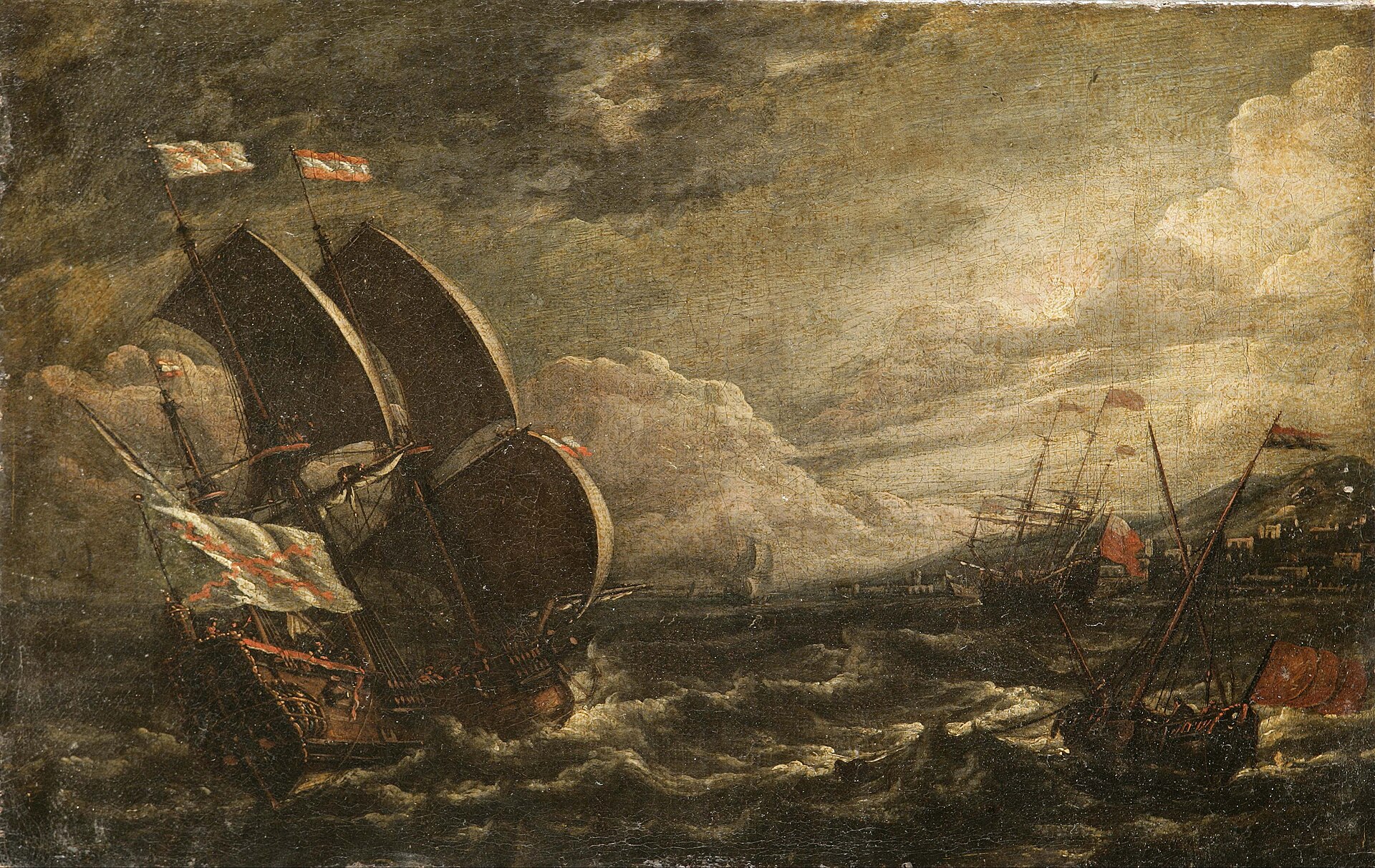
in Psalms 107They mounted up to the heavens, then sunk to the depths; their courage melted in their anguish.
BSB
The same verse in ASV and KJV ▾
ASV
They mount up to the heavens, they go down again to the depths: Their soul melteth away because of trouble.
KJV
They mount up to the heaven, they go down again to the depths: their soul is melted because of trouble.
⋯
This verse in Psalms 107
Commentary
11 notes on this verseThey mount up to the heaven,.... The waves which are lifted up by the stormy wind, and the ships which are upon them, and the men in them. They go down again to the depths: one while they seem to reach the skies, and presently they are down, as it were, in the bottom of the sea, and are threatened to be buried in the midst of it; distress at sea is described in much the same language by Virgil and Ovid (m).
This site's exposition
went out to sea in ships
on Psalms 107:23-26
The fourth rescue is sailors at work on the sea. They saw the works of the LORD in the deep, and then He spoke, and a tempest lifted the waves. They rose to the heavens and sank to the depths, and their courage melted.
The record, by era
The Church Fathers2 voices
"They go up even to the heavens," in daring; "They go down even into the deeps" [Psalm 107:26], in fearing. "Their soul wasted in miseries." "They were disturbed, and moved like a drunken man" [Psalm 107:27]. They who sit at the helm, and they who faithfully love the ship, feel what I say. Certainly, when they speak, when they read, when they interpret, they appear wise. Woe for the storm! "and all their wisdom," he says, "was swallowed up." Sometimes all human counsels fail; whichever way one turns himself, the waves roar, the storm rages, the arms are powerless: where the prow may strike, to what wave the side may be exposed, whither the stricken ship may be allowed to drift, from what rocks she must be kept back lest she be lost, is impossible for her pilots to see. And what is left but that which follows?
A commentator
Desert FathersThe Desert Fathers, Sayings of the Early Christian Monks · Written before 500.
proposed
[Syncletica] also said, 'We have no security in this world. The Apostle said, "Let him that thinks he stands, take heed lest he fall" (1 Cor. 10:12). We are sailing on uncharted seas, as the psalmist David said, "Our life is like a sea." Yet …
The Puritans and the Awakening2 voices
When the ships are thus tossed the soul of the seaman melts because of trouble; and, when the storm is very high, even those that are used to the sea can neither shake off nor dissemble their fears, but they reel to and fro, and tossing makes them giddy, and they stagger and are sick, it may be, like a drunken man; the whole ship's crew are in confusion and quite at their wits' end (
quarantine:debris (2026-07-29) — unbalanced-parens
These are put for all similar perils, in which those that cry unto God have ever found him a very present help. He specifies the varieties and vicissitudes of events concerning nations and families, in all which God's hand is to be eyed by his own people, with joyful acknowledgments of his goodness,
The Nineteenth Century1 voice
They mount up to the heaven. Borne aloft on the crest of the wave, the sailors and their vessels appear to climb the skies, but it is only for a moment, for very soon in the trough of the sea they go down again to the depths. As if their vessel were but a sea bird, the mariners are tossed "up and down, up and down, from the base of the wave to the billow's crown." Their soul is melted because of trouble.
4 more voices on this verse
The Nineteenth Century4 voices
A commentator
Jamieson, Fausset & Brown1802–1910
Commentary Critical and Explanatory on the Whole Bible (1871)
proposed
Here are set forth the perils of seafaring, futility of man's, and efficiency of God's, help. go . . . sea--alluding to the elevation of the land at the coast.
They mount up to the heaven. Borne aloft on the crest of the wave, the sailors and their vessels appear to climb the skies, but it is only for a moment, for very soon in the trough of the sea they go down again to the depths. As if their vessel were but a sea bird, the mariners are tossed "up and down, up and down, from the base of the wave to the billow's crown." Their soul is melted because of trouble. Weary, wet, dispirited, hopeless of escape, their heart is turned to water, and they seem to have no manhood left. Those who have been on the spiritual deep in one of the great storms which occasionally agitate the soul know what this verse means. In these spiritual cyclones presumption alternates with despair, indifference with agony! No heart is left for anything, courage is gone, hope is almost dead. Such an experience is as real as the tossing of a literal tempest and far more painful. Some of us have weathered many such an internal hurricane, and have indeed seen the Lord's wondrous works.
They mount up to the heaven - This is a most natural and striking description of the state of a ship at sea in a storm: when the sea appears to run mountains high, and the vessel seems for a moment to stand on the sharp ridge of one most stupendous, with a valley of a frightful depth between it and a similar mountain, which appears to be flying in the midst of heaven, that it may submerge the hapless bark, when she descends into the valley of death below. This is a sight the most terrific that can be imagined: nor can any man conceive or form an adequate idea of it, who has not himself been at sea in such a storm. Their soul is melted because of trouble - This is not less expressive than it is descriptive. The action of raising the vessel to the clouds, and precipitating her into the abyss, seems to dissolve the very soul: the whole mind seems to melt away, so that neither feeling, reflection, nor impression remains, nothing but the apprehension of inevitable destruction! When the ship is buffeted between conflicting waves, which threaten either to tear her asunder or crush her together; when she reels to and fro, and staggers like a drunken man, not being able to hold any certain course; when sails and masts are an incumbrance, and the helm of no use; when all hope of safety is taken away; and when the experienced captain, the skillful pilot, and the hardy sailors, cry out, with a voice more terrible than the cry of fire at midnight, We are All lost! we are all Lost! then, indeed, are they at their wit’s end; or, as the inimitable original expresses it, וחל חכמתם תתבלע vechol chochmatham tithballa, “and all their skill is swallowed up,” - seems to be gulped down by the frightful abyss into which the ship is about to be precipitated. […]
A commentator
Albert Barnes1798–1870
Notes, Explanatory and Practical, on the Old and New Testaments (1832-1869)
proposed
They mount up to the heaven - The mariners. That it refers to the seamen, and not to the waves, is apparent from the close of the verse: “their soul is melted.” They go down again to the depths - The word here is different from that used in Psa 107:24, and rendered “deep,” but the idea is essentially the same. It is the sea or ocean considered as “deep;” as bottomless. The idea here is, that they seem to descend into the very depths of the ocean. Their soul is melted because of trouble - It seems to dissolve; it loses all its vigor; it faints. The word used - מוג mûg - means to melt; to flow down; to soften; and is then applied to the heart or mind that loses its courage or vigor by fear or terror. Exo 15:15; Jos 2:9, Jos 2:24; Nah 1:5. The “trouble” here referred to is that which arises from fear and danger.
The words behind it
7 Hebrew wordsEvery Hebrew word of this verse in the order it stands, with what it means and the door to its own study. The last column counts the times a word stands in the whole Bible: the rarer the word, the more the places it appears belong together.
| Hebrew | Sound | Meaning | Word study | In the Bible |
|---|---|---|---|---|
| יַעֲל֣וּ | yaalu | they went up | H5927 → | 890 times |
| שָׁ֭מַיִם | shamayim | [the] heavens | H8064 → | 421 times |
| יֵרְד֣וּ | yeredu | they went down | H3381 → | 381 times |
| תְהוֹמ֑וֹת | tehomot | [the] deeps | H8415 → | 36 times |
| נַ֝פְשָׁ֗ם | nafsham | soul their | H5315 → | 754 times |
| בְּרָעָ֥ה | beraah | in distress | H7451 → | 662 times |
| תִתְמוֹגָֽג׃ | titmogag | it melted | H4127 → | 17 times |
יַעֲל֣וּthey went up
yaaluH5927 →890 times
שָׁ֭מַיִם[the] heavens
shamayimH8064 →421 times
יֵרְד֣וּthey went down
yereduH3381 →381 times
תְהוֹמ֑וֹת[the] deeps
tehomotH8415 →36 times
נַ֝פְשָׁ֗םsoul their
nafshamH5315 →754 times
בְּרָעָ֥הin distress
beraahH7451 →662 times
תִתְמוֹגָֽג׃it melted
titmogagH4127 →17 times
A shaded row is a word that stands 400 times or fewer in the Bible.
The walk
8 stopsEach card is a verse this one points to, and under it the verses that one points to in turn. Where several paths arrive at the same place, that place is listed first: the text keeps returning to it.
Through
Psalms 119:28My soul melts with sorrow; strengthen me according to Your word.
it leads to
- Psalms 22:14
I am poured out like water, and all my bones are disjointed. My heart is like wax; it melts away within me.
Reached by 2 separate paths from here.
- Philippians 4:13
I can do all things through Christ who gives me strength.
- Psalms 27:14
Wait patiently for the LORD; be strong and courageous. Wait patiently for the LORD!
- 1 Peter 5:10
And after you have suffered for a little while, the God of all grace, who has called you to His eternal glory in Christ, will Himself restore you, secure you, strengthen you, and establish…
- Zechariah 10:12
I will strengthen them in the LORD, and in His name they will walk,” declares the LORD.
- Psalms 22:14
Through
Psalms 22:14I am poured out like water, and all my bones are disjointed. My heart is like wax; it melts away within me.
it leads to
- Daniel 5:6
his face grew pale and his thoughts so alarmed him that his hips gave way and his knees knocked together.
Reached by 2 separate paths from here.
- Psalms 22:17
I can count all my bones; they stare and gloat over me.
- Psalms 31:10
For my life is consumed with grief and my years with groaning; my iniquity has drained my strength, and my bones are wasting away.
- Daniel 5:6
Where this verse is studied
On this page
About Psalms
This page draws on 9 works. Open the list of works
This page draws on Adam Clarke, Commentary on the Bible; Albert Barnes, Notes, Explanatory and Practical, on the Old and New Testaments (1832-1869); Augustine of Hippo, Exposition on Psalm 107; Charles Spurgeon, The Treasury of David, Vol. 5; Desert Fathers, The Desert Fathers, Sayings of the Early Christian Monks; Franz Delitzsch, Biblical Commentary on the Psalms; Jamieson, Fausset & Brown, Commentary Critical and Explanatory on the Whole Bible; John Gill, Exposition of the Old Testament (1748-1763) and Matthew Henry, Commentary on the Whole Bible.