
Matthewchapter 7
29 verses · Matthew, by tradition · AD 50 to 65 · The Gospels
Therefore everyone who hears these words of Mine and acts on them is like a wise man who built his house on the rock.
Introduction
Matthew, by tradition, The Gospels, Matthew Overview.
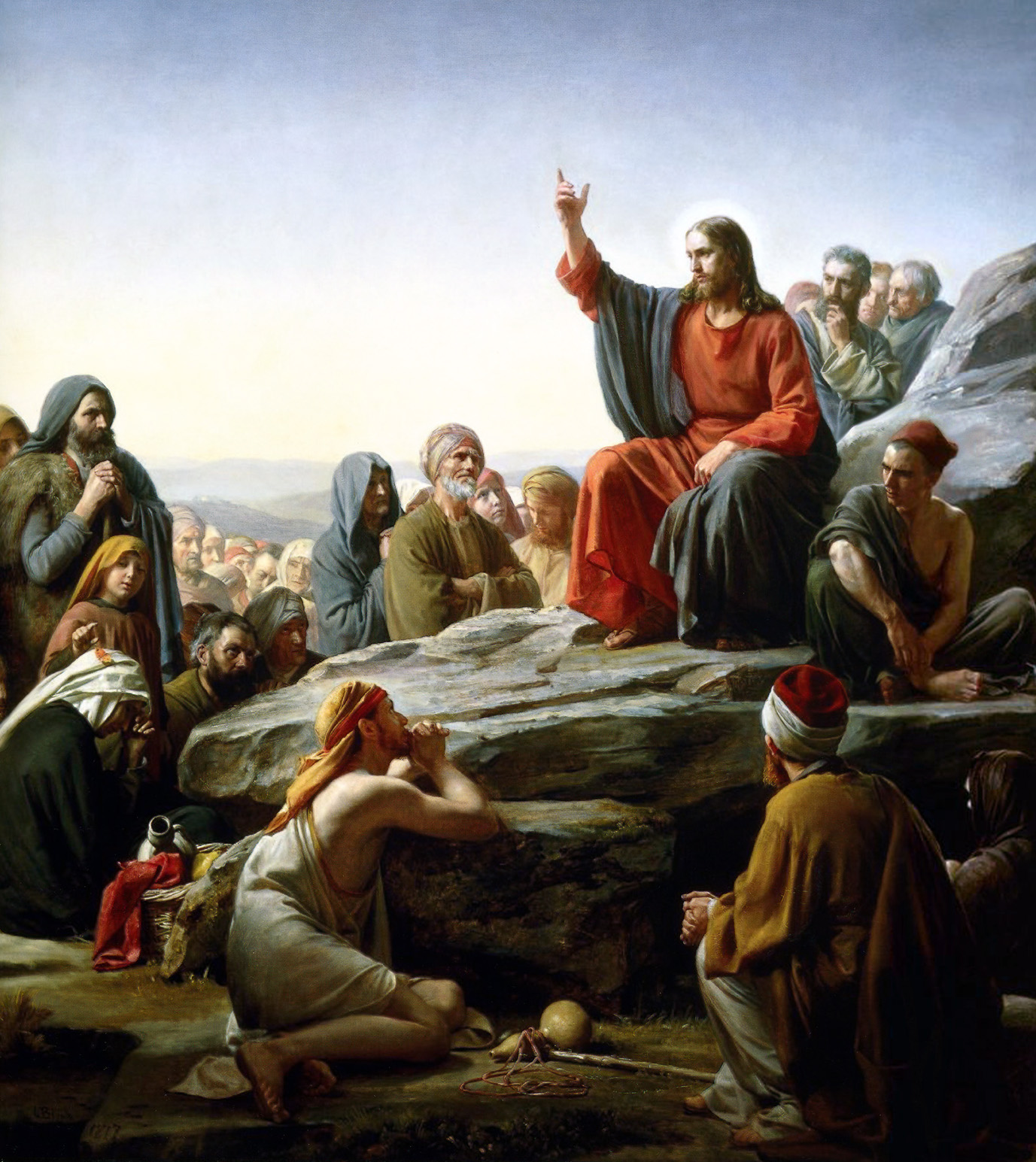
This chapter brings the Sermon on the Mount to its end. Jesus has laid out the life of the kingdom, and now He presses His hearers to decide what they will do with it. He speaks to a crowd that included disciples, the curious and those who would later turn away. Listen for the pairs that run through the closing sayings and ask which side of each pair the hearer stands on. Then notice how the crowd responds when He finishes, and what they say about the authority with which He taught.
Context
- Who
- Jewish hearers comparing this teacher to the scribes they knew
- What
- The close of the Sermon on the Mount: judging others, asking and receiving, the golden rule, the narrow gate, false prophets, false disciples, and the two builders.
- Where
- The mountainside in Galilee, where the crowds heard the whole sermon.
- When
- About AD 28, early in the ministry of Jesus in Galilee.
- Why
- To call hearers to act on His words, and to warn that a profession of faith without obedience will not stand in the judgment.
Historical context
Dogs and pigs in that world were not pets. Dogs ran in scavenging packs outside the towns, and pigs were unclean animals kept by Gentiles. Both were bywords for what was filthy and dangerous.
Show the rest of the historical context, 3 more paragraphs
The rule about doing to others what you want done to you had a well-known cousin. Rabbi Hillel, a generation earlier, had summed up the Law as not doing to your neighbour what you hate. Jesus turns it around into something active, which costs a great deal more.
The closing picture is a builder's warning, and Galilee makes it vivid. Many valleys there are wadis, dry, sandy channels that are pleasant flat building ground for eleven months and become torrents within minutes of a winter storm. Digging down to bedrock was slower, harder work, and it was the only thing that mattered when the water came.
Fruit inspection was ordinary sense in an agricultural village. Thornbushes and thistles grow in the same ground as vines and figs, and from a distance the tangle can look similar. You wait for the harvest.
Significance
The crowd's reaction is the historical detail that matters most: he taught as one having authority, and not as their scribes. A scribe argued by citing the chain of teachers behind him. This man cited no one.
Show the rest of the significance, 1 more paragraph
For Matthew's readers, the warning about those who prophesy and cast out demons in his name and are still unknown to him was pointed. Membership in the movement was not the test. Doing the Father's will was.
The heads below are this chapter's scenes. The numbered points under each are its verses.
Judge Not: the Beam in Your Own Eye
Matthew 7:1-2
"Do not judge" forbids the verdict on another's heart that only God can give, while the chapter requires discernment at verses 6 and 15. The words "with the measure you use, it will be measured to you" state a reciprocity. The measure applied to others becomes the measure God applies.
Matthew 7:1
“And therefore has the Lord said: "Judge not, that ye be not judged: for with what judgment ye shall judge, ye shall be judged." [Matthew 7:1-2] [The meaning is] not certainly that we should not find fault with sinners, nor that we should consent to those who act wickedly; but that we should not pronounce an unfair judgment on the dispensations of God, inasmuch as He has Himself made provision that all things shall turn out for good, in a way consistent with justice.”
Irenaeus · written before 202 · Against Heresies (Book IV, Chapter 30)patristic
1 more voice on this verseWhat preachers and commentators have said about this verse, in their own words.
Matthew 7:1
“There are those whose office it is to judge-magistrates and ministers. Christ, though he made not himself a Judge, yet came not to unmake them, for by him princes decree justice; but this is directed to private persons, to his disciples, who shall hereafter sit on thrones judging, but not now.”
Matthew Henry · Commentary on the Whole Bible (1707-1721)puritan
with the measure you use: Albert Barnes calls the saying a Jewish proverb that Christ took up, and he applies it to human judgment and to God's. Augustine denies that God would judge rashly, and says the haste with which a person punishes another becomes his own punishment. Matthew Henry cites Adonibezek in Judges 1.
Matthew 7:2
“With what measure ye mete, it shall be measured to you - Awful words! So we may, as it were, choose for ourselves, whether God shall be severe or merciful to us. God and man will favour the candid and benevolent: but they must expect judgment without mercy, who have showed no mercy.”
John Wesley · Explanatory Notes upon the New Testament (1755)evangelical
2 more voices on this verse
Matthew 7:2
“Besides, the Lord Himself demonstrates the manner in which He threatens such as judge: "For with what judgment ye judge, judgment shall be given on you." Thus He has not prohibited judging, but taught (how to do it).”
Tertullian · written before 220 · On Modestypatristic
Matthew 7:2
“The righteous God, in his judgments, often observes a rule of proportion, as in the case of Adonibezek, Judg. i. Thus will he be both justified and magnified in his judgments, and all flesh will be silenced before him.”
Matthew Henry · Commentary on the Whole Bible (1707-1721)puritan
Matthew 7:3-4
the speck in your brother’s eye: The speck and the beam set an absurd contrast that exposes the fault-finder straining at another's small failing while blind to his own gross one. The image likely drew on a proverb already current among the rabbis, and Jesus sharpens it into a rebuke of censorious disciples.
Matthew 7:3
“They were severe upon Christ's disciples for eating with unwashen hands, which was scarcely a mote, while they encouraged men in a contempt of their parents, which was a beam. Pride and uncharitableness are commonly beams in the eyes of those that pretend to be critical and nice in their censures of others.”
Matthew Henry · Commentary on the Whole Bible (1707-1721)puritan
1 more voice on this verse
Matthew 7:3
“And why beholdest thou the mote ... - A mote signifies any “light substance,” as dry chaff, or fine spires of grass or grain. It probably most usually signified the small “spiculae” or “beards” on a head of barley or wheat. It is thus placed in opposition to the word “beam.” Beam - The word used here signifies a large piece of squared timber. The one is an exceedingly small object, the other a large one.”
Augustine reads the beam as hatred, and he says a person must first put it away before he can correct the brother he loves. Adam Clarke draws the wider rule. Anyone walking the way of death is unfit to show others the way of life.
Matthew 7:4
“Or how wilt thou say to thy brother?....”
2 more voices on this verse
Matthew 7:4
“Or how wilt thou say - That man is utterly unfit to show the way of life to others who is himself walking in the way of death.”
Adam Clarke · Commentary on the Bible (1810-1826)evangelical
Matthew 7:4
“That is, with what face can you charge your brother with sin, when yourself are living in the same or a yet greater sin?”
Pseudo-Chrysostom · written before 500 · Catena Aurea by Aquinaspatristic
First take the beam out: "You hypocrite" is the word used through chapter 6 of those who perform for an audience, applied to another performance, correcting others while excusing oneself. The order is self-examination first, "First take the beam out of your own eye," before a person is fit to help with another's smaller failing.
Matthew 7:5
“Thou hypocrite, first cast out the beam out of thine own eye,.... Very rightly does our Lord call such a man an hypocrite, who is very free in remarking and reproving other men's sins, and covering his own; and indeed, one end of his critical observations, rigid censures, and rash judgments is, that he might be thought to be holier than he is. Christ very manifestly points at the Scribes and Pharisees, who were men of such a complexion; and whom he often, without any breach of charity, calls hypocrites.”
1 more voice on this verse
Matthew 7:5
“He only is fit to be a reprover of others who jealously and severely judges himself. Such persons will not only be slow to undertake the office of censor on their neighbors, but, when constrained in faithfulness to deal with them, will make it evident that they do it with reluctance and not satisfaction, with moderation and not exaggeration, with love and not harshness.”
Jamieson, Fausset & Brown · Commentary Critical and Explanatory on the Whole Bible (1871)reformed
throw your pearls before swine: The phrase "what is holy" and the pearls name something sacred. Dogs and swine, unclean, picture those who cannot value it and turn to "trample them" and "tear you to pieces." The verse balances what precedes: judging harshly is forbidden, and so is offering sacred things without discernment.
Matthew 7:6
“Give not that which is holy - Το αγιον, the holy or sacred thing; i.e. any thing, especially, of the sacrificial kind, which had been consecrated to God. The members of this sentence should be transposed thus: - Give not that which is holy unto the dogs, Lest they turn again and rend you: Neither cast ye your pearls before swine, Lest they trample them under their feet The propriety of this transposition is self-evident. There are many such transpositions as these, both in sacred and profane writers.”
Adam Clarke · Commentary on the Bible (1810-1826)evangelical
3 more voices on this verse
Matthew 7:6
“Give not - to dogs - lest turning they rend you: Cast not - to swine - lest they trample them under foot. Yet even then, when the beam is cast out of thine own eye, Give not - That is, talk not of the deep things of God to those whom you know to be wallowing in sin. neither declare the great things God hath done for your soul to the profane, furious, persecuting wretches.”
John Wesley · Explanatory Notes upon the New Testament (1755)evangelical
Matthew 7:6
“Give not that which is holy unto the dogs--savage or snarling haters of truth and righteousness. neither cast ye your pearls before swine--the impure or coarse, who are incapable of appreciating the priceless jewels of Christianity. In the East, dogs are wilder and more gregarious, and, feeding on carrion and garbage, are coarser and fiercer than the same animals in the West.”
Jamieson, Fausset & Brown · Commentary Critical and Explanatory on the Whole Bible (1871)reformed
Matthew 7:6
“Give not that which is holy to the dogs,.... Dogs were unclean creatures by the law; the price of one might not be brought into the house of the Lord, for a vow, Deu 23:18 yea, these creatures were not admitted into several temples of the Heathens (h). Things profane and unclean, as flesh torn by beasts, were ordered to be given to them, Exo 22:31 but nothing that was holy was to be given them, as holy flesh, or the holy oblations, or anything that was consecrated to holy uses; to which is the allusion here.”
Ask, Seek, Knock; Good Gifts From a Father
Matthew 7:7-8
Ask, and it will be given: Ask, seek and knock rise in intensity, from a request to a search to knocking, and each is answered in kind. The Greek present tense carries a continuing sense, so prayer is sustained. The promise stands in the same Sermon as the Lord's Prayer of chapter 6.
Matthew 7:7
“Ask, and it shall be given you ... - There are here three different forms presented of seeking the things which we need from God - asking, ‘seeking, and knocking. The latter is taken from the act of knocking at a door for admittance. See Luk 13:25; Rev 3:20. The phrases signify to seek with earnestness, diligence, and perseverance. The promise is, that what we seek shall be given us. It is of course implied that we seek with a proper spirit, with humility, sincerity, and perseverance.”
1 more voice on this verse
Matthew 7:7
“Answering to this threefold representation is the triple assurance of success to our believing efforts. "But ah!" might some humble disciple say, "I cannot persuade myself that I have any interest with God." To meet this, our Lord repeats the triple assurance He had just given, but in such a form as to silence every such complaint.”
Jamieson, Fausset & Brown · Commentary Critical and Explanatory on the Whole Bible (1871)reformed
everyone who asks receives: Matthew Henry notes the present tense of receives, which he reads as faith taking hold of the promise now. John Gill extends the promise to every kind of person, Jew or Gentile, rich or poor, provided he asks rightly. Augustine adds that the promise calls for perseverance.
Matthew 7:8
“For everyone that asketh receiveth,.... For God is no respecter of persons; whoever makes application, be he a Jew, or a Gentile, rich or poor, bond or free, a man of great gifts, or mean parts, provided he asks aright, from right principles, and with right views, shall not lose his labour; but shall receive all such good things at the hand of God, as are suitable and convenient for him.”
2 more voices on this verse
Matthew 7:8
“For every one that asketh receiveth - Prayer is always heard after one manner or other. No soul can pray in vain that prays as directed above. The truth and faithfulness of the Lord Jesus are pledged for its success. - Ye Shall receive - ye Shall find - it Shall be opened. These words are as strongly binding on the side of God, as thou shalt do no murder is on the side of man. Bring Christ’s word, and Christ’s sacrifice with thee, and not one of Heaven’s blessings can be denied thee. See on Luk 11:9 (note).”
Adam Clarke · Commentary on the Bible (1810-1826)evangelical
Matthew 7:8
“Every one that asketh, not only shall receive, but receiveth; by faith, applying and appropriating the promise, we are actually interested and invested in the good promised: so sure and inviolable are the promises of God, that they do, in effect, give present possession: an active believer enters immediately, and makes the blessings promised his own.”
Matthew Henry · Commentary on the Whole Bible (1707-1721)puritan
Matthew 7:9-10
will give him a stone?: A stone resembles the round loaves of the day closely enough to make the cruel substitution vivid, and "a snake" could resemble a fish. Both pictures name an evil no ordinary father would do to his child, setting up the argument from lesser to greater that verse 11 completes.
Matthew 7:9
“Or what man is there of you,.... "That is a father", as in Luk 11:11 that is, is in the relation, and has the affections of a father; and indeed is a man, and has the nature and passions of a man; unless he is become a mere brute, and devoid of all humanity, whom if his son ask bread, will he give him a stone?”
2 more voices on this verse
Matthew 7:9
“Or what man is there of you, whom if his son ask bread--a loaf. will he give him a stone?--round and smooth like such a loaf or cake as was much in use, but only to mock him.”
Jamieson, Fausset & Brown · Commentary Critical and Explanatory on the Whole Bible (1871)reformed
Matthew 7:9
“Or what man is there - whom if his son - Men are exhorted to come unto God, with the persuasion that he is a most gracious and compassionate Parent, who possesses all heavenly and earthly good, knows what is necessary for each of his creatures, and is infinitely ready to communicate that which they need most. Will he give him a stone? - Will he not readily give him bread if he have it? This was a proverb in other countries; a benefit grudgingly given by an avaricious man is called by Seneca, panem lapidosum, stony bread.”
Adam Clarke · Commentary on the Bible (1810-1826)evangelical
if he asks for a fish: John Gill cites Mark 6:41 and John 21:13 to show that bread and fish were the common food of the region. Galilee was fishing country. Several of the disciples had been fishermen, as Gill notes, so the picture came from their own trade.
Matthew 7:10
“Or if he ask a fish, will he give him a serpent? Which is somewhat like a fish, especially an eel. Fish and bread are mentioned, because these were common food; see Mar 6:41 Joh 21:13 and particularly in Galilee, a fish country, where Christ now was, and from whence he had called his disciples, who were fishermen.”
know how to give good gifts: The words "you who are evil" concede that sinful parents still "know how to give good gifts to your children," and argue to the greater. The verse assumes human sinfulness as too plain to need proof. Luke 11:13 names the Holy Spirit as the gift.
Matthew 7:11
“If ye, then, being evil - Πονηροι οντες, who are radically and diabolically depraved, yet feel yourselves led, by natural affection, to give those things to your children which are necessary to support their lives, how much more will your Father who is in heaven, whose nature is infinite goodness, mercy, and grace, give good things - his grace and Spirit (πνευμα αγιον, the Holy Ghost, Luk 11:13), to them who ask him? What a picture is here given of the goodness of God!”
Adam Clarke · Commentary on the Bible (1810-1826)evangelical
1 more voice on this verse
Matthew 7:11
“To them that ask him - But on this condition, that ye follow the example of his goodness, by doing to all as ye would they should do to you. For this is the law and the prophets - This is the sum of all, exactly answering Chap. v, 17. The whole is comprised in one word, Imitate the God of love.”
John Wesley · Explanatory Notes upon the New Testament (1755)evangelical
the Law and the Prophets: The golden rule states positively what earlier teachers stated negatively, and the positive form asks more, active kindness beyond restraint from harm. "For this is the essence of the Law and the Prophets" closes the Sermon with the summary Jesus gives the two great commandments at 22:40.
Matthew 7:12
“In this part of the Sermon on the Mount our Lord begins to draw his discourse to a conclusion. The lessons he here forces on our notice are broad, general and full of the deepest wisdom. Let us mark them in succession. He lays down a general principle for our guidance in all doubtful questions between man and man. “We are to do to others as we would have others do to us.”We are not to deal with others as others deal with us: this is mere selfishness and heathenism.”
J.C. Ryle · Expository Thoughts on the Gospels: Matthew (1856)Reformed Evangelical
2 more voices on this verse
Matthew 7:12
“Christ has here adopted it into this law; so that both the Old Testament and the New agree in prescribing this to us, to do as we would be done by. By this rule the law of Christ is commended, but the lives of Christians are condemned by comparing them with it. Aut hoc non evangelium, authi non evangelici.--Either this is not the gospel, or these are not Christians.”
Matthew Henry · Commentary on the Whole Bible (1707-1721)puritan
Matthew 7:12
“Therefore all things whatsoever,.... These words are the epilogue, or conclusion of our Lord's discourse; the sum of what he had delivered in the two preceding chapters, and in this hitherto, is contained in these words; for they not only respect the exhortation about judging and reproving; but every duty respecting our neighbour; it is a summary of the whole. It is a golden rule, here delivered, and ought to be observed by all mankind, Jews and Gentiles.”
ConnectionsMatthew 5:17
Two Gates, Two Trees, and False Prophets
Matthew 7:13-14
Enter through the narrow gate: The King James word strait, an old spelling meaning narrow, names the gate. The narrow gate and broad way picture two whole ways of living, since the way is walked over a lifetime. The whole Sermon describes the narrow way, commended over the one "that leads to destruction."
Matthew 7:13
Hence the still stronger expression in Luke (Lu 13:24), "Strive to enter in at the strait gate." for wide is the gate--easily entered. and broad is the way--easily trodden. that leadeth to destruction, and--thus lured "many there be which go in thereat."
Jamieson, Fausset & Brown · Commentary Critical and Explanatory on the Whole Bible (1871)reformed
4 more voices on this verse
Matthew 7:13
“The strait gate - The holiness described in the foregoing chapters. And this is the narrow way. Wide is the gate, and many there are that go in through it - They need not seek for this; they come to it of course.”
John Wesley · Explanatory Notes upon the New Testament (1755)evangelical
Matthew 7:13
“Attend to the words, for they have an especial force, many walk in the broad way—few find the narrow way. For the broad way needs no search, and is not found, but presents itself readily; it is the way of all who go astray. Whereas the narrow way neither do all find, nor when they have found, do they straightway walk therein. Many, after they have found the way of truth, caught by the pleasures of the world, desert midway.”
Jerome · written before 420 · Catena Aurea by Aquinaspatristic
Matthew 7:13
“Enter ye in at the strait gate - Christ here compares the way to life to an entrance through a gate. The words “straight” and “strait” have very different meanings. The former means “not crooked;” the latter, “pent up, narrow, difficult to be entered.” This is the word used here, and it means that the way to heaven is “pent up, narrow, close,” and not obviously entered. The way to death is open, broad, and thronged. The Saviour here referred probably to ancient cities. They were surrounded with walls and entered through gates.”
Matthew 7:13
“Christ deals faithfully with us, and tells us, First, That the gate is strait. Conversion and regeneration are the gate, by which we enter into this way, in which we begin a life of faith and serious godliness; out of a state of sin into a state of grace we must pass, by the new birth, John iii.”
Matthew Henry · Commentary on the Whole Bible (1707-1721)puritan
narrow the way that leads to life: Adam Clarke prefers a reading that exclaims at the narrow gate. John Gill hears an echo of the narrow place in Numbers 22:26, where the angel met Balaam and there was no turning. Jamieson, Fausset and Brown call the first step a full surrender, and every later step repeats it.
Matthew 7:14
“As to the other way, the disadvantage of it lies in its narrowness and solicitude. Its very first step involves a revolution in all our purposes and plans for life, and a surrender of all that is dear to natural inclination, while all that follows is but a repetition of the first great act of self-sacrifice. No wonder, then, that few find and few are found in it.”
Jamieson, Fausset & Brown · Commentary Critical and Explanatory on the Whole Bible (1871)reformed
2 more voices on this verse
Matthew 7:14
“Because strait is the gate, and narrow is the way,.... And so, difficult to enter in at; and when entered, the way is unpleasant to the flesh to walk in, being hedged up on each side with afflictions and tribulations; and moreover, is like the "narrow place", or στενος τοπος, "the strait place", as the Septuagint in Num 22:26 render it; in which the angel that met Balaam stood; and in which there was no turning to the right hand or the left; and such is the way to eternal happiness.”
Matthew 7:14
“Because strait is the gate - Instead of οτι because, I should prefer τι how, which reading is supported by a great majority of the best MSS., versions, and fathers. How strait is that gate! This mode of expression more forcibly points out the difficulty of the way to the kingdom. How strange is it that men should be unwilling to give up their worldly interests to secure their everlasting salvation! And yet no interest need be abandoned, but that which is produced by injustice and unkindness.”
Adam Clarke · Commentary on the Bible (1810-1826)evangelical
sheep’s clothing: The sheep thread that runs to the struck shepherd of 26:31 sounds here as a warning: wolves come "in sheep’s clothing," disguised as sheep. False prophets are known by their fruit, the test verse 16 states. Disciples must discern even while forbidden the censorious judgment of verse 1.
Matthew 7:15
“False prophets - The word prophet originally means one who foretells future events. As prophets, however, were commonly regarded as public instructors on the subject of religion, the word came to denote all who were religious teachers. See the notes at Rom 12:6. In this sense it is probably used here. A false prophet is a teacher of incorrect doctrine, or one falsely and unjustly laying claims to divine inspiration. It probably had reference to the false teachers then among the Jews. Who come in sheep’s clothing - The sheep is an emblem of innocence, sincerity, and harmlessness.”
3 more voices on this verse
Matthew 7:15
“We have need to be very cautious, because their pretences are very fair and plausible, and such as will deceive us, if we be not upon our guard. They come in sheep's clothing, in the habit of prophets, which was plain and coarse, and unwrought; they wear a rough garment to deceive, Zech. xiii. Elijah's mantle the Septuagint calls he melote -- a sheep-skin mantle.”
Matthew Henry · Commentary on the Whole Bible (1707-1721)puritan
Matthew 7:15
“What is here spoken of false prophets we may apply to all whose dress and speech promise one thing, and their actions exhibit another. But it is specially to be understood of heretics, who by observing temperance, chastity, and fasting, surround themselves as it were with a garment of sanctity, but inasmuch as their hearts within them are poisoned, they deceive the souls of the more simple brethren.”
Jerome · written before 420 · Catena Aurea by Aquinaspatristic
Matthew 7:15
“Beware of false prophets - Who in their preaching describe a broad way to heaven: it is their prophesying, their teaching the broad way, rather than their walking in it themselves, that is here chiefly spoken of. All those are false prophets, who teach any other way than that our Lord hath here marked out.”
John Wesley · Explanatory Notes upon the New Testament (1755)evangelical
Matthew 7:16-18
By their fruit: Fruit names a life's actual produce, character and conduct over time. The test is reliable, since grapes from thornbushes and figs from thistles are impossible in nature. The teaching is addressed to judging others' claims to authority, false prophets in particular, more than to assurance of one's own standing.
Matthew 7:16
“Ye shall know them by their fruits,.... By "fruits" are meant, not so much their external works in life and conversation; for a false prophet may so behave, as not to be discovered thereby. So the Pharisees were outwardly righteous before men; and false teachers among Christians may have the form of godliness, and keep it up, though they are strangers to, and even deny the power of it: but their doctrines are here meant, and the effects of them.”
3 more voices on this verse
Matthew 7:16
“Ye shall know them by their fruits--not their doctrines--as many of the elder interpreters and some later ones explain it--for that corresponds to the tree itself; but the practical effect of their teaching, which is the proper fruit of the tree.”
Jamieson, Fausset & Brown · Commentary Critical and Explanatory on the Whole Bible (1871)reformed
Matthew 7:16
“Persons are still living who remember them,-their own actual disciples and successors,-who cannot therefore deny the lateness of their date. But, in fact, by their own works they are convicted, even as the Lord said. For since Marcion separated the New Testament from the Old, he is (necessarily) subsequent to that which he separated, inasmuch as it was only in his power to separate what was (previously) united.”
Tertullian · written before 220 · The Prescription Against Hereticspatristic
Matthew 7:16
“For a bad man preaching the good doctrine here delivered, is sometimes an instrument of converting sinners to God. Yet I do not aver, that all are true prophets who speak the truth, and thereby convert sinners. I only affirm, that none are such who do not.”
John Wesley · Explanatory Notes upon the New Testament (1755)evangelical
every good tree bears good fruit: John Gill stresses the order: the tree is good first, and its fruit shows that goodness without creating it. Augustine warns against the Manichean reading, which took the two trees as two natures, one from God and one not. He answers that the context shows Jesus speaking of men.
Matthew 7:17
“As is the tree, so is its fruit; if the tree is good, it will bring forth good fruit. The tree that brings forth good fruit, is good antecedent to the fruit it produces; it is first good, and then puts forth good fruit: it is not the fruit that makes the tree good, but makes it appear to be so; but it is the goodness of the tree that makes the fruit good.”
1 more voice on this verse
Matthew 7:17
“A corrupt tree - The word “corrupt” here does not signify, as our translation would seem to indicate, that the tree “had been” good, but had become “vitiated;” but that it was a tree of a useless character, of a nature that produced nothing beneficial.”
ConnectionsGalatians 5:22
A good tree cannot bear bad fruit: Chrysostom reads the verse as closing off the plea that a bad tree yields a mixed crop. Jerome presses the verse against those who taught two opposed natures, asking how Moses, David and Peter could then have sinned. Adam Clarke names love to God and man as the root.
Matthew 7:18
“A good tree cannot bring forth evil fruit - Love to God and man is the root of the good tree; and from this principle all its fruit is found. To teach, as some have done, that a state of salvation may be consistent with the greatest crimes, (such as murder and adultery in David), or that the righteous necessarily sin in all their best works, is really to make the good tree bring forth bad fruit, and to give the lie to the Author of eternal truth.”
Adam Clarke · Commentary on the Bible (1810-1826)evangelical
2 more voices on this verse
Matthew 7:18
“We would ask those heretics who affirm that there are two natures directly opposed to each other, if they admit that a good tree cannot bring forth evil fruit, how it was possible for Moses, a good tree, to sin as he did at the water of contradiction? Or for Peter to deny his Lord in the Passion, saying, I know not the man? Or how, on the other hand, could Moses' father-in-law, an evil tree, inasmuch as he believed not in the God of Israel, give good counsel?”
Jerome · written before 420 · Catena Aurea by Aquinaspatristic
Matthew 7:18
“A good tree cannot bring forth evil fruit,.... A man that is unprincipled with the grace of God, has an experimental acquaintance with the Gospel of Christ, and is guided by the Spirit of God into all truth, as it is in Jesus, cannot knowingly deliver, maintain, and abide by any doctrine that is contrary to the glory of God's grace, and the person of Christ, the work of the Spirit, the fundamental doctrines of the Bible; or what is repugnant to the experiences of God's people, and prejudicial to their souls.”
Matthew 7:19-20
thrown into the fire: "Every tree that does not bear good fruit is cut down and thrown into the fire" repeats John the Baptist's words in 3:10. "So then, by their fruit you will recognize them" closes the paragraph as verse 16 opened it. The fire pictures a real and final judgment.
Matthew 7:19
“Every tree that bringeth not forth good fruit - What a terrible sentence is this against Christless pastors, and Christless hearers! Every tree that produceth not good fruit, εκκοπτεται, is to be now cut down; the act of excision is now taking place: the curse of the Lord is even now on the head and the heart of every false teacher, and impenitent hearer.”
Adam Clarke · Commentary on the Bible (1810-1826)evangelical
1 more voice on this verse
Matthew 7:19
“Faith and a good conscience are held together, 1 Tim. i. Note, Doctrines of doubtful disputation must be tried by graces and duties of confessed certainty: those opinions come not from God that lead to sin: but if we cannot know them by their fruits, we must have recourse to the great touchstone, to the law, and to the testimony; do they speak according to that rule?”
Matthew Henry · Commentary on the Whole Bible (1707-1721)puritan
by their fruit you will recognize them: John Gill applies the rule to doctrine, testing teachers by what they teach and their teaching by Scripture. Adam Clarke allows no harmless barrenness in the heart. A tree without good fruit already bears bad fruit, in his reading, and both are fit only for the fire.
Matthew 7:20
“Wherefore by their fruits ye shall know them. This is the conclusion of the whole, and a repetition of what is before said, the more to fix the rule of judgment upon their minds, and engage them to try men by their doctrines, and their doctrines by the standard of the Scriptures, and not believe every spirit; for with some care and diligence such persons may be detected, and the malignant influence of their ministry be prevented.”
1 more voice on this verse
Matthew 7:20
“Wherefore by their fruits, etc. - This truth is often repeated, because our eternal interests depend so much upon it. Not to have good fruit is to have evil: there can be no innocent sterility in the invisible tree of the heart. He that brings forth no fruit, and he that brings forth bad fruit, are both only fit for the fire.”
Adam Clarke · Commentary on the Bible (1810-1826)evangelical
Two Builders and the Foundations They Chose
Not everyone who says to Me: Saying "Lord, Lord" confesses Jesus' authority. The verse shows it insufficient without doing "the will of My Father in heaven," the standard that closes the Sermon in the parable. Verses 22 and 23 bring the harder case, where the claim includes visible spiritual works and still falls short.
Matthew 7:21
“Yet our Lord claims and expects this of all His disciples, as when He washed their feet: "Ye call me Master and Lord: and ye say well; for so I am" (Joh 13:13). shall enter into the kingdom of heaven; but he that doeth the will of my Father which is in heaven--that will which it had been the great object of this discourse to set forth.”
Jamieson, Fausset & Brown · Commentary Critical and Explanatory on the Whole Bible (1871)reformed
3 more voices on this verse
Matthew 7:21
“The Lord Jesus winds up the Sermon on the Mount by a passage of heart-piercing application. He turns from false prophets to false professors, from unsound teachers to unsound hearers. Here is a word for all. May we have grace to apply it to our own hearts! The first lesson here is the uselessness of a mere outward profession of Christianity. Not everyone that saith “Lord, Lord,” shall enter the kingdom of heaven. Not all that profess and call themselves Christians shall be saved. Let us take notice of this.”
J.C. Ryle · Expository Thoughts on the Gospels: Matthew (1856)Reformed Evangelical
Matthew 7:21
“Not every one that saith ... - The Saviour goes on to say that many, on the ground of a mere profession such as he had just referred to, would claim admittance into his kingdom. Many would plead that they had done miracles, and preached or prophesied much, and on the ground of that would demand an entrance into heaven. The power of working miracles had no necessary connection with piety. God may as well, if he chooses, give the power of raising the dead to a wicked man, as the skill of healing to a wicked physician.”
Matthew 7:21
“IN reading this chapter one is led to feel that it is not, after all, an easy thing to be a sincere Christian. The way is hard, the road is narrow. Who will, may represent the way to Heaven as being easy, but our Savior does not speak so of it. "Strait is the gate and narrow is the way, and few there are that find it." "Many are called and few chosen." The difficulty of being right is increased by the fact that there are men in the world whose trade it is to make counterfeits.”
Matthew 7:22-23
Many will say to Me on that day: The phrase "on that day" names the day of judgment. The claims are impressive, to prophesy, "drive out demons and perform many miracles," all "in Your name." The verdict "I never knew you" gives the chapter's sharpest warning, that gifts and real supernatural works can occur without a personal relationship.
Matthew 7:22
“We have prophesied - We have declared the mysteries of thy kingdom, wrote books; preached excellent sermons: In thy name done many wonderful works - So that even the working of miracles is no proof that a man has saving faith.”
John Wesley · Explanatory Notes upon the New Testament (1755)evangelical
John Gill notes that Christ knew these people and all their deeds, so the words cannot deny his knowledge. Adam Clarke and Albert Barnes read know as approve, a sense the word carries in many places of Scripture. For Jamieson, Fausset and Brown, no acquaintance ever existed.
Matthew 7:23
“Then will I profess unto them,.... Publicly before men and angels, at the day of judgment, I never knew you; which must be understood consistent with the omniscience of Christ; for as the omniscient God he knew their persons and their works, and that they were workers of iniquity; he knew what they had been doing all their days under the guise of religion; he knew the principles of all their actions, and the views they had in all they did; nothing is hid from him.”
3 more voices on this verse
Matthew 7:23
“Profess unto them - Say unto them; plainly declare. I never knew you - That is, I never approved of your conduct; never loved you; never regarded you as my friends. See Psa 1:6; 2Ti 2:19; 1Co 8:3. This proves that, with all their pretensions, they had never been true followers of Christ.”
Matthew 7:23
“And then will I profess unto them--or, openly proclaim--tearing off the mask. I never knew you--What they claimed--intimacy with Christ--is just what He repudiates, and with a certain scornful dignity. "Our acquaintance was not broken off--there never was any." depart from me--(Compare Mt 25:41).”
Jamieson, Fausset & Brown · Commentary Critical and Explanatory on the Whole Bible (1871)reformed
Matthew 7:23
“I never knew you - There never was a time that I approved of you: so that as many souls as they had saved, they were themselves never saved from their sins.”
John Wesley · Explanatory Notes upon the New Testament (1755)evangelical
Matthew 7:24-25
built his house on the rock: The wise man is marked by two acts together: he "hears these words of Mine and acts on them," and hearing alone builds nothing. A rock foundation meant digging to bedrock before building. Rain, torrents and wind come to both houses alike, and the difference lies in what was beneath.
Matthew 7:24
“Therefore--to bring this discourse to a close. whosoever heareth these sayings of mine, and doeth them--see Jas 1:22, which seems a plain allusion to these words; also Lu 11:28; I will liken him unto a wise man--a shrewd, prudent, provident man. which built his house upon a rock--the rock of true discipleship, or genuine subjection to Christ.”
Jamieson, Fausset & Brown · Commentary Critical and Explanatory on the Whole Bible (1871)reformed
2 more voices on this verse
Matthew 7:24
“The difference between sand and rock is far more subtle than you may think—one is simply small particles of the other, conforming to whatever presses against it.”
John Bevere · Which Builder Are You? (blog article) (2021)Charismatic
Matthew 7:24
“Therefore whosoever heareth these sayings of mine - That is, the excellent doctrines laid down before in this and the two preceding chapters. There are several parables or similitudes like to this in the rabbins. I shall quote but the two following: - Rabbi Eleasar said, “The man whose knowledge exceeds his works, to whom is he like? He is like a tree which had many branches, and only a few roots; and, when the stormy winds came, it was plucked up and eradicated. But he whose good works are greater than his knowledge, to what is he like?”
Adam Clarke · Commentary on the Bible (1810-1826)evangelical
its foundation was on the rock: Jamieson, Fausset and Brown trace the storm from every side, with rain from above, floods from below and wind across. Chrysostom reads the storm as the troubles of life, such as false accusation, plots, bereavement and death. None of them brings down the house on the rock.
Matthew 7:25
“And the rain descended--from above. and the floods came--from below. and the winds blew--sweeping across. and beat upon that house--thus from every direction. and it fell not; for it was founded upon a rock--See 1Jo 2:17.”
Jamieson, Fausset & Brown · Commentary Critical and Explanatory on the Whole Bible (1871)reformed
1 more voice on this verse
Matthew 7:25
“And the rain descended - floods came - winds blew - In Judea, and in all countries in the neighborhood of the tropics, the rain sometimes falls in great torrents, producing rivers, which sweep away the soil from the rocky hills; and the houses, which are built of brick only dried in the sun, of which there are whole villages in the east, literally melt away before those rains, and the land-floods occasioned by them.”
Adam Clarke · Commentary on the Bible (1810-1826)evangelical
Matthew 7:26-27
built his house on sand: The foolish man hears the same words and builds a house that may look the same, the difference hidden until the same storm tries both. Sand describes the dry Judean wadi beds, level ground to build on in fair weather and deadly when the seasonal floods return.
Matthew 7:26
“And every one that heareth - and doeth them not - Was there ever a stricter system of morality delivered by God to man, than in this sermon? He who reads or hears it, and does not look to God to conform his soul and life to it, and notwithstanding is hoping to enter into the kingdom of heaven, is like the fool who built his house on the sand. When the rain, the rivers, and the winds come, his building must fall, and his soul be crushed into the nethermost pit by its ruins.”
Adam Clarke · Commentary on the Bible (1810-1826)evangelical
1 more voice on this verse
Matthew 7:26
“Or otherwise; On sand which is loose and cannot be bound into one mass, all the doctrine of heretics is built so as to fall.”
Jerome · written before 420 · Catena Aurea by Aquinaspatristic
Adam Clarke illustrates the verse from Bengal, where fishermen built huts on river sand and lost great numbers of them in one night of rain. Chrysostom says the loss is the soul and heaven itself. He adds that such a builder lives in fear and anxiety even before the fall.
Matthew 7:27
“And the rain descended, and the floods came,.... Such builders, and such a building, cannot stand against the violent rain of Satan's temptations, the floods of the world's persecutions, the stream and rapid torrent of their own heart's lusts, nor the blowing winds of heresy and false doctrine, and much less the storms of divine wrath and vengeance. They are in a most dangerous condition; they cannot support themselves; they must fall, and great will be their fall; their destruction is inevitable, their ruin is irrecoverable.”
1 more voice on this verse
Matthew 7:27
“And the rain descended, and the floods came, etc. - A fine illustration of this may be seen in the case of the fishermen in Bengal, who, in the dry season, build their huts on the beds of sand from which the rivers had retired: but when the rain sets in suddenly; as it often does, accompanied with violent northwest winds, and the waters pour down in torrents from the mountains; in one night, multitudes of these buildings are swept away, and the place where they stood is on the next morning indiscoverable.”
Adam Clarke · Commentary on the Bible (1810-1826)evangelical
Matthew 7:28-29
Jesus had finished saying these things: The formula "When Jesus had finished saying these things" closes the first of the book's five discourses and recurs at 11:1, 13:53, 19:1 and 26:1. The crowds were astonished "because He taught as one who had authority, and not as their scribes," who leaned on citing earlier rabbis.
Matthew 7:28
“The people were astonished - Οι οχλοι, the multitudes; for vast crowds attended the ministry of this most popular and faithful of all preachers. They were astonished at his doctrine. They heard the law defined in such a manner as they had never thought of before; and this sacred system of morality urged home on their consciences with such clearness and authority as they had never felt under the teaching of their scribes and Pharisees. Here is the grand difference between the teaching of scribes and Pharisees, the self-created or men-made ministers, and those whom God sends.”
Adam Clarke · Commentary on the Bible (1810-1826)evangelical
2 more voices on this verse
Matthew 7:28
“For as the God and Lord of Moses himself, He of His own free will either added such things as seemed omitted in the Law, or even changed some; as above we read, It was said by them of old... But I say unto you. But the Scribes only taught the people what was written in Moses and the Prophets.”
Jerome · written before 420 · Catena Aurea by Aquinaspatristic
Matthew 7:28
“And it came to pass, when Jesus had ended these sayings, the people were astonished at his doctrine--rather, "His teaching," for the reference is to the manner of it quite as much as the matter, or rather more so.”
Jamieson, Fausset & Brown · Commentary Critical and Explanatory on the Whole Bible (1871)reformed
not as their scribes: Jerome says the scribes taught what Moses and the Prophets wrote. Jesus spoke as the Lord of Moses himself, adding to the law or changing it, as the pattern of chapter 5 shows. Adam Clarke contrasts the trifling cases of conscience with teaching that was clear, persuasive and sound.
Matthew 7:29
“Having authority - They felt a commanding power and authority in his word, i.e. his doctrine. His statements were perspicuous; his exhortations persuasive; his doctrine sound and rational; and his arguments irresistible. These they never felt in the trifling teachings of their most celebrated doctors, who consumed their own time, and that of their disciples and hearers, with frivolous cases of conscience, ridiculous distinctions, and puerile splittings of controversial hairs - questions not calculated to minister grace to the hearers. Several excellent MSS. and almost all the ancient versions read, και οι Φαρισαιοι, and the Pharisees.”
Adam Clarke · Commentary on the Bible (1810-1826)evangelical
Keep studying
Studies20
Words12
Sources for this chapter
The summary
Jamieson, Fausset & Brown, Commentary Critical and Explanatory; John Calvin, Commentaries; John Wesley, Explanatory Notes Upon the New Testament and Matthew Henry, Complete Commentary.
The exposition
Adam Clarke, Commentary on the Bible; Albert Barnes; Augustine of Hippo; Jamieson, Fausset & Brown, Commentary Critical and Explanatory on the Whole Bible; Jerome, Commentary on Matthew; John Calvin, Commentary on a Harmony of the Evangelists; John Chrysostom; John Gill, Exposition of the New Testament; John Lightfoot, Horae Hebraicae et Talmudicae on Matthew; John Wesley, Explanatory Notes upon the New Testament and Matthew Henry, Commentary on the Whole Bible.