
Matthew 7:19
in Matthew 7Every tree that does not bear good fruit is cut down and thrown into the fire.
BSB
The same verse in ASV and KJV ▾
ASV
Every tree that bringeth not forth good fruit is hewn down, and cast into the fire.
KJV
Every tree that bringeth not forth good fruit is hewn down, and cast into the fire.
⋯
This verse in Matthew 7
Commentary
16 notes on this verseEvery tree that bringeth not forth good fruit - What a terrible sentence is this against Christless pastors, and Christless hearers! Every tree that produceth not good fruit, εκκοπτεται, is to be now cut down; the act of excision is now taking place: the curse of the Lord is even now on the head and the heart of every false teacher, and impenitent hearer.
This site's exposition
hewn down, and cast into the fire
on Matthew 7:19-20
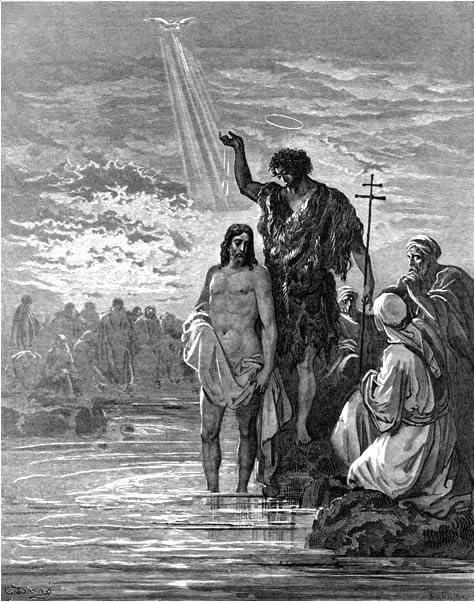
Every tree that bringeth not forth good fruit is hewn down, and cast into the fire repeats language John the Baptist had already used of the axe laid to the root at 3:10, tying this warning back to his own preaching at the Gospel's opening. Wherefore by their fruits ye shall know them closes the paragraph exactly as verse 16 opened it, an inclusio marking fruit-testing as the whole unit's single point. The fire pictures a real and final judgment on false teaching left unrepented, not merely a loss of usefulness in this life.
The record, by era
The Church Fathers4 voices
On this point, one must carefully avoid the error of those who think that they find in these two trees a reason for believing that there are two natures and that one of them belongs to the nature of God but that the other neither belongs to God nor depends on him. This error has been rather fully discussed in other books, and if that is not sufficient it will receive still further treatment later. But we must now show that these two trees furnish no argument in support of it. First of all, in this similitude the Lord is speaking about two kinds of persons. This is so obvious that if anyone will but read the passages in the context of those that precede and follow it, he will be amazed at the blindness of those who would misinterpret it impersonally. Again, they fix their attention on the saying, "A good tree cannot bear bad fruit, nor can a bad tree bear good fruit," and then they think that an evil soul cannot be changed into a better or a good soul into a worse. As though, in truth, the saying were "A good tree cannot become a bad tree, nor a bad tree become a good tree!" But what has been said is that "a good tree cannot bear bad fruit, and a bad tree cannot bear good fruit." The tree, of course, is the soul itself—that is, the person—and the fruits are the person's works. So a bad person cannot perform good works, nor can a good person perform bad works.
Others maintain that these things are said with reference to teachers of foreign doctrines and to people who mingle lies with the truth. Just as one cannot gather evil fruit from a tree that produces good fruit, neither can one gather grapes or figs from …
A commentator
John ChrysostomHomily on the Gospel of Matthew 23 · Written in the 5th century.
proposed
Then forasmuch as He had not commanded to punish, but only to beware of them, He, at once both to comfort those whom they vex, and to alarm and change them, set up as a bulwark against them the punishment they should receive at His hands, saying, "Every tree that bringeth not forth good fruit is hewn down, and cast into the fire." Then, to make the saying less grievous, He added, "Wherefore by their fruits ye shall know them." That He might not seem to introduce the threatening as His leading topic, but to be stirring up their mind in the way of admonition and counsel. Here He seems to me to be hinting at the Jews also, who were exhibiting such fruits. Wherefore also He reminded them of the sayings of John, in the very same terms delineating their punishment. For he too said the very same, making mention to them of an "axe," and of a "tree cut down," and of "unquenchable fire." And though it appear indeed to be some single judgment, the being burnt up, yet if one examine carefully, these are two punishments. For he that is burnt is also cast of course out of God's kingdom; and this latter punishment is more grievous than the other. Now I know indeed that many tremble only at hell, but I affirm the loss of that glory to be a far greater punishment than hell. And if it be not possible to exhibit it such in words, this is nothing marvellous. For neither do we know the blessedness of those good things, that we should on the other hand clearly perceive the wretchedness ensuing on being deprived of them; since Paul, as knowing these things clearly, is aware, that to fall from Christ's glory is more grievous than all. And this we shall know at that time, when we shall fall into the actual trial of it. But may this never be our case, O thou only-begotten Son of God, neither may we ever have any experience of this irremediable punishment. […]
A commentator
John ChrysostomHomily on the Gospel of Matthew 46 · Written in the 5th century.
proposed
"For by their fruits," saith He, "ye shall know them." And what commends our own life? Is it indeed a display of miracles, or the perfection of an excellent conversation? Very evidently it is the second; but as to the miracles, they both have their origin from hence, and terminate herein. For both He that shows forth an excellent life, draws to Himself this gift, and he that receives the gift, receives it for this end, that he may amend other men's lives. Since even Christ for this end wrought those miracles, that having made Himself thereby credible, and drawn men unto Him, He might bring virtue into our life. Wherefore also He lays more stress of the two on this. For He is not at all satisfied with the signs only, but He also threatens hell, and promises a kingdom, and lays down those startling laws, and all things He orders to this end, that He may make us equal to the angels.
The Medieval Church1 voice
But what will happen to the bad tree? Every tree that does not bear good fruit is cut down, because if it does not bear or if it omits doing what it can, it will be cut down: "If anyone does not abide in me, …
9 more voices on this verse
The Medieval Church1 voice
"Every tree that bringeth not forth good fruit is hewn down, and cast into the fire. Wherefore by their fruits ye shall know them." He addresses the Jews, speaking the same words as did John (Mt. 3:10). Jesus likens man to a tree. For by …
The Puritans and the Awakening4 voices
Faith and a good conscience are held together, 1 Tim. i. Note, Doctrines of doubtful disputation must be tried by graces and duties of confessed certainty: those opinions come not from God that lead to sin: but if we cannot know them by their fruits, we must have recourse to the great touchstone, to the law, and to the testimony; do they speak according to that rule?
Every tree that bringeth not forth good fruit is hewn down and cast into the fire - How dreadful then is the condition of that teacher who hath brought no sinners to God!
quarantine:scripture (2026-07-29) — verbatim-run:16w-of-32
Every tree that bringeth not forth good fruit,....
The fruit is according to the tree. Men may, in their professions, put a force upon their nature, and contradict their inward principles, but the stream and bent of their practices will agree with them. Christ insists upon this, the agreeableness between the fruit and the tree, which is such as that, (1.) If you know what the tree is, you may know what fruit to expect.
The Nineteenth Century3 voices
In this part of the Sermon on the Mount our Lord begins to draw his discourse to a conclusion. The lessons he here forces on our notice are broad, general and full of the deepest wisdom. Let us mark them in succession. He lays down a general principle for our guidance in all doubtful questions between man and man. “We are to do to others as we would have others do to us.”We are not to deal with others as others deal with us: this is mere selfishness and heathenism.
A commentator
Jamieson, Fausset & Brown1802–1910
Commentary Critical and Explanatory on the Whole Bible (1871)
proposed
Conclusion of the Sermon on the Mount (Mt 7:13-27). "The righteousness of the kingdom," so amply described, both in principle and in detail, would be seen to involve self-sacrifice at every step.
Anchor repaired 2026-08-10: was 7:12; quote is JFB's section opening for the Sermon's conclusion, self-labeled Mt 7:13-27.
In this part of the Sermon on the Mount our Lord begins to draw his discourse to a conclusion. The lessons he here forces on our notice are broad, general and full of the deepest wisdom. Let us mark them in succession. He lays down a general principle for our guidance in all doubtful questions between man and man. “We are to do to others as we would have others do to us.”We are not to deal with others as others deal with us: this is mere selfishness and heathenism. We are to deal with others as we would like others to deal with us—this is real Christianity. There is a golden rule indeed! It does not merely forbid all petty malice and revenge, all cheating and overreaching: it does much more. It settles a hundred difficult points which, in a world like this, are continually arising between man and man. It prevents the necessity of laying down endless little rules for our conduct in specific cases. It sweeps the whole debatable ground with one mighty principle. It shows us a balance and measure by which everyone may see at once what is his duty. Is there a thing we would not like our neighbor to do to us? Then let us always remember that this is the thing we ought not to do to him. Is there a thing we would like him to do to us? Then this is the very thing we ought to do to him. How many intricate questions would be decided at once if this rule were honestly used! In the second place, our Lord gives us a general caution against the way of many in religion. It is not enough to think as others think, and do as others do. It must not satisfy us to follow the fashion, and swim with the stream of those among whom we live. He tells us that the way that leads to everlasting life is “narrow,” and “ few” travel in it. He tells us that the way that leads to everlasting destruction is “broad,” and full of travelers: “many enter there be that go in there at.”
Modern Voices1 voice
A commentator
Mark Virkler4 Keys to Hearing God – You Can Hear God's Voice! (Elijah List article) (2015)
proposed
Words from the Lord will quicken your faith and increase your love, peace, and joy. They will stimulate a sense of humility within you as you become more aware of Who God is and who you are.
The words behind it
11 Greek wordsEvery Greek word of this verse in the order it stands, with what it means and the door to its own study. The last column counts the times a word stands in the whole Bible: the rarer the word, the more the places it appears belong together.
| Greek | Sound | Meaning | Word study | In the Bible |
|---|---|---|---|---|
| πᾶν | pan | Every | G3956 → | 1235 times |
| δένδρον | dendron | tree | G1186 → | 25 times |
| μὴ | me | not | G3361 → | 1066 times |
| ποιοῦν | poioun | producing | G4160 → | 569 times |
| καρπὸν | karpon | fruit | G2590 → | 66 times |
| καλὸν | kalon | good | G2570 → | 101 times |
| ἐκκόπτεται | ekkoptetai | is cut down | G1581 → | 10 times |
| καὶ | kai | and | G2532 → | 9120 times |
| εἰς | eis | into | G1519 → | 1755 times |
| πῦρ | pur | fire | G4442 → | 70 times |
| βάλλεται. | balletai | is thrown. | G906 → | 121 times |
πᾶνEvery
panG3956 →1235 times
δένδρονtree
dendronG1186 →25 times
μὴnot
meG3361 →1066 times
ποιοῦνproducing
poiounG4160 →569 times
καρπὸνfruit
karponG2590 →66 times
καλὸνgood
kalonG2570 →101 times
ἐκκόπτεταιis cut down
ekkoptetaiG1581 →10 times
καὶand
kaiG2532 →9120 times
εἰςinto
eisG1519 →1755 times
πῦρfire
purG4442 →70 times
βάλλεται.is thrown.
balletaiG906 →121 times
A shaded row is a word that stands 400 times or fewer in the Bible.
The walk
8 stopsEach card is a verse this one points to, and under it the verses that one points to in turn. Where several paths arrive at the same place, that place is listed first: the text keeps returning to it.
Through
Matthew 3:10The axe lies ready at the root of the trees, and every tree that does not produce good fruit will be cut down and thrown into the fire.
it leads to
- John 15:6
If anyone does not remain in Me, he is like a branch that is thrown away and withers. Such branches are gathered up, thrown into the fire, and burned.
Reached by 3 separate paths from here.
- Luke 3:9
The axe lies ready at the root of the trees, and every tree that does not produce good fruit will be cut down and thrown into the fire.”
- John 15:2
He cuts off every branch in Me that bears no fruit, and every branch that does bear fruit, He prunes to make it even more fruitful.
- Luke 13:6–9
Then Jesus told this parable: “A man had a fig tree that was planted in his vineyard. He went to look for fruit on it, but did not find any.
- Ezekiel 15:2–7
“Son of man, how does the wood of the vine surpass any other branch among the trees in the forest?
- John 15:6
Through
Hebrews 6:8But land that produces thorns and thistles is worthless, and its curse is imminent. In the end it will be burned.
it leads to
- Genesis 3:17–18
And to Adam He said: “Because you have listened to the voice of your wife and have eaten from the tree of which I commanded you not to eat, cursed is the ground because…
- Genesis 3:17–18
Through
Luke 3:9The axe lies ready at the root of the trees, and every tree that does not produce good fruit will be cut down and thrown into the fire.”
it leads to
- Matthew 3:10
The axe lies ready at the root of the trees, and every tree that does not produce good fruit will be cut down and thrown into the fire.
- Isaiah 10:33–34
Behold, the Lord GOD of Hosts will lop off the branches with terrifying power. The tall trees will be cut down, the lofty ones will be felled.
- Matthew 3:10
Where this verse is studied
About Matthew
This page draws on 14 works. Open the list of works
This page draws on Adam Clarke, Commentary on the Bible; Augustine of Hippo, SERMON ON THE MOUNT 2.24.79; J.C. Ryle, Expository Thoughts on the Gospels: Matthew; Jamieson, Fausset & Brown, Commentary Critical and Explanatory on the Whole Bible; John Chrysostom, Homily on the Gospel of Matthew 23; John Chrysostom, Homily on the Gospel of Matthew 46; John Gill, Exposition of the New Testament; John Gill, Exposition of the New Testament (1746-1748); John Wesley, Explanatory Notes upon the New Testament; Mark Virkler, 4 Keys to Hearing God – You Can Hear God's Voice! (Elijah List article); Matthew Henry, Commentary on the Whole Bible; Theodore of Mopsuestia, FRAGMENT 38.17; Theophylact of Ohrid, Commentary on Matthew and Thomas Aquinas, Commentary on Matthew.