
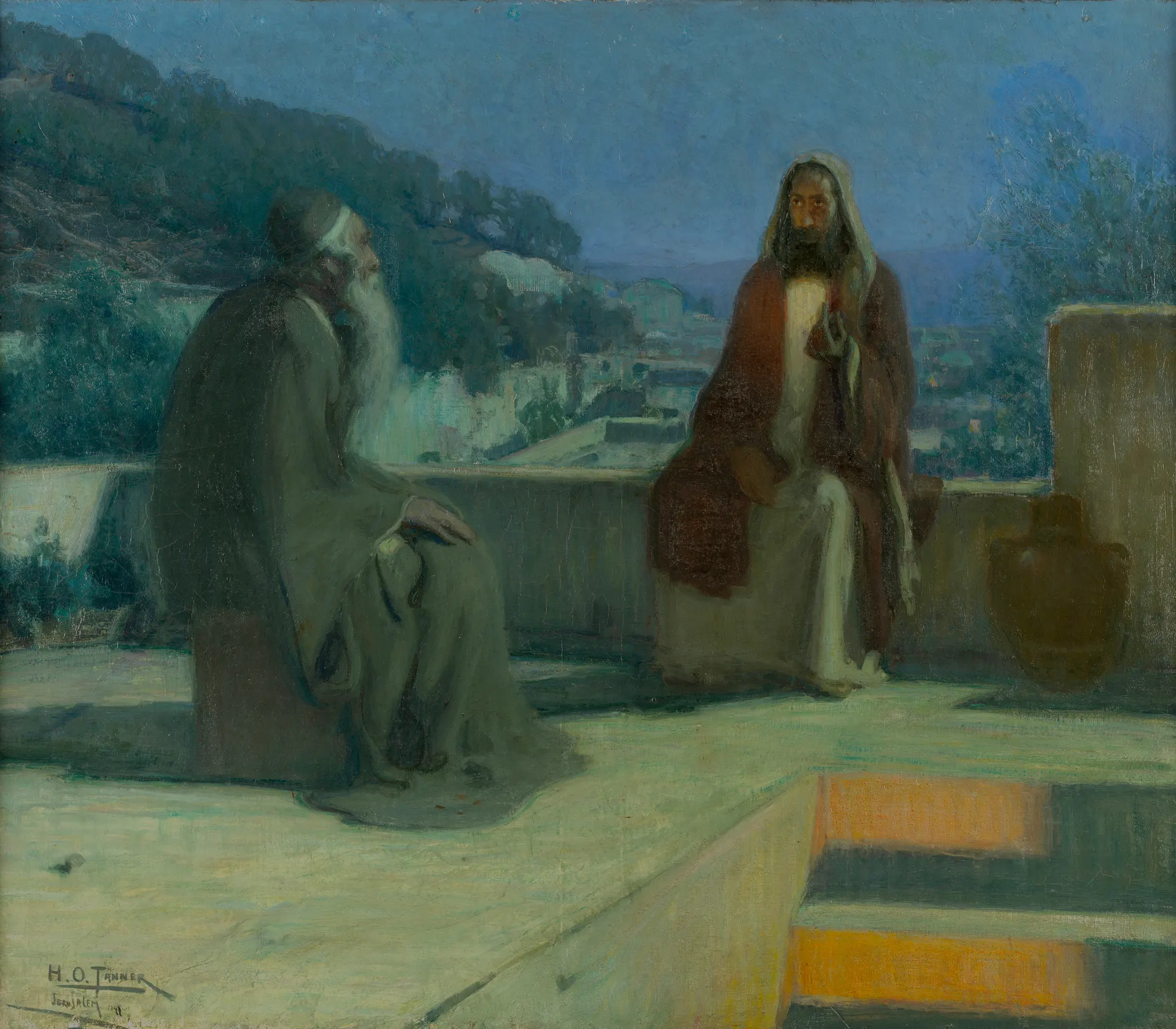
Johnchapter 16
33 verses · John, by tradition · AD 85 to 95 · The Gospels
But I tell you the truth, it is for your benefit that I am going away. Unless I go away, the Advocate will not come to you; but if I go, I will send Him to you.
Introduction
John, by tradition, The Gospels, John Overview.
This chapter closes the teaching Jesus gave on His last night, as the disciple He loved remembered it and wrote it down. That disciple wrote for believers who knew what it cost to confess Christ in a hostile town. On the night itself the eleven were grieving, confused and hours from scattering. Listen for the warnings given in advance, stated plainly so that no one would be caught unready. Listen also for the picture from family life that turns grief toward gladness. The chapter ends on a word of courage for people who will have trouble in the world.
Context
- Who
- Readers who had been put out of the synagogue and buried friends who were killed
- What
- The last part of the farewell teaching, where Jesus warns of persecution, sets out the Advocate's work and speaks of sorrow turned to joy.
- Where
- Jerusalem on the night of the betrayal, between the supper and the crossing of the Kidron Valley, in a place the Gospel leaves unstated.
- When
- The night before the crucifixion, about AD 30 to 33, written down about AD 85 to 95 on the traditional dating.
- Why
- To keep the disciples from falling away when persecution and His death came, by telling them beforehand and promising the Spirit.
Historical context
The warning is exact about what was coming: they will put you out of the synagogues, and the hour is coming when whoever kills you will think he is offering service to God. Both happened. Exclusion from the synagogue cost a Jewish family its whole social world, and the man who would write most of the New Testament had himself hunted believers in the sincere belief that he was serving God.
Show the rest of the historical context, 3 more paragraphs
The word for the Helper is the courtroom term again, and the work described here is prosecution rather than defence: he will convict the world concerning sin, righteousness, and judgment. The picture is of a case being made, not a feeling being produced.
The image of childbirth was the most familiar picture of pain that ends in joy that anyone in that world had. A woman has sorrow because her hour has come, and when the child is born she no longer remembers the anguish for joy that a human being has been born into the world. Every family had watched it, and many had watched it go wrong, which gives the promise its weight.
Praying in his name is introduced as something new, until now you have asked nothing in my name. To ask in someone's name in that culture meant to come with their authority, the way an envoy spoke for a king, and it is being handed to fishermen.
Significance
The most surprising sentence for the disciples is that it is to their advantage that he goes away. Losing his physical presence sounded like pure loss, and they are told it is the condition of the Spirit's coming.
Show the rest of the significance, 1 more paragraph
The chapter closes with a sentence that made sense of everything the first readers were living through: in the world you will have tribulation, but take heart, I have overcome the world. The trouble is promised, not avoided, and so is the outcome.
The heads below are this chapter's scenes. The numbered points under each are its verses.
It Is Expedient That I Go: The Spirit of Truth Comes
John 16:1-2
you will not fall away: Jesus tells them ahead of time so that you will not fall away, the Greek skandalizo, to be tripped into giving Him up. The men who kill them will think they are offering a service to God, as Paul once did.
John 16:1
“These things - The things spoken in the two previous chapters, promising them divine aid and directing them in the path of duty. Be offended - For the meaning of the word offend, see the notes at Mat 5:29. It means here the same as to stumble or fall - that is, to apostatize. He proceeds immediately to tell them, what he had often apprised them of, that they would be subject to great persecutions and trials. He was also himself about to be removed by death. They were to go into an unfriendly world.”
2 more voices on this verseWhat preachers and commentators have said about this verse, in their own words.
John 16:1
“These things I have spoken to you. He again states that none of those things which he has spoken are superfluous; for, since wars and contests await them, it is necessary that they should be provided beforehand with the necessary arms. Yet he also means that, if they meditate deeply on this doctrine, they will be fully prepared for resistance.”
John Calvin · Commentaries (1554)reformed
John 16:1
“The disciples of Christ are apt to be offended at the cross; and the offence of the cross is a dangerous temptation, even to good men, to turn back from the ways of God, or turn aside out of them, or drive on heavily in them; to quit either their integrity or their comfort. It is not for nothing that a suffering time is called an hour of temptation.”
Matthew Henry · Commentary on the Whole Bible (1707-1721)puritan
They will put you out of the synagogues: To be put out of the synagogue cut a man off from worship and from his neighbours. It could cost him his goods, as Ezra 10:8 shows. Anyone who kills them will think he is offering a service of worship to God.
John 16:2
“The time cometh, that whosoever killeth you will think he doth God service - But, blessed be God, the time is so far past, that those who bear the name of Christ do not now generally suppose they do him service by killing each other for a difference in opinion or mode of worship.”
John Wesley · Explanatory Notes upon the New Testament (1755)evangelical
3 more voices on this verse
John 16:2
“They shall put you out of the synagogues - They will excommunicate you, and consider you as execrable, and utterly unworthy to hold any commerce with God by religion; or with man by civil fellowship. See on Joh 9:22 (note). In these excommunications they were spoiled of all their substance, see Ezr 10:8, and see also Heb 10:34, and deprived of their character, their influence, and every necessary of life. Though the Jewish people had the most humane laws, yet they were a most vindictive and cruel people.”
Adam Clarke · Commentary on the Bible (1810-1826)evangelical
John 16:2
“His statement amounts to this, that we ought not to be dismayed by the perverse judgments of men, but ought to endure boldly the reproach of the cross of Christ, satisfied with this single consideration, that our cause which men unjustly and wickedly condemn, is approved by God.”
John Calvin · Commentaries (1554)reformed
John 16:2
“Christ's sheep have been accounted as sheep for the slaughter; the twelve apostles (we are told) were all put to death, except John. Christ had said ( ch. xv. 27 ), You shall bear witness, martyreite -- you shall be martyrs, shall seal the truth with your blood, your heart's blood.”
Matthew Henry · Commentary on the Whole Bible (1707-1721)puritan
John 16:3-4
have not known the Father: Ignorance of the Father and of the Son is the root of the coming violence. Jesus names it now so that when their hour comes the disciples will remember that He told them. The prediction itself will hold their faith steady.
John 16:3
“He showed that the zeal of the Jews was a zeal not according to knowledge, as also Paul says, but that it had gone far astray and wandered out of the straight path, even though according to the purpose that was in them it seemed to be manifested for the sake of God. For these misguided men thought that by arming themselves with the command given by Moses they pleased God, the Giver of the Law, and actually supposed, that by opposing the prophetic utterances of Christ, they gained credit with Him.”
Cyril of Alexandria · written before 444 · Commentary on the Gospel of John, Book 10patristic
1 more voice on this verse
John 16:3
“Those that are ignorant of Christ cannot have any right knowledge of God. In vain do men pretend to know God and religion, while they slight Christ and Christianity. Those are very ignorant indeed of God and Christ that think it an acceptable piece of service to persecute good people.”
Matthew Henry · Commentary on the Whole Bible (1707-1721)puritan
you will remember that I told you: Jesus had spoken of persecution early, at Luke 6:22, though never as plainly as in verse 2. A deceiver would never tell his followers beforehand of things likely to turn them away. A trouble foretold is the less grievous.
John 16:4
“At the beginning - I would not trouble you by speaking of these things pointedly at first, when I chose you to be my disciples, but have referred them to the present time, lest you should be discouraged; and now only declare them because it is absolutely necessary that you should be put upon your guard.”
Adam Clarke · Commentary on the Bible (1810-1826)evangelical
1 more voice on this verse
John 16:4
“He contends that mention has been made to them of these things for no other reason except that they might know that, meeting for His sake the assaults of sin, they would at all events gain glory therefrom. For I have not foretold it unto you, He says, from any wish to enfeeble your courage or to inspire in you a premature alarm by the anticipation of suffering, but rather to give you foreknowledge, in order that by this means you may derive a double benefit.”
Cyril of Alexandria · written before 444 · Commentary on the Gospel of John - Book 10patristic
John 16:5-6
none of you asks Me: Peter had asked where Jesus was going at John 13:36, and now none of you asks Me. Sorrow has filled their hearts and stopped their questions. The departure is a return to the Father who sent Him, which the disciples hear only as loss.
John 16:5
“But now I go my way to him that sent me,.... These words seem to belong to Joh 16:4, and to contain a reason why Christ spoke of the trials and afflictions of his disciples now, because he was going away from them to his Father; when as they would be at the head of his affairs in this world, so they would the more become the butt of the rage of men: and none of you asketh me, whither goest thou?”
2 more voices on this verse
John 16:5
“Now I go my way - Now I am about to die and leave you, and it is proper to announce all these things to you. None of you asketh me ... - They gave themselves up to grief instead of inquiring why he was about to leave them. Had they made the inquiry, he was ready to answer them and to comfort them. When we are afflicted we should not yield ourselves to excessive grief.”
John 16:5
“Did the Saviour then separate from His disciples when He ascended to the Father, and was He still with them, by the working and power and grace of the Spirit? How, or in what way, was He with them? For it is beyond question that He cannot lie when He says, Lo, I am with you alway, even unto the end of the world, except so far as the flesh and His bodily presence were concerned.”
Cyril of Alexandria · written before 444 · Commentary on the Gospel of John - Book 10patristic
your hearts are filled with sorrow: Two readings of the sorrow stand. John Chrysostom takes it as grief at the troubles foretold, and Augustine of Hippo as grief at His leaving, before the Spirit's inner comfort. Verse 20 promises to turn this sorrow to joy.
John 16:6
"But because I have said these things unto you," He adds, "sorrow hath filled your heart." He saw, indeed, what effect these words of His were producing in their hearts; for having not yet within them the spiritual consolation, which they were afterwards to have by the Holy Spirit, what they still saw objectively in Christ they were afraid of losing; and because they could have no doubt they were about to lose Him whose announcements were always true, their human feelings were saddened, because their carnal view of Him was to be left a blank.
Augustine of Hippo · written before 430 · Tractates on John 94patristic
it is for your benefit: renders sympherei, what brings gain. The Advocate is the Paraclete, one called alongside to help and to plead a case. Jesus makes His going the condition of the Spirit's coming, and He is the one who sends Him.
John 16:7
“It was therefore expedient because it was in order to the sending of the Spirit. Now observe, (1.) That Christ's going was in order to the Comforter's coming. [1.] This is expressed negatively: If I go not away, the Comforter will not come.”
Matthew Henry · Commentary on the Whole Bible (1707-1721)puritan
2 more voices on this verse
John 16:7
“This Spirit did David ask for the human race, saying, "And stablish me with Thine all-governing Spirit;" who also, as Luke says, descended at the day of Pentecost upon the disciples after the Lord's ascension, having power to admit all nations to the entrance of life, and to the opening of the new covenant; from whence also, with one accord in all languages, they uttered praise to God, the Spirit bringing distant tribes to unity, and offering to the Father the first-fruits of all nations. Wherefore also the Lord promised to send the Comforter, who should join us to God.”
Irenaeus · written before 202 · Against Heresies 3.17.2patristic
John 16:7
“Even the Lord Himself said that the Spirit would not descend on any other condition, but that He should first ascend to the Father. What the Lord was not yet conferring, of course the servant could not furnish.”
Tertullian · written before 220 · On Baptismpatristic
John 16:8-9
convict the world: Convict renders elencho, a courtroom word for exposing a case and proving it. The Spirit works on the world in three counts, sin, righteousness and judgment, and the sin named is that they do not believe in Me. Every other sin stands under that one.
John 16:8
“When He has shown that His departure to His Father is the fitting occasion of the descent and mission of the Spirit, and has by this means sufficiently allayed the pangs of grief in His holy disciples, He rightly proceeds to show what the work of the Holy Spirit will be. For when He is come, He says, He will convict the world in respect of sin, and of righteousness, and of judgment. And He has clearly pointed out what form the reproof in each of these cases will take.”
Cyril of Alexandria · written before 444 · Commentary on the Gospel of John - Book 10patristic
3 more voices on this verse
John 16:8
“When our Lord in this passage speaks of the Holy Spirit "coming," we must take care that we do not misunderstand His meaning. On the one hand, we must remember that the Holy Spirit was in all believers in the Old Testament days, from the very beginning. No man was ever saved from the power of sin, and made a saint, except by the renewing of the Holy Spirit. Abraham, and Isaac, and Samuel, and David, and the Prophets, were made what they were by the operation of the Holy Spirit.”
John 16:8
“He will reprove - Ελεγξει, He will demonstrate these matters so clearly as to leave no doubt on the minds of those who are simple of heart; and so fully as to confound and shut the mouths of those who are gainsayers. See Act 2:1, etc. The world - The Jewish nation first, and afterwards the Gentile world; for his influences shall not be confined to one people, place, or time.”
Adam Clarke · Commentary on the Bible (1810-1826)evangelical
John 16:8
“Reproof is indeed implied in the term employed, and doubtless the word begins with it. But convict or convince is the thing intended; and as the one expresses the work of the Spirit on the unbelieving portion of mankind, and the other on the believing, it is better not to restrict it to either.”
Jamieson, Fausset & Brown · Commentary Critical and Explanatory on the Whole Bible (1871)reformed
because they do not believe in Me: The world's sin is that they do not believe in Jesus, and the Spirit presses that count home. At Pentecost multitudes were convinced of this sin and turned to God. Unbelief is the confluence of all sins.
John 16:9
Of sin, because they believe not on me. The "sin" here primarily intended, is that of the Jews, in disbelieving, rejecting, and crucifying Christ; and which the Spirit of God, by Peter, charged upon them on the day of "Pentecost", and fully proved against them; gave such clear evidence, and wrought such strong convictions of in their minds and consciences, that being pricked to the heart, they cried out, "what shall we do?"
4 more voices on this verse
John 16:9
“Of sin, because they believe not on me--As all sin has its root in unbelief, so the most aggravated form of unbelief is the rejection of Christ. The Spirit, however, in fastening this truth upon the conscience, does not extinguish, but, on the contrary, does consummate and intensify, the sense of all other sins.”
Jamieson, Fausset & Brown · Commentary Critical and Explanatory on the Whole Bible (1871)reformed
John 16:9
“The Spirit demonstrates the depravity and degeneracy of the whole world, that all the world is guilty before God. [2.] The Spirit, in conviction, fastens especially upon the sin of unbelief, their not believing in Christ, First, As the great reigning sin. There was, and is, a world of people, that believe not in Jesus Christ, and they are not sensible that it is their sin.”
Matthew Henry · Commentary on the Whole Bible (1707-1721)puritan
John 16:9
“Of sin - The first thing specified of which the world would be convinced is sin. Sin, in general, is any violation of a law of God, but the particular sin of which men are here said to be convinced is that of rejecting the Lord Jesus. This is placed first, and is deemed the sin of chief magnitude, as it is the principal one of which men are guilty.”
John 16:9
“Of sin - Particularly of unbelief, which is the confluence of all sins, and binds them all down upon us.”
John Wesley · Explanatory Notes upon the New Testament (1755)evangelical
John 16:10-11
in regard to righteousness: The second count is righteousness, and it stands on Jesus going to the Father, where the world will see Him no more. The third count is judgment, and the prince of this world has been condemned in the perfect tense, a sentence passed and still in force.
John 16:10
“Of righteousness, because I go to my Father - Which the Spirit will testify, though ye do not then see me. But I could not go to him if I were not righteous.”
John Wesley · Explanatory Notes upon the New Testament (1755)evangelical
3 more voices on this verse
John 16:10
“But further, He says: He will reprove the world in respect of righteousness, because I go to the Father and ye behold Me no more. For He will duly hold converse with those who believe in Christ after His ascension into heaven, as duly justified thereby. For they received as the true God Him Whom, though they had in nowise seen Him, they yet believed to sit on His Father's throne. For by calling to mind what Thomas said and did, one might readily perceive that Christ calls those who thus believe blessed.”
Cyril of Alexandria · written before 444 · Commentary on the Gospel of John - Book 10patristic
John 16:10
“Of righteousness - Of my innocence and holiness, because I go away to my Father; of which my resurrection from the dead, and my ascension to heaven, shall be complete proofs. Christ was treated by the Jews as an impostor; as a magician; as one possessed by the devil; as a wicked person, seducer, and destroyer of the law.”
Adam Clarke · Commentary on the Bible (1810-1826)evangelical
John 16:10
“Secondly, Christ's ascension is the great argument proper to convince men of this righteousness: I go to the Father, and, as an evidence of my welcome with him, you shall see me no more. If Christ had left any part of his undertaking unfinished, he had been sent back again; but now that we are sure he is at the right hand of God, we are sure of being justified through him.”
Matthew Henry · Commentary on the Whole Bible (1707-1721)puritan
the prince of this world has been condemned: Adam Clarke gives two readings, the false judgment by which the Jews condemned Jesus and the judgment of the prince of this world. Barnes, Wesley and Augustine of Hippo take the prince as Satan, condemned at the cross, and Henry reads toward the final judgment of the world.
John 16:11
“Of judgment, because the prince of this world is judged--By supposing that the final judgment is here meant, the point of this clause is, even by good interpreters, quite missed.”
Jamieson, Fausset & Brown · Commentary Critical and Explanatory on the Whole Bible (1871)reformed
4 more voices on this verse
John 16:11
“God then has called him the prince of this world, not as really being so in truth, or as though this overruling power were a dignity inherent in his being, but as he had the glory thereof by fraud and covetousness, and as he is still holding sway and ruling over those that are astray by reason of the wicked purpose that is in them, by which having their mind fast bound in error they are inextricably entangled in the noose of captivity, even though it was in their power to escape by being converted through faith in Christ to…”
Cyril of Alexandria · written before 444 · Commentary on the Gospel of John - Book 10patristic
John 16:11
“The prince of this world is judged - And in consequence thereof dethroned, deprived of the power he had so long usurped over men. Yet those who reject the deliverance offered them will remain slaves of Satan still.”
John Wesley · Explanatory Notes upon the New Testament (1755)evangelical
John 16:11
“Of judgment - That God is just, and will execute judgment. This is proved by what he immediately states. The prince of this world - Satan. See the notes at Joh 12:31. The death of Christ was a judgment or a condemnation of Satan. In this struggle Jesus gained the victory and subdued the great enemy of man. This proves that God will execute judgment or justice on all his foes. If he vanquished his great enemy who had so long triumphed in this world, he will subdue all others in due time.”
John 16:11
“Fourthly, Of the final day of judgment: all the obstinate enemies of Christ's gospel and kingdom shall certainly be reckoned with at last, for the devil, their ringleader, is judged.”
Matthew Henry · Commentary on the Whole Bible (1707-1721)puritan
John 16:12-13
you cannot yet bear: renders bastazo, to carry a weight. The Spirit of truth comes to guide them into all truth, speaking what He hears and declaring what is to come. Guidance into truth and the disclosure of things to come are His work in the church still.
John 16:12
“I have yet many things to say - Concerning my passion, death, resurrection, and the consequences of it. These things we have, not in uncertain traditions, but in the Acts, the Epistles, and the Revelation. But ye cannot bear them now - Both because of your littleness of faith, and your immoderate sorrow.”
John Wesley · Explanatory Notes upon the New Testament (1755)evangelical
2 more voices on this verse
John 16:12
“The Gospel shows him [the Paraclete] to be of such power and majesty that the apostles could not yet receive those things that the Savior wished to teach them until the advent of the Holy Spirit, who, pouring himself into their souls, might enlighten them regarding the nature and faith of the Trinity.”
Origen of Alexandria · written before 253 · On First Principles 2.7.3patristic
John 16:12
“He assures them of sufficient assistances, by the pouring out of the Spirit. They were now conscious to themselves of great dulness, and many mistakes; and what shall they do now their master is leaving them? " But when he, the Spirit of Truth, is come, you will be easy, and all will be well." Well indeed; for he shall undertake to guide the apostles, and glorify Christ.”
Matthew Henry · Commentary on the Whole Bible (1707-1721)puritan
He will guide you into all truth: The verb means to lead on the way, as a father leads a child by the hand. All truth is the truth the apostles needed to found the church, and the promise is that they would be guided in it. The Spirit speaks what He hears.
John 16:13
“Howbeit, when the Spirit of truth is come,.... Of this character of the Spirit, see Joh 14:17. His coming, as before, intends more especially his descent on the apostles at Pentecost; though what is here said of him is true of his office, and of his operations on other persons, and at other times: he will guide you into all truth; necessary to be known, useful to men, profitable to the churches, even the whole counsel of God; what relates to worship, the nature, form, and spirituality of it, as well as doctrine.”
2 more voices on this verse
John 16:13
“The Son of God says concerning the Holy Spirit that "he will not speak from himself," that is, not without the participation of the Father and myself. For the Spirit is not divided and separated but speaks what he hears.… This means he shall not speak without me. For he speaks the truth, he breathes wisdom. He does not speak without the Father, for he is the Spirit of God. He does not hear from himself, for all things are of God.… Therefore what the Spirit says is the Son's, what the Son has given is the Father's.”
Ambrose of Milan · written before 397 · On the Holy Spirit 2.12.131, 133, 134patristic
John 16:13
“The Spirit of truth - So called because he would teach them all necessary truth. Will guide you into all truth - That is, truth which pertained to the establishment of the Christian system, which they were not then prepared to hear. We may here remark that this is a full promise that they would be inspired and guided in founding the new church; and we may observe that the plan of the Saviour was replete with wisdom.”
John 16:14-15
He will glorify Me: The Spirit's office is to glorify Me by taking what is Mine and disclosing it. All that belongs to the Father is Mine, so the Spirit draws on the Son's own possession. What the Spirit discloses is Christ.
John 16:14
“Shall glorify me - Shall honor me. The nature of his influence shall be such as to exalt my character and work in view of the mind. Shall receive of mine - Literally, “shall take of or from me.” He shall receive his commission and instructions as an ambassador from me, to do my will and complete my work. Shall show it - Shall announce or communicate it to you. This is always the work of the Spirit. All serious impressions produced by him lead to the Lord Jesus 1Co 12:3, and by this we may easily test our feelings.”
3 more voices on this verse
John 16:14
“But the Paraclete, having many things to teach fully which the Lord deferred till He came, (according to the pre-definition,) will begin by bearing emphatic witness to Christ, (as being) such as we believe (Him to be), together with the whole order of God the Creator, and will glorify Him, and will "bring to remembrance" concerning Him.”
Tertullian · written before 220 · On Monogamypatristic
John 16:14
IT is the chief office of the Holy Spirit to glorify Christ. He does many things, but this is what He aims at in all of them—to glorify Christ. Brothers and Sisters, what the Holy Spirit does must be right for us to imitate! Therefore, let us endeavor to glorify Christ. To what higher ends can we devote ourselves, than to something to which God the Holy Spirit devotes Himself? Be this, then, your continual prayer, "Blessed Spirit, help me to always glorify the Lord Jesus Christ!"
Charles Spurgeon · written before 1892 · The Metropolitan Tabernacle Pulpit, Sermon No. 2382: “The Holy Spirit's Chief Office” (lightly modernized text, CCEL edition)Particular Baptist
John 16:14
“The subjective nature of the Spirit's teaching--the discovery to the souls of men of what is Christ outwardly--is here very clearly expressed; and, at the same time, the vanity of looking for revelations of the Spirit which shall do anything beyond throwing light in the soul upon what Christ Himself is, and taught, and did upon earth.”
Jamieson, Fausset & Brown · Commentary Critical and Explanatory on the Whole Bible (1871)reformed
Everything that belongs to the Father is Mine: Only one equal with the Father could say this. The everything here is chiefly the gifts of the kingdom of grace the Spirit would show. As the Son is the Father's ambassador, the Spirit comes as the ambassador of the Son.
John 16:15
“15 All things that the Father hath are mine: therefore said I, that he shall take of mine, and shall show it unto you. As it was usual with the Old Testament prophets to comfort the church in its calamities with the promise of the Messiah ( Isa. ix. 8 ); so, the Messiah being come, the promise of the Spirit was the great cordial, and is still.”
Matthew Henry · Commentary on the Whole Bible (1707-1721)puritan
2 more voices on this verse
John 16:15
“All things that the Father hath are mine--a plainer expression than this of absolute community with the Father in all things cannot be conceived, though the "all things" here have reference to the things of the Kingdom of Grace, which the Spirit was to receive that He might show it to us.”
Jamieson, Fausset & Brown · Commentary Critical and Explanatory on the Whole Bible (1871)reformed
John 16:15
“All things that the Father has are the Son's. And … all that belongs to the Son is the Father's. Nothing then is peculiar [to any person] because all things are in common. For their being itself is common and equal, even though the Son receives it from the Father.”
Gregory of Nazianzus · written before 390 · On the Son, Theological Oration 4(30).11patristic
A Little While: Your Sorrow Shall Turn to Joy
John 16:16-19
In a little while: covers two spans, the hours the grave hides Him and the day He stands among them again. The disciples turn the saying over with one another and cannot make it out. Jesus knows the question before they ask it.
John 16:16
“A little while and ye shall not see me,.... Meaning, that he should be quickly taken from them by death. And in a very little time after this, having put up a prayer for them, recorded in the next chapter, he went into the garden, where he was met by Judas with his band of men, who laid hold on him, bound him, and led him first to Annas, then to Caiaphas, and from him to Pilate, when all the disciples forsook him and fled, and saw him no more in this mortal state, except Peter and John.”
3 more voices on this verse
John 16:16
“A little while - He had but a few hours to live. And ye shall not see me - I shall be hidden from your view in the grave. Again a little while - In three days after my death: Ye shall see me - I will rise again, and show myself to you.”
Adam Clarke · Commentary on the Bible (1810-1826)evangelical
John 16:16
“Since he had said a little before this that he would reveal to them through his Holy Spirit all things that were necessary and profitable to them, he also tells them of his passion and that then would come his ascension into heaven. After this would follow the most necessary descent of the Holy Spirit. Returning now to the Father, there would be no more mutual conversing in the flesh with his holy apostles. He uses only a few words, lessening in this way the sharpness of their sorrow.”
Cyril of Alexandria · written before 444 · Commentary on the Gospel of John, Book 11patristic
John 16:16
“At the same time the sorrow of the widowed Church in the absence of her Lord in the heavens, and her transport at His personal return, are certainly here expressed.”
Jamieson, Fausset & Brown · Commentary Critical and Explanatory on the Whole Bible (1871)reformed
Then some of His disciples asked: The disciples join the saying of verse 16 to verse 10, because I am going to the Father, and cannot fit the two together. They knew He was about to leave and did not know He would come back so soon. Grief and misunderstanding thicken each other.
John 16:17
“Then said some of his disciples among themselves,.... It may be, some of them might better understand the meaning of Christ than others, or they might all be ignorant of it; for before the effusion of the Spirit on them, they were attended with a great deal of ignorance; and what through their being overwhelmed at this time with sorrow, and what with their national sentiments they retained about a temporal kingdom, they understood very little of what Christ said to them concerning his death, the nature, use, and end of it.”
1 more voice on this verse
John 16:17
“The darkness of ignorance and the darkness of melancholy commonly increase and thicken one another; mistakes cause griefs, and then griefs confirm mistakes. (2.) The notion of Christ's secular kingdom was so deeply rooted in them that they could make no sense at all of those sayings of his which they knew not how to reconcile with that notion.”
Matthew Henry · Commentary on the Whole Bible (1707-1721)puritan
They kept asking, “Why is He saying: The disciples fix on one phrase and say openly that they do not understand it. They already knew He would die, and what puzzled them was the promise of seeing Him again so soon. They confess their ignorance plainly.
John 16:18
“What is this that he saith - They knew from what he had said that he was to die, but knew not what he meant by their seeing him again in a little time.”
Adam Clarke · Commentary on the Bible (1810-1826)evangelical
Aware that they wanted to question Him: Jesus answers the question they had kept among themselves, as one who knows hearts. He answers before they call. Seeing them burdened with sorrow, He speaks more plainly of His death and teaches the humble who own their ignorance.
John 16:19
“Christ, however, anticipates their desire for information, and once more very seasonably shows them that He knows their hearts as God, and that He is as well aware of what they are turning over in their minds, and what was as yet buried in the depths of their hearts, as though they had already given utterance to it in speech. For what is there which can be hid from Him before Whom all things are naked?”
Cyril of Alexandria · written before 444 · Commentary on the Gospel of John, Book 11patristic
1 more voice on this verse
John 16:19
“Before we call, he answers. Another reason why Christ explained it was because he observed them canvassing this matter among themselves: " Do you enquire this among yourselves? Well, I will make it easy to you." This intimates to us who they are that Christ will teach: (1.) The humble, that confess their ignorance, for so much their enquiry implied.”
Matthew Henry · Commentary on the Whole Bible (1707-1721)puritan
John 16:20-21
your grief will turn to joy: is the promise, and the turn comes at the resurrection. The picture is a woman in labour, whose anguish is forgotten in the joy that a child is born. The pain produced the joy.
John 16:20
“Ye shall weep and lament - To see me crucified and laid in the grave. But the world shall rejoice - The chief priests, scribes, Pharisees, and persecuting Jews in general, will triumph, hoping that their bad cause is crowned with success. But your sorrow shall be turned into joy - When ye see me risen from the dead. It is very evident that our Lord uses the word world, in several parts of this discourse of his, to signify the unbelieving and rebellious Jews.”
Adam Clarke · Commentary on the Bible (1810-1826)evangelical
1 more voice on this verse
John 16:20
“When then you who are truly Mine and united to Me by your love towards Me shall behold your Guide and Master undergoing the brunt of the madness of the Jews, their insults and outrages, and all that their mad frenzy will prompt, then, indeed, ye shall weep and lament, but the world shall rejoice; that is, those who are not minded to follow God's Will, but are, as it were, enchained by worldly lusts.”
Cyril of Alexandria · written before 444 · Commentary on the Gospel of John, Book 11patristic
A woman has pain in childbirth: The prophets use this comparison often, setting the pains of childbirth for the deepest grief. The Greek word for child covers either sex. The church too labours, then rejoices when the faithful are born into the life to come.
John 16:21
“A woman when she is in travail hath sorrow,.... As was said she should have, Gen 3:16; This is God's ordination and appointment for sin: because her hour is come; is at hand; the fixed time in nature is up, and there is no avoiding it: but as soon as she is delivered of the child; for though the sorrow is great, yet there is a deliverance, and she is saved in child bearing: when she remembereth no more the anguish; the sharp pains she has endured in her travail; for joy that a man is born into the world.”
1 more voice on this verse
John 16:21
“For joy that a man is born - Ανθρωπος is put here for a human creature, whether male or female; as homo among the Romans denoted either man or woman.”
Adam Clarke · Commentary on the Bible (1810-1826)evangelical
no one will take away your joy: I will see you again names the resurrection meetings of chapter 20. The joy rests on that reunion, and afterward on His presence with them by the Spirit. No one will take away your joy sets it beyond every circumstance that could reach it.
John 16:22
“In like manner then will your suffering also not fail to meet its reward. For you will rejoice when you see a new child born into the world, incorruptible and beyond the reach of death. Plainly He alludes to Himself here. He tells them that the joy of heart that they will have in Him cannot be taken away from them or lost. For, as Paul says, or rather as the Very Truth Itself implies, having died once for all, He dieth no more. The joy of heart then that rests upon Him hath in very truth a sure foundation.”
Cyril of Alexandria · written before 444 · Commentary on the Gospel of John, Book 11patristic
2 more voices on this verse
John 16:22
“Your joy no man taketh from you - Or, shall take away. Some excellent MSS. and versions read the verb in the future tense. Our Lord’s meaning appears to have been this: that his resurrection should be so completely demonstrated to them, that they should never have a doubt concerning it; and consequently that their joy should be great and permanent, knowing that the atonement was made, the victory gained, and the kingdom of heaven opened to all believers.”
Adam Clarke · Commentary on the Bible (1810-1826)evangelical
John 16:22
“Ye now therefore have sorrow - This gives us no manner of authority to assert all believers must come into a state of darkness. They never need lose either their peace, or love, or the witness that they are the children of God. They never can lose these, but either through sin, or ignorance, or vehement temptation, or bodily disorder.”
John Wesley · Explanatory Notes upon the New Testament (1755)evangelical
John 16:23-24
ask the Father in My name: In that day the disciples stop asking Jesus questions and ask the Father in My name. Praying in His name means praying on His authority and His standing with the Father. Ask and you will receive, and the joy is made complete.
John 16:23
“Whatsoever ye shall ask - Knowledge, love, or any thing else, he will give it - Our Lord here gives us a charte blanche. Believer, write down what thou wilt. He had said, Chap. xiv, 13, I will do it, where the discourse was of glorifying the Father through the Son.”
John Wesley · Explanatory Notes upon the New Testament (1755)evangelical
1 more voice on this verse
John 16:23
“He says that His holy disciples will increase in wisdom and knowledge when they should be clothed with power from on high according to the Scripture, and with their minds illumined by the torchlight of the Spirit should be able to conceive all wisdom, even though they asked no question of Him Who was no longer present with them in the flesh.”
Cyril of Alexandria · written before 444 · Commentary on the Gospel of John, Book 11patristic
Until now you have not asked: During His ministry the disciples brought their requests to Jesus Himself and had not yet prayed in His name. Prayer in the name of Christ presupposes His glorification, so it begins after He goes. He is the Mediator between God and man.
John 16:24
“Hitherto have ye asked nothing in my name - Ye have not as yet considered me the great Mediator between God and man; but this is one of the truths which shall be more fully revealed to you by the Holy Spirit. Ask - In my name; and ye shall receive - all the salvation ye thus request; the consequence of which shall be that your joy shall be full - ye shall be thoroughly happy in being made completely holy.”
Adam Clarke · Commentary on the Bible (1810-1826)evangelical
1 more voice on this verse
John 16:24
Hitherto have ye asked nothing in my name--for "prayer in the name of Christ, and prayer to Christ, presuppose His glorification" [OLSHAUSEN]. ask--when I am gone, "in My name."
Jamieson, Fausset & Brown · Commentary Critical and Explanatory on the Whole Bible (1871)reformed
Be of Good Cheer, I Have Overcome the World
in figures of speech: Figures of speech renders paroimia, a veiled saying that carries its meaning under a picture. The woman in labour and the little while are two. Jesus promises an hour when He will tell them plainly about the Father, speech that begins with the resurrection and continues in the Spirit's teaching.
John 16:25
“In proverbs - In a manner that appears obscure, enigmatical, and difficult to be understood. It is worthy of remark, that though his declarations in these chapters about his death and resurrection appear to us to be plain, yet to the apostles, filled with Jewish prejudices, and unwilling to believe that he was about to die, they would appear exceedingly obscure and perplexed. The plainest declarations to them on the subject would appear to be involved in mystery.”
2 more voices on this verse
John 16:25
“By proverbs He means language that is indistinct and does not bear its meaning on the surface, but is in some sort veiled by obscurities so subtle that He says His hearers could not very readily comprehend it; for this was the fashion of what was said in proverbs. What I have told you then, He says, I have told you as it were in proverbs and riddles, reserving for the fitting season which has not yet come, though it is drawing nigh, the revelation of these things beyond possibility of doubt.”
Cyril of Alexandria · written before 444 · Commentary on the Gospel of John, Book 11patristic
John 16:25
The passage we have now read is a very remarkable portion of Scripture, for two reasons. On the one hand, it forms a suitable conclusion to our Lord's long parting address to His disciples. It was fit and right that such a solemn sermon should have a solemn ending. On the other hand it contains the most general and unanimous profession of belief that we ever find the Apostles making—"Now are we sure that You know all things . . . by this we believe that you came forth from God."
John 16:26-27
you will ask in My name: , for the Father Himself loves you. Their own love for Jesus and their faith that He came from God are the ground on which they now ask. Christ still intercedes, at Romans 8:34 and Hebrews 7:25.
John 16:26
“At that day ye shall ask - For true knowledge begets prayer. And I say not that I will pray - This in nowise implies that he will not: it means only, The Father himself now loves you, not only because of my intercession, but also because of the faith and love which he hath wrought in you.”
John Wesley · Explanatory Notes upon the New Testament (1755)evangelical
1 more voice on this verse
John 16:26
“I will pray the Father for you--as if He were not of Himself disposed to aid you: Christ does pray the Father for His people, but not for the purpose of inclining an unwilling ear.”
Jamieson, Fausset & Brown · Commentary Critical and Explanatory on the Whole Bible (1871)reformed
For the Father Himself loves you: Does the Father love because they love, or do they love because He loves? John's own letter answers that God's love comes first, and the disciples' love is called forth by God's love in the gift of His Son. The same words warn them to keep to that love.
John 16:27
“And in saying this, He shows us too, to our profit, that very acceptable to God the Father is the honour and love which we have towards His Offspring. Not understanding this, the miserable people of the Jews did not shrink from assailing Him with intolerable blasphemies, and sought to kill Him, according to the Scripture, because of the conversion of the mind of His believers from the obscure commandment of the Law to the clearness of the life according to the Gospel.”
Cyril of Alexandria · written before 444 · Commentary on the Gospel of John, Book 11patristic
1 more voice on this verse
John 16:27
“For the Father himself loveth you,.... The Father loved them as well, and as much as the Son did, and of himself too, without any merit or motive in them: he loved them from everlasting, and had given proofs of it in time, in the gift of his Son to them, and for them; and in calling them by his grace; and therefore being thus strongly affected to them, they might depend upon a ready and speedy answer from him, as might be best for his glory, and their good.”
I came from the Father: names four moves in one line, from the Father, into the world, out of the world, back to the Father. The Gospel opened with the first of them at John 1:1 and 1:14. One sentence holds the whole descent and return.
John 16:28
“I came forth from the Father - With whom I existed from eternity in glory. Am come into the world - By my incarnation. I leave the world - By my death. And go to the Father - By my ascension. These four words contain the whole economy of the Gospel of man’s salvation, and a consummate abridgment of the Christian faith. This gave the disciples a key to the whole of our Lord’s discourse; and especially to that part, Joh 16:16, that had so exceedingly embarrassed them, as appears by Joh 16:17, Joh 16:18.”
Adam Clarke · Commentary on the Bible (1810-1826)evangelical
2 more voices on this verse
John 16:28
“When Jesus says that he came into this world and again left the world and went to the Father, he does not mean that he either abandoned the Father when he became man or that he abandoned the human race when, in the flesh, he went to the Father. For he is truly God and with his ineffable power fills all things and is not far from anything that exists.”
Cyril of Alexandria · written before 444 · Commentary on the Gospel of John, Book 11patristic
John 16:28
“I came forth from the Father, &c.--that is, "And ye are right, for I have indeed so come forth,and shall soon return whence I came." This echo of the truth, alluded to in Joh 16:27, seems like thinking aloud, as if it were grateful to His own spirit on such a subject and at such an hour.”
Jamieson, Fausset & Brown · Commentary Critical and Explanatory on the Whole Bible (1871)reformed
John 16:29-30
now You are speaking plainly: The disciples take verse 28 as the plain speaking promised in verse 25. Now You are speaking plainly, they say, and they believe that He came from God. Their confidence is real and it is about to be broken, within the hour, as verse 32 says.
John 16:29
“Now speakest thou plainly - What he had said that perplexed them was that which is contained in Joh 16:16. Compare Joh 16:17-19; “A little while and ye shall not see me,” etc. This he had now explained by saying Joh 16:28, “Again, I leave the world, and go to the Father.” In this there was no ambiguity, and they expressed themselves satisfied with this explanation.”
Now we understand that You know: They had kept their puzzle over verse 16 among themselves, and He answered it unasked. Their confession echoes His own words in verse 27 about coming from God. They own Him as the God who searches the heart.
John 16:30
“Now are we sure that thou knowest all things - Is not the following the meaning of the disciples? We believe that thou art not only the Messiah who camest out from God, but that thou art that God who searchest the heart and triest the reins, and needest not to be asked in order to make thee acquainted with the necessities of thy creatures; for thou perfectly knowest their wants, and art infinitely disposed to relieve them.”
Adam Clarke · Commentary on the Bible (1810-1826)evangelical
John 16:31-33
Do you finally believe meets their confidence with a warning. Within hours they are scattered, each to his own home, and leave Him alone, while the Father stays with Him. I have overcome the world stands in the perfect tense, a victory won before the cross.
John 16:31
“Jesus answered them, do ye now believe? Not as calling their faith in question; or as denying they had any; or as despising it for the smallness of it; but as reproving them for their security, vain confidence and boasting, as if their faith was so very strong that it would never be moved; and perhaps for the lateness of it too: the words may be read affirmatively, without an interrogation, "ye do believe now"; they are in the Syriac and Arabic versions read imperatively, "believe ye now".”
1 more voice on this verse
John 16:31
“Do ye now believe? - Do you truly and really believe? This question was evidently asked to put them on a full examination of their hearts. Though they supposed that they had unshaken faith - faith that would endure every trial, yet he told them that they were about to go through scenes that would test them, and where they would need all their confidence in God. When we feel strong in the faith we should examine ourselves.”
Yet I am not alone, because: The hour came the next day. They were scattered as Matthew 26:31 foretold, each to his own home in the belief that His work had failed. Their faith would be shaken when they saw Him seized, and their strength would come later with the Spirit.
John 16:32
“The hour cometh - Ye shall shortly have need of all the faith ye profess: ye now believe me to be the Omniscient; but ye will find difficulty to maintain this faith when ye see me seized, condemned, and crucified as a malefactor. Yea, your faith will be then so shaken that ye shall run away, each striving to save himself at his own home, or among his kindred.”
Adam Clarke · Commentary on the Bible (1810-1826)evangelical
1 more voice on this verse
John 16:32
“The Saviour, however, very gently tells them that the time when they should be confirmed in all goodness was not yet; but that this would come to pass on the occasion of the descent of the Holy Ghost unto them from heaven and power from on high, according to the Scripture.”
Cyril of Alexandria · written before 444 · Commentary on the Gospel of John - Book 11patristic
In the world you will have tribulation: The long discourse closes here. The tribulation comes from the world's hatred of those chosen out of it, so the promised peace is far from untroubled. The victory is the prince of this world overcome by His death, as 12:31 foretold.
John 16:33
“In the world ye shall have tribulation--specially arising from its deadly opposition to those who "are not of the world, but chosen out of the world." So that the "peace" promised was far from an unruffled one.”
Jamieson, Fausset & Brown · Commentary Critical and Explanatory on the Whole Bible (1871)reformed
1 more voice on this verse
John 16:33
“In me - In my presence, and in the aid which I shall render you by the Holy Spirit. In the world - Among the men to whom you are going. You must expect to be persecuted, afflicted, tormented. I have overcome the world - He overcame the prince of this world by his death, Joh 12:31. He vanquished the great foe of man, and triumphed over all that would work our ruin.”
How this psalm is built
The form: The close of the farewell discourse, its teaching gathered into a few words at verse 33, as Alexandria classes it.
The patterns in this chapter
| Device | What it does | Where to see it |
|---|---|---|
| Told beforehand | Five verses of the chapter say that Jesus has told them these things, at 16:1, 16:4, 16:6, 16:25 and 16:33, and three of them give the reason. John Chrysostom reads the forewarning as a proof of trust, since a deceiver would never tell his followers beforehand of things likely to turn them away.John Chrysostom, Homily on the Gospel of John 77, on John 16:4. | John 16:1, John 16:4, John 16:6, John 16:25, John 16:33 |
| Three counts against the world | Verse 8 names sin, righteousness and judgment, and verses 9 to 11 give each its reason in turn. Albert Barnes marks the order: sin comes first, and the sin meant is the rejection of Jesus, the sin of chief magnitude.Albert Barnes, Notes, Explanatory and Practical, on the Gospels, on John 16:9. | John 16:8, John 16:9, John 16:10, John 16:11 |
| A little while | The phrase a little while stands seven times in the Berean text of verses 16 to 19, as Jesus says it and the disciples repeat it back to one another. Cyril of Alexandria records their doubt over what a little while, and again a little while, might mean.Cyril of Alexandria, Commentary on the Gospel of John, Book 11, on John 16:18. | John 16:16, John 16:17, John 16:18, John 16:19 |
| Grief turned to joy | Verse 20 sets weeping against the world's rejoicing and promises that grief will turn to joy, and verse 21 gives the picture of a woman whose pain gives way to joy at a birth. John Chrysostom notes that the prophets use this comparison often, setting the pains of childbirth for the deepest grief.John Chrysostom, Homily on the Gospel of John 79, on John 16:21. | John 16:20, John 16:21, John 16:22 |
How the chapter is built
10 more paragraphs on the patterns
The chapter runs in four movements. Verses 1 to 4 warn of expulsion and death, verses 5 to 15 set out the Advocate's work, verses 16 to 24 turn on the little while and the sorrow that becomes joy, and verses 25 to 33 speak plainly of the Father and close the discourse. Augustine of Hippo and Cyril of Alexandria both read verse 33 as the close of the whole farewell (Tractates on John 103; Commentary on the Gospel of John, Book 11).
The debated reading: the judgment of verse 11
The third count is judgment, because the prince of this world has been condemned. Adam Clarke sets out two readings, the false judgment by which the Jews condemned Jesus and the judgment of the prince of this world (Commentary on the Bible, on John 16:11). Albert Barnes, John Wesley and Augustine of Hippo take the prince as Satan, condemned at the cross (Notes, Explanatory and Practical, on the Gospels, Explanatory Notes upon the New Testament and Tractates on John 95).
Matthew Henry reads the clause toward the final day (Commentary on the Whole Bible), and Jamieson, Fausset and Brown hold that a reading of the final judgment misses the point of the verse (Commentary Critical and Explanatory on the Whole Bible).
The debated reading: the little while
Albert Barnes and Adam Clarke read the first little while as the hours before His death and the second as the three days before He rose and showed Himself to them (Notes, Explanatory and Practical, on the Gospels; Commentary on the Bible, on John 16:16). Augustine of Hippo reads the second little while more widely, as the whole span of the present age, which the same evangelist calls the last hour (Tractates on John 101). Each position is stated by its holder and the page settles neither.
Where the New Testament touches it
Adam Clarke reads the first count of verse 9 as fulfilled at Pentecost, when multitudes were convinced of this sin (Commentary on the Bible, on John 16:9). Albert Barnes sets the scattering of verse 32 beside Matthew 26:31 (Notes, Explanatory and Practical, on the Gospels, on John 16:32).
What the chapter hands forward
The discourse ends here, and the prayer of chapter 17 follows at once, when Jesus had spoken these things. The hour that has come at verse 32 is the hour He names in the first line of that prayer.
Keep studying
Studies13
Words12
Subjects1
Sources for this chapter
The summary
Jamieson, Fausset & Brown, Commentary Critical and Explanatory; John Calvin, Commentaries; John Wesley, Explanatory Notes Upon the New Testament and Matthew Henry, Complete Commentary.
The form and classifications
Augustine of Hippo, Tractates on John 103, on John 16:33; Charles Spurgeon, The Metropolitan Tabernacle Pulpit, Sermon No. 1994, "Sweet Peace For Tried Believers", on John 16:33 and Cyril of Alexandria, Commentary on the Gospel of John, Book 11, on John 16:33.
The exposition
Adam Clarke, Commentary on the Bible; Albert Barnes, Notes, Explanatory and Practical, on the Gospels; Augustine of Hippo; Bede, Homilies on the Gospels 2.13; Cyril of Alexandria; J. C. Ryle, Expository Thoughts on the Gospels, John; Jamieson, Fausset & Brown, Commentary Critical and Explanatory on the Whole Bible; John Calvin, Commentary on the Gospel according to John; John Chrysostom; John Wesley, Explanatory Notes upon the New Testament; Matthew Henry, Commentary on the Whole Bible; Theophylact of Ohrid, Commentary on John and Thomas Aquinas, Commentary on John.