
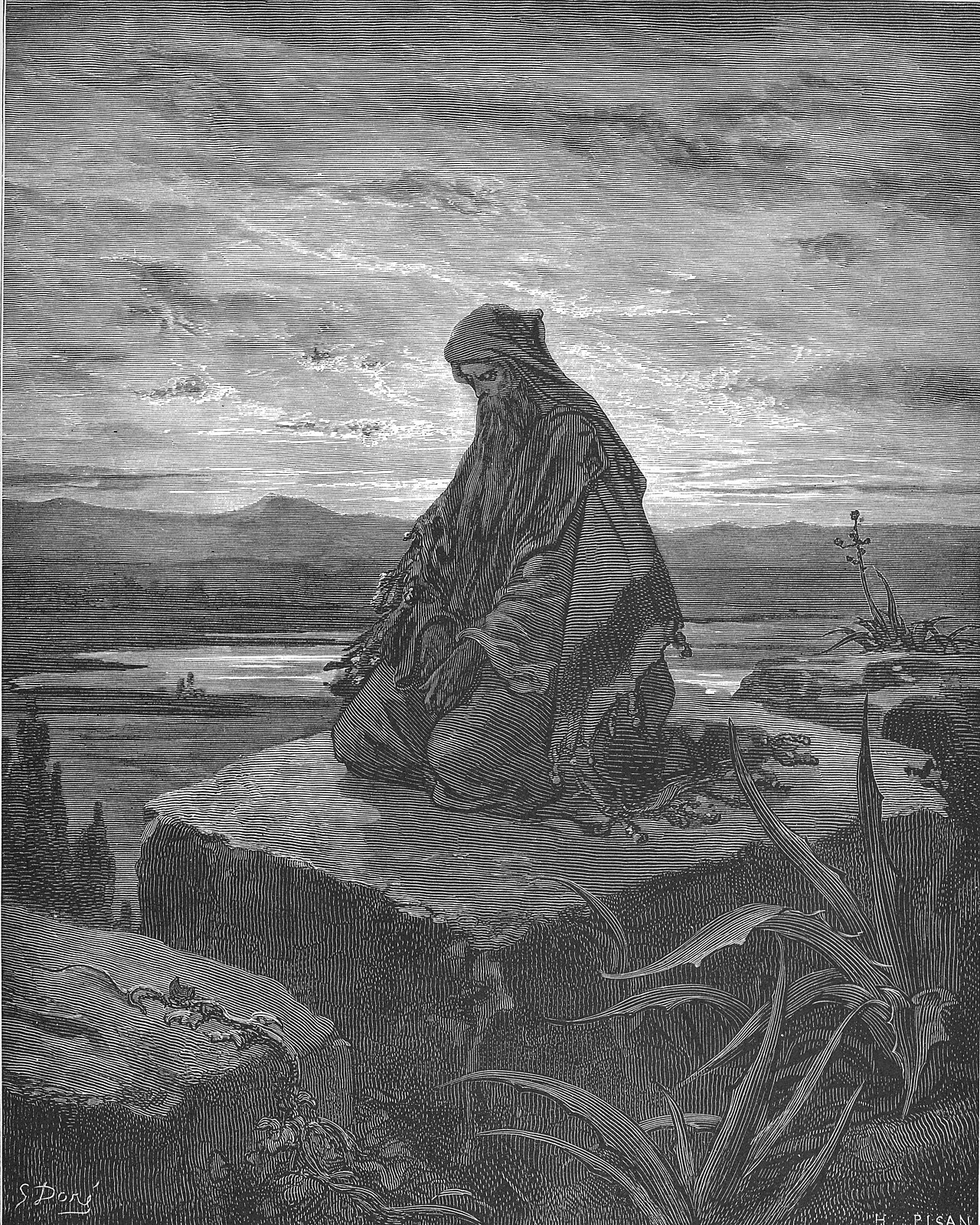
Isaiahchapter 51
23 verses · Isaiah · 8th century BC · The Prophets
“Listen to Me, you who pursue righteousness, you who seek the LORD: Look to the rock from which you were cut, and to the quarry from which you were hewn.
Introduction
Isaiah, The Prophets, Isaiah Overview.
Isaiah wrote this chapter for a small and discouraged remnant counting how few they were. It is a string of calls to listen and to wake, addressed first to those who pursue righteousness and then to Jerusalem herself. The chapter sends its hearers back to their beginnings and then lifts their eyes to the heavens and the earth. Listen for the calls to wake, spoken both to the arm of the LORD and to Jerusalem. Watch for the cup in the second half, and whose hand it ends in.
Context
- Who
- A small, discouraged remnant doing arithmetic on their own numbers
- What
- A series of calls to listen and awake, promising comfort to Zion and the removal of the cup of wrath.
- Where
- Spoken to the exiles and to Jerusalem lying in ruin.
- When
- Spoken about 700 to 690 BC by the book's own reading, and addressed to the exile generation.
- Why
- To strengthen a small and fearful remnant by pointing them to Abraham and to God's lasting salvation.
Historical context
The first image is quarry work. Look to the rock from which you were hewn and to the hole of the pit from which you were dug, a stonecutter cuts blocks out of a rock face and leaves a hole behind, and every dressed stone in Jerusalem came out of a quarry somewhere. Then the identification: look to Abraham your father and to Sarah who bore you, for I called him alone, and blessed him, and increased him. A discouraged minority is told to go and count how many Abraham was.
Show the rest of the historical context, 3 more paragraphs
The middle section retells the Exodus in the older poetry, using the sea-monster language the whole region shared. Are you not the arm that cut Rahab in pieces and wounded the dragon, that dried the sea, the waters of the great deep, and made the depths of the sea a road for the redeemed to cross? Rahab is the nickname for Egypt and also the name for the chaos monster; the poem lets both stand.
One line describes a prisoner in a hurry. The captive exile hastens to be released, that he may not die in the pit and his bread may not fail. Ancient prisons were often literal pits, and prisoners were fed by whoever remembered them; men did die down there of neglect.
The cup is the chapter's other main image. At a feast, a cup was passed and each guest drank in turn; here it is the cup of the LORD's fury, the cup of staggering, and Jerusalem has drunk it to the dregs, down to the sediment at the bottom, the bitterest part. She is described lying at the head of every street like a wild bull in a net, with no son to take her by the hand. Then the cup is taken out of her hand and put into the hand of those who tormented her.
Significance
The comfort offered is not that the suffering was imaginary. God takes responsibility for the cup and then removes it.
Show the rest of the significance, 1 more paragraph
And the reason not to fear a man who dies and a son of man made like grass is put next to what will not die: my salvation shall be forever, and my righteousness shall not be abolished. The heavens will vanish like smoke and the earth wear out like a garment; that is the comparison being drawn.
This chapter in Jewish lifeWhat this chapter is in Jewish life and reading.
What is done
The site's own table in src/lib/hebraic/readings.ts sets this chapter in two prophetic readings of the annual cycle. It is read as the Haftarah of Eikev, Isaiah 49:14 to 51:3, in both rites, on the Sabbath of the portion Deuteronomy 7:12 to 11:25. It is read as the Haftarah of Shoftim, Isaiah 51:12 to 52:12, in both rites, on the Sabbath of the portion Deuteronomy 16:18 to 21:9. A congregation keeping that cycle hears the verses of each reference read aloud after the Torah portion of its Sabbath.
The corpus joins the chapter to the weeks of the Torah portions through the works arranged by portion. Under the twelfth verse it carries Bereshit Rabbati, Parashat Vayetze 51. Under the thirteenth verse it carries Bereshit Rabbati, Parashat Vayishlach 48. Under the twenty-third verse it carries Bereshit Rabbati, Parashat Vayishlach 6.
How it is read
Two commentators on this chapter carry English in the corpus. Rashi is quoted from The Judaica Press complete Tanach with Rashi, translated by A. J. Rosenberg, which Sefaria reports as CC-BY, and every quotation of it is held to fifty words or fewer because the translation is modern. Ibn Ezra is quoted from the version Sefaria titles Commentary of Ibn Ezra on Isaiah - trans. by M. Friedlander, 1873, which it reports as Public Domain.
Rashi reads the call to the rock from which Israel was hewn in a few words and gives most of his notes on the chapter to single words. The Torah that goes out in the fourth verse he widens: "The words of the prophets are Torah", and the judgments that follow bring rest to the peoples (Rashi on Isaiah 51:4:1). The heavens that vanish like smoke he reads as the princes of the heathen hosts in heaven (Rashi on Isaiah 51:6:1).
The ninth verse opens a prayer, and Rashi marks it: "This is the prophet’s prayer". The return of the redeemed in the eleventh verse he joins to the same prayer (Rashi on Isaiah 51:9:1 and 51:11:1). Ibn Ezra reads the drying of the sea in the tenth verse as the division of the Red Sea (Ibn Ezra on Isaiah 51:10:1).
Rashi turns the comfort of the twelfth verse on Zion: "the daughter of the righteous like you and full of merits, why should you fear man, whose end is to die?" (Rashi on Isaiah 51:12:1). At the seventeenth verse he sets his own reading against Jonathan's. Jonathan renders the word as a kind of cup, and Rashi takes it as the dregs fixed to the bottom of the vessel, supporting it from a psalm (Rashi on Isaiah 51:17:1). Ibn Ezra reads the eighteenth verse as a plain description of Israel in exile: "Israel has no king nor judge, to be saved by him" (Ibn Ezra on Isaiah 51:18:1).
What the rabbis say
The corpus carries forty rabbinic locators on this chapter and the text of none, so each is cited and linked here rather than quoted. On the first verse it holds Aggadat Bereshit 25:1 and Aggadat Bereshit 56:1. On the second verse it holds Ein Yaakov, Yevamot 6:19 and Midrash Lekach Tov, Numbers 23:9:1. On the third verse it holds Bereshit Rabbah 100:13 and Bereshit Rabbah 15:2. On the fourth verse it holds Bamidbar Rabbah 12:8 and Midrash Lekach Tov, Leviticus 9:1:2. On the fifth verse it holds Midrash Tehillim 17:5 and Tanna DeBei Eliyahu Rabbah 27:2.
On the sixth verse it holds Aggadat Bereshit 29:1 and Avodah Zarah 17a:13. On the seventh verse it holds Midrash Aggadah, Exodus 32:12:1. On the ninth verse it holds Mekhilta DeRabbi Yishmael, Tractate Vayehi Beshalach 4:4 and Mekhilta DeRabbi Yishmael, Tractate Vayehi Beshalach 4:7. On the tenth verse it holds Midrash Aggadah, Deuteronomy 1:1:12 and Midrash Lekach Tov, Genesis 18:20:2. On the eleventh verse it holds Aggadat Bereshit 36:1 and Bamidbar Rabbah 16:25. On the twelfth verse it holds Bereshit Rabbati, Parashat Vayetze 51 and Eikhah Rabbah 1:23. On the thirteenth verse it holds Bereshit Rabbah 76:1 and Bereshit Rabbati, Parashat Vayishlach 48.
On the fourteenth verse it holds Berakhot 57a:14 and Berakhot 57b:14. On the fifteenth verse it holds Jerusalem Talmud Megillah 3:6:3 and Otzar Midrashim, Midrashim of Rabbi Akiba, Aleph Bet of Rabbi Akiba (Version 1) 44. On the sixteenth verse it holds Avot DeRabbi Natan, Recension B 44:10 and Bereshit Rabbah 2:5. On the seventeenth verse it holds Bereshit Rabbah 16:4. On the eighteenth verse it holds Midrash Sekhel Tov, Bereshit 21:18:1 and Midrash Sekhel Tov, Bereshit 47:17:3. On the twentieth verse it holds Bava Kamma 117a:19 and Ein Yaakov (Glick Edition), Bava Kama 10:1.
On the twenty-first verse it holds Ein Yaakov (Glick Edition), Eiruvin 6:5 and Ein Yaakov, Eiruvin 6:10. On the twenty-second verse it holds Bereshit Rabbah 41:9 and Midrash Tehillim 146:4. On the twenty-third verse it holds Bereshit Rabbah 69:5 and Bereshit Rabbati, Parashat Vayishlach 6. What each of them teaches is a saying of the rabbis, and is reported as theirs wherever this site quotes one. The quotations wait on a fetch that carries the text.
Sources: Rashi, Rashi on Isaiah 51:1:1 to 51:23:1, The Judaica Press complete Tanach with Rashi, translated by A. J. Rosenberg, reported CC-BY; Ibn Ezra, Ibn Ezra on Isaiah 51:7:1 to 51:18:1, Commentary of Ibn Ezra on Isaiah - trans. by M. Friedlander, 1873, reported Public Domain; The Sefaria corpus, scripts/data/sources/sefaria/isaiah/51.json, the 40 Talmud and Midrash locators of this chapter; The site's own files, src/lib/hebraic/readings.ts, the Haftarah entries for Eikev (Isaiah 49:14 to 51:3) and Shoftim (Isaiah 51:12 to 52:12).
The heads below are this chapter's scenes. The numbered points under each are its verses.
Look to the Rock Whence Ye Were Hewn
Isaiah 51:1-2
Look to the rock from which you were cut: The chapter opens with a call: “Look to the rock from which you were cut, and to the quarry from which you were hewn”. Verse 2 names the rock as Abraham and Sarah. The God who made a nation from one childless couple is the God promising to restore Zion.
Isaiah 51:1
“They are such as follow after righteousness, such as are very desirous and solicitous both to be justified and to be sanctified, are pressing hard after this, to have the favour of God restored to them and the image of God renewed on them. These are those that seek the Lord, for it is only in the say of righteousness that we can seek him with any hope of finding him.”
Matthew Henry · Commentary on the Whole Bible (1707-1721)puritan
1 more voice on this verseWhat preachers and commentators have said about this verse, in their own words.
Isaiah 51:1
“Hearken unto me - That is, to the God of their fathers, who now addresses them. They are regarded as in exile and bondage, and as desponding in regard to their prospects. In this situation, God, or perhaps more properly the Messiah (compare the notes at Isa. 1), is introduced as addressing them with the assurances of deliverance. Ye that follow after righteousness - This is addressed evidently to those who sought to be righteous, and who truly feared the Lord. There was a portion of the nation that continued faithful to Yahweh.”
he was but one: Wesley notes that Abraham alone was called out of all his kindred to an unknown land. He was blessed when reason saw no hope. Gregory of Nyssa turns the call to look to Abraham your father on all who wander from virtue.
Isaiah 51:2
“For the divine voice says somewhere in the prophecy of Isaiah, "Consider Abraham, your father, and Sarah, who gave you birth." Scripture gives this admonition to those who wander outside virtue.”
Gregory of Nyssa · written before 395 · Life of Moses, Prologue 11patristic
2 more voices on this verse
Isaiah 51:2
“I called him alone - As I have made out of one a great nation; so, although ye are brought low and minished, yet I can restore you to happiness, and greatly multiply your number.”
Adam Clarke · Commentary on the Bible (1810-1826)evangelical
Isaiah 51:2
“Him alone - To follow me to an unknown land: him only of all his kindred. Increased - Into a vast multitude, when his condition was desperate in the eye of reason. And therefore God can as easily raise his church when they are in the most forlorn condition.”
John Wesley · Explanatory Notes upon the Old Testament (1765)evangelical
For the LORD will comfort Zion: The promise reaches past the exile to the garden: “He will make her wilderness like Eden and her desert like the garden of the LORD”. The verse ends on the sound of the people in it: “Joy and gladness will be found in her, thanksgiving and melodious song”.
Isaiah 51:3
“For the Lord shall comfort Zion - On the word ‘Zion,’ see the notes at Isa 1:8. The meaning here is, that he would again restore it from its ruins. The argument is drawn from the statement in the previous verses. If God had raised up so great a nation from so humble all origin, he had power to restore the waste places of Judea to more than their former beauty and prosperity (see the notes at Isa 40:1). And he will make her wilderness - Judea is here represented as lying waste.”
1 more voice on this verse
Isaiah 51:3
“What the comfort is that belongs to God's people. That the gospel of Christ shall be preached and published to the world: A law shall proceed from me, an evangelical law, the law of Christ, the law of faith, ch. ii. This law is his judgment; for it is that law of liberty by which the world shall be governed and judged.”
Matthew Henry · Commentary on the Whole Bible (1707-1721)puritan
Isaiah 51:4-6
for a law will go out from Me: The LORD calls His people to listen, “for a law will go out from Me, and My justice will become a light to the nations”. Verse 6 sets the heavens and earth as passing things against the fixed thing: “My salvation will last forever, and My righteousness will never fail”.
Isaiah 51:4
“Hearken unto me, my people,.... His special people, whether Jews or Gentiles, chosen by him, taken into covenant with him; given to Christ, redeemed by him as a peculiar people, and called by his grace; these are exhorted to hearken to him; to his word, as the Targum; see Isa 51:1, and give ear unto me, O my nation; not the nation of the Jews only, but the Gentiles; a nation taken out of a nation, even out of all nations; a chosen and a holy nation.”
2 more voices on this verse
Isaiah 51:4
“By people - O my nation “O ye peoples - O ye nations” - For עמי ammi, my people, the Bodleian MS. and another read עמים ammim, ye peoples; and for לאומי leumi, my nation, the Bodleian MS. and eight others, (two of them ancient), and four of De Rossi’s, read לאמים leummim, ye nations; and so the Syriac in both words.”
Adam Clarke · Commentary on the Bible (1810-1826)evangelical
Isaiah 51:4
“My people - Ye Jews, whom I chose to be my peculiar people. A law - A new law, even the doctrine of the gospel. Judgment - Judgment is here the same thing with law, the word of God, or the evangelical doctrine, of which he saith that he will make it to rest, that is settle and establish it.”
John Wesley · Explanatory Notes upon the Old Testament (1765)evangelical
My righteousness draws near: Barnes, after Lowth, takes the righteousness that draws near as the LORD keeping faith with His people and His promises. Gill reads a righteous One, with the Vulgate, and applies it to Christ, where Grotius saw Cyrus. Cyril hears the Son in both words.
Isaiah 51:5
“My righteousness is near - The word ‘righteousness’ is used in a great variety of significations. Here it means, probably, the faithful completion of his promises to his people (Lowth). My salvation is gone forth - The promise of salvation is gone forth, and already the execution of that purpose is commenced. He would soon deliver his people; he would at no distant period extend salvation to all nations. And mine arm shall judge the people - That is, shall dispense judgment to them.”
2 more voices on this verse
Isaiah 51:5
“If we want to know the meaning of these words in the person of God and Father, then we say that he calls the Son "his righteousness." For we are saved in him … through his great mercy.… He is called "righteousness" and "salvation" and rightly so. For he has removed all evil from us and, freeing us from the chains of death, has led us into eternal life.… Those who were once weak and prostrate on the ground grasp his right hand and gain the hope of an unexpected salvation.”
Cyril of Alexandria · written before 444 · Commentary on Isaiah 4:5.51:5patristic
Isaiah 51:5
“My righteousness is near,.... These are either the words of God the Father, and to be understood not of his essential righteousness, nor of his vindictive justice; but of the righteousness of his Son, which he calls his own, because he approves and accepts of it, imputes and reckons it to his people, and with it justifies them. The words may be rendered, "my righteous One", as in the Vulgate Latin version; not Cyrus, as Grotius; but Christ, God's righteous servant, who was near to come in the flesh, in order to work righteousness.”
the heavens will vanish like smoke: Gill says the word for vanish means to melt like salt. Wesley and Jerome read the heavens and earth as changed for the better, the way smoke passes while its substance remains. Aben Ezra, cited by Clarke, drew from the salvation that will last forever the immortality of the soul.
Isaiah 51:6
“Lift up your eyes to the heavens,.... And observe their beauty and order, the constant and regular motion of the heavenly bodies, the firmness and solidity of them: and look upon the earth beneath; how stable and well founded it is: for the heavens shall vanish away like smoke; though they are so firm, and have lasted so long, and have kept their constant situation and course, yet they shall melt away like salt, as the word (k) signifies, and disappear in an instant like smoke.”
4 more voices on this verse
Isaiah 51:6
“JEROME translates, as English Version, and infers that "in like manner" as man, the heavens (that is, the sky) and earth are not to be annihilated, but changed for the better (Isa 65:17). righteousness--My faithfully fulfilled promise (see on Isa 51:5).”
Jamieson, Fausset & Brown · Commentary Critical and Explanatory on the Whole Bible (1871)reformed
Isaiah 51:6
“Again, as to their malignantly asserting that if heaven is indeed the throne of God, and earth His footstool, and if it is declared that the heaven and earth shall pass away, then when these pass away the God who sitteth above must also pass away, and therefore He cannot be the God who is over all; in the first place, they are ignorant what the expression means, that heaven is [His] throne and earth [His] footstool.”
Irenaeus · written before 202 · Against Heresies (Book IV, Chapter 3), Section 1patristic
Isaiah 51:6
“The heavens - The heavens and earth shall pass away, in regard of their present state, and properties, and use, as smoak is said to vanish, tho' the substance of it be not destroyed.”
John Wesley · Explanatory Notes upon the Old Testament (1765)evangelical
Isaiah 51:6
“My salvation shall be for ever - Aben Ezra says, From this verse divines have learnt the immortality of the soul. Men shall perish as the earth does, because they are formed from it; but they who are filled with the salvation of God shall remain for ever. See Kimchi.”
Adam Clarke · Commentary on the Bible (1810-1826)evangelical
Isaiah 51:7-8
Do not fear the scorn of men: Those with the law in their hearts are told, “Do not fear the scorn of men; do not be broken by their insults”. “For the moth will devour them like a garment, and the worm will eat them like wool”, the picture of decay used at 50:9.
Isaiah 51:7
“Hearken unto me, ye that know righteousness - My people who are acquainted with my law, and who are to be saved. This is addressed to the pious parlor the Jewish nation. Fear ye not the reproach of men - If we have the promise of God, and the assurance of his favor, we shall have no occasion to dread the reproaches and the scoffs of people (compare Mat 10:28).”
1 more voice on this verse
Isaiah 51:7
“It is a disparagement to us to give way to them: Who art thou, that thou shouldst be afraid? In the original, the pronoun is feminine, Who art thou, O woman! unworthy the name of a man? Such a weak and womanish thing it is to give way to perplexing fears. [1.] It is absurd to be in such dread of a dying man.”
Matthew Henry · Commentary on the Whole Bible (1707-1721)puritan
the worm will eat them like wool: Barnes reads the moth as the agent itself, one of the smallest insects, so that the scornful are weaker than a worm beside the LORD. Aquinas sets the figure beside Job 13:28. The scorn of men dies with the men.
Isaiah 51:8
“For the moth - (see Isa 50:9). The idea is, that they shall be consumed as the moth eats up a garment; or rather, that the moth itself shall consume them as it does a garment: that is, that they were so weak when compared with Yahweh that even the moth, one of the smallest, and most contemptible of insects, would consume them.”
1 more voice on this verse
Isaiah 51:8
“But when heaven and earth pass away, when all flesh and the glory of it wither as grass, the word of the Lord endures for ever, and not one iota or tittle of that shall fall to the ground. Those whose happiness is bound up in Christ's righteousness and salvation will have the comfort of it when time and days shall be no more. What use they are to make of this comfort.”
Matthew Henry · Commentary on the Whole Bible (1707-1721)puritan
Awake, Arm of the LORD That Cut Rahab in Pieces
Isaiah 51:9-10
Awake, awake, put on strength, O arm of the LORD: The prayer calls the arm of the LORD to wake, naming the one “who cut Rahab to pieces, who pierced through the dragon”. Verse 10 tells the deed plainly, the sea dried up. Isaiah 30:7 uses Rahab as a name for Egypt, so the exodus is told twice.
Isaiah 51:9
“The arm of the Lord is Christ, or it is put for God himself, as Ps. xliv. Awake! why sleepest thou? He that keeps Israel neither slumbers nor sleeps; but, when we pray that he would awake, we mean that he would make it to appear that he watches over his people and is always awake to do them good.”
Matthew Henry · Commentary on the Whole Bible (1707-1721)puritan
1 more voice on this verse
Isaiah 51:9
“Awake, awake - This verse commences a new subject (see the analysis of the chapter). It is the solemn and impassioned entreaty of those who were in exile that God would interpose in their behalf, as he did in behalf of his people when they were suffering in cruel bondage in Egypt. The word ‘awake’ here, which is addressed to the arm of Jehovah, is a petition that it might be roused from its apparent stupor and inactivity, and its power exerted in their behalf.”
a road in the depths: Barnes grounds the appeal in the Red Sea crossing of Exodus 14:21, the deliverance the prophets and poets of Israel return to most. The arm that made that road can make another. Jerome carries the redeemed of this verse to the Church, ransomed by the blood of Christ.
Isaiah 51:10
“Art thou not it - Art thou not still the same? The ground of the appeal is, that the same arm that dried up the sea, and made a path for the Jewish people, was still able to interpose and rescue them. Which hath dried the sea - The Red Sea when the children of Israel passed over Exo 14:21. This is the common illustration to which the Hebrew prophets and poets appeal, when they wish to refer to the interposition of God in favor of their nation (compare Ps. 105; see the notes at Isa 43:16).”
So the redeemed of the LORD will return: “So the redeemed of the LORD will return and enter Zion with singing, crowned with everlasting joy” repeats almost word for word 35:10. It joins the exodus of verses 9 and 10 to the exiles' own return. The end of grief is stated as fact: “sorrow and sighing will flee”.
Isaiah 51:11
“Therefore the redeemed of the Lord - This is probably the language of Yahweh assuring them, in answer to their prayer, that his ransomed people should again return to Zion. And everlasting joy shall be upon their head - This entire verse occurs also in Isa 35:10. See it explained in the note on that verse. The custom of singing alluded to here on a journey is now very common in the East.”
4 more voices on this verse
Isaiah 51:11
“10 , where we find this promise, that the redeemed of the Lord, when they are released out of their captivity in Babylon, shall come with singing unto Zion. Sinners, when they are brought out of the slavery of sin into the glorious liberty of God's children, may come singing, as a bird got loose out of the cage.”
Matthew Henry · Commentary on the Whole Bible (1707-1721)puritan
Isaiah 51:11
“There shall be a second exodus (Isa 11:11-16; 27:12, 13). singing--image from the custom of singing on a journey when a caravan is passing along the extended plains in the East. everlasting joy-- (Jude 24). sorrow . . . flee away-- (Re 21:4).”
Jamieson, Fausset & Brown · Commentary Critical and Explanatory on the Whole Bible (1871)reformed
Isaiah 51:11
“Therefore the redeemed of the Lord shall return,.... Or "and", or "so" (q). In like manner, and as sure as the Israelites had a way made for them through the sea to pass over, so sure shall all those that are redeemed by the blood of Christ from sin, Satan, the law, death, and hell, be gathered out of the nations of the world, and from the antichristian states, and shall be converted and turn to the Lord.”
Isaiah 51:11
“Therefore - This verse contains an answer to the prophet's prayer. I did these great things, and I will do the like again. Joy - Like a crown of glory.”
John Wesley · Explanatory Notes upon the Old Testament (1765)evangelical
Isaiah 51:12-13
The comfort turns into a rebuke of fear of “a son of man who withers like grass”. That man is set beside the Maker, and the fear is traced to a forgetting. The closing question about “the fury of the oppressor” speaks of that fury as already gone.
Isaiah 51:12
“I even I am he that comforteth you - The word ‘I’ is repeated here to give emphasis to the passage, and to impress deeply upon them the fact that their consolation came alone from God. The argument is, that since God was their protector and friend, they had no occasion to fear anything that man could do. Of a man that shall die - God your comforter will endure forever. But all men - even the most mighty - must soon die.”
your Maker, who stretched out the heavens: Barnes finds the fear common among the people of God, who count the strength of their foes and forget the promises made to them. Athanasius reads the Maker who laid the foundations of the earth as working through His Word, who is His Wisdom. The Maker still holds that power.
Isaiah 51:13
“And forgettest the Lord thy Maker - These verses are designed to rebuke that state of the mind - alas! too common, even among the people of God - where they are intimidated by the number and strength of their foes, and forget their dependence on God, and his promises of aid. In such circumstances God reproves them for their want of confidence in him, and calls on them to remember that he has made the heavens, and has all power to save them. That hath stretched forth the heavens - (See the notes at Isa 40:12, Isa 40:26).”
1 more voice on this verse
Isaiah 51:13
And David being taught this, and knowing that the Lord's hand was nothing else than Wisdom, he says in the psalm, "In wisdom you have made them all; the earth is full of your creation." Solomon also received the same from God and said, "The Lord by wisdom founded the earth." And John, knowing that the Word was the hand and the Wisdom, preached, "In the beginning was the Word, and the Word was with God, and the Word was God … without him was not anything made."
Athanasius of Alexandria · written before 373 · Defence of the Nicene Definition 4patristic
The captive will soon be freed: One verse promises release: “The captive will soon be freed; he will not die in the dungeon, and his bread will not be lacking”. The dungeon is the pit in the Hebrew, the language of prison and near death, the exile's state at its worst before the promise turns.
Isaiah 51:14
“The captive exile hasteneth that he may be loosed “He marcheth on with speed, who cometh to set free the captive” - Cyrus, if understood of the temporal redemption from the captivity of Babylon; in the spiritual sense, the Messiah, who comes to open the prison to them that are bound.”
Adam Clarke · Commentary on the Bible (1810-1826)evangelical
1 more voice on this verse
Isaiah 51:14
“The Lord of hosts is his name, his name for ever, the name by which his people have long known him. And, as he is able to help them, so he is willing and engaged to do it; for he is thy God, O captive-exile! thine in covenant.”
Matthew Henry · Commentary on the Whole Bible (1707-1721)puritan
Isaiah 51:15-16
For I am the LORD your God who stirs up the sea: The LORD names Himself by the sea, the God “who stirs up the sea so that its waves roar”, the exodus claimed as His credential. Verse 16 applies the language of creation: “to establish the heavens, to found the earth, and to say to Zion, ‘You are My people.’”
Isaiah 51:15
“But I am the Lord thy God - In order to show them that he was able to save them, God again refers to the fact that he had divided the sea, and delivered their fathers from bondage and oppression. That divided the sea - The Red Sea. The Chaldee renders this, ‘That rebuked the sea.’ The Septuagint, Ὁ ταράσσων ho tarassōn - ‘Who disturbs the sea.’ or, who excites a tempest.”
covered you with the shadow of My hand: Clarke judges the Hebrew to plant the heavens obscure and likely a slip for the word to stretch out, used in verse 13. Gill names three mouths the words may be put in: the church, the prophet and Christ. Jerome hears the Son, who speaks the Father's words.
Isaiah 51:16
“For God's word is frequently said to be put into the mouths, not only of the prophets, but of the people also. Covered - Have protected thee by my almighty power, that I may bring thee to that perfect and blessed estate which is reserved for the days of the Messiah, which in scripture phrase is called a making of new heavens, and a new earth, chap. lxv, 17.”
John Wesley · Explanatory Notes upon the Old Testament (1765)evangelical
2 more voices on this verse
Isaiah 51:16
“That I may plant the heavens “To stretch out the heavens” - In the present text it is לנתע lintoa, “to plant the heavens:” the phrase is certainly very obscure, and in all probability is a mistake for לנטות lintoth. This latter is the word used in Isa 51:13 just before, in the very same sentence; and this phrase occurs very frequently in Isaiah, Isa 40:22, Isa 42:5, Isa 44:24, Isa 45:12; the former in no other place.”
Adam Clarke · Commentary on the Bible (1810-1826)evangelical
Isaiah 51:16
“And I have put my words in thy mouth,.... His promises and his truths, either in the mouth of his church, and people for them, both to preserve and transmit to future generations, and to publish and declare to the comfort of each other, Isa 59:21 or to the Prophet Isaiah, to make known to the people of Israel; or to Christ himself, the great Prophet in Israel, by whom grace and truth are come, and by whom God has spoken all his mind and will, and in whom all the promises are yea and amen.”
The Cup of Trembling Taken Out of Jerusalem's Hand
Isaiah 51:17-20
Awake, awake! Rise up, O Jerusalem: The cry now wakes Jerusalem, “you who have drunk from the hand of the LORD the cup of His fury”. Her sons “lie at the head of every street, like an antelope in a net”. The city lies spent, the low point before the reversal of verses 21 to 23.
Isaiah 51:17
“Anger, which is called "the cup in the hand of the Lord" and "the cup of falling that is drained," is in proportion to transgressions, even though he abates to all some of what is their due and dilutes with compassion the unmixed draught of his wrath. For he inclines from severity to indulgence toward those who accept chastisement with fear, and who after a slight affliction conceive and are in pain with conversion and bring forth the perfect spirit of salvation.”
Gregory of Nazianzus · written before 390 · On His Father's Silence, Oration 16:4patristic
1 more voice on this verse
Isaiah 51:17
“Awake, awake - (See the notes at Isa 51:9). This verse commences an address to Jerusalem under a new figure or image. The figure employed is that of a man who has been overcome by the cup of the wrath of Yahweh, that had produced the same effect as inebriation. Jerusalem had reeled and fallen prostrate. There had been none to sustain her, and she had sunk to the dust. Calamities of the most appalling kind had come upon her, and she is now called on to arouse from this condition, and to recover her former splendor and power.”
no one to take her hand: Barnes takes the picture from a drunken man who needs someone to steady and guide him. The cup of verse 17 has left Jerusalem staggering. Aquinas sees every human remedy shut off, both defense and rescue.
Isaiah 51:18
“There is none to guide her - The image here is taken from the condition of one who is under the influence of an intoxicating draught, and who needs some one to sustain and guide him. The idea is, than among all the inhabitants of Jerusalem in the time of the calamity, there was none who could restore to order the agitated and distracted affairs of the nation. All its wisdom was destroyed; its counsels perplexed; its power overcome. All the sons whom she hath brought forth - All the inhabitants of Jerusalem.”
devastation and destruction, famine and sword: Barnes, after Lowth, pairs the words crosswise, devastation by famine and destruction by the sword. Theodoret reads the pair as bold enemies and fleeing allies. The question of who will grieve asks, in Barnes's reading, who could pity her enough to bring relief.
Isaiah 51:19
“So famine and sword are not named as new evils, but only as the particular ways of bringing the destruction. By whom - I cannot find any man who is able to comfort and relieve thee.”
John Wesley · Explanatory Notes upon the Old Testament (1765)evangelical
1 more voice on this verse
Isaiah 51:19
“These two things are come unto thee - Margin, ‘Happened.’ That is, two sources of calamity have come upon thee; to wit, famine and the sword, producing desolation and destruction; or desolation by famine, and destruction by the sword (see Lowth on Hebrew Poetry, Lect. xix.) The idea here is, that far-spread destruction had occurred, caused by the two things, famine and the sword. Who shall be sorry for thee? - That is, who shall be able so to pity thee as to furnish relief? Desolation - By famine.”
like an antelope in a net: The Hebrew animal is uncertain. Clarke gives the oryx and Jerome a trapped wild goat. Wesley reads the sons at the head of every street as dead by famine, and the rest as struggling like an antelope in the net.
Isaiah 51:20
“As a wild bull in a net: they are full, etc. “Like the oryx taken in the toils; drenched to the full” - “Perhaps מכמרה מלאים michmerah meleim.” Secker. The demonstrative ה he, prefixed to מלאים meleim, full, seems improper in this place.”
Adam Clarke · Commentary on the Bible (1810-1826)evangelical
1 more voice on this verse
Isaiah 51:20
“Fainted - They are so far from being able to comfort thee, that they themselves faint away. They lie - Dead by famine or the sword. As a bull - Those of them who are not slain are struggling for life.”
John Wesley · Explanatory Notes upon the Old Testament (1765)evangelical
Isaiah 51:21-23
Therefore now hear this, you afflicted one: The spent city, “drunken, but not with wine”, hears the reversal: “See, I have removed from your hand the cup of staggering”. The cup passes to other hands, “I will place it in the hands of your tormentors”. The judgment Jerusalem drank is turned back on her oppressors.
Isaiah 51:21
“Therefore hear now this, thou afflicted,.... By Babylon, by antichrist and his followers; hear, for thy comfort, the following prophecy: and drunken, but not with wine; not with wine in a literal sense; nor with the wine of the fornication of the whore of Rome; nor with idolatry, as the kings of the earth are said to be, Rev 17:2 but, as the Targum expresses it, with tribulation; with afflictions at the hand of God, and persecutions from men.”
who defends His people: Henry reads the title as patron, a God who takes a wrong done to His people as a wrong done to Himself. Their cause may seem lost for a time. Barnes reads the cup of staggering removed from her hand as an end to such trials, as in Isaiah 54:7-9.
Isaiah 51:22
“I have taken out of thy hand the cup of trembling - (See the notes at Isa 51:17). This verse contains a promise that they would be delivered from the effect of the wrath of God, under which they had been suffering so long. Thou shalt no more drink it again - Thou shalt no more be subject to similar trials and calamities (see Isa 54:7-9).”
1 more voice on this verse
Isaiah 51:22
"That he is the God who pleads the cause of his people, as their patron and protector, who takes what is done against them a done against himself." The cause of God's people, and of that holy religion which they profess, is a righteous cause, otherwise the righteous God would not appear for it; yet it may for a time be run down, and seem as if it were lost.
Matthew Henry · Commentary on the Whole Bible (1707-1721)puritan
you made your back like the ground: Barnes takes the tormentors to be the Babylonians, conquerors who set their feet on the necks of conquered kings. Henry sees Daniel's accusers thrown into the den. Gregory hears the command to lie down in the voice of evil spirits, who walk over a soul bent to the ground.
Isaiah 51:23
“But I will put it into the hand of them that afflict thee - The nations that have made war upon thee, and that have reduced thee to bondage, particularly the Babylonians. The calamities which the Jews had suffered, God would transfer to their foes. Which have said to thy soul, Bow down, that we may go over - This is a striking description of the pride of eastern conquerors. It was not uncommon for conquerors actually to put their feet on the necks of conquered kings, and tread them in the dust.”
2 more voices on this verse
Isaiah 51:23
“Hence another prophet says concerning unclean spirits: Who said to your soul, Bow down that we may pass over. For the soul stands upright when it desires heavenly things, and is by no means bent toward the lowest things. But when malign spirits see it standing in its uprightness, they cannot pass through it. For their passing through is to scatter unclean desires upon it.”
Gregory the Dialogist · written before 604 · Forty Gospel Homilies, Homily 31patristic
Isaiah 51:23
“Babylon's case shall be as bad as ever Jerusalem's was. Daniel's persecutors shall be thrown into Daniel's den; let them see how they like it. And the Lord is known by these judgments which he executes.”
Matthew Henry · Commentary on the Whole Bible (1707-1721)puritan
Keep studying
Studies5
Sources for this chapter
The summary
Jamieson, Fausset & Brown, Commentary Critical and Explanatory; John Calvin, Commentaries; John Wesley, Notes on the Old Testament and Matthew Henry, Complete Commentary.
The exposition
Adam Clarke, Commentary on the Bible; Albert Barnes; Athanasius of Alexandria, DEFENCE OF THE NICENE DEFINITION 4; Cyril of Alexandria, COMMENTARY ON ISAIAH 4:5.51:5; Franz Delitzsch, Biblical Commentary on the Prophecies of Isaiah; Gregory of Nyssa, LIFE OF MOSES, PROLOGUE 11; Gregory the Dialogist, Forty Gospel Homilies, Homily 31; Jamieson, Fausset & Brown, Commentary Critical and Explanatory on the Whole Bible; Jerome, Commentary on Isaiah; John Calvin, Commentary on the Book of the Prophet Isaiah; John Gill; John Wesley, Explanatory Notes upon the Old Testament; Matthew Henry, Commentary on the Whole Bible; Theodoret of Cyrus, COMMENTARY ON ISAIAH 16:51.19 and Thomas Aquinas, Commentary on Isaiah.