
2 Timothychapter 1
18 verses · Paul, by tradition · AD 66 or 67 · Paul's letters
For God has not given us a spirit of fear, but of power, love, and self-control.
Introduction
Paul, by tradition, Paul's letters, 2 Timothy Overview.
Paul wrote this letter from a Roman prison near the end of his life, and it is the last of his letters that we have. He wrote to Timothy, the younger man he had trained for years and left to lead the church at Ephesus. Timothy was timid by nature, and friends were leaving Paul as the danger grew. The chapter opens with a father's warmth and then turns to a charge. Listen for the word ashamed and for how often it returns. Listen also for what is entrusted, and to whom.
Context
- Who
- A colleague deciding whether to be publicly associated with a condemned man
- What
- The opening of Paul's last letter, with its greeting, its thanksgiving for Timothy's faith and the first charge to guard what was entrusted to him.
- Where
- Written from prison in Rome to Timothy, who was most likely at Ephesus in the province of Asia.
- When
- Near the end of Paul's life, about AD 66 or 67 on the traditional dating, during a second imprisonment in Rome.
- Why
- To strengthen Timothy against fear and shame while Paul was in chains and many in Asia had turned away from him.
Historical context
Roman prisons did not feed people. A prisoner ate what friends brought, and a man with no visitors starved or lived on scraps. That is why the chapter makes so much of Onesiphorus, who searched Rome until he found Paul and was not ashamed of his chain.
Show the rest of the historical context, 3 more paragraphs
Finding a prisoner in Rome took real effort. There were several holding places, custody could be in a barracks, a private house under guard, or an underground cell, and a visitor asking after a man charged with a capital offense drew attention to himself.
After the great fire of AD 64, Nero fixed the blame on Christians, and the historian Tacitus describes the punishments that followed. Being known as one of them was now genuinely dangerous in the capital, which explains the line about everyone in Asia turning away.
The chain was literal. A prisoner awaiting trial could be shackled to the wrist of the soldier guarding him, in shifts around the clock, which meant Paul was never alone and never unheard.
Significance
The first hearer was one man being asked, plainly, not to be ashamed. Everything else in the chapter supports that single request.
Show the rest of the significance, 1 more paragraph
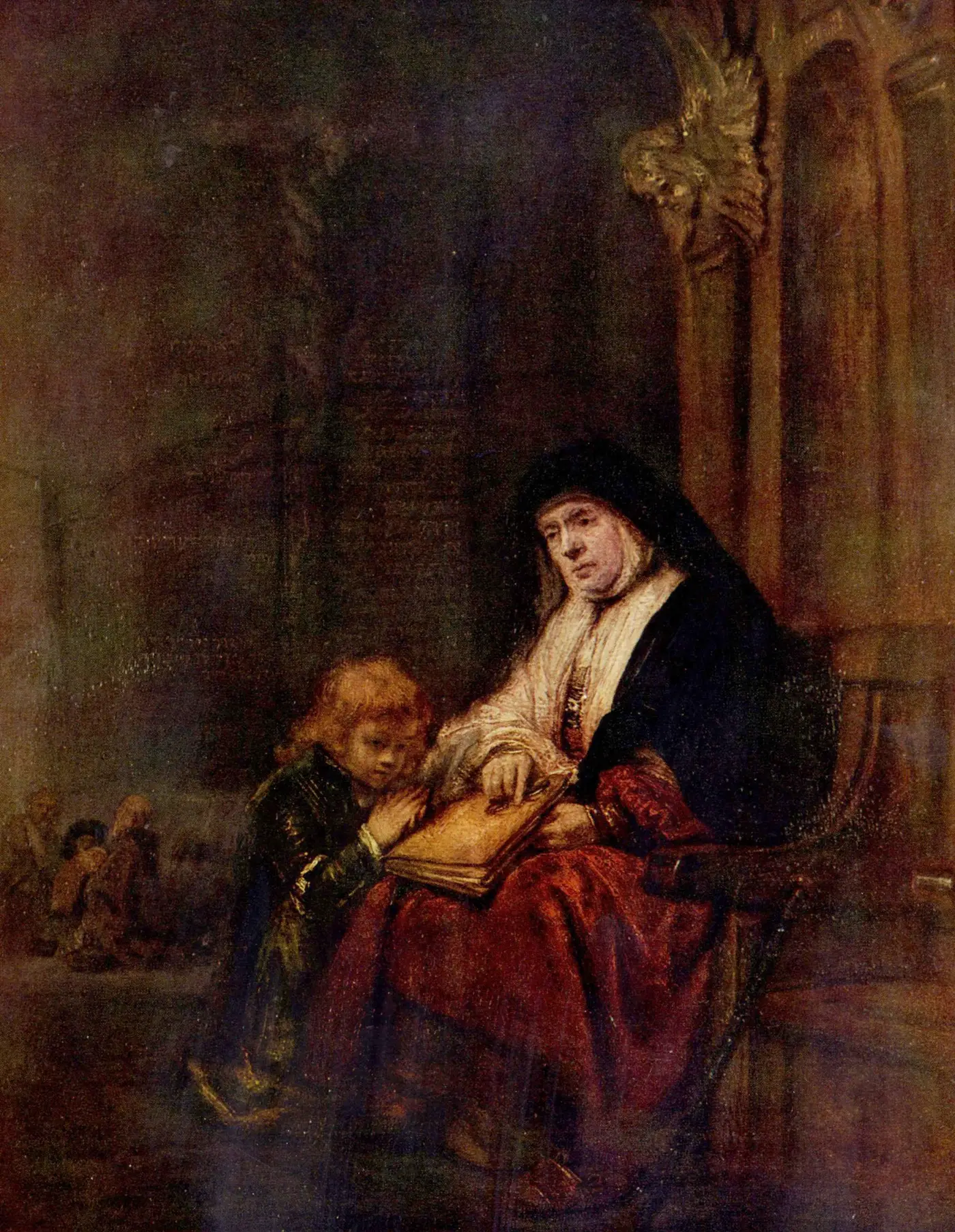
The mention of his grandmother and mother reminded Timothy that the faith he was tempted to keep quiet had been handed to him by two women who had no public standing at all.
The heads below are this chapter's scenes. The numbered points under each are its verses.
Lois, Eunice, and the Gift to Be Stirred Into Flame
2 Timothy 1:1-2
the promise of life: Paul calls Timothy my beloved child, a warmer name than my true child in the faith at 1 Timothy 1:2. He writes in a letter that also says the time of my departure is at hand.
2 Timothy 1:1
“He wrote to him while he was hindered and bound in Rome. And therefore he urged him for a second letter. He begins by praising the student, that he is a slave to Christ who dwells above.”
John Damascene · written before 749 · Commentary (church-history corpus)patristic
my beloved child: John Chrysostom notes that Paul calls Timothy beloved as well as child, because a son can be unloved. Theodoret of Cyrus explains the sonship as one of the soul, begun when Paul brought Timothy to faith. The word sets the tone for charges given in love.
2 Timothy 1:2
“But this seems to me not justified by the Greek word agapetos, which implies the attachment of reasoning and choice, on the ground of merit in the one "beloved," not of merely instinctive love. See TRENCH [Greek Synonyms of the New Testament].”
Jamieson, Fausset & Brown · Commentary Critical and Explanatory on the Whole Bible (1871)reformed
2 Timothy 1:3-4
with a clear conscience: Paul serves God with a clear conscience as did my forefathers, owning his Jewish heritage as the apostle to the Gentiles. He remembers Timothy night and day in my prayers.
2 Timothy 1:3
We grant that there are some among us who may deny that the God of the Jews is truly God. Yet that is no reason to criticize those who prove from the same Scriptures that there is one and the same God for Jews and Gentiles. So also Paul, who came to Christianity from the Jews, says clearly, "I thank my God whom I serve from my forefathers in a pure conscience."
Origen of Alexandria · written before 253 · Against Celsus 5.61patristic
2 more voices on this verse
2 Timothy 1:3
“I thank God, whom I serve from my forefathers - Paul reckoned among his forefathers the patriarchs and the holy men of former times, as being of the same nation with himself, though it may be that he also included his more immediate ancestors, who, for anything known to the contrary, may have been distinguished examples of piety. His own parents, it is certain, took care that he should be trained up in the ways of religion; compare the Php 3:4-5 notes; Act 26:4-5. The phrase “from my forefathers,” probably means, after the example of my ancestors.”
2 Timothy 1:3
“The memory of those who had gone before to whom he is about to be gathered, is now, on the eve of death, pleasant to him; hence also, he calls to mind the faith of the mother and grandmother of Timothy; as he walks in the faith of his forefathers (Ac 23:1; 28:20), so Timothy should persevere firmly in the faith of his parent and grandparent.”
Jamieson, Fausset & Brown · Commentary Critical and Explanatory on the Whole Bible (1871)reformed
Recalling your tears: Clarke leaves open which tears are meant: the Ephesian elders' parting (Acts 20:37), Timothy's tears when he first heard of Christ, or another meeting. Barnes thinks this longing is why the letter was written, and 4:9 and 4:21 repeat the call to come.
2 Timothy 1:4
“Being mindful of thy tears - Whether the apostle refers to the affecting parting with the Ephesian Church, mentioned Act 20:37, or to the deep impressions made on Timothy’s heart when he instructed him in the doctrine of Christ crucified, or to some interview between themselves, it is not certainly known. The mention of this by the apostle is no small proof of his most affectionate regards for Timothy, whom he appears to have loved as a father loves his only son.”
Adam Clarke · Commentary on the Bible (1810-1826)evangelical
which first dwelt in your grandmother Lois: Paul names three generations, Lois, Eunice, and Timothy, and calls the faith sincere, anupokritos, without hypocrisy. Acts 16:1 names Eunice a believing Jewish woman married to a Greek. The verse credits the home rather than an office with planting Timothy's faith.
2 Timothy 1:5
“When I call to remembrance the unfeigned faith that is in thee; - notes, 1Ti 1:5. On the faith of Timothy, see the notes at 1Ti 4:6. Which dwelt first in thy grandmother Lois - That is, the same faith dwelt in her; or, she was a sincere believer in Christ. It would seem probable, from this, that she was the first of the family who had been converted.”
1 more voice on this verse
2 Timothy 1:5
“Which dwelt - A word not applied to a transient guest, but only to a settled inhabitant. First - Probably this was before Timothy was born, yet not beyond St. Paul's memory.”
John Wesley · Explanatory Notes upon the New Testament (1755)evangelical
2 Timothy 1:6-7
the gift of God, which is in you: To fan into flame renders anazopyrein, to stir a smoldering coal back to flame. The command assumes the gift given through the laying on of my hands is still alive and wants use.
2 Timothy 1:6
“Wherefore - Because I remember this. I remind thee of stirring up - Literally, blowing up the coals into a flame. The gift of God - All the spiritual gifts, which the grace of God has given thee.”
John Wesley · Explanatory Notes upon the New Testament (1755)evangelical
2 more voices on this verse
2 Timothy 1:6
“Stir up the gift of God, which is in thee - The gift which Timothy had received was the Holy Spirit; and through him, a particular power to preach and defend the truth. This gift is represented here, under the notion of a fire, which, if it be not frequently stirred up, and fresh fuel added to it, will go out. This is the precise idea which the apostle had in his mind; hence the term αναζωπυρειν, which signifies to stir up the fire; to add fresh fuel to it.”
Adam Clarke · Commentary on the Bible (1810-1826)evangelical
2 Timothy 1:6
“Wherefore--Greek, "For which cause," namely, because thou hast inherited, didst once possess, and I trust ("am persuaded") still dost possess, such unfeigned faith [ALFORD]. stir up--literally, "rekindle," "revive the spark of"; the opposite of "quench" or "extinguish" (1Th 5:19).”
Jamieson, Fausset & Brown · Commentary Critical and Explanatory on the Whole Bible (1871)reformed
a spirit of fear: Tertullian reads the three gifts as the equipment of a witness. They are power to suffer, love toward God, and a sound mind that suffers only for what is blameless.
2 Timothy 1:7
"Be not thou, therefore, ashamed of the testimony of our Lord, nor of me His prisoner; " for he had said before: "For God hath not given us the spirit of fear, but of power, and of love, and of a sound mind." For we suffer with power from love toward God, and with a sound mind, when we suffer for our blamelessness.
Tertullian · written before 220 · Scorpiacepatristic
1 more voice on this verse
2 Timothy 1:7
“For God hath not given us the spirit of fear - A timorous and servile spirit. This is said in order to encourage Timothy, who was not improbably modest and diffident. But of power - Power to encounter foes and dangers; power to bear up under trials; power to triumph in persecutions. That is, it is the nature of the gospel to inspire the mind with holy courage; compare, however, Luk 24:49. And of love - Love to God and to the souls of men.”
I Know Whom I Have Believed
do not be ashamed of the testimony of our Lord: Paul names the testimony of our Lord and himself, His prisoner, together, so shame at either is shame at the same gospel. He calls Timothy to join me in suffering for the gospel, a shared suffering rather than a watched one.
2 Timothy 1:8
“Be not - ashamed of the testimony - The testimony of Christ is the Gospel in general, which proclaims Christ crucified, and redemption through his blood. In the sight of the world, there appeared to be reason why a man should be ashamed of this; ashamed of him who was crucified as a malefactor; but, when this Gospel became the power of God to the salvation of every one that believed, it was a subject to exult in. Hence the apostle, Rom 1:16 (note), said, I am not ashamed of the Gospel of Christ.”
Adam Clarke · Commentary on the Bible (1810-1826)evangelical
2 Timothy 1:9-10
before time began: Verse 10 gives the center: Christ has abolished death and illuminated the way to life and immortality through the gospel. The good news throws light on what death had hidden.
2 Timothy 1:9
“Here again allusion is made to the economy according to the flesh. For the grace which came to us from the Savior appeared, as the apostle says, just now, and has come when he sojourned among us. Yet this grace has been prepared even before we came into being.… The God of all then created us by his own Word, and knowing our destinies better than we, God foresaw that even though we were made "good," we should be transgressors of the commandment and be thrust out of paradise for disobedience.”
Athanasius of Alexandria · written before 373 · Discourses Against the Arians 2.75patristic
abolished death: The grace planned before time began now stands in the open, because the Savior has appeared. Athanasius sets the verse beside Romans 5:14: death reigned from Adam to Moses, but the presence of the Word abolished death. Its full effect waits for the resurrection, as Revelation 20:14 shows.
2 Timothy 1:10
“But is now made manifest - This purpose of God to save the Gentiles as well as the Jews, and call them to the same state of salvation by Jesus Christ, was, previously to the manifestation of Christ, generally hidden; and what was revealed of it, was only through the means of types and ceremonies. Who hath abolished death - Καταργησαντος μεν τον θανατον. Who has counterworked death; operated against his operations, destroyed his batteries, undersunk and destroyed his mines, and rendered all his instruments and principles of attack useless.”
Adam Clarke · Commentary on the Bible (1810-1826)evangelical
1 more voice on this verse
2 Timothy 1:10
"From Adam to Moses death reigned"; but the presence of the Word abolished death. No longer in Adam are we all dying. In Christ we are all reviving.
Athanasius of Alexandria · written before 373 · Discourses Against the Arians 1.59.8patristic
2 Timothy 1:11-12
appointed as a preacher: Paul's threefold office has brought the suffering just described, and he answers it, I am not ashamed; for I know whom I have believed. His confidence rests on a person known, able to guard what I have entrusted to Him for that day.
2 Timothy 1:11
“Whereunto I am appointed a preacher - Κηρυξ, a herald. See the notes at Mat 3:17. And an apostle - Sent immediately from God to man. A teacher - One whose business it is to instruct men, and particularly the Gentiles, to whom he was especially sent; to proclaim the doctrines of eternal life, the resurrection and final incorruptibility of the human body; and, in a word, the salvation both of the body and soul of man by Christ Jesus.”
Adam Clarke · Commentary on the Bible (1810-1826)evangelical
I know whom I have believed: Readers differ on what he has entrusted to God. Theodore of Mopsuestia takes it as the pledge of the Spirit, and Theodoret as the grace given for service. Augustine, reading the Latin copies, takes it as what Paul has committed to God's keeping.
2 Timothy 1:12
“OUR Apostle was in prison. If he was confined in the Mammertine, those of us who have shivered in that dark underground dungeon may well pity him. And if he was confined in the prison of the Praetorian Guards, he fared no better, for the near company of such rough and cruel soldiers would involve much suffering. The Apostle was not only a prisoner, chained by his right hand to a soldier both day and night, but he was, to his intense sorrow, forsaken by his friends.”
1 more voice on this verse
2 Timothy 1:12
“I am not ashamed--neither be thou (2Ti 1:8). for--Confidence as to the future drives away shame [BENGEL]. I know--though the world knows Him not (Joh 10:14; 17:25). whom--I know what a faithful, promise-keeping God He is (2Ti 2:13).”
Jamieson, Fausset & Brown · Commentary Critical and Explanatory on the Whole Bible (1871)reformed
All Asia Turned Away: but Onesiphorus Searched Him Out
2 Timothy 1:13-14
Hold on to the pattern of sound teaching: The pattern of sound teaching is an outline with a fixed shape for Timothy to keep. At verse 12 God guards what Paul entrusted, and in verse 14 Timothy guards the treasure entrusted to you.
2 Timothy 1:13
“Hold fast the form--rather as Greek, "Have (that is, keep) a pattern of sound (Greek, 'healthy') words which thou hast heard from me, in faith and love." "Keep" suits the reference to a deposit in the context.”
Jamieson, Fausset & Brown · Commentary Critical and Explanatory on the Whole Bible (1871)reformed
2 more voices on this verse
2 Timothy 1:13
“Hold fast the form of sound words,.... By "words" are meant, not mere words, but doctrines; for the servants of the Lord should not strive about words, to no profit, or be too tenacious of them.”
2 Timothy 1:13
“Hold fast the form of sound words; - see the notes at 1Ti 1:3. On the Greek word here rendered “form,” see the notes at 1Ti 1:16, where it is rendered pattern. The word means a form, sketch, or imperfect delineation - an outline. Grotius says that it here means “an exemplar, but an exemplar fixed in the mind - an idea.” Calvin says that the command is that he should adhere to the doctrine which he had learned, not only in its substance, but in its form.”
Guard the treasure: The treasure is the sound teaching of verse 13, which Matthew Henry calls a trust given to every Christian and to ministers in particular. John Chrysostom says no human soul can keep so great a thing by its own strength. The Holy Spirit who dwells in us keeps it.
2 Timothy 1:14
If we offer glory to God in the Spirit, we mean that the Spirit enables us to fulfill the requirements of true religion. According to this usage, then, we say we are in the Spirit, but it is not objectionable for someone to testify, "the Spirit of God is in me, and I offer glory because his grace has given me the wisdom to do so." The words of Paul are appropriate: "I think that I have the Spirit of God," and "guard the truth that has been entrusted to you by the Holy Spirit who dwells within us."
Basil of Caesarea · written before 379 · On the Holy Spirit 26.63patristic
2 more voices on this verse
2 Timothy 1:14
“Translate as Greek, "That goodly deposit keep through the Holy Ghost," namely, "the sound words which I have committed to thee" (2Ti 1:13; 2Ti 2:2). in us--in all believers, not merely in you and me.”
Jamieson, Fausset & Brown · Commentary Critical and Explanatory on the Whole Bible (1871)reformed
2 Timothy 1:14
“That good thing was the form of sound words, the Christian doctrine, which was committed to Timothy in his baptism and education as he was a Christian, and in his ordination as he was a minister. Observe, (1.) The Christian doctrine is a trust committed to us. It is committed to Christians in general, but to ministers in particular.”
Matthew Henry · Commentary on the Whole Bible (1707-1721)puritan
Phygelus and Hermogenes: Paul writes that everyone in the Province of Asia has deserted me, and he names two, Phygelus and Hermogenes, known from this verse alone. Their desertion stands against the loyalty of Onesiphorus in the next verses. The text leaves open whether they abandoned the faith or only the imprisoned apostle.
2 Timothy 1:15
“This thou knowest, that all they which are in Asia be turned away from me - That is, in that part of Asia Minor of which Ephesus was the capital. The name Asia was often given particularly to that part of Asia Minor; see the notes at Act 2:9; Act 16:6. This passage proves that Timothy was somewhere in that region when this Epistle was written to him, for otherwise he could not be supposed to Know what is here said.”
2 Timothy 1:16-18
May the Lord grant mercy to the household of Onesiphorus: Onesiphorus receives a prayer for mercy because he has often refreshed me and was unashamed of my chains. In Rome he searched diligently until he found me.
2 Timothy 1:16
“The Lord give mercy - Onesiphorus had acknowledged him, and continued to do so; he, and his house, or family, ministered to him in prison, and were not ashamed of their imprisoned pastor, nor of the cause for which he was in disgrace and suffering. As he showed mercy to the apostle, the apostle prays the Lord to show mercy to him.”
Adam Clarke · Commentary on the Bible (1810-1826)evangelical
1 more voice on this verse
2 Timothy 1:16
“Nowhere has Paul prayers for the dead, which is fatal to the theory, favored by ALFORD also, that he was dead. God blesses not only the righteous man himself, but all his household. my chain--Paul in the second, as in his first imprisonment, was bound by a chain to the soldier who guarded him.”
Jamieson, Fausset & Brown · Commentary Critical and Explanatory on the Whole Bible (1871)reformed
searched diligently: Onesiphorus came to Rome and had to hunt for Paul, and Albert Barnes notes that the kindness cost him trouble. Adam Clarke thinks Paul was held this time in a close prison that was hard to find. His search answers the desertion of verse 15.
2 Timothy 1:17
“But when he was in Rome - What was the employment of Onesiphorus is not known. It may have been that he was a merchant, and had occasion to visit Rome on business. At all events, he was at pains to search out the apostle, and his attention was the more valuable because it cost him trouble to find him.”
on that day: That day is the day of judgment, when the Lord judges all, as Thomas Aquinas reads it. Theophylact draws the lesson that even a man who risked so much for Christ will need mercy then. Paul repays a friend with the best prayer he has.
2 Timothy 1:18
“The Lord grant unto him that he may find mercy of the Lord in that day;.... In return for his diligent seeking till he found the apostle. By "mercy", he means the mercy of our Lord Jesus Christ unto eternal life; or that crown of righteousness and everlasting glory and happiness, which will be a grant from the Lord, or a free gift through Jesus Christ; the effect of pure grace and mercy, and not of merit.”
How this psalm is built
The form: A letter opening, with greeting and thanksgiving in verses 1 to 5, followed by the first charge and two examples, the deserters and Onesiphorus, as page classes it.
The patterns in this chapter
| Device | What it does | Where to see it |
|---|---|---|
| Unashamed, said three times | The word ashamed stands in three verses of the Berean text of the chapter. Timothy is told at verse 8 not to be ashamed, Paul says at verse 12 that he is not ashamed, and verse 16 calls Onesiphorus unashamed of the chains. The charge, the example and the friend all carry the same word, and Jamieson, Fausset and Brown tie verse 12 back to verse 8.Jamieson, Fausset and Brown, Commentary Critical and Explanatory on the Whole Bible, on 2 Timothy 1:12. | 2 Timothy 1:8, 2 Timothy 1:12, 2 Timothy 1:16 |
| The trust given both ways | The word entrusted stands twice in the chapter. At verse 12 Paul has entrusted something to God, who is able to guard it. At verse 14 Timothy is to guard the treasure entrusted to him. God keeps what Paul gives Him, and Timothy keeps what God has given.Jamieson, Fausset and Brown, Commentary Critical and Explanatory on the Whole Bible, on 2 Timothy 1:14. | 2 Timothy 1:12, 2 Timothy 1:14 |
| Those who left and the one who came | Verse 15 names everyone in Asia as having deserted Paul, with Phygelus and Hermogenes named. Verses 16 to 18 answer with one household, Onesiphorus, who searched Rome until he found him. The same pairing returns at 4:10 to 17, so the letter opens and closes on who stood by Paul.This site's 2 Timothy book page, src/components/book/guides/2-timothy/Book2TimothyGuide.tsx, the block "The Ring". | 2 Timothy 1:15, 2 Timothy 1:16, 2 Timothy 4:16, 2 Timothy 4:17 |
How the chapter is built
5 more paragraphs on the patterns
The chapter keeps the order of a letter of its time. Verses 1 and 2 give the writer, the reader and the greeting, and verses 3 to 5 give thanks for Timothy's faith. The charge begins at verse 6 with a gift to fan into flame and runs to verse 14 with a treasure to guard. Two examples close it, the deserters of verse 15 and the household of Onesiphorus in verses 16 to 18. The site's book page names this chapter's charge Guard, the first of four that run down the letter.
The debated reading: what Paul has entrusted
Verse 12 says Paul has entrusted something to God, and readers differ on what it is. Theodore of Mopsuestia takes it as the pledge of the Spirit given to Paul (Commentary on 2 Timothy, on 2 Timothy 1:12). Theodoret of Cyrus reads it as the power and grace given to Paul for his service (Interpretation of the Second Letter to Timothy, on 1:12). Augustine, working from Latin copies, reads it as what Paul has committed to God's keeping (Proceedings of Pelagius 14.35). The page states each reading with its holder and settles none.
The debated reading: the prayer for Onesiphorus
Verses 16 to 18 pray for the household of Onesiphorus and for mercy for him on that day, and verse 19 of chapter 4 greets his household without him. Some read this as a sign that he had died, and later prayer for the departed has been drawn from the verse. The site's published exposition of verses 16 to 18 holds that the text does not settle whether he had died.
Keep studying
Studies9
People and groups6
Sources for this chapter
The summary
Jamieson, Fausset & Brown, Commentary Critical and Explanatory; John Calvin, Commentaries; John Wesley, Explanatory Notes Upon the New Testament and Matthew Henry, Complete Commentary.
The context
John Wesley, Explanatory Notes upon the New Testament and Matthew Henry, Commentary on the Whole Bible.
The form and classifications
Albert Barnes, Notes, Explanatory and Practical, on 2 Timothy 1:7 and 1:9; Matthew Henry, Commentary on the Whole Bible, on 2 Timothy 1:14 and This site's 2 Timothy book page, src/components/book/guides/2-timothy/Book2TimothyGuide.tsx, the CHARGES table, the entry for chapter 1, "Guard the deposit entrusted to you", 1:6 to 14.
The exposition
Adam Clarke, Commentary on the Bible; Albert Barnes; Athanasius of Alexandria, Discourses Against the Arians 1.59.8; Augustine of Hippo, PROCEEDINGS OF PELAGIUS 14.35; Jamieson, Fausset & Brown, Commentary Critical and Explanatory on the Whole Bible; John Chrysostom; John Gill, Exposition of the New Testament; John Wesley, Explanatory Notes upon the New Testament; Matthew Henry, Commentary on the Whole Bible; Tertullian, Scorpiace; Theodore of Mopsuestia, COMMENTARY ON 2 TIMOTHY; Theodoret of Cyrus, INTERPRETATION OF THE SECOND LETTER TO TIMOTHY; Theophylact of Ohrid, Commentary on 2 Timothy and Thomas Aquinas, Commentary on 2 Timothy.